

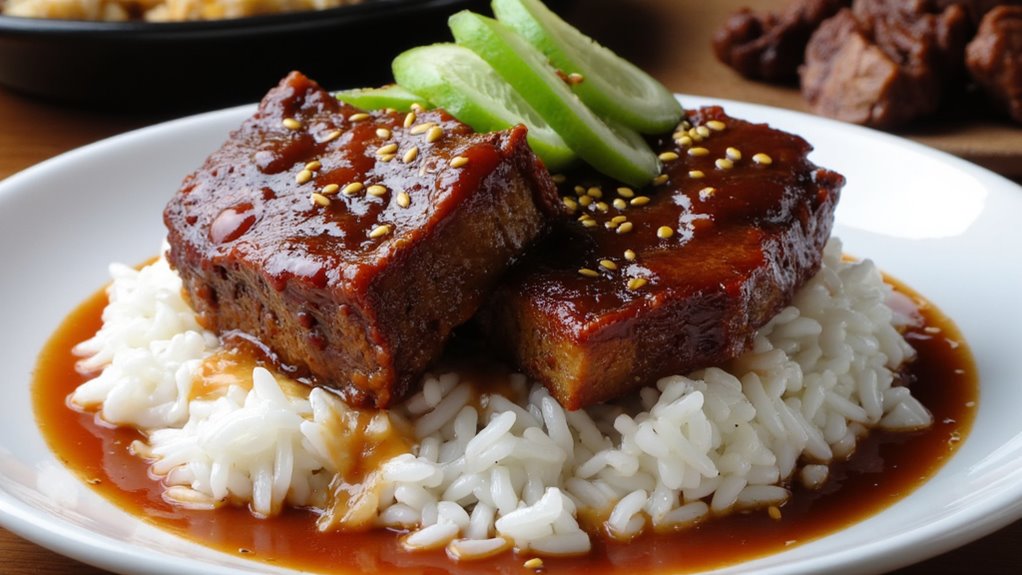
Ever been intrigued by the bold flavors of Korean cuisine? Me too! This collection of recipes is not only quick to whip up but also packed with delightful tastes. From the tangy kick of Kimchi Fried Rice to the savory goodness of Bulgogi Beef Wraps, there’s something for everyone to enjoy. Let’s explore how you can easily bring these mouthwatering dishes into your kitchen and impress your taste buds.
Kimchi Fried Rice

Kimchi Fried Rice, or Kimchi Bokkeumbap, is a quintessential Korean comfort food that perfectly blends the spicy, tangy flavor of kimchi with the heartiness of rice. This dish isn’t only delicious but also incredibly easy to make, making it a great option for a quick weeknight dinner or a satisfying lunch.
The beauty of Kimchi Fried Rice lies in its versatility; you can add in various proteins such as tofu, chicken, or pork, and customize it according to your taste preferences. To create a well-balanced meal, this dish is typically garnished with a fried egg on top, adding richness to the overall flavor profile. The combination of ingredients creates a delightful medley of textures and flavors, making each bite a delightful experience.
Whether you’re a beginner in the kitchen or a seasoned cook, this easy Korean recipe will surely impress your family and friends.
Ingredients (serving size: 4-6 people):
- 4 cups cooked rice (preferably day-old)
- 1 cup kimchi, chopped
- 1/2 cup kimchi juice (optional)
- 1 cup mixed vegetables (peas, carrots, corn)
- 2-3 green onions, chopped
- 2 tablespoons vegetable oil
- 2 tablespoons soy sauce
- 1 tablespoon sesame oil
- 4-6 eggs (for frying)
- Salt and pepper to taste
- Sesame seeds (for garnish)
Cooking Instructions:
- Prepare the Rice: If you haven’t done so already, cook the rice and let it cool. Day-old rice is ideal as it’s less sticky and fries better. If using freshly cooked rice, spread it out on a baking sheet to cool and dry out slightly.
- Heat the Pan: In a large skillet or wok, heat the vegetable oil over medium-high heat. Confirm the pan is hot enough to fry the ingredients quickly, which will help in achieving a nice texture.
- Sauté the Vegetables: Add the mixed vegetables to the pan and stir-fry for about 2-3 minutes until they’re tender. You can use fresh, frozen, or leftover vegetables based on what you have on hand.
- Add Kimchi: Stir in the chopped kimchi and sauté for another 2 minutes until it’s heated through. The kimchi will release its juices, adding flavor to the rice.
- Incorporate Rice: Add the cooked rice to the pan, breaking up any clumps with a spatula. Pour in the kimchi juice (if using), soy sauce, and sesame oil. Stir everything together, confirming that the rice is evenly coated with the sauces and heated through, about 5 minutes.
- Season and Garnish: Taste and season with salt and pepper according to your preference. Add the chopped green onions and give it one final stir. Remove from heat.
- Fry the Eggs: In a separate pan, fry the eggs sunny-side up or to your liking. This will serve as a topping for the fried rice.
- Serve: Spoon the Kimchi Fried Rice onto plates, top with a fried egg, and sprinkle sesame seeds for garnish. Serve hot and enjoy!
Extra Tips: For an extra layer of flavor, you can add protein such as diced tofu or cooked meat (like chicken or pork) to the fried rice while sautéing the vegetables.
Also, feel free to experiment with different types of kimchi; each variety can bring a unique taste to the dish. Finally, if you prefer a bit of heat, consider adding a teaspoon of gochujang (Korean chili paste) when mixing in the rice for a spicier kick!
Spicy Korean Tofu Stir-Fry
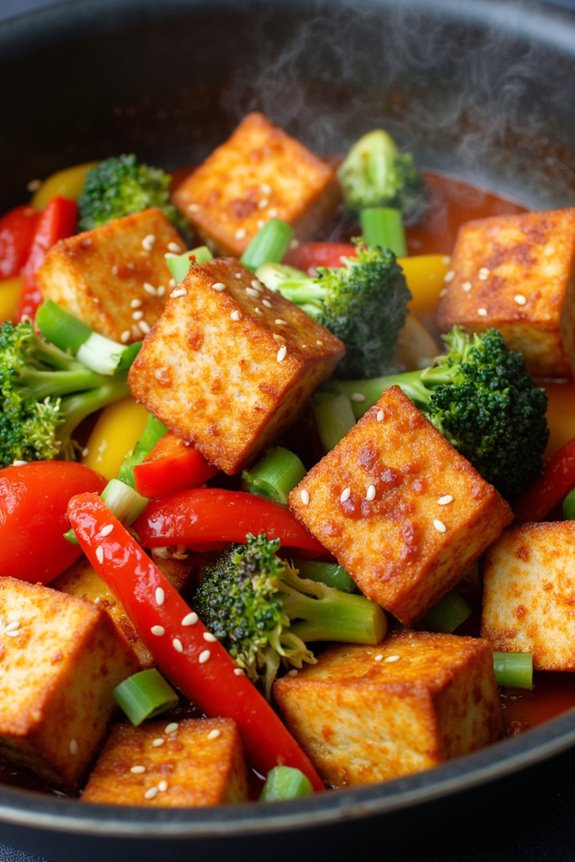
If you’re looking to spice up your dinner routine, the Spicy Korean Tofu Stir-Fry is a fantastic dish that combines the flavors of traditional Korean cuisine with the health benefits of tofu. This dish isn’t only easy to prepare but also offers a satisfying balance of spice, sweetness, and umami. Packed with colorful vegetables and seasoned with a rich gochujang (Korean chili paste) sauce, this stir-fry is sure to become a favorite in your household.
Tofu is a versatile protein that absorbs flavors well, making it the perfect base for this dish. The combination of crispy tofu and vibrant vegetables creates a delightful mix of textures, while the spicy sauce adds a kick that brings the dish to life. Whether you’re a seasoned chef or a kitchen novice, this recipe will guide you through the steps to create a delicious and hearty meal that serves 4-6 people.
Ingredients
- 1 block (14 oz) firm or extra-firm tofu, drained and pressed
- 2 tablespoons vegetable oil
- 1 cup bell peppers (red, green, or yellow), sliced
- 1 cup broccoli florets
- 1 medium onion, sliced
- 2 cloves garlic, minced
- 1 tablespoon ginger, minced
- 3 tablespoons gochujang (Korean chili paste)
- 2 tablespoons soy sauce
- 1 tablespoon maple syrup or honey
- 1 tablespoon sesame oil
- 1 teaspoon sesame seeds (for garnish)
- 2 green onions, chopped (for garnish)
- Cooked rice (for serving)
Cooking Instructions
- Prepare the Tofu: Start by pressing the tofu to remove excess moisture. Wrap the tofu block in a clean kitchen towel and place a heavy object on top for about 15-20 minutes. After pressing, cut the tofu into bite-sized cubes.
- Sauté the Tofu: In a large skillet or wok, heat the vegetable oil over medium-high heat. Once hot, add the tofu cubes in a single layer. Cook for about 5-7 minutes, turning occasionally until all sides are golden and crispy. Remove the tofu from the skillet and set aside.
- Cook the Vegetables: In the same skillet, add the sliced onion, bell peppers, and broccoli florets. Sauté for about 5 minutes, stirring frequently, until the vegetables are tender yet still crisp.
- Add Aromatics: Add the minced garlic and ginger to the skillet, stirring for about 1 minute until fragrant. Be careful not to burn them.
- Create the Sauce: In a small bowl, combine the gochujang, soy sauce, maple syrup (or honey), and sesame oil. Mix well until smooth.
- Combine Everything: Return the crispy tofu to the skillet with the sautéed vegetables. Pour the sauce over the mixture and stir well to coat everything evenly. Cook for an additional 2-3 minutes until heated through.
- Serve: Remove from heat and transfer the stir-fry to a serving platter. Garnish with sesame seeds and chopped green onions. Serve hot over cooked rice.
Extra Tips
For a milder version of this dish, reduce the amount of gochujang or replace it with a milder chili paste. You can also experiment with different vegetables based on what you have on hand, such as zucchini or snap peas.
If you prefer a thicker sauce, consider adding a cornstarch slurry (mixing cornstarch with a little water) to the sauce while cooking. This dish isn’t only quick to prepare but also makes for great leftovers, as the flavors deepen overnight. Enjoy your delicious Spicy Korean Tofu Stir-Fry!
Bulgogi Beef Wraps
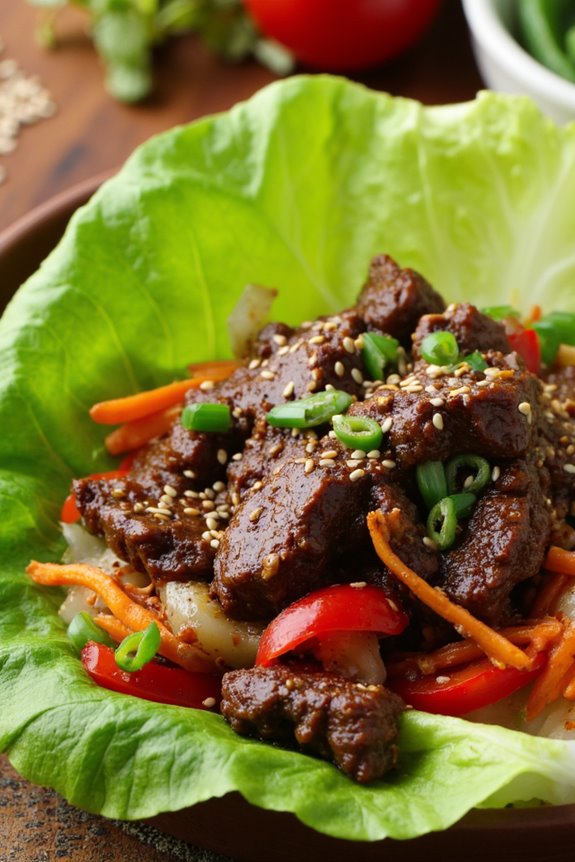
Bulgogi Beef Wraps are a delicious and savory dish that brings the flavors of Korean barbecue right to your kitchen. The term “bulgogi” translates to “fire meat,” and it’s traditionally made with marinated beef that’s grilled to perfection. In this recipe, we’ll create a simple yet flavorful version of bulgogi which can be wrapped in fresh lettuce leaves, creating a delightful and healthy meal.
The combination of tender beef, aromatic marinade, and crunchy vegetables makes this dish a favorite among many. These wraps aren’t only easy to make, but they also provide a fun way to enjoy a meal together, as everyone can customize their wrap with their favorite toppings.
Whether you’re hosting a gathering or enjoying a family dinner, Bulgogi Beef Wraps serve as a perfect centerpiece. Pair them with some steamed rice and kimchi for a complete Korean dining experience.
Ingredients (Serves 4-6)
- 1 ½ pounds of thinly sliced beef (ribeye or sirloin)
- ¼ cup soy sauce
- 2 tablespoons brown sugar
- 1 tablespoon sesame oil
- 2 tablespoons minced garlic
- 1 tablespoon grated ginger
- 1 tablespoon rice vinegar
- ½ teaspoon black pepper
- 1 tablespoon vegetable oil (for cooking)
- 1 cup sliced onions
- 1 cup sliced bell peppers (any color)
- 1 cup shredded carrots
- 1 bunch of green onions, chopped
- Large lettuce leaves (such as Romaine or Butter lettuce)
- Optional toppings: sliced cucumbers, sesame seeds, and gochujang (Korean chili paste)
Cooking Instructions
- Prepare the Marinade: In a medium bowl, whisk together the soy sauce, brown sugar, sesame oil, minced garlic, grated ginger, rice vinegar, and black pepper. This marinade will infuse the beef with a rich flavor.
- Marinate the Beef: Place the thinly sliced beef in a large resealable plastic bag or a shallow dish. Pour the marinade over the beef, ensuring all pieces are well-coated. Seal the bag or cover the dish, and let it marinate in the refrigerator for at least 30 minutes, or up to 4 hours for a more intense flavor.
- Cook the Vegetables: In a large skillet or wok, heat the vegetable oil over medium-high heat. Add the sliced onions and bell peppers, and sauté for about 3-4 minutes until they’re tender and slightly caramelized. Remove the vegetables from the skillet and set aside.
- Cook the Beef: In the same skillet, add the marinated beef in a single layer. Cook for about 4-5 minutes, stirring occasionally, until the beef is cooked through and slightly charred. This step will enhance the smoky flavor of the bulgogi.
- Combine Ingredients: Once the beef is cooked, return the sautéed vegetables to the skillet and toss everything together for an additional minute. This allows the flavors to meld perfectly.
- Assemble the Wraps: To serve, take a large lettuce leaf and spoon a portion of the bulgogi beef mixture onto the center. Top with chopped green onions and any additional toppings you desire, such as sliced cucumbers, sesame seeds, or gochujang. Wrap the lettuce around the filling and enjoy!
Extra Tips
When making Bulgogi Beef Wraps, you can customize the marinade to suit your taste by adjusting the sweetness or adding more spices. For an even more authentic flavor, consider using Korean pear or apple in the marinade to tenderize the beef and add a hint of sweetness.
If you prefer a vegetarian option, you can substitute the beef with tofu or mushrooms, which will absorb the marinade beautifully. Don’t forget to serve with plenty of side dishes, like kimchi or pickled vegetables, to complete your Korean meal experience!
Korean BBQ Chicken
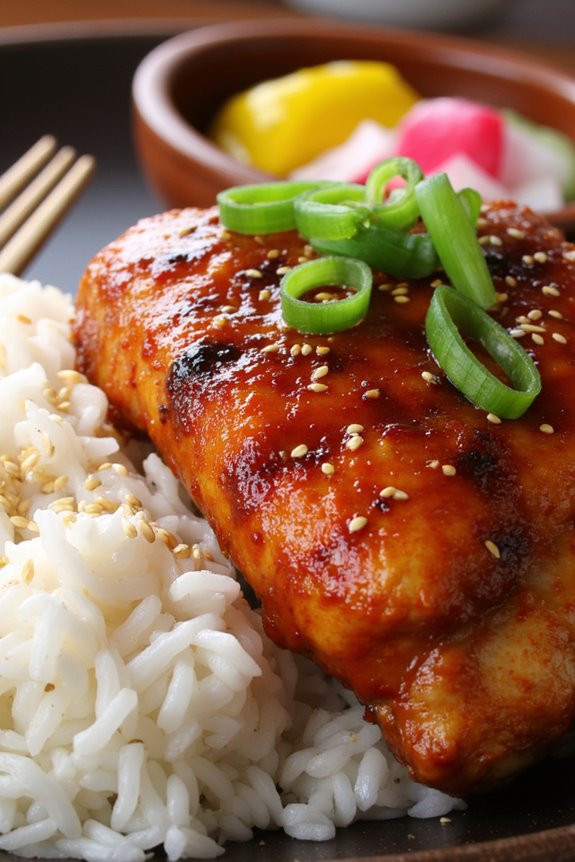
Korean BBQ Chicken is a delicious and flavorful dish that’s perfect for gatherings or a cozy family dinner. Marinated in a blend of soy sauce, garlic, ginger, and sesame oil, the chicken becomes tender and infused with mouthwatering flavors. Grilling or pan-searing the chicken adds a smoky finish, making it a delightful addition to any meal. Served with rice and pickled vegetables, this dish embodies the heart of Korean cuisine.
The beauty of Korean BBQ Chicken lies in its versatility. You can use chicken thighs or breasts based on your preference, and the marinade can be adjusted to suit your taste. Whether you’re hosting a barbecue or simply enjoying a weeknight dinner, this dish is sure to impress your family and friends. With just a few simple ingredients and steps, you can bring the authentic taste of Korean BBQ to your kitchen.
Ingredients (Serves 4-6):
- 2 lbs chicken thighs (bone-in or boneless)
- 1/4 cup soy sauce
- 2 tablespoons brown sugar
- 2 tablespoons sesame oil
- 4 cloves garlic (minced)
- 1 tablespoon fresh ginger (grated)
- 1 tablespoon gochujang (Korean chili paste)
- 1 tablespoon rice vinegar
- 1/2 teaspoon black pepper
- 2 green onions (sliced, for garnish)
- Sesame seeds (for garnish)
Cooking Instructions:
- Prepare the Marinade: In a medium bowl, mix together the soy sauce, brown sugar, sesame oil, minced garlic, grated ginger, gochujang, rice vinegar, and black pepper. Whisk until the sugar is dissolved and all ingredients are well combined.
- Marinate the Chicken: Place the chicken thighs in a large resealable plastic bag or a shallow dish. Pour the marinade over the chicken, ensuring that each piece is well coated. Seal the bag or cover the dish and refrigerate for at least 1 hour, or overnight for the best flavor.
- Preheat the Grill or Pan: If using a grill, preheat it to medium-high heat. If cooking on a stovetop, heat a large skillet or grill pan over medium-high heat and lightly grease it with oil.
- Cook the Chicken: Remove the chicken from the marinade, letting any excess drip off. Place the chicken on the grill or in the pan. Cook for about 6-8 minutes on each side or until the chicken is fully cooked and reaches an internal temperature of 165°F (75°C). If using bone-in chicken, it may take a little longer.
- Rest and Garnish: Once cooked, remove the chicken from the heat and let it rest for a few minutes. This allows the juices to redistribute. Garnish with sliced green onions and sesame seeds before serving.
- Serve: Serve the Korean BBQ Chicken hot with steamed rice and your choice of pickled vegetables or a fresh salad.
Extra Tips:
For added flavor, consider adding a splash of pineapple juice to the marinade for a sweet and tangy twist. If you prefer a spicier kick, increase the amount of gochujang or add some sliced fresh chilies to the marinade.
Also, marinating the chicken overnight will enhance the flavors even more. Enjoy your Korean BBQ Chicken with a side of kimchi for an authentic experience!
Japchae (Sweet Potato Noodles)
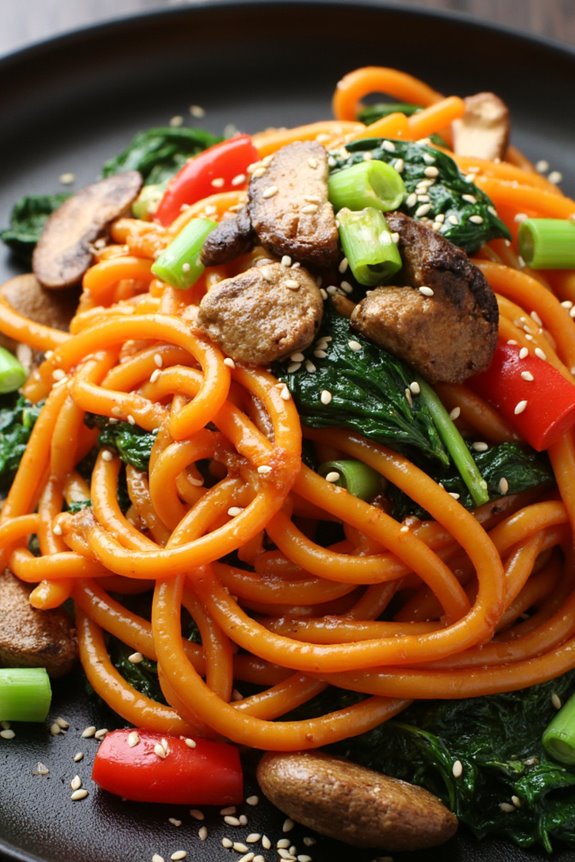
Japchae is a beloved Korean dish made with sweet potato noodles, also known as glass noodles, that are stir-fried with a colorful mix of vegetables and sometimes beef or other proteins. The dish is known for its slightly chewy texture and the delightful balance of flavors, which come from a combination of soy sauce, sesame oil, and a touch of sugar.
Traditionally served as a side dish or at special occasions, Japchae isn’t only a feast for the taste buds but also for the eyes, thanks to its vibrant ingredients.
Preparing Japchae is a straightforward process that involves cooking the noodles, sautéing the vegetables, and combining everything with a savory sauce. This dish is incredibly versatile, allowing you to customize it with your favorite vegetables and proteins.
Whether you’re enjoying it as part of a festive meal or as a comforting weeknight dinner, Japchae is sure to impress with its taste and presentation.
Ingredients (Serves 4-6):
- 8 oz sweet potato noodles (dangmyeon)
- 2 tablespoons vegetable oil
- 1 medium onion, thinly sliced
- 1 medium carrot, julienned
- 1 bell pepper (red or green), thinly sliced
- 1 cup spinach, washed and roughly chopped
- 3-4 shiitake mushrooms, sliced (fresh or dried, soaked in water if dried)
- 2-3 green onions, chopped
- 2 cloves garlic, minced
- 3 tablespoons soy sauce
- 2 tablespoons sesame oil
- 1 tablespoon sugar
- 1 tablespoon sesame seeds (for garnish)
- Salt and pepper to taste
- Optional: 4 oz beef or chicken, thinly sliced (if desired)
Instructions:
1. Cook the Sweet Potato Noodles: Begin by boiling a pot of water. Once the water reaches a rolling boil, add the sweet potato noodles. Cook according to the package instructions, which usually takes about 6-8 minutes. When done, drain and rinse the noodles under cold water to stop the cooking process. Set aside.
2. Prepare the Vegetables: While the noodles are cooking, prepare the vegetables. Thinly slice the onion, julienne the carrot, and slice the bell pepper. If using shiitake mushrooms, clean and slice them. Rinse and chop the spinach. Set all the vegetables aside.
3. Sauté the Vegetables: In a large skillet or wok, heat the vegetable oil over medium-high heat. Add the sliced onion and garlic, sautéing for 1-2 minutes until fragrant. Next, add the carrots, bell pepper, and mushrooms to the pan, stirring frequently for about 3-4 minutes, or until they start to soften.
Finally, add the chopped spinach and green onions, cooking for another minute until the spinach wilts.
4. Combine Noodles and Sauce: Once the vegetables are cooked, add the drained sweet potato noodles to the skillet. In a small bowl, mix together the soy sauce, sesame oil, and sugar. Pour this sauce over the noodles and vegetables. Toss everything together gently but thoroughly, making sure the noodles are well coated with the sauce.
Cook for an additional 2-3 minutes, allowing the flavors to meld.
5. Season and Serve: Taste the Japchae and adjust the seasoning with salt and pepper if necessary. Once everything is well combined and heated through, remove from heat. Sprinkle sesame seeds on top for garnish and serve hot or at room temperature.
Extra Tips: When making Japchae, feel free to experiment with the vegetables you use based on seasonal availability or personal preference. You can also add proteins like beef, chicken, or tofu for a more filling dish.
If you prefer a sweeter taste, increase the sugar slightly. Additionally, for an authentic touch, use Korean sesame oil, as it adds a unique flavor that enhances the dish. Ultimately, leftovers can be stored in the refrigerator and reheated, but the noodles may become slightly softer over time, so consume them within a few days for the best texture.
Quick Kimchi
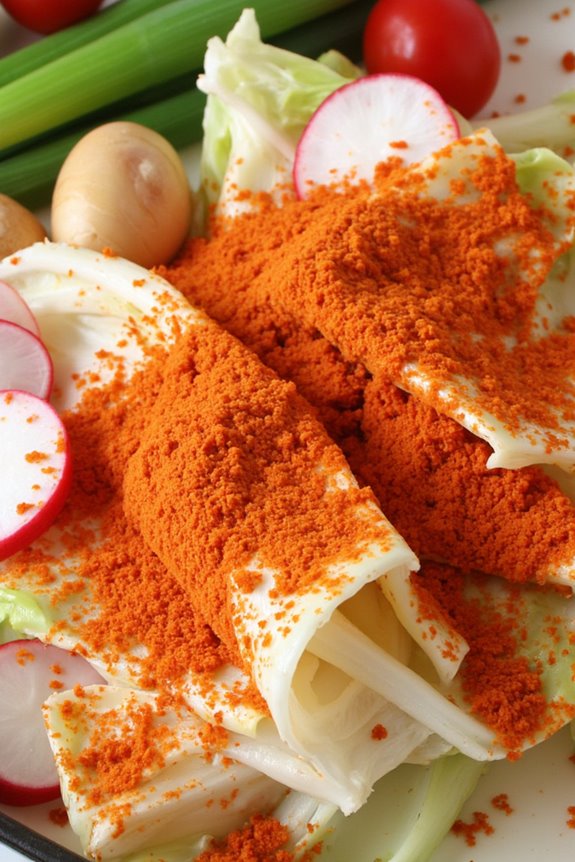
Kimchi is a quintessential Korean dish, known for its bold flavors and impressive health benefits. This traditional fermented side dish is made primarily from seasoned vegetables, most commonly napa cabbage and radishes, and is often enjoyed with rice, meats, or as a topping for various Korean dishes.
The process of making kimchi may seem intimidating, but with this quick recipe, you can enjoy homemade kimchi in no time. This Quick Kimchi recipe simplifies the fermentation process, allowing you to create a delicious and tangy dish in just a few hours. It’s perfect for those who want to dip their toes into the world of kimchi-making without committing to the traditional long fermentation methods.
With a balance of spice, garlic, and a hint of sweetness, this kimchi will elevate any meal and can be stored in the refrigerator for weeks, developing even richer flavors over time.
Ingredients (Serving Size: 4-6 people)
- 1 medium napa cabbage
- 1 cup sea salt
- 4 cups water
- 1 cup radishes, julienned
- 4 green onions, chopped
- 5 cloves garlic, minced
- 1 tablespoon ginger, grated
- 2 tablespoons sugar
- 3 tablespoons Korean red pepper flakes (gochugaru)
- 2 tablespoons fish sauce (or soy sauce for a vegetarian option)
Cooking Instructions
- Prepare the Cabbage: Chop the napa cabbage into quarters and remove the core. Rinse the cabbage under cold water and then soak it in a large bowl with 4 cups of water and 1 cup of sea salt. Make sure the cabbage is fully submerged and let it soak for about 2 hours. This process helps to soften the cabbage and enhances its flavor.
- Rinse and Drain: After 2 hours, remove the cabbage from the saltwater and rinse it thoroughly under cold running water to remove excess salt. Drain the cabbage well and let it sit in a colander while you prepare the kimchi paste.
- Make the Kimchi Paste: In a separate bowl, combine the minced garlic, grated ginger, sugar, Korean red pepper flakes, and fish sauce (or soy sauce). Mix well to form a thick paste. Adjust the spice level by adding more or less gochugaru according to your taste preference.
- Combine Ingredients: In a large mixing bowl, add the drained cabbage, julienned radishes, and chopped green onions. Pour the kimchi paste over the vegetables and use your hands (wearing gloves is recommended) to mix everything thoroughly. Make sure all the cabbage and vegetables are well-coated with the paste.
- Pack and Ferment: Transfer the kimchi mixture into a clean, airtight container or jar, pressing it down to remove any air bubbles. Leave some space at the top as the kimchi will expand during fermentation. Seal the container and let it sit at room temperature for 1-2 hours to start the fermentation process. Afterward, store it in the refrigerator.
Extra Tips
When making kimchi, feel free to get creative with additional ingredients like carrots, cucumbers, or even fruits like pear for a touch of sweetness.
The level of fermentation can vary according to your preference; taste the kimchi after a few hours and refrigerate it once it reaches your desired tanginess. Kimchi is also great for using leftovers, so don’t hesitate to add any additional vegetables you have on hand.
Enjoy your homemade Quick Kimchi as a side dish or incorporate it into various meals!
Korean Egg Pancakes (Gyeran-jjim)

Korean Egg Pancakes, known as Gyeran-jjim, are a delightful dish often enjoyed as a staple side or a light meal in Korean cuisine. This fluffy and savory egg dish is similar to a custard and is steamed rather than fried, making it a healthier alternative that retains the eggs’ nutrients.
Gyeran-jjim can be easily customized with various vegetables, seafood, or even cheese, allowing you to tailor it to your taste preferences. Whether you’re serving it for breakfast, lunch, or dinner, this dish is sure to satisfy everyone at the table.
Making Gyeran-jjim is a straightforward process that requires minimal ingredients but delivers maximum flavor. This recipe serves 4-6 people, making it perfect for family meals or gatherings.
Using a steamer or a heatproof bowl setup, you can create a wonderfully fluffy texture that’s both comforting and satisfying. With simple steps and accessible ingredients, you can whip up this Korean classic in no time.
Ingredients (Serves 4-6):
- 6 large eggs
- 1 cup water
- 1/2 cup finely chopped scallions (green onions)
- 1/4 cup finely chopped carrot (optional)
- 1/4 cup finely chopped bell pepper (optional)
- 1 tablespoon soy sauce
- 1 teaspoon sesame oil
- Salt and pepper to taste
Cooking Instructions:
- Prepare the Egg Mixture: In a large mixing bowl, crack the eggs and whisk them until well combined. Add water, soy sauce, sesame oil, salt, and pepper. Whisk together until the mixture is smooth and the ingredients are evenly incorporated.
- Add Vegetables: Gently fold in the chopped scallions, carrots, and bell peppers into the egg mixture. Confirm that the vegetables are distributed evenly throughout the mixture, giving the dish a pop of color and added flavor.
- Prepare the Steamer: Fill a pot with water and bring it to a gentle boil. If you don’t have a steamer, you can use a heatproof bowl or a dish that fits inside the pot. Make sure there’s enough space for steam to circulate around the bowl.
- Pour into Steaming Dish: Lightly grease the steaming dish with oil to prevent sticking. Pour the egg mixture into the greased dish, spreading it out evenly.
- Steam the Eggs: Carefully place the dish into the pot, ensuring it sits above the boiling water. Cover the pot with a lid and steam the eggs for about 15-20 minutes, or until the egg is fully set and bounces back when lightly pressed.
- Check for Doneness: After 15 minutes, check the eggs by inserting a toothpick in the center. If it comes out clean, the Gyeran-jjim is ready. If not, continue steaming for an additional 5 minutes.
- Serve: Once done, remove the steaming dish from the pot and let it cool for a few minutes. Cut the Gyeran-jjim into squares or wedges and serve warm as a side dish or light meal.
Extra Tips:
For an extra layer of flavor, consider adding a splash of fish sauce or a sprinkle of chili flakes to the egg mixture.
You can also experiment with different vegetables based on what you have on hand, such as zucchini or mushrooms. If you prefer a more robust flavor, try adding cooked shrimp or crab meat.
For a presentation touch, garnish with additional chopped scallions or serve with a side of kimchi for a traditional Korean meal experience.
Spicy Cucumber Salad
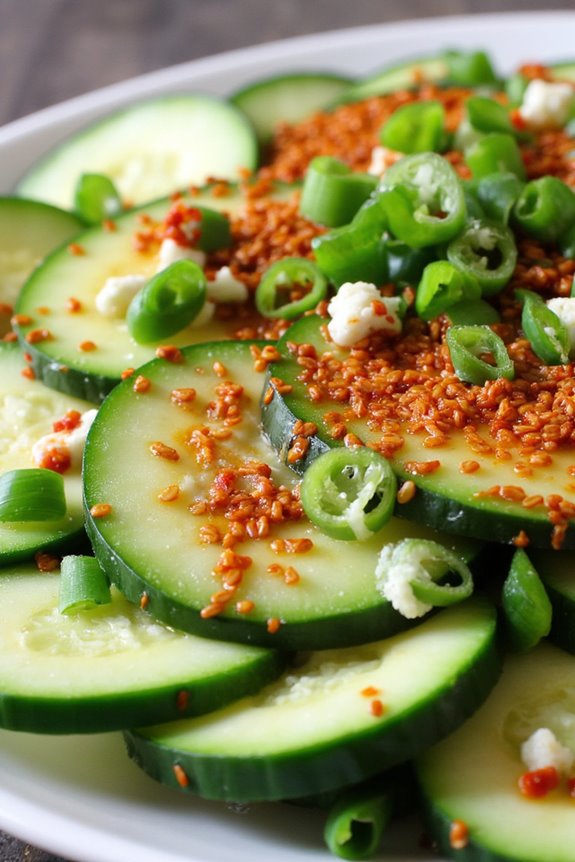
Spicy Cucumber Salad, known as “Oi Muchim” in Korean, is a revitalizing and vibrant dish that perfectly complements any meal. With its crisp cucumbers and zesty dressing, this salad adds a delightful crunch and a kick of heat that awakens the palate.
It’s a great option for those who enjoy a balance of spicy and tangy flavors, making it a popular choice in Korean cuisine. This easy-to-make salad isn’t only quick to prepare but also requires minimal ingredients, making it ideal for any home cook looking to add a burst of flavor to their table.
Whether served alongside grilled meats or enjoyed as a standalone dish, Spicy Cucumber Salad is sure to impress your family and friends with its bold taste and beautiful presentation.
Ingredients (Serves 4-6):
- 4 medium cucumbers
- 2 tablespoons salt
- 2 tablespoons Korean red pepper flakes (gochugaru)
- 2 tablespoons sugar
- 3 tablespoons rice vinegar
- 2 tablespoons sesame oil
- 2 cloves garlic, minced
- 2 green onions, chopped
- 1 tablespoon sesame seeds
Cooking Instructions:
1. Prepare the Cucumbers: Start by washing the cucumbers thoroughly. Slice them in half lengthwise and scoop out the seeds using a spoon to reduce excess moisture.
Then, cut the cucumbers into bite-sized pieces. This will help the cucumbers absorb the dressing better and maintain their crunch.
2. Salt the Cucumbers: Place the cucumber pieces in a large bowl and sprinkle the salt over them. Toss the cucumbers gently to make sure they’re evenly coated.
Allow them to sit for about 15-20 minutes. Salting the cucumbers helps to draw out excess water and enhances their flavor.
3. Make the Dressing: In a separate bowl, combine the Korean red pepper flakes, sugar, rice vinegar, sesame oil, and minced garlic. Whisk the ingredients together until the sugar dissolves and the mixture is well blended.
This dressing is where the spicy flavor comes from, so feel free to adjust the amount of gochugaru based on your heat preference.
4. Combine Ingredients: After the cucumbers have released some moisture, drain any excess liquid and rinse them briefly under cold water to remove excess salt.
Add the cucumbers to the bowl with the dressing. Toss everything together until the cucumbers are fully coated in the spicy dressing.
5. Add Final Touches: Fold in the chopped green onions and sprinkle sesame seeds over the salad. Mix gently to distribute the ingredients evenly.
The green onions add a fresh flavor and a pop of color, while the sesame seeds provide an additional layer of texture.
6. Serve: Transfer the Spicy Cucumber Salad to a serving dish and enjoy it immediately, or refrigerate for about 30 minutes to allow the flavors to meld.
This salad can be served cold or at room temperature, making it versatile for any occasion.
Extra Tips:
For an even more authentic taste, consider adding a teaspoon of fish sauce to the dressing for an umami boost.
You can also experiment with different types of cucumbers, such as Persian or Kirby, which have a firmer texture. If you prefer a milder version, reduce the amount of red pepper flakes or omit them entirely.
This salad can be made ahead of time, as the flavors deepen with a little time in the fridge. Enjoy your Spicy Cucumber Salad as a delicious side dish or a light snack!
Korean Grilled Salmon
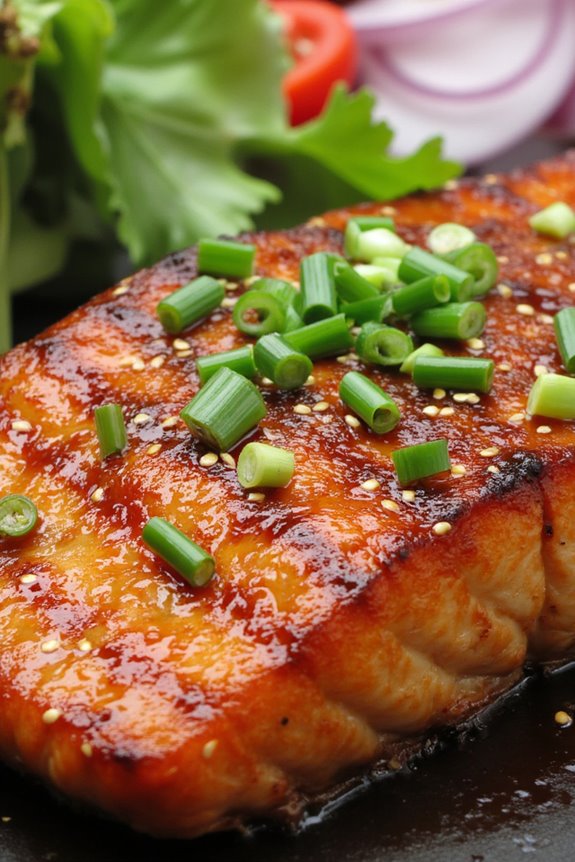
Korean Grilled Salmon is a delightful dish that embodies the perfect balance of flavors, combining the richness of salmon with a sweet and savory marinade that’s deeply rooted in Korean cuisine.
This recipe offers an easy way to enjoy a healthy, flavorful meal that can be prepared quickly on the grill or in the oven. The marinade not only enhances the natural taste of the salmon but also caramelizes beautifully when cooked, creating a delectable crust that will impress your family and friends.
To make Korean Grilled Salmon, you’ll need a few key ingredients that can be found in most supermarkets. The marinade features traditional Korean ingredients such as soy sauce, sesame oil, garlic, and brown sugar, which come together to create a harmonious flavor profile.
Whether you serve it with steamed rice, a fresh salad, or grilled vegetables, this dish is sure to become a favorite in your household.
Ingredients (serving size: 4-6 people)
- 4-6 salmon fillets (about 6 ounces each)
- ¼ cup soy sauce
- 2 tablespoons sesame oil
- 2 tablespoons brown sugar
- 4 cloves garlic, minced
- 1 tablespoon fresh ginger, grated
- 1 tablespoon rice vinegar
- 1 teaspoon red pepper flakes (optional)
- 2 green onions, chopped (for garnish)
- Sesame seeds (for garnish)
Cooking Instructions
- Prepare the Marinade: In a medium bowl, whisk together the soy sauce, sesame oil, brown sugar, minced garlic, grated ginger, rice vinegar, and red pepper flakes (if using). Make sure the brown sugar is fully dissolved, creating a smooth marinade that will coat the salmon.
- Marinate the Salmon: Place the salmon fillets in a shallow dish or a resealable plastic bag. Pour the marinade over the salmon, ensuring each fillet is well-coated. Cover the dish or seal the bag and refrigerate for at least 30 minutes, allowing the flavors to penetrate the fish.
- Preheat the Grill or Oven: If using a grill, preheat it to medium-high heat. If cooking in the oven, preheat it to 400°F (200°C).
- Remove Salmon from Marinade: After marinating, take the salmon fillets out of the marinade and let any excess liquid drip off. Reserve the marinade for basting while cooking.
- Grill or Bake the Salmon: For grilling, place the salmon fillets skin-side down on the grill. Grill for about 6-8 minutes per side, basting occasionally with the reserved marinade. For baking, place the fillets on a lined baking sheet and bake for about 12-15 minutes, or until the salmon flakes easily with a fork.
- Garnish and Serve: Once cooked, remove the salmon from the grill or oven. Sprinkle with chopped green onions and sesame seeds before serving. Enjoy the salmon with your choice of sides.
Extra Tips
For the best results, choose high-quality salmon fillets with skin on, as the skin helps to keep the fish moist while cooking and adds flavor.
If you’re short on time, marinating the salmon for just 15 minutes will still impart good flavor, but longer marination yields a more pronounced taste.
Additionally, you can customize the level of spiciness by adjusting the amount of red pepper flakes in the marinade. Serve the grilled salmon with Korean side dishes like kimchi or pickled vegetables for a complete meal experience.
Instant Pot Korean Short Ribs
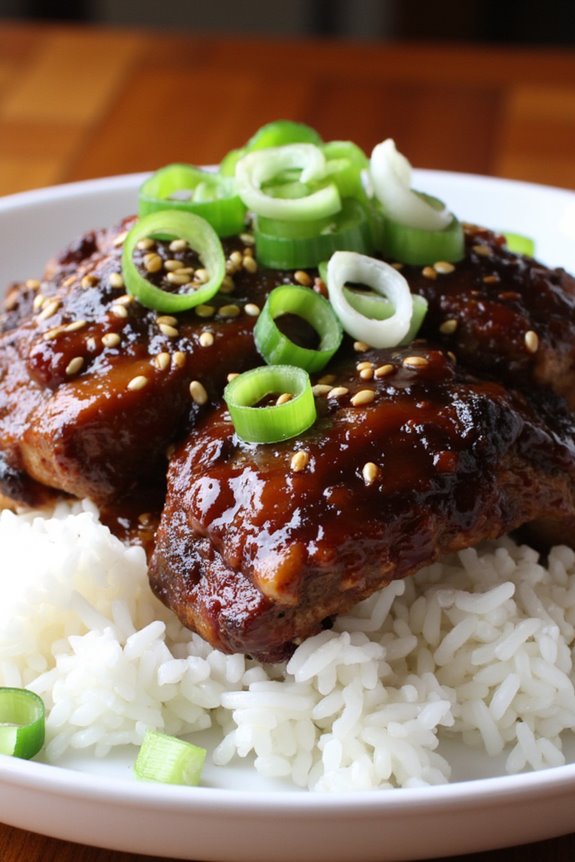
Korean short ribs, known as “Galbi,” are a beloved dish that combines the rich, savory flavors of marinated beef with a slightly sweet and tangy glaze. Cooking these ribs in an Instant Pot not only saves time but also guarantees that the meat becomes tender and infused with flavor.
The pressure cooking method allows the flavors to meld beautifully while keeping the ribs juicy and succulent, making it a perfect dish for a family dinner or a special occasion.
This recipe features a delicious marinade that includes soy sauce, garlic, ginger, and sesame oil, which are crucial components of Korean cuisine. The Instant Pot considerably reduces the cooking time compared to traditional methods, making it an ideal option for busy weeknights or when you want to impress guests without spending all day in the kitchen.
Serve these tender short ribs over a bed of steamed rice, and enjoy the delightful taste of Korea right at home.
Ingredients (Serves 4-6)
- 3 pounds beef short ribs, cut into individual pieces
- 1 cup soy sauce
- 1/2 cup brown sugar
- 1/4 cup rice vinegar
- 1/4 cup sesame oil
- 1 tablespoon minced garlic (about 4 cloves)
- 1 tablespoon minced fresh ginger
- 1 tablespoon gochugaru (Korean red pepper flakes; optional for spice)
- 1 teaspoon black pepper
- 1/2 cup sliced green onions (for garnish)
- 1 tablespoon sesame seeds (for garnish)
Cooking Instructions
1. Prepare the Marinade: In a large mixing bowl, combine the soy sauce, brown sugar, rice vinegar, sesame oil, minced garlic, minced ginger, gochugaru (if using), and black pepper. Whisk the ingredients together until the sugar is dissolved and the marinade is well blended.
2. Marinate the Ribs: Add the short ribs to the marinade, making sure they’re fully coated. Cover the bowl and let the ribs marinate in the refrigerator for at least 1 hour, or ideally overnight for maximum flavor. If you’re short on time, even a 30-minute soak will enhance the taste.
3. Sear the Ribs (Optional): Set the Instant Pot to the “Sauté” function and allow it to heat up. Once hot, add a splash of oil and sear the short ribs in batches until they’re browned on all sides, about 2-3 minutes per side. This step adds depth to the flavor but can be skipped if you’re in a hurry.
4. Pressure Cook the Ribs: After searing, return all the short ribs to the pot and pour the remaining marinade over them. Close the lid, making sure the vent is sealed, and set the Instant Pot to “Manual” or “Pressure Cook” on high for 45 minutes.
Once the cooking time is complete, allow the pressure to release naturally for about 10-15 minutes before manually releasing any remaining pressure.
5. Serve: Carefully open the lid and transfer the short ribs to a serving platter. Spoon some of the sauce over the top and garnish with sliced green onions and sesame seeds. Serve hot over steamed rice or with your favorite Korean side dishes.
Extra Tips
When preparing Instant Pot Korean short ribs, it’s crucial to choose well-marbled short ribs for the best flavor and tenderness.
If you prefer a thicker sauce, you can remove the cooked ribs and set the Instant Pot back to “Sauté” to reduce the sauce for a few minutes before serving. Additionally, feel free to add vegetables such as carrots or potatoes into the pot for a complete meal.
Always taste and adjust the seasoning to your preference, and enjoy experimenting with the marinade by adding other ingredients like pear puree for a touch of sweetness!
