


Korean cuisine is such a beautiful blend of colors and flavors, especially in vegetarian dishes. Each recipe brings together fresh ingredients and traditional techniques to create meals that are both nutritious and visually stunning. If you’re looking to add some delicious Korean inspiration to your table, these innovative vegetarian recipes are perfect. They’ll satisfy your taste buds and bring a pop of color to your meals. Let’s explore some delightful options that are sure to brighten up your day.
Kimchi Fried Rice With Tofu

Kimchi Fried Rice with Tofu is a delightful and hearty dish that beautifully combines the bold flavors of fermented kimchi with the satisfying texture of tofu. This recipe is perfect for those who are looking for a quick weeknight meal, as it’s both easy to prepare and packed with nutrients. The savory and spicy notes from the kimchi bring the rice to life, while the tofu adds protein and a delightful chewiness, making this dish a complete meal.
This vegetarian version of the classic Korean fried rice is versatile and can be customized to your liking. You can add more vegetables or adjust the spice level by using milder or spicier kimchi. It’s a great way to use leftover rice and a wonderful opportunity to introduce the unique flavors of Korean cuisine to your dining table. Serve it with a sprinkle of sesame seeds and green onions for a touch of freshness.
Ingredients (Serves 4-6):
- 2 cups cooked white or brown rice (preferably day-old)
- 1 cup kimchi, chopped (with some juice)
- 1 block (14 oz) firm tofu, drained and cubed
- 1 medium onion, diced
- 3 cloves garlic, minced
- 2 tablespoons soy sauce
- 1 tablespoon gochujang (Korean chili paste)
- 1 tablespoon sesame oil
- 2 tablespoons vegetable oil
- 1 cup mixed vegetables (peas, carrots, corn)
- 2 green onions, chopped
- Sesame seeds for garnish (optional)
Instructions:
- Prepare the Tofu: Begin by pressing the tofu to remove excess moisture. Wrap it in a clean kitchen towel or paper towels and place a heavy object on top for about 15-20 minutes. Once pressed, cut the tofu into bite-sized cubes.
- Sauté the Tofu: In a large non-stick skillet or wok, heat 1 tablespoon of vegetable oil over medium-high heat. Add the cubed tofu and cook until golden brown on all sides, about 5-7 minutes. Remove the tofu from the skillet and set aside.
- Cook the Aromatics: In the same skillet, add the remaining tablespoon of vegetable oil. Sauté the diced onion for about 3 minutes until it becomes translucent. Add the minced garlic and cook for an additional minute until fragrant.
- Add Kimchi and Vegetables: Stir in the chopped kimchi and mixed vegetables, cooking for about 3-4 minutes until the vegetables are tender. Make sure to stir well to combine all the flavors.
- Incorporate Rice and Tofu: Add the cooked rice, soy sauce, gochujang, and sesame oil to the skillet. Gently fold in the fried tofu, ensuring everything is well mixed. Cook for another 5 minutes, stirring occasionally, to heat everything through and allow the flavors to meld.
- Garnish and Serve: Once heated, remove from the heat and sprinkle with chopped green onions and sesame seeds if desired. Serve hot, and enjoy your delicious Kimchi Fried Rice with Tofu!
Extra Tips:
When cooking Kimchi Fried Rice, using day-old rice is ideal, as it helps to avoid a mushy texture and allows the grains to remain separate.
Make sure to use good quality kimchi for the best flavor—homemade or store-bought, it should be tangy and slightly spicy.
Feel free to customize the dish by adding other vegetables like bell peppers or zucchini, or even some spinach for extra nutrition.
Adjust the amount of gochujang based on your spice preference, and enjoy this quick and satisfying meal!
Spicy Korean Vegetable Noodles
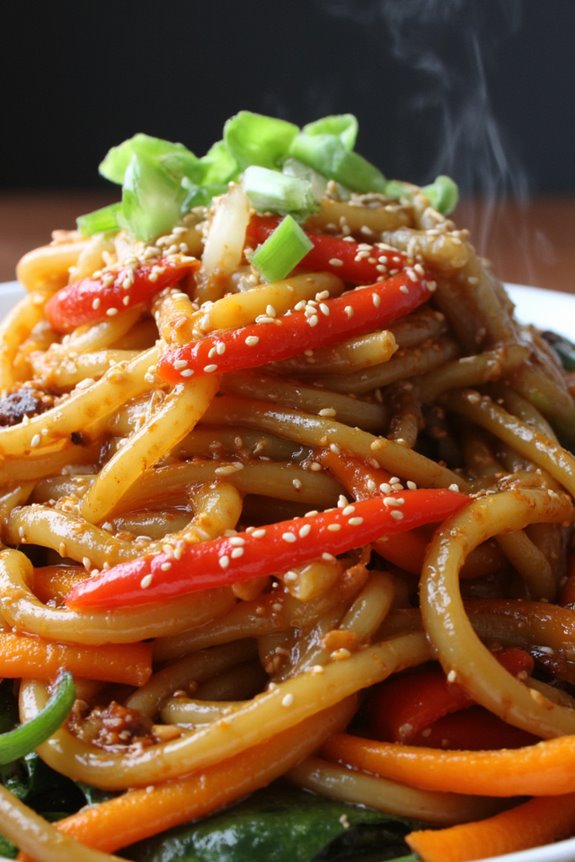
If you’re craving a flavorful and satisfying meal, these Spicy Korean Vegetable Noodles are the perfect dish to whip up. This recipe brings together a medley of colorful vegetables and chewy noodles, all tossed in a spicy and aromatic sauce. The balance of textures and flavors will transport your taste buds straight to Korea, making this dish a delightful addition to your vegetarian repertoire.
These noodles aren’t only quick to prepare but also incredibly versatile. You can easily customize the vegetables based on what you have on hand, making it a fantastic option for a weeknight dinner or a weekend feast. Serve them with a side of kimchi or pickled vegetables for an authentic Korean experience. This recipe serves 4-6 people, perfect for sharing with family and friends.
Ingredients:
- 8 oz Korean noodles (such as sweet potato starch noodles or udon)
- 2 tablespoons vegetable oil
- 1 medium onion, sliced
- 2 cloves garlic, minced
- 1 medium carrot, julienned
- 1 bell pepper, sliced (any color)
- 1 zucchini, julienned
- 2 cups baby spinach
- 3 tablespoons gochujang (Korean red chili paste)
- 2 tablespoons soy sauce
- 1 tablespoon sesame oil
- 1 tablespoon sugar
- 1 tablespoon sesame seeds (for garnish)
- 2 green onions, chopped (for garnish)
Cooking Instructions:
- Cook the Noodles: Begin by boiling a large pot of water. Once it reaches a rolling boil, add the Korean noodles and cook according to package instructions until they’re al dente. Drain the noodles and rinse them under cold water to stop cooking, then set aside.
- Prepare the Sauce: In a small bowl, combine the gochujang, soy sauce, sesame oil, and sugar. Mix well until the sugar is dissolved. Set the sauce aside as you prepare the vegetables.
- Sauté the Vegetables: In a large skillet or wok, heat the vegetable oil over medium heat. Add the sliced onion and sauté for 2-3 minutes until they become translucent. Then, add the minced garlic and cook for another minute until fragrant.
- Add Remaining Vegetables: Toss in the julienned carrot, bell pepper, and zucchini. Stir-fry the vegetables for about 5-7 minutes until they’re tender but still crisp. Finally, add the baby spinach and cook until it wilts, which should take about 1-2 minutes.
- Combine Noodles and Sauce: Add the cooked noodles to the skillet with the sautéed vegetables. Pour the prepared sauce over the noodles and vegetables. Toss everything together gently to guarantee the noodles are evenly coated with the sauce.
- Garnish and Serve: Once everything is well combined, remove the skillet from the heat. Transfer the spicy noodle mixture to a serving dish and sprinkle sesame seeds and chopped green onions on top for garnish. Serve hot.
Extra Tips:
For an extra kick, feel free to add sliced chili peppers or a dash of chili flakes when sautéing the vegetables. You can also incorporate protein by adding tofu or tempeh. If you prefer a milder flavor, adjust the amount of gochujang to suit your taste.
This dish is best enjoyed fresh, but leftovers can be stored in the refrigerator for a day or two. Reheat gently in a skillet to keep the noodles from becoming too mushy.
Gochujang Glazed Eggplant
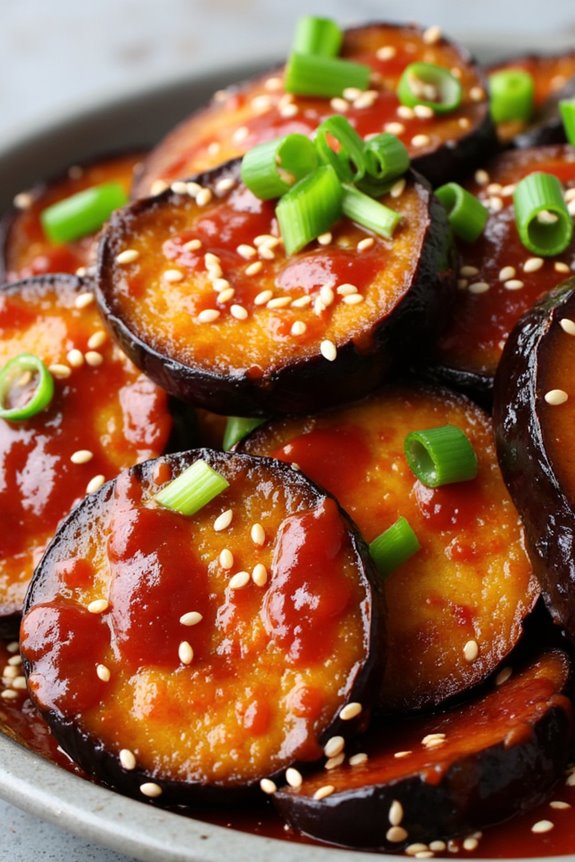
Gochujang Glazed Eggplant is a delightful vegetarian dish that showcases the unique flavors of Korean cuisine. This dish combines the rich, savory taste of gochujang (Korean chili paste) with the tender texture of eggplant, creating a mouthwatering experience that’s both comforting and exciting. The glaze not only adds a spicy kick but also a beautiful sheen that makes the eggplant visually appealing. Perfect as a side dish or a main course served over rice, Gochujang Glazed Eggplant is bound to impress both vegetarians and meat-lovers alike.
In this recipe, we’ll explore how to create this delicious dish with simple ingredients and straightforward steps. The balance of flavors, from the sweetness of the sugar to the umami of soy sauce, comes together beautifully to elevate the eggplant. Whether you’re hosting a dinner party or just want to enjoy a cozy meal at home, this dish will transport you to the vibrant streets of Korea.
Ingredients (Serves 4-6):
- 2 large eggplants, cut into 1-inch thick slices
- 3 tablespoons gochujang
- 2 tablespoons soy sauce
- 2 tablespoons maple syrup or honey
- 1 tablespoon sesame oil
- 1 tablespoon rice vinegar
- 2 cloves garlic, minced
- 1 teaspoon grated ginger
- 2 tablespoons vegetable oil
- 1 tablespoon sesame seeds, for garnish
- 2 green onions, chopped, for garnish
Cooking Instructions:
- Prepare the Eggplant: Start by slicing the eggplants into 1-inch thick rounds. This thickness guarantees that the eggplants cook evenly and absorb the flavors of the glaze. Place the slices in a colander and sprinkle with salt. Let them sit for about 20-30 minutes to draw out excess moisture and bitterness.
- Make the Gochujang Glaze: While the eggplant is sweating, prepare the glaze. In a bowl, combine gochujang, soy sauce, maple syrup (or honey), sesame oil, rice vinegar, minced garlic, and grated ginger. Whisk the ingredients together until they’re well combined, creating a smooth and thick sauce.
- Rinse and Dry the Eggplant: After the eggplants have rested, rinse them under cold water to remove the salt. Pat them dry with a clean kitchen towel or paper towels. This step is essential as it helps to achieve a nice sear when cooking.
- Cook the Eggplant: In a large skillet or frying pan, heat the vegetable oil over medium-high heat. Once the oil is hot, add the eggplant slices in a single layer. Cook for about 3-4 minutes on each side until they’re golden brown and tender. You may need to do this in batches to avoid overcrowding the pan.
- Add the Glaze: Once all the eggplant slices are cooked, lower the heat to medium and pour the gochujang glaze over the eggplant in the skillet. Gently toss the eggplant to coat them evenly with the sauce. Cook for an additional 2-3 minutes until the glaze thickens and clings to the eggplant.
- Serve: Transfer the glazed eggplant to a serving platter. Sprinkle sesame seeds and chopped green onions over the top for garnish. Serve warm, either on its own or over steamed rice for a complete meal.
Extra Tips:
When cooking Gochujang Glazed Eggplant, feel free to adjust the spice level to your preference by adding more or less gochujang. If you want a bit more texture, consider adding other vegetables such as bell peppers or zucchini alongside the eggplant.
Additionally, this dish can be made ahead of time and reheated, making it a great option for meal prep. Enjoy the flavors and experiment with the glaze; it also works wonderfully with other vegetables!
Korean Vegetable Pancakes (Jeon)
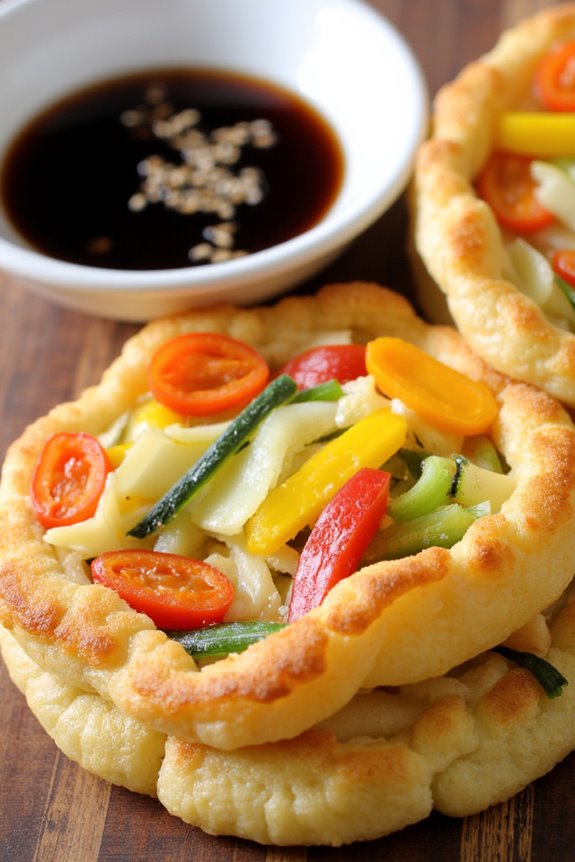
Korean vegetable pancakes, known as Jeon, are a delightful and savory dish that showcases a variety of fresh vegetables folded into a crispy batter. These pancakes aren’t only popular in Korean cuisine but also serve as a versatile dish that can be enjoyed as a snack, appetizer, or part of a main meal.
The beauty of Jeon lies in its adaptability; you can use whatever vegetables you have on hand, making it a fantastic option for utilizing seasonal produce or leftovers.
To make the perfect Korean vegetable pancakes, you’ll need a mix of colorful vegetables and a simple batter that will create a crispy texture on the outside while keeping the inside tender. Traditionally served with a soy dipping sauce, Jeon is a crowd-pleaser that can be easily customized to cater to different tastes and dietary preferences.
Whether you’re hosting a gathering or simply craving a delicious snack, these pancakes are sure to impress.
Ingredients (serving size: 4-6 people)
- 1 cup all-purpose flour
- 1/2 cup rice flour
- 1 1/2 cups cold water
- 1/2 teaspoon salt
- 1/4 teaspoon black pepper
- 1 cup zucchini, julienned
- 1 cup carrots, julienned
- 1 cup bell pepper, thinly sliced (any color)
- 1 cup scallions, chopped
- 1/2 cup onion, thinly sliced
- Vegetable oil for frying
Cooking Instructions
1. Prepare the Vegetables: Start by washing and cutting all the vegetables. Julienne the zucchini and carrots, thinly slice the bell pepper and onion, and chop the scallions. Make sure the vegetable pieces are uniform in size to guarantee even cooking.
2. Make the Batter: In a large mixing bowl, combine the all-purpose flour, rice flour, salt, and black pepper. Gradually add the cold water while whisking until you achieve a smooth and thick batter. The rice flour adds a nice crispiness to the pancakes, so don’t skip it!
3. Combine Vegetables and Batter: Once the batter is ready, gently fold in the prepared vegetables. Make sure each piece of vegetable is well-coated with the batter. This mixture should be thick enough to hold the vegetables together without being too runny.
4. Heat the Oil: In a large non-stick skillet or frying pan, heat a generous amount of vegetable oil over medium heat. You want enough oil to cover the bottom of the pan for frying.
5. Fry the Pancakes: Once the oil is hot, scoop a ladleful of the vegetable-batter mixture into the skillet, spreading it out gently to form a pancake about 1/2 inch thick. Fry for about 3-4 minutes until the bottom is golden brown and crispy. Flip it over carefully and cook for another 3-4 minutes on the other side.
Repeat this process for the remaining batter.
6. Drain and Serve: Once cooked, transfer the pancakes to a plate lined with paper towels to drain any excess oil. Serve the pancakes warm with a soy dipping sauce made from soy sauce, vinegar, and a sprinkle of sesame seeds.
Extra Tips
To enhance the flavor of your Korean vegetable pancakes, consider adding a touch of gochugaru (Korean red pepper flakes) for a mild heat or a splash of sesame oil to the batter for a nutty aroma.
Experiment with different vegetables such as mushrooms, spinach, or even kimchi for a unique twist. Remember to keep the oil at a consistent temperature to avoid sogginess, and enjoy your Jeon fresh for the best texture!
Tofu and Vegetable Bibimbap
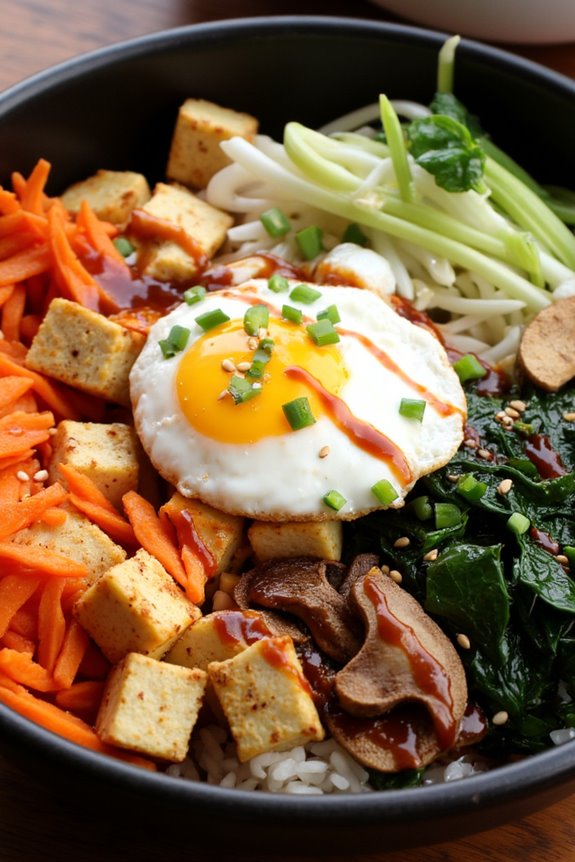
Tofu and Vegetable Bibimbap is a colorful and nutritious Korean dish that beautifully combines a variety of vegetables, tofu, and rice, all topped with a spicy gochujang sauce. Bibimbap, which translates to “mixed rice,” is often served with an assortment of sautéed or pickled vegetables, making it a versatile meal that can be easily adapted to suit different tastes.
This vibrant dish isn’t only visually appealing but also packs a punch regarding flavor and health benefits, making it a perfect choice for vegetarians and anyone looking to incorporate more plant-based meals into their diet.
The beauty of Tofu and Vegetable Bibimbap lies in its flexibility. You can customize the vegetable toppings based on what you have on hand or what’s in season. Additionally, the dish is a fantastic way to use up leftover vegetables.
With a savory mix of textures and a hint of spice from the gochujang, this bibimbap is a satisfying meal that can be enjoyed any time of the day, whether for lunch, dinner, or even breakfast. Let’s get started on creating this delicious dish for 4-6 people!
Ingredients:
- 2 cups of cooked short-grain rice
- 1 block (14 oz) firm tofu, drained and pressed
- 2 cups of spinach, blanched
- 1 cup of carrots, julienned
- 1 cup of zucchini, julienned
- 1 cup of bean sprouts, blanched
- 1 cup of shiitake mushrooms, sliced
- 3 tablespoons soy sauce
- 2 tablespoons sesame oil
- 2 tablespoons vegetable oil
- 2 cloves garlic, minced
- 2 tablespoons gochujang (Korean chili paste)
- 1 tablespoon sugar
- Sesame seeds for garnish
- Green onions, chopped for garnish
- Optional: Fried egg for topping (one per serving)
Cooking Instructions:
1. Prepare the Tofu: Start by cutting the firm tofu into bite-sized cubes. Heat 2 tablespoons of vegetable oil in a non-stick skillet over medium heat. Once the oil is hot, add the tofu cubes and cook until they’re golden brown on all sides, about 5-7 minutes. Once cooked, remove the tofu from the skillet and set aside.
2. Sauté the Vegetables: In the same skillet, add the sliced shiitake mushrooms and sauté for about 3-4 minutes until they become tender. Next, add the julienned carrots and zucchini, cooking for an additional 3-4 minutes until they’re slightly softened.
Finally, add the blanched spinach and bean sprouts, and stir-fry everything together for another 2 minutes. Season the mixture with 1 tablespoon of soy sauce and a little sesame oil for flavor. Remove from heat.
3. Make the Gochujang Sauce: In a small bowl, combine 2 tablespoons of gochujang, 1 tablespoon of sugar, 1 tablespoon of soy sauce, and 1 tablespoon of sesame oil. Mix well until the sugar is dissolved and the sauce is smooth. Adjust the spice level according to your preference.
4. Assemble the Bibimbap: To serve, place a generous scoop of cooked rice at the bottom of each bowl. Arrange the sautéed vegetables and tofu on top of the rice in an attractive pattern. Drizzle a spoonful of the gochujang sauce over the top. If desired, add a fried egg on top of each bowl for an extra richness.
5. Garnish and Serve: Sprinkle sesame seeds and chopped green onions over the bibimbap for garnish. Serve immediately, encouraging everyone to mix their ingredients together before enjoying their colorful creation.
Extra Tips:
For the best flavor and texture, make sure the vegetables are cooked just until tender but still retain some crunch. Feel free to experiment with different vegetables like bell peppers, radishes, or even kimchi for added flavor.
If you’re looking for a protein boost, consider adding edamame or chickpeas. Remember to taste and adjust the gochujang sauce to achieve your desired level of spiciness. Enjoy your homemade Tofu and Vegetable Bibimbap!
Korean Sweet Potato Salad
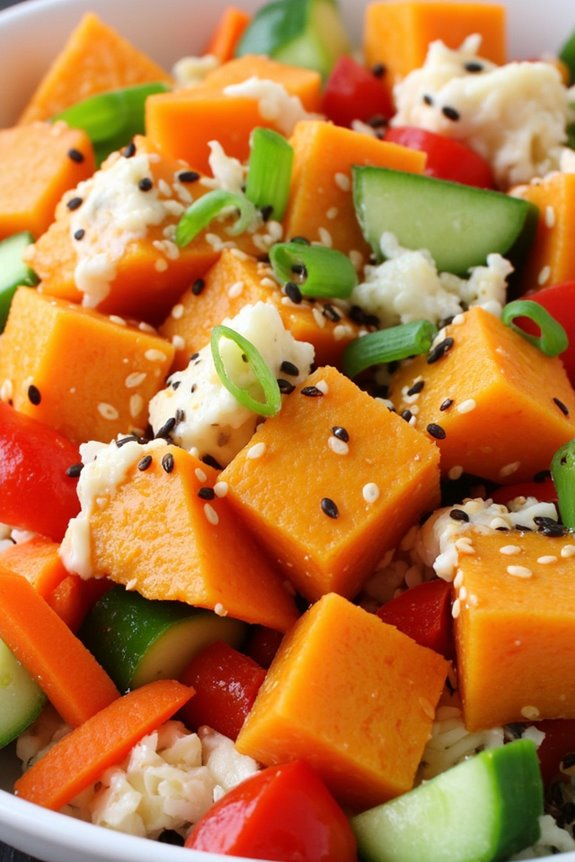
Korean Sweet Potato Salad, also known as “Goguma Salad,” is a delightful and nutritious dish that highlights the naturally sweet flavors of Korean sweet potatoes. This salad isn’t only vibrant in color but is also packed with health benefits, making it a perfect side dish for any meal or a light snack. The combination of creamy dressing and crunchy vegetables adds depth to the dish, elevating the sweet potatoes into a revitalizing salad.
The beauty of this salad lies in its simplicity and versatility. You can customize it with various ingredients based on your preferences. The sweet potatoes provide a hearty base, while the addition of fresh vegetables and a tangy dressing enhances the overall flavor. Whether you serve it at a gathering or enjoy it as a meal prep option, Korean Sweet Potato Salad is sure to impress anyone who tastes it.
Ingredients (Serves 4-6):
- 2 large Korean sweet potatoes
- 1 cup cucumber, diced
- 1 cup carrot, grated
- 1/2 cup red bell pepper, diced
- 1/4 cup green onions, chopped
- 1/4 cup roasted sesame seeds
- 1/3 cup mayonnaise (or vegan mayo for a plant-based option)
- 1 tablespoon rice vinegar
- 1 tablespoon sesame oil
- 1 teaspoon honey (or maple syrup for vegan option)
- Salt and pepper to taste
Cooking Instructions:
- Prepare the Sweet Potatoes: Begin by washing the Korean sweet potatoes thoroughly under running water to remove any dirt. Then, peel the sweet potatoes and cut them into bite-sized cubes. This size allows them to cook evenly and makes them easier to mix into the salad.
- Boil the Sweet Potatoes: In a pot, bring water to a boil and add a pinch of salt. Once the water is boiling, add the sweet potato cubes and cook for about 10-15 minutes or until they’re tender but still hold their shape. You can check their doneness by piercing them with a fork; they should be soft but not mushy.
- Drain and Cool: After cooking, drain the sweet potatoes in a colander and let them cool for a few minutes. This will prevent the salad from being too warm and help the flavors meld better once combined with the other ingredients.
- Mix the Vegetables: In a large mixing bowl, combine the diced cucumber, grated carrot, diced red bell pepper, and chopped green onions. These fresh vegetables will add a nice crunch and vibrant color to the salad.
- Prepare the Dressing: In a separate small bowl, whisk together the mayonnaise, rice vinegar, sesame oil, honey (or maple syrup), and a pinch of salt and pepper. Mix until the dressing is smooth and well combined.
- Combine Everything: Once the sweet potatoes have cooled, gently fold them into the bowl with the mixed vegetables. Pour the dressing over the salad and toss everything until the sweet potatoes and vegetables are evenly coated with the dressing.
- Garnish and Serve: Finally, sprinkle the roasted sesame seeds over the top of the salad for added flavor and texture. Serve the Korean Sweet Potato Salad immediately, or refrigerate it for about 30 minutes to allow the flavors to meld together before serving.
Extra Tips:
To enhance the flavor of your Korean Sweet Potato Salad, consider adding some sliced radishes or a handful of chopped cilantro for a fresh burst of flavor. You can also adjust the dressing ingredients to suit your taste—if you like it creamier, add more mayonnaise, or if you prefer a tangy kick, increase the amount of rice vinegar.
This salad can be stored in the refrigerator for a couple of days, making it an ideal make-ahead dish for busy weeks. Enjoy this nutrient-rich salad as a standalone dish or as a side with your favorite Korean entrees!
Spicy Cucumber Salad (Oi Muchim)
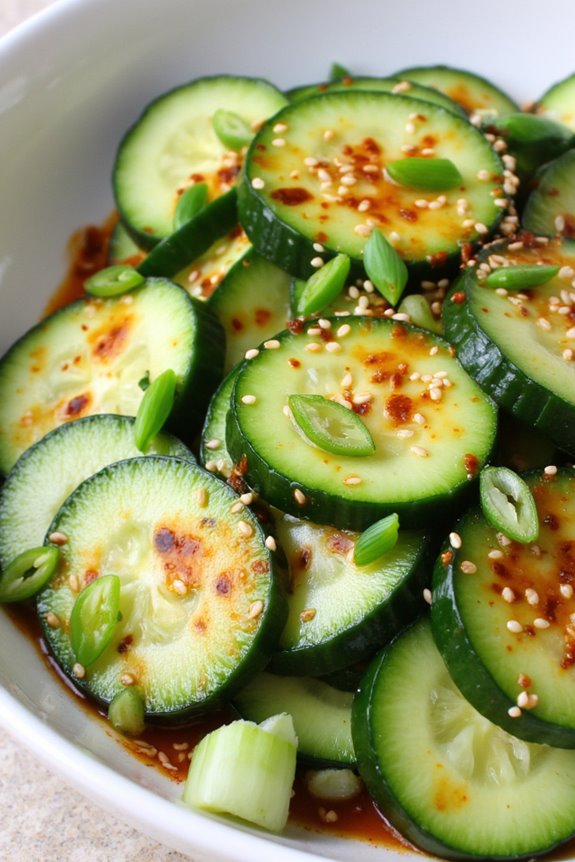
Oi Muchim is a revitalizing and spicy Korean salad that perfectly complements any meal. Made primarily from cucumbers, this dish isn’t only vibrant and colorful but also packed with flavors that awaken the palate. The combination of spicy gochugaru (Korean red pepper flakes), tangy vinegar, and a touch of sugar creates a delightful balance of tastes that enhances the crispness of the cucumbers.
This salad is especially popular during the warmer months, making it a staple at barbecues and picnics.
Preparing Oi Muchim is quite simple and can be done in under 30 minutes. It requires minimal cooking skills, making it accessible for novice cooks while still being a hit in any gathering. The dish is vegan-friendly and can easily be adjusted to suit your spice tolerance. Whether served as a side dish or a light snack, Oi Muchim is sure to bring a burst of flavor to your dining experience.
Ingredients (Serves 4-6)
- 4 medium cucumbers
- 1 tablespoon salt
- 2 tablespoons sugar
- 2 tablespoons rice vinegar
- 1 tablespoon soy sauce
- 1-2 tablespoons gochugaru (Korean red pepper flakes, adjust to taste)
- 2 cloves garlic, minced
- 1 teaspoon sesame oil
- 2 green onions, finely chopped
- 1 tablespoon sesame seeds (optional)
Cooking Instructions
- Prepare the Cucumbers: Start by washing the cucumbers thoroughly. Cut off the ends and slice them in half lengthwise. If the cucumbers have a lot of seeds, you can scoop them out with a spoon. Then, cut the cucumbers into bite-sized pieces or thin half-moons, depending on your preference.
- Salt the Cucumbers: Place the cut cucumbers in a bowl and sprinkle them with salt. Toss the cucumbers gently to make sure they’re evenly coated. Let them sit for about 15-20 minutes. This process will draw out excess moisture, making the cucumbers crispier and enhancing their flavor.
- Make the Dressing: While the cucumbers are resting, prepare the dressing. In a separate bowl, combine the sugar, rice vinegar, soy sauce, gochugaru, minced garlic, and sesame oil. Whisk the ingredients together until the sugar is dissolved, and the mixture is well-combined.
- Combine and Toss: After the cucumbers have rested, drain any excess liquid released during the salting process. Add the cucumbers to the bowl with the dressing. Toss everything together until the cucumbers are well coated with the dressing.
- Add Final Touches: Finally, sprinkle the chopped green onions and sesame seeds (if using) over the salad. Give it one last gentle toss to incorporate these ingredients.
- Serve: Oi Muchim can be served immediately, but it tastes even better after marinating for a bit in the refrigerator. Allow it to chill for at least 30 minutes for the flavors to meld together before serving.
Extra Tips
When preparing Oi Muchim, feel free to adjust the level of spice according to your preference. If you prefer a milder flavor, reduce the amount of gochugaru, or substitute it with a milder chili powder.
Additionally, you can experiment by adding other ingredients such as shredded carrots or sliced radishes for added texture and flavor. Always taste and adjust the seasoning before serving to make sure it suits your palate. Enjoy your revitalizing Spicy Cucumber Salad!
Vegetable Kimbap (Korean Sushi Rolls)
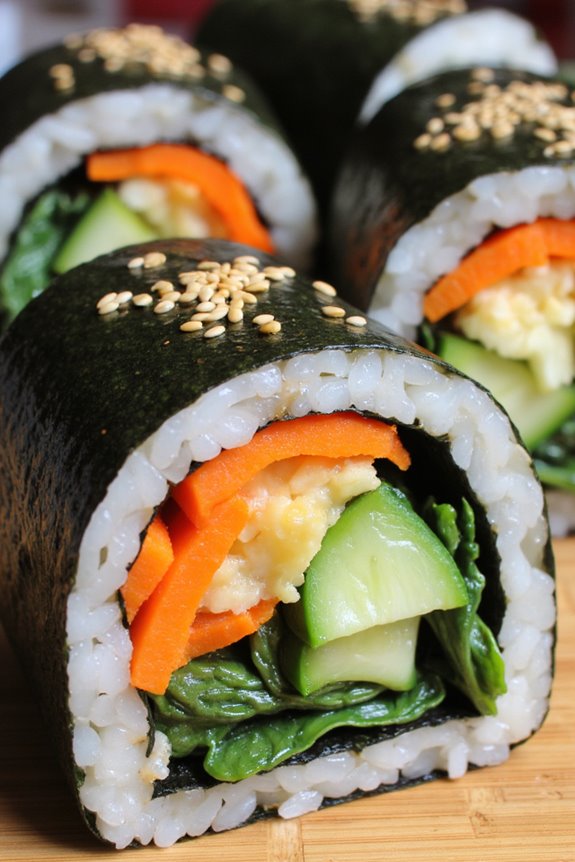
Vegetable Kimbap, also known as Korean sushi rolls, is a delightful and nutritious dish that embodies the essence of Korean cuisine. Traditionally made with rice, vegetables, and sometimes meat, this vegetarian version brings together colorful and fresh ingredients wrapped in seasoned rice and seaweed.
It’s not only a popular picnic food in Korea but also a perfect snack for any occasion. With its vibrant colors and wholesome ingredients, Vegetable Kimbap is a feast for the eyes as well as the palate.
Making Vegetable Kimbap at home is easier than you might think. You can customize the fillings based on your preferences, using a variety of vegetables such as carrots, cucumbers, and radishes, all seasoned to enhance their natural flavors.
Served with a side of dipping sauce, these rolls are a great way to introduce your family and friends to the joys of Korean vegetarian cuisine.
Ingredients (Serves 4-6):
- 2 cups short-grain rice
- 2 ½ cups water
- 4 sheets of nori (seaweed)
- 1 medium carrot, julienned
- 1 cucumber, julienned
- 1 small daikon radish, julienned (or pickled radish)
- 1 cup spinach, blanched
- 2 tablespoons sesame oil
- 1 tablespoon soy sauce
- 1 teaspoon salt
- 1 teaspoon sesame seeds
- Optional: Kimchi for serving
Cooking Instructions:
- Prepare the Rice: Rinse the short-grain rice under cold water until the water runs clear. This removes excess starch and helps the rice to be less sticky. Combine the rinsed rice with 2 ½ cups of water in a rice cooker or pot. Cook according to the rice cooker’s instructions or bring to a boil, then reduce the heat to low and cover, simmering for about 20 minutes until the water is absorbed.
- Season the Rice: Once the rice is cooked, transfer it to a large bowl. While it’s still warm, add 1 tablespoon of sesame oil, 1 teaspoon of salt, and 1 teaspoon of sesame seeds. Mix gently with a wooden spoon or rice paddle to incorporate the seasonings without mashing the rice. Let it cool to room temperature.
- Prepare the Vegetables: While the rice is cooling, prepare your vegetables. Julienne the carrot and cucumber into thin strips. For the spinach, blanch it in boiling water for about 30 seconds, then immediately transfer it to an ice bath to stop the cooking. Once cooled, squeeze out excess water and season with a little sesame oil and salt.
- Assemble the Kimbap: Place a bamboo sushi mat on a clean surface and lay a sheet of nori, shiny side down, on the mat. Wet your hands to prevent sticking, then take about a cup of seasoned rice and spread it evenly over the nori, leaving about 1 inch of space at the top. Layer the julienned carrot, cucumber, spinach, and daikon radish across the center of the rice.
- Roll the Kimbap: Starting from the bottom, use the bamboo mat to carefully roll the nori over the filling, tucking it tightly as you go. Once you reach the exposed edge of the nori, wet it with a little water to seal the roll.
- Slice and Serve: Use a sharp knife to slice the rolled Kimbap into bite-sized pieces. Clean the knife with a damp cloth between cuts to maintain clean edges. Serve the Vegetable Kimbap with soy sauce or your favorite dipping sauce, alongside some kimchi if desired.
Extra Tips:
To make the Vegetable Kimbap even more flavorful, you can add additional seasonings to the vegetables, such as a sprinkle of gochugaru (Korean chili flakes) for some heat or a dash of vinegar for extra tang.
If you’re feeling adventurous, consider adding tofu or avocado for creaminess. Always keep your hands and utensils wet while handling the rice and nori to prevent sticking.
Finally, feel free to get creative with the fillings, using whatever vegetables you have on hand for a personalized twist!
Korean Miso Soup With Tofu and Greens
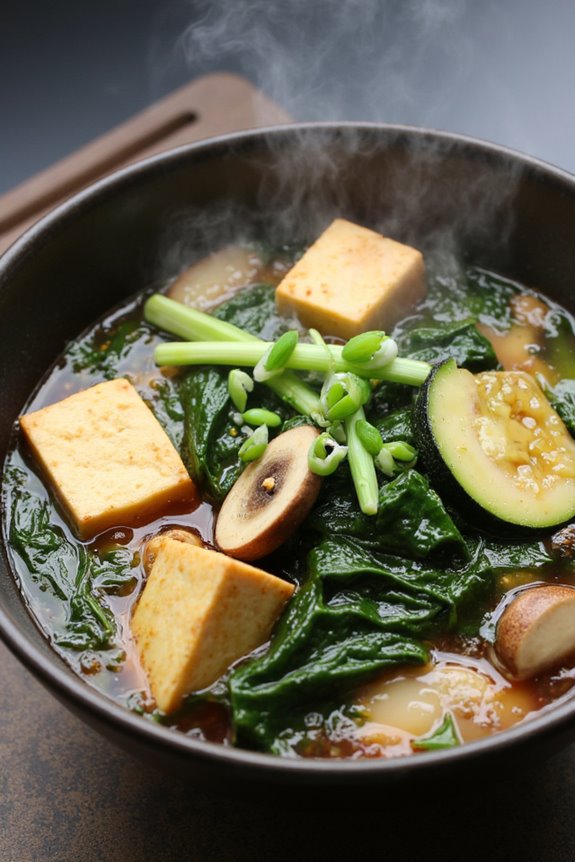
Korean Miso Soup, also known as Doenjang Jjigae, is a comforting and nutritious dish that showcases the depth of umami flavors found in Korean cuisine. This vegetarian version features silken tofu and a variety of fresh greens, making it not only hearty but also packed with nutrients.
The miso paste, fermented from soybeans, serves as the base of the soup, imparting a rich and savory taste that pairs wonderfully with the freshness of the vegetables. Ideal for a family meal or a cozy dinner, this soup is sure to warm your heart and satisfy your taste buds.
Making Korean Miso Soup is a straightforward process, allowing you to enjoy a healthy and robust dish in no time. The combination of tofu and greens not only adds texture but also enhances the nutritional profile of the soup.
Feel free to experiment with different vegetables based on what you have on hand or what’s in season. This recipe serves 4-6 people, making it perfect for sharing with family or friends.
Ingredients:
- 1 tablespoon vegetable oil
- 1 medium onion, diced
- 2 cloves garlic, minced
- 1 medium zucchini, sliced
- 1 cup mushrooms, sliced (shiitake or button)
- 4 cups vegetable broth
- 3 tablespoons Korean miso paste (doenjang)
- 1 block (14 oz) firm or silken tofu, cut into cubes
- 2 cups fresh spinach or bok choy, chopped
- 2 green onions, sliced
- 1 teaspoon sesame oil
- Salt and pepper to taste
- Optional: red pepper flakes or gochugaru for heat
Cooking Instructions:
- Sauté the Aromatics: In a large pot, heat the vegetable oil over medium heat. Add the diced onion and sauté for about 3-4 minutes until it becomes translucent. Stir in the minced garlic and continue to cook for an additional minute, being careful not to burn it.
- Cook the Vegetables: Add the sliced zucchini and mushrooms to the pot. Sauté the vegetables for about 5-6 minutes until they start to soften. This step builds the flavor base for the soup.
- Add Broth and Miso: Pour in the vegetable broth and bring the mixture to a gentle boil. Once boiling, reduce the heat to low and whisk in the Korean miso paste until fully dissolved. This will create the rich, savory flavor of the soup.
- Add Tofu and Greens: Carefully add the cubed tofu to the pot, then fold in the chopped spinach or bok choy. Allow the soup to simmer for 5-7 minutes. This will heat the tofu through and allow the greens to wilt beautifully.
- Finish with Seasoning: Stir in the sliced green onions and drizzle the sesame oil over the soup. Taste the soup and adjust with salt, pepper, or red pepper flakes according to your preference. Let it simmer for another minute before removing from heat.
- Serve: Ladle the Korean Miso Soup into bowls and serve hot. Enjoy it with a side of steamed rice or as part of a larger meal.
Extra Tips:
When preparing Korean Miso Soup, feel free to customize the ingredients based on your preferences or what you have available. You can substitute or add other vegetables like carrots, bell peppers, or radishes.
If you prefer a spicier kick, add more red pepper flakes or even some sliced chili peppers. Always taste your soup before serving, as the saltiness of the miso and the broth can vary; adjusting it to your liking will guarantee a delicious outcome.
Stir-Fried Spicy Korean Radish
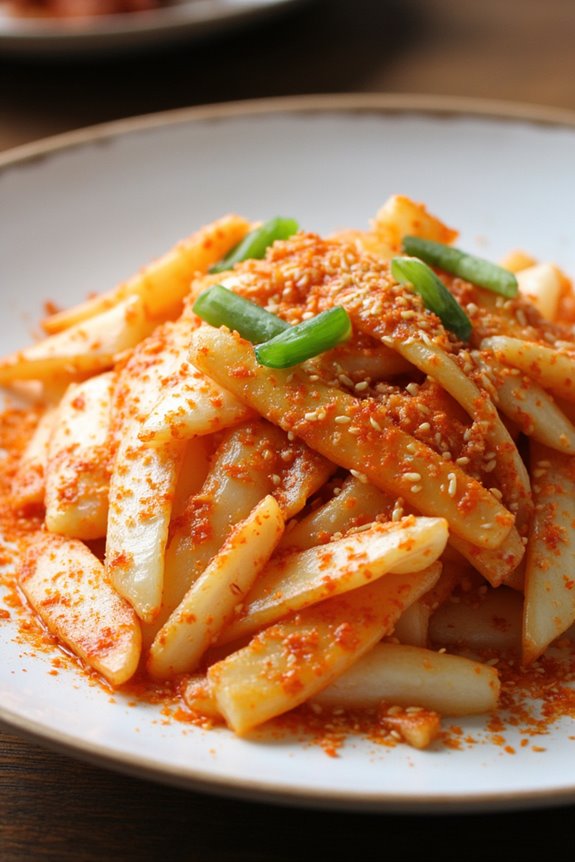
Stir-Fried Spicy Korean Radish, known as “Musaengchae” in Korean, is a delightful and tangy side dish that showcases the unique flavor of Korean radish, also known as mu. This dish isn’t only easy to prepare but also packs a punch with its spicy and savory profile, making it a perfect accompaniment to rice or as part of a banchan spread.
The radish is sliced thinly and stir-fried with a mix of gochugaru (Korean red pepper flakes), garlic, and sesame oil, creating a vibrant and aromatic dish that will tantalize your taste buds.
This vegetarian version is suitable for everyone and is loaded with nutrients, making it a healthy choice for your meals. The natural crunchiness of the radish, combined with the heat from the gochugaru and the depth of flavor from the garlic and sesame oil, results in a dish that’s both satisfying and delicious.
Serve it as a part of your Korean feast or enjoy it on its own as a flavorful snack.
Ingredients (Serves 4-6):
- 1 large Korean radish (mu), peeled and julienned
- 2 tablespoons vegetable oil
- 2 tablespoons gochugaru (Korean red pepper flakes)
- 2 cloves garlic, minced
- 1 tablespoon soy sauce
- 1 tablespoon sesame oil
- 1 teaspoon sugar
- 1 tablespoon sesame seeds (for garnish)
- 2 green onions, chopped (for garnish)
Cooking Instructions:
- Prepare the Radish: Begin by peeling the Korean radish and julienning it into thin strips. This helps the radish cook quickly and evenly while also allowing it to absorb the flavors of the spices and seasonings.
- Heat the Oil: In a large skillet or wok, heat the vegetable oil over medium-high heat. Confirm the oil is hot enough before adding the radish, as this will help to achieve a nice stir-fry without steaming the vegetables.
- Stir-Fry the Radish: Add the julienned radish to the skillet and stir-fry for about 5-7 minutes or until the radish becomes slightly tender but still retains some crunch. Continuously stir to confirm even cooking and prevent any sticking.
- Add Seasonings: Once the radish is cooked to your liking, add the minced garlic, gochugaru, soy sauce, sesame oil, and sugar to the skillet. Stir everything together, cooking for an additional 2-3 minutes until the radish is well-coated with the seasoning and the garlic is fragrant.
- Garnish and Serve: Remove the skillet from heat and transfer the stir-fried radish to a serving dish. Sprinkle sesame seeds and chopped green onions on top for added flavor and presentation. Serve warm or at room temperature as a side dish.
Extra Tips:
To enhance the flavor even further, consider adding a splash of rice vinegar for an extra tangy kick. You can also adjust the level of spiciness by varying the amount of gochugaru used according to your personal taste.
If you have leftovers, they can be stored in an airtight container in the refrigerator for up to three days, and the flavors will continue to develop over time. Enjoy your Stir-Fried Spicy Korean Radish as a delicious addition to any meal!
Grilled Vegetable Skewers With Soy Sauce
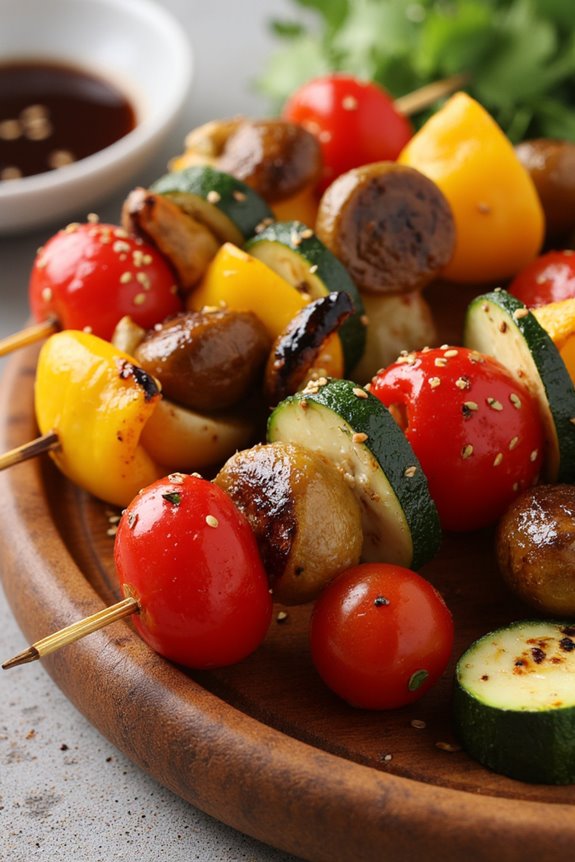
Grilled vegetable skewers are a vibrant and healthy dish that celebrates the rich flavors of Korean cuisine while being completely vegetarian. These skewers are perfect for a summer barbecue or a quick weeknight dinner. The combination of fresh vegetables marinated in a savory soy sauce mixture creates a delightful umami flavor that will satisfy both vegetarians and meat-lovers alike.
The grilling process caramelizes the vegetables, enhancing their sweetness and adding a smoky depth that makes every bite irresistible.
To create these delicious grilled vegetable skewers, you can choose a variety of vegetables based on your preferences and what you have on hand. Bell peppers, zucchini, mushrooms, and cherry tomatoes are popular choices, but feel free to experiment with other seasonal vegetables. The key to a successful dish is the marinade, which not only adds flavor but also helps to tenderize the vegetables.
Serve these skewers with a side of rice or enjoy them as a starter at your next gathering.
Ingredients (Serves 4-6):
- 1 red bell pepper, cut into chunks
- 1 yellow bell pepper, cut into chunks
- 1 zucchini, sliced into thick rounds
- 1 cup cherry tomatoes
- 1 cup mushrooms, cleaned and stems removed
- 1/4 cup soy sauce
- 2 tablespoons sesame oil
- 2 tablespoons honey or maple syrup
- 2 cloves garlic, minced
- 1 teaspoon fresh ginger, grated
- 1 teaspoon black pepper
- 1 tablespoon sesame seeds (optional)
- Skewers (wooden or metal)
Cooking Instructions:
- Prepare the Skewers: If using wooden skewers, soak them in water for at least 30 minutes to prevent burning on the grill. If using metal skewers, you can skip this step.
- Make the Marinade: In a mixing bowl, combine the soy sauce, sesame oil, honey (or maple syrup), minced garlic, grated ginger, and black pepper. Whisk the ingredients together until well blended.
- Marinate the Vegetables: Add the chopped bell peppers, zucchini, cherry tomatoes, and mushrooms to the marinade. Toss the vegetables gently to guarantee they’re all coated evenly. Let them marinate for at least 30 minutes for the best flavor, or up to 2 hours in the refrigerator.
- Assemble the Skewers: After marinating, take the vegetables out and thread them onto the skewers. Alternate the vegetables for a colorful presentation, and make sure not to overcrowd the skewers for even cooking.
- Preheat the Grill: Preheat your grill to medium-high heat. If using a grill pan on the stove, heat the pan over medium heat and lightly oil it to prevent sticking.
- Grill the Skewers: Place the vegetable skewers on the grill and cook for about 8-10 minutes, turning occasionally, until the vegetables are tender and have nice grill marks. Be careful not to overcook them; you want them to be slightly crisp.
- Serve: Once grilled, remove the skewers from the heat and sprinkle with sesame seeds if desired. Serve hot, either on their own or alongside rice or a dipping sauce.
Extra Tips:
For added flavor, consider adding some chili flakes or a splash of rice vinegar to the marinade for a bit of heat and acidity.
You can also customize the skewers by adding different vegetables such as eggplant or asparagus, or even tofu for an extra protein boost. Make sure to keep an eye on the skewers while grilling to prevent burning, and enjoy these delightful grilled vegetable skewers at room temperature or straight off the grill for the best experience!
Korean Corn Salad
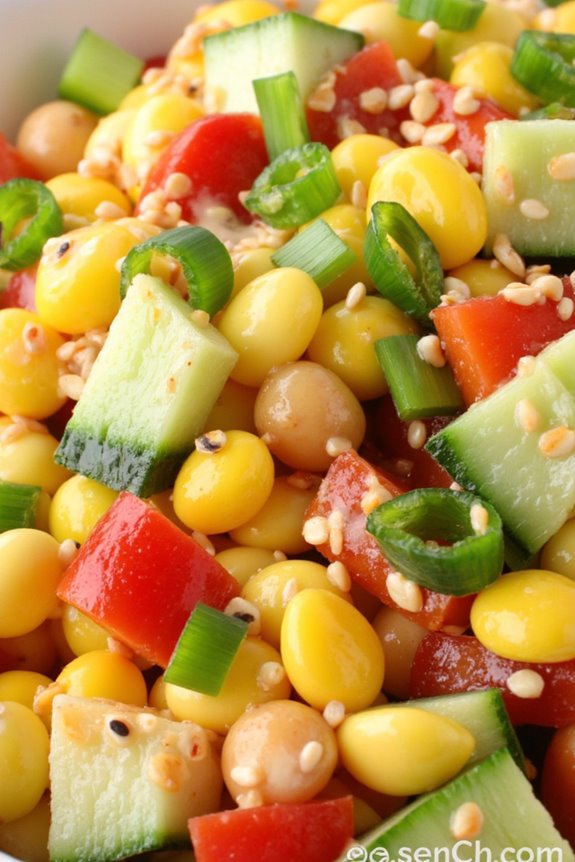
Korean Corn Salad is a delightful and revitalizing dish that combines the sweetness of corn with a medley of colorful vegetables and a tangy dressing. This vibrant salad isn’t only easy to prepare but also serves as a perfect appetizer or side dish for any meal.
The combination of flavors and textures makes it a crowd favorite, especially during the warm months when corn is in season. This salad is versatile and can be customized according to personal preferences. You can add ingredients like diced cucumbers, bell peppers, or even some spicy kimchi for an extra kick.
The key to a great Korean Corn Salad is balancing the sweet corn with the savory and tangy elements of the dressing. This recipe serves 4-6 people, making it an ideal dish for sharing at gatherings or family dinners.
Ingredients:
- 2 cups of canned or frozen corn (thawed if frozen)
- 1 medium-sized cucumber, diced
- 1 medium-sized red bell pepper, diced
- 3 green onions, chopped
- 1/4 cup of mayonnaise (can use vegan mayo for a plant-based version)
- 2 tablespoons of Korean gochujang (red chili paste)
- 1 tablespoon of soy sauce
- 1 tablespoon of sesame oil
- 1 tablespoon of rice vinegar
- Salt and pepper to taste
- Sesame seeds (for garnish)
Cooking Instructions:
- Prepare the Corn: If using canned corn, drain and rinse it under cold water to remove excess salt. If using frozen corn, cook it in boiling water for about 2-3 minutes until tender, then drain and cool. This will enhance the sweetness and texture of the corn.
- Chop the Vegetables: Dice the cucumber and red bell pepper into small, uniform pieces. This guarantees that every bite of the salad has a balanced mix of flavors. Also, chop the green onions, using both the white and green parts for added flavor and color.
- Make the Dressing: In a medium-sized bowl, combine mayonnaise, gochujang, soy sauce, sesame oil, and rice vinegar. Whisk together until smooth and well combined. Adjust the spice level by adding more gochujang if desired.
- Combine Ingredients: In a large mixing bowl, add the prepared corn, diced cucumber, diced red bell pepper, and chopped green onions. Pour the dressing over the salad ingredients and gently toss everything together until all the vegetables are evenly coated.
- Season and Garnish: Taste the salad and add salt and pepper to your liking. Transfer the salad to a serving dish and sprinkle sesame seeds on top for garnish. This adds a delightful crunch and enhances the visual appeal of the dish.
- Chill and Serve: Let the salad sit in the refrigerator for at least 30 minutes before serving. This allows the flavors to meld together beautifully. Serve chilled or at room temperature as a revitalizing side dish.
Extra Tips:
For an extra layer of flavor, consider adding some chopped cilantro or parsley for freshness. If you enjoy a little heat, you can incorporate diced jalapeños or sprinkle some red pepper flakes on top.
This salad can also be made ahead of time; just keep it covered in the refrigerator. The longer it sits, the more the flavors will develop, making it an excellent choice for meal prep or potlucks!
Kimchi Quesadillas With Avocado
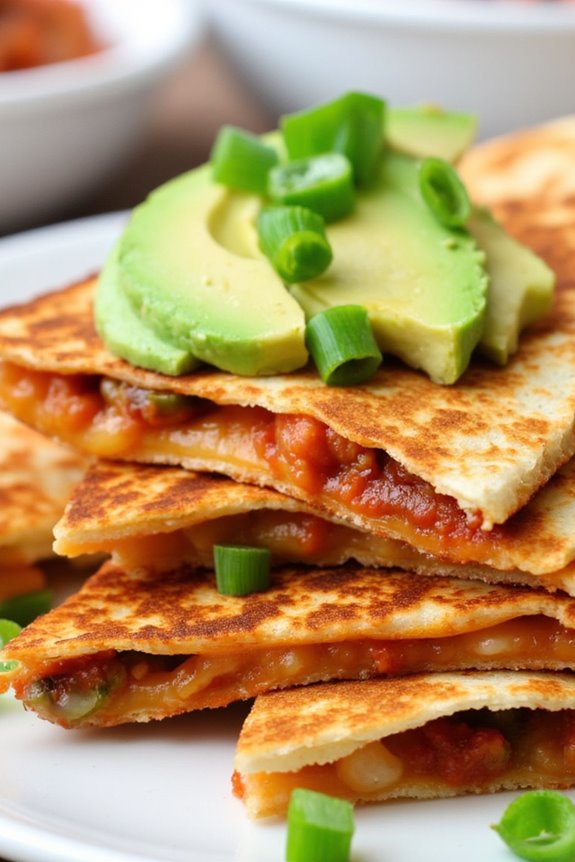
Kimchi quesadillas are a delightful fusion of Korean and Mexican cuisines, perfect for those looking to satisfy their cravings for something savory and unique. The spicy, tangy flavor of the kimchi complements the gooey, melted cheese, while the addition of fresh avocado adds a creamy texture that balances the heat.
This recipe isn’t only easy to prepare but also allows you to incorporate a variety of vegetables based on your preferences, making it a versatile dish for any occasion.
Serving 4-6 people, these quesadillas can be enjoyed as a main dish or a hearty appetizer. They’re perfect for gatherings, game nights, or simply when you want a quick meal that’s both satisfying and packed with flavor. Pair them with a side of salsa or a revitalizing dipping sauce for an extra burst of taste!
Ingredients:
- 2 cups kimchi, chopped
- 1 cup shredded mozzarella cheese
- 1 cup shredded cheddar cheese
- 4 large flour tortillas
- 1 avocado, sliced
- 2 tablespoons olive oil
- 1 tablespoon sesame oil
- 1 green onion, chopped (for garnish)
- Salt and pepper to taste
Cooking Instructions:
- Prepare the Kimchi Filling: In a mixing bowl, combine the chopped kimchi with shredded mozzarella and cheddar cheeses. Mix well until the ingredients are evenly distributed. This filling will provide a spicy and cheesy base for your quesadillas.
- Heat the Pan: In a large skillet, heat 1 tablespoon of olive oil and 1 tablespoon of sesame oil over medium heat. The combination of oils adds a rich flavor and helps prevent the quesadillas from sticking to the pan.
- Assemble the Quesadillas: Place one flour tortilla in the heated skillet. Spread half of the kimchi and cheese mixture evenly over the tortilla. Top with another tortilla, pressing down gently to help it adhere. This layering will guarantee that the quesadilla holds together during cooking.
- Cook the Quesadilla: Cook the quesadilla for about 3-4 minutes on one side until it’s golden brown and crispy. Flip the quesadilla carefully using a spatula and cook the other side for an additional 3-4 minutes. The cheese should be melted, and the tortillas should be evenly browned.
- Slice and Serve: Once cooked, remove the quesadilla from the skillet and let it cool for a minute before slicing it into wedges. Arrange the wedges on a serving platter and top with fresh avocado slices. Garnish with chopped green onions for a pop of color and flavor.
- Repeat for Remaining Quesadillas: Repeat the process with the remaining tortillas and filling, adding more oil to the skillet as needed.
Extra Tips:
For an added touch, consider mixing in other vegetables such as bell peppers, spinach, or mushrooms into the kimchi and cheese filling for extra nutrition and flavor.
You can also adjust the amount of kimchi based on your preferred spice level. Additionally, serving the quesadillas with a side of Korean-style dipping sauce or a simple soy sauce can enhance the overall experience, making it a delightful twist on traditional quesadillas.
Enjoy your culinary adventure!
