

Looking to add some excitement to your low-carb meal plan?
I’ve got the perfect collection of zesty Korean recipes that will keep things light and delightful.
From spicy chicken lettuce wraps to savory cauliflower fried rice, these dishes are both satisfying and guilt-free.
Get ready to explore bold flavors that will elevate your dining experience.
Let’s discover these 10 flavorful recipes together!
Spicy Korean Chicken Lettuce Wraps
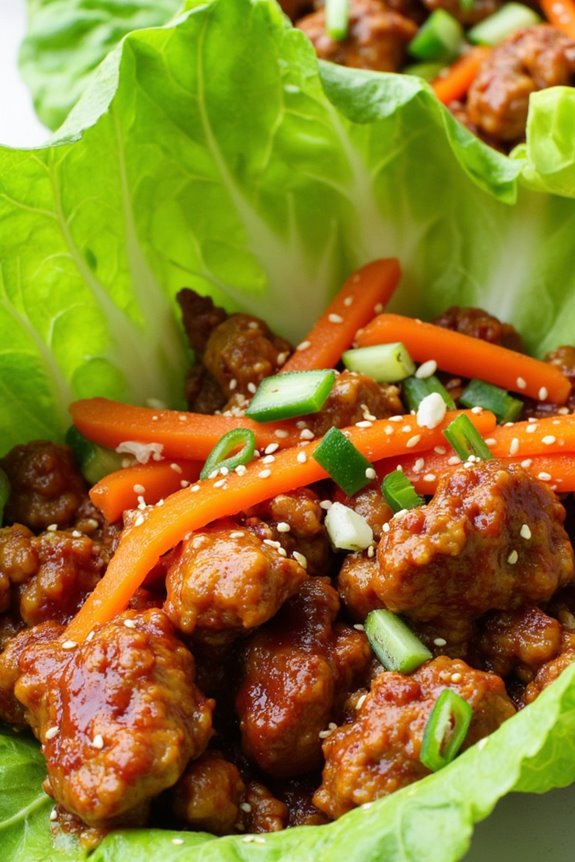
Spicy Korean Chicken Lettuce Wraps are a delicious and healthy option for those looking to enjoy the vibrant flavors of Korean cuisine while keeping their carbohydrate intake low. This dish features tender chicken marinated in a spicy, savory sauce, paired with crisp lettuce leaves to create invigorating wraps. They aren’t only satisfying but also perfect for a light lunch or dinner, allowing you to indulge in bold flavors without the guilt of high-carb ingredients.
These wraps are incredibly versatile, allowing you to customize the fillings and toppings according to your preferences. You can add vegetables like shredded carrots, cucumbers, or bell peppers for added crunch and nutrition. Additionally, the spicy sauce can be adjusted to suit your taste, whether you prefer mild heat or a fiery kick. Serving them with a side of pickled vegetables can elevate the experience even further, making these wraps a delightful addition to any meal plan.
Ingredients (Serves 4-6)
- 1 lb ground chicken
- 2 tablespoons soy sauce (or tamari for gluten-free)
- 1 tablespoon sesame oil
- 1 tablespoon gochujang (Korean chili paste)
- 1 tablespoon honey or sugar substitute
- 3 cloves garlic, minced
- 1 teaspoon fresh ginger, grated
- 1 tablespoon rice vinegar
- 1 tablespoon green onions, chopped
- 1 head of butter or romaine lettuce (for wraps)
- Optional toppings: shredded carrots, sliced cucumbers, sesame seeds
Cooking Instructions
- Prepare the Marinade: In a large bowl, combine the soy sauce, sesame oil, gochujang, honey (or sugar substitute), minced garlic, grated ginger, and rice vinegar. Whisk the ingredients together until well mixed. This marinade will infuse the chicken with a rich flavor profile, balancing sweetness and heat.
- Cook the Chicken: In a large skillet over medium heat, add the ground chicken. Cook the chicken for about 5-7 minutes, breaking it apart with a spatula until it’s fully cooked and browned. This step guarantees the chicken is tender and allows it to absorb the flavors from the marinade.
- Add the Marinade: Once the chicken is cooked through, pour the marinade over the chicken in the skillet. Stir well to confirm that all of the chicken is coated in the sauce. Allow it to simmer for an additional 3-5 minutes, letting the sauce thicken slightly and cling to the chicken.
- Prepare the Lettuce Wraps: While the chicken is simmering, carefully separate the leaves of the lettuce head, washing them gently under cold water. Pat them dry with a paper towel. These leaves will serve as your wraps, so be sure to choose larger, intact leaves for better holding capacity.
- Assemble the Wraps: To serve, spoon a portion of the spicy chicken mixture into the center of each lettuce leaf. Top with chopped green onions and any additional toppings you desire, such as shredded carrots or sliced cucumbers for added crunch.
Extra Tips
When making Spicy Korean Chicken Lettuce Wraps, feel free to adjust the level of spiciness according to your liking by adding more or less gochujang. For an even healthier version, consider adding sautéed mushrooms or bell peppers into the chicken mixture for extra flavor and nutrients.
These wraps are best enjoyed fresh, but any leftovers can be stored in an airtight container in the refrigerator for up to two days. Just reheat the chicken filling before serving it again in fresh lettuce leaves.
Low Carb Bibimbap With Cauliflower Rice
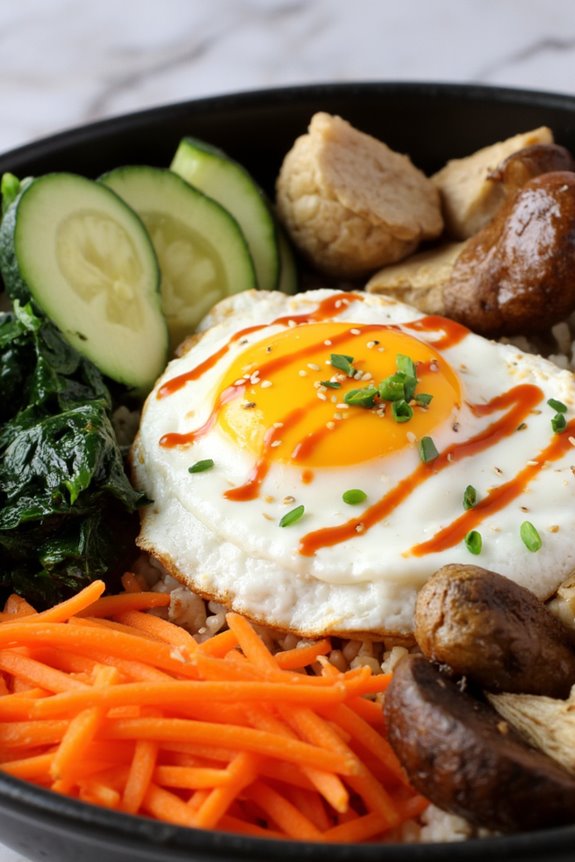
Bibimbap is a vibrant and wholesome Korean dish that tantalizes the palate with its mix of flavors and textures. Traditionally made with rice and an assortment of vegetables, proteins, and a spicy sauce, this low-carb version substitutes cauliflower rice, making it a perfect option for those following a low-carb diet. The result is a colorful bowl that isn’t only visually appealing but also packed with nutrients, making it a delightful meal for all occasions.
To enhance the experience, this dish can be customized with your choice of protein, whether it’s marinated beef, grilled chicken, or even sautéed tofu for a vegetarian option. The key to achieving an authentic taste lies in the quality of the gochujang (Korean chili paste) and the fresh vegetables used. With this low-carb bibimbap recipe, you’ll enjoy a satisfying and guilt-free meal that retains the essence of traditional Korean cuisine.
Ingredients (Serves 4-6):
- 1 medium head of cauliflower, riced
- 1 cup of spinach, blanched
- 1 cup of carrots, julienned
- 1 cup of zucchini, julienned
- 1 cup of mushrooms, sliced
- 1 cup of bean sprouts
- 1 pound of protein (beef, chicken, or tofu)
- 2 tablespoons of soy sauce (or tamari for gluten-free)
- 2 tablespoons of sesame oil
- 3 tablespoons of gochujang (Korean chili paste)
- 2 teaspoons of sesame seeds
- 4 eggs
- Salt and pepper to taste
- Green onions, chopped (for garnish)
Cooking Instructions:
- Prepare the Cauliflower Rice: Start by ricing the cauliflower. Remove the leaves and stem, then cut it into florets. Using a food processor, pulse the florets until they resemble rice grains. Alternatively, you can grate the cauliflower using a box grater. Set aside.
- Cook the Protein: If using beef or chicken, slice it into thin strips. In a skillet over medium-high heat, add 1 tablespoon of sesame oil. Once hot, add the protein and cook until browned and cooked through, about 5-7 minutes. Season with soy sauce, salt, and pepper to taste. If using tofu, press it to remove excess moisture, cube it, and sauté it in the same manner until golden. Remove from heat and set aside.
- Sauté the Vegetables: In the same skillet, add the remaining tablespoon of sesame oil. Add the carrots, zucchini, and mushrooms, and sauté for about 3-4 minutes until they’re tender but still crisp. Add the blanched spinach and bean sprouts, cooking for another 2 minutes. Season with salt and pepper as needed.
- Prepare the Cauliflower Rice: In a separate pan, add a little oil and sauté the riced cauliflower over medium heat for about 5-7 minutes until tender. Season with salt and pepper to taste.
- Fry the Eggs: In a non-stick skillet, fry the eggs sunny-side up or to your desired doneness. This will add a rich flavor to the bibimbap when mixed in.
- Assemble the Bibimbap: In serving bowls, place a generous scoop of cauliflower rice as the base. Arrange the sautéed vegetables and cooked protein on top of the rice in sections to create a colorful presentation. Add a fried egg to each bowl and drizzle with gochujang and sprinkle sesame seeds on top. Garnish with chopped green onions.
Extra Tips:
For an added flavor burst, you can mix a spoonful of gochujang with a bit of sesame oil and a touch of honey (or a low-carb sweetener) to create a spicy-sweet sauce to drizzle over your bibimbap.
Additionally, feel free to include other low-carb veggies like bell peppers or radishes according to your preference. Enjoy your delicious low-carb bibimbap as a nutritious meal that satisfies without the guilt!
Korean Beef Stir-Fry With Zucchini Noodles
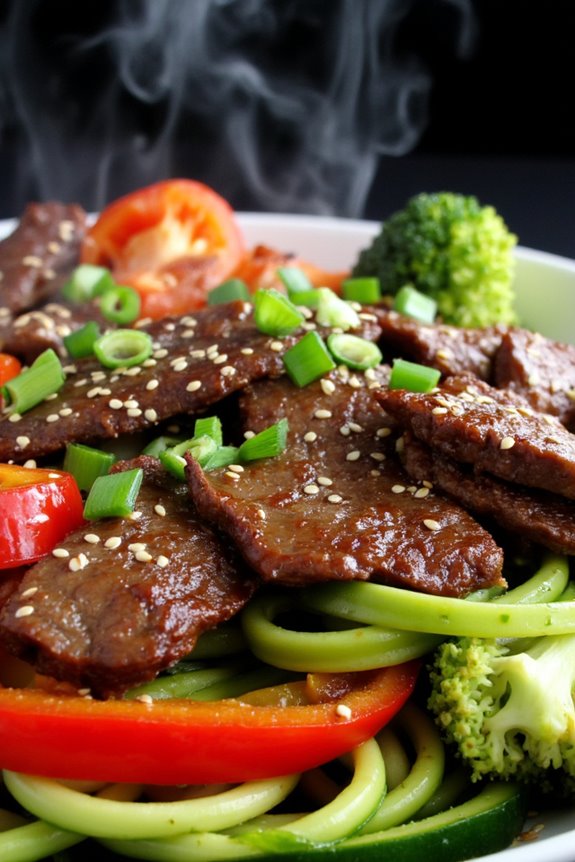
Korean Beef Stir-Fry with Zucchini Noodles is a delightful and healthy twist on a classic dish, perfect for anyone following a low-carb diet. This recipe combines tender strips of beef marinated in a savory mix of soy sauce, garlic, and ginger, all while incorporating fresh vegetables. The zucchini noodles serve as a fantastic substitute for traditional noodles, adding a vibrant color and a satisfying crunch to the meal. This dish isn’t only nutritious but also quick to prepare, making it ideal for busy weeknight dinners.
The beauty of this recipe lies in its versatility. You can easily customize the vegetables to your liking, adding bell peppers, mushrooms, or snap peas for an extra crunch and flavor. The marinade infuses the beef with a rich umami taste, ensuring that every bite is packed with flavor. Serve it hot with a sprinkle of sesame seeds and green onions for a finishing touch, and you’ll have a meal that feels indulgent without the carbs.
Ingredients (Serves 4-6):
- 1 ½ pounds flank steak, thinly sliced against the grain
- 2 medium zucchinis, spiralized into noodles
- 1 tablespoon sesame oil
- 3 tablespoons soy sauce (or tamari for gluten-free)
- 1 tablespoon rice vinegar
- 2 cloves garlic, minced
- 1 teaspoon fresh ginger, grated
- 1 tablespoon brown sugar substitute (like erythritol)
- 1 cup bell peppers, sliced (red or green)
- 1 cup broccoli florets
- 2 green onions, chopped (for garnish)
- 1 tablespoon sesame seeds (for garnish)
- Salt and black pepper to taste
Cooking Instructions:
- Prepare the Marinade: In a mixing bowl, combine the soy sauce, rice vinegar, minced garlic, grated ginger, and brown sugar substitute. Stir well until the sugar substitute is dissolved. Add the sliced flank steak to the bowl, ensuring each piece is well coated with the marinade. Cover and let it marinate for at least 30 minutes in the refrigerator, or up to 2 hours for deeper flavor.
- Spiralize the Zucchini: While the beef is marinating, wash and trim the ends of the zucchinis. Use a spiralizer to create zucchini noodles. If you don’t have a spiralizer, you can use a vegetable peeler to create thin strips. Set the zucchini noodles aside and sprinkle with a little salt to draw out excess moisture.
- Cook the Beef: Heat the sesame oil in a large skillet or wok over medium-high heat. Once the oil is hot, add the marinated beef in a single layer. Let it sear without stirring for about 2 minutes to develop a nice crust. After 2 minutes, stir-fry the beef for another 2-3 minutes until it’s cooked through and browned. Remove the beef from the skillet and set aside.
- Stir-Fry the Vegetables: In the same skillet, add the sliced bell peppers and broccoli florets. Stir-fry for about 4-5 minutes, or until the vegetables are tender-crisp. You can add a splash of water if the vegetables start to stick to the skillet.
- Combine and Serve: Return the cooked beef to the skillet with the vegetables. Add the zucchini noodles and toss everything together. Cook for an additional 2-3 minutes, just until the zucchini noodles are heated through but still al dente. Taste and adjust seasoning with salt and pepper if needed.
- Garnish and Enjoy: Serve the stir-fry hot, garnished with chopped green onions and sesame seeds. Enjoy your low-carb Korean Beef Stir-Fry with Zucchini Noodles!
Extra Tips:
When preparing this dish, be mindful of not overcooking the zucchini noodles; they can quickly become mushy. To keep them firm, add them toward the end of the stir-frying process.
Additionally, feel free to experiment with different vegetables and proteins—chicken or tofu can be great substitutes for beef. To add a bit of heat, consider including some sliced chili peppers or a dash of chili sauce in the marinade. Enjoy your culinary adventure!
Sesame Garlic Shrimp Skewers
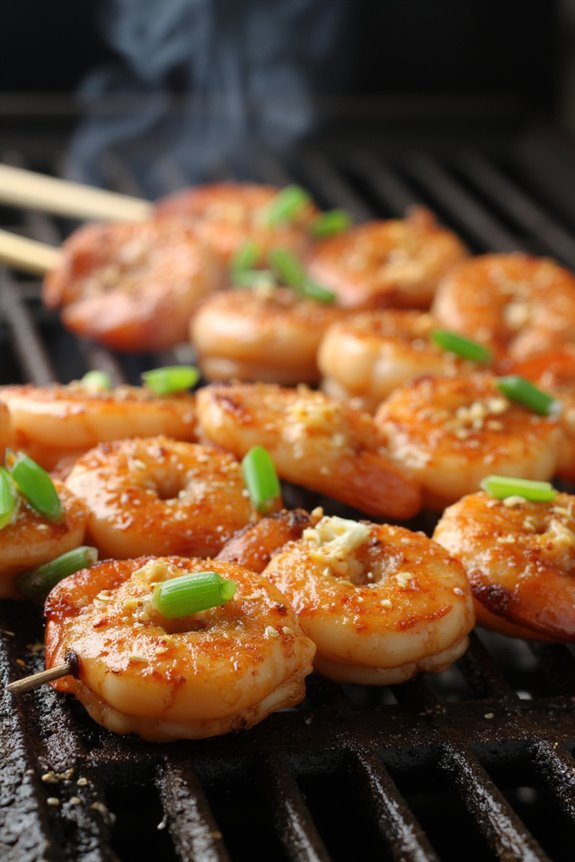
If you’re looking for a delightful low-carb dish that’s both flavorful and easy to prepare, search no further than Sesame Garlic Shrimp Skewers. This dish brings together the succulent taste of shrimp with the rich flavors of sesame and garlic, making it an ideal choice for a quick weeknight dinner or a weekend barbecue.
The skewers not only make for an appealing presentation but also allow for easy grilling, ensuring that the shrimp cook evenly while absorbing all the wonderful marinade flavors. This recipe is perfect for serving 4-6 people, making it a great option for family gatherings or small get-togethers with friends.
The combination of sesame oil, garlic, and a touch of soy sauce creates a savory marinade that elevates the shrimp, while the grilling process gives them a nice char that enhances the overall taste. Serve these skewers with a side of steamed vegetables or a fresh salad for a complete low-carb meal.
Ingredients
- 1.5 lbs large shrimp, peeled and deveined
- 1/4 cup sesame oil
- 4 cloves garlic, minced
- 3 tablespoons low-sodium soy sauce
- 2 tablespoons honey (or low-carb sweetener)
- 1 tablespoon fresh ginger, grated
- 2 green onions, finely chopped
- 1 tablespoon sesame seeds
- Salt and pepper to taste
- Skewers (wooden or metal)
Cooking Instructions
- Prepare the Marinade: In a mixing bowl, combine the sesame oil, minced garlic, soy sauce, honey (or low-carb sweetener), grated ginger, and a pinch of salt and pepper. Whisk the ingredients together until well blended. This marinade will infuse the shrimp with great flavor.
- Marinate the Shrimp: Add the peeled and deveined shrimp to the marinade, making sure they’re thoroughly coated. Cover the bowl with plastic wrap and let it marinate in the refrigerator for at least 30 minutes. This will allow the shrimp to absorb all the delicious flavors from the marinade.
- Preheat the Grill: While the shrimp is marinating, preheat your grill to medium-high heat. If you’re using wooden skewers, make sure to soak them in water for about 30 minutes beforehand to prevent burning on the grill.
- Assemble the Skewers: After the shrimp has marinated, remove them from the bowl. Thread the shrimp onto the skewers, leaving a little space between each shrimp for even cooking. Optionally, you can add pieces of bell pepper or onion between the shrimp for added flavor and color.
- Grill the Skewers: Place the skewers on the preheated grill. Cook for about 2-3 minutes per side, until the shrimp turn pink and opaque. Be careful not to overcook them, as shrimp can become rubbery if left on the heat too long.
- Garnish and Serve: Once cooked, remove the skewers from the grill and sprinkle with chopped green onions and sesame seeds for garnish. Serve hot, either on their own or with your favorite dipping sauce.
Extra Tips
For an added layer of flavor, consider adding a splash of lime juice to the marinade or serving the skewers with a side of low-carb dipping sauce such as a spicy mayo or a simple soy sauce blend.
Additionally, if you’re short on time, using pre-cooked shrimp will cut down on marinating and grilling time, though fresh shrimp will always yield the best taste and texture. Enjoy your delicious Sesame Garlic Shrimp Skewers!
Kimchi Cauliflower Fried Rice
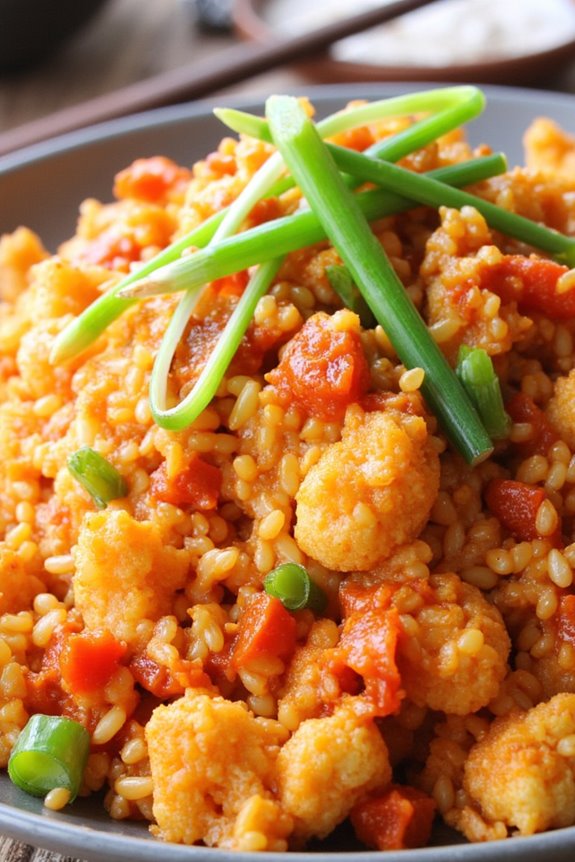
Kimchi Cauliflower Fried Rice is a delightful twist on the traditional Korean dish, offering a low-carb alternative that’s both flavorful and satisfying. This recipe harnesses the tangy taste of kimchi combined with the texture of cauliflower rice, which serves as a perfect base for the dish. Not only does it provide a delicious meal, but it also packs a nutritional punch, making it a great choice for those following a low-carb lifestyle.
This dish is incredibly versatile and can be customized based on your preferences or what you have on hand. Feel free to add proteins like chicken, shrimp, or tofu to make it a more substantial meal. The vibrant colors and bold flavors will surely please your taste buds, and it also makes for great leftovers that can be enjoyed the next day. Let’s plunge into making this scrumptious Kimchi Cauliflower Fried Rice!
Ingredients (Serves 4-6):
- 1 medium head of cauliflower, riced (about 4 cups)
- 1 cup kimchi, chopped
- 2 tablespoons sesame oil
- 2 green onions, sliced
- 2 cloves garlic, minced
- 1 tablespoon ginger, minced
- 2 large eggs, lightly beaten
- 1 tablespoon soy sauce or tamari (for gluten-free)
- Salt and pepper, to taste
- Optional: sesame seeds for garnish
- Optional: protein of choice (chicken, shrimp, or tofu)
Cooking Instructions:
- Prepare the Cauliflower Rice: Start by removing the leaves and stem from the cauliflower. Cut it into florets and place them in a food processor. Pulse until the cauliflower resembles rice grains. If you don’t have a food processor, you can also grate the cauliflower using a box grater.
- Sauté Aromatics: In a large skillet or wok, heat the sesame oil over medium heat. Add the minced garlic and ginger, stirring frequently for about 1 minute until fragrant. Be careful not to let them burn, as this can alter the flavor of the dish.
- Add Kimchi and Cauliflower Rice: Once the aromatics are ready, add the chopped kimchi to the skillet. Stir for about 2 minutes to allow the flavors to meld. Next, add the riced cauliflower, mixing well to incorporate everything. Cook for about 5-7 minutes, stirring occasionally until the cauliflower is tender but not mushy.
- Incorporate Eggs: Push the cauliflower mixture to one side of the skillet and pour the beaten eggs into the empty side. Scramble the eggs until fully cooked, which should take about 2-3 minutes. Once cooked, mix the scrambled eggs into the cauliflower rice mixture.
- Season and Serve: Add the soy sauce or tamari, and season with salt and pepper to taste. If you’re using any additional protein, this is the time to incorporate it, making sure it’s heated through. Stir everything together for another couple of minutes until well mixed. Serve hot, garnished with sliced green onions and sesame seeds if desired.
Extra Tips: When making Kimchi Cauliflower Fried Rice, make certain that your cauliflower rice is dry to prevent a soggy dish. If using frozen cauliflower rice, thaw it and squeeze out excess moisture before cooking.
Additionally, the type of kimchi you use can greatly influence the flavor; try to select a kimchi that you enjoy eating on its own for the best results. Enjoy this dish as a main course or a side, and don’t hesitate to experiment with different vegetables or proteins to suit your taste!
Gochujang Marinated Grilled Tofu
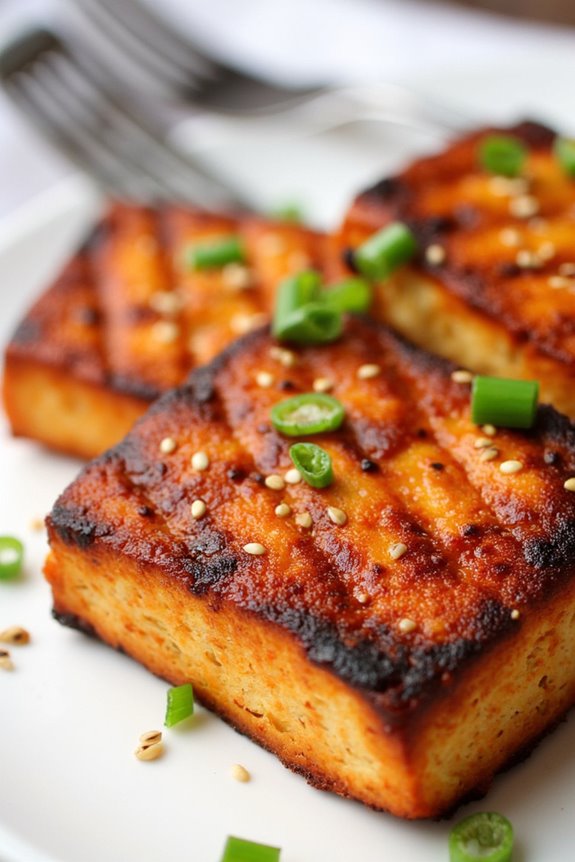
Gochujang Marinated Grilled Tofu is a deliciously spicy and savory dish that brings the flavors of Korean cuisine into a low-carb lifestyle. Tofu, known for its versatility, absorbs the bold flavors of the gochujang sauce, creating a satisfying and healthy meal. This recipe isn’t only simple to prepare but also perfect for those seeking a plant-based protein option that’s both filling and low in carbohydrates.
Serve it with a side of fresh vegetables or a light salad for a complete meal that’s sure to please everyone at the table.
The marinating process is vital for infusing the tofu with the rich flavors of gochujang, a fermented Korean chili paste that adds a delightful depth and heat to the dish. By grilling the tofu, you achieve a crispy exterior while keeping the inside tender and flavorful. This dish can be enjoyed on its own or used as a protein addition to salads, wraps, or rice bowls, making it a versatile option for meal prep or quick dinners.
Ingredients (serves 4-6):
- 1 block (14 oz) firm tofu, drained and pressed
- 3 tablespoons gochujang
- 2 tablespoons soy sauce (or tamari for gluten-free)
- 1 tablespoon sesame oil
- 1 tablespoon honey or sugar substitute (for low-carb)
- 1 tablespoon rice vinegar
- 2 cloves garlic, minced
- 1 teaspoon grated ginger
- 2 green onions, chopped (for garnish)
- Sesame seeds (for garnish)
Cooking Instructions:
- Prepare the Tofu: Start by draining the tofu and pressing it to remove excess moisture. Wrap the tofu block in a clean kitchen towel and place a heavy object on top for about 15-20 minutes. This step is necessary as it allows the tofu to absorb the marinade better.
- Make the Marinade: In a medium bowl, combine gochujang, soy sauce, sesame oil, honey (or sugar substitute), rice vinegar, minced garlic, and grated ginger. Whisk the ingredients together until well blended to form a smooth marinade.
- Marinate the Tofu: Once the tofu is pressed and the marinade is ready, cut the tofu into slices or cubes, depending on your preference. Place the tofu pieces in a shallow dish and pour the marinade over them. Make sure all sides are coated well. Cover and refrigerate for at least 30 minutes, or up to 2 hours for more intense flavor.
- Preheat the Grill: While the tofu is marinating, preheat your grill or grill pan over medium-high heat. If using a grill, oil the grates lightly to prevent sticking.
- Grill the Tofu: After marinating, carefully place the tofu pieces on the preheated grill. Cook for about 4-5 minutes on each side, or until grill marks appear and the tofu is heated through. Be gentle when flipping to avoid breaking the slices.
- Garnish and Serve: Once grilled, remove the tofu from the grill and place it on a serving platter. Sprinkle with chopped green onions and sesame seeds for garnish. Serve immediately while hot.
Extra Tips:
For an extra layer of flavor, consider adding a splash of lime juice or a sprinkle of crushed red pepper flakes to the marinade for additional heat.
If you prefer a smoky flavor, try grilling the tofu over charcoal rather than gas. Additionally, marinated tofu can be stored in the refrigerator for up to 3 days, making it an excellent option for meal prep.
Enjoy your Gochujang Marinated Grilled Tofu in various ways, whether in a wrap, salad, or on its own!
Korean-Style Cabbage Salad
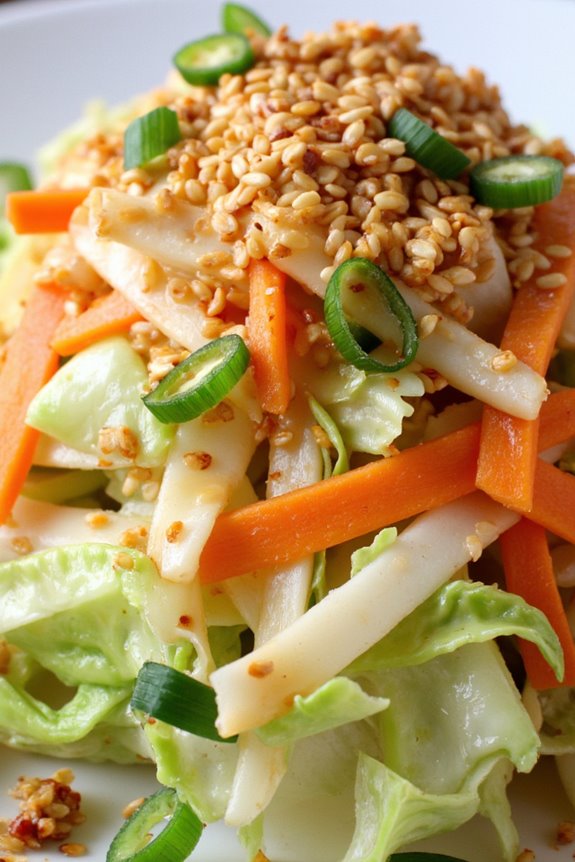
Korean-Style Cabbage Salad is a revitalizing and vibrant dish that perfectly complements any meal, especially for those following a low-carb diet. This salad isn’t only easy to prepare but also packed with flavors that are characteristic of Korean cuisine, thanks to the incorporation of ingredients like sesame oil, soy sauce, and a hint of spice.
The crunchy texture of the cabbage, combined with the tangy and savory dressing, makes it a delightful addition to your table. This salad is a versatile side dish that can be served with grilled meats, stir-fries, or enjoyed on its own as a light lunch. It’s a great way to incorporate more vegetables into your diet while keeping the carbohydrate count low.
With its simple preparation and delicious taste, Korean-Style Cabbage Salad will surely become a favorite among both low-carb enthusiasts and those who love Korean flavors.
Ingredients (Serves 4-6)
- 1 small head of Napa cabbage, shredded
- 1 medium carrot, julienned
- 4 green onions, chopped
- 1/4 cup sesame oil
- 2 tablespoons soy sauce (or tamari for gluten-free)
- 1 tablespoon rice vinegar
- 1 teaspoon chili flakes (adjust to taste)
- 1 tablespoon sesame seeds, toasted
- Salt to taste
Cooking Instructions
1. Prepare the Vegetables: Start by washing the Napa cabbage thoroughly under cold water. Remove the outer leaves if they’re wilted or damaged. Shred the cabbage into bite-sized pieces and place it in a large mixing bowl.
Peel and julienne the carrot, then add it to the bowl along with the chopped green onions.
2. Make the Dressing: In a separate small bowl, combine the sesame oil, soy sauce, rice vinegar, and chili flakes. Whisk the mixture together until well combined.
The dressing should have a balance of savory, tangy, and spicy flavors, so feel free to adjust the ingredients according to your preference.
3. Combine the Salad: Drizzle the dressing over the shredded cabbage, carrot, and green onions in the mixing bowl. Use a large spoon or salad tongs to gently toss the ingredients together, ensuring that the vegetables are evenly coated with the dressing.
4. Season and Serve: Taste the salad and add salt as needed to enhance the flavors. Once seasoned, sprinkle the toasted sesame seeds over the top for added crunch and flavor.
Give the salad one final toss before serving.
5. Chill (Optional): For the best flavor, let the salad sit for about 15-30 minutes at room temperature or in the refrigerator before serving.
This allows the flavors to meld together beautifully.
Extra Tips
When preparing Korean-Style Cabbage Salad, it’s essential to use fresh ingredients for the best taste and texture. You can also customize this salad by adding other low-carb vegetables like bell peppers or cucumbers, or by incorporating protein such as grilled chicken or tofu for a more filling meal.
If you prefer a sweeter dressing, a small amount of low-carb sweetener can be added to balance the flavors. Enjoy experimenting with this revitalizing salad!
Spicy Pork Belly With Roasted Vegetables
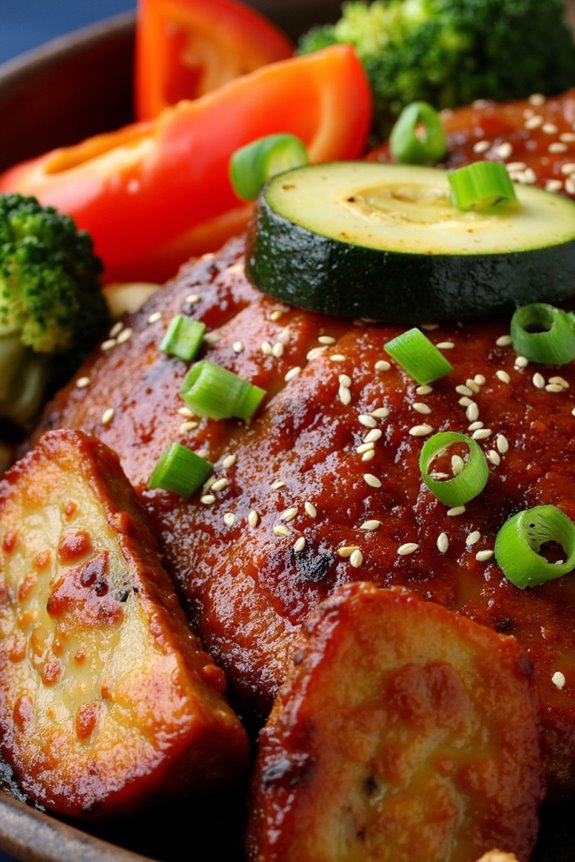
Spicy Pork Belly with Roasted Vegetables is a delightful dish that combines rich flavors and wholesome ingredients, perfect for anyone following a low-carb diet. The tender, juicy pork belly is marinated in a spicy Korean sauce, which enhances its natural flavors, while the roasted vegetables add a satisfying crunch and a burst of nutrition. This dish not only satisfies your cravings but also aligns with healthy eating practices, making it an excellent choice for family dinners or meal prep.
The key to achieving the best results lies in the marinade. Allowing the pork belly to soak up the spices for a few hours or ideally overnight will infuse it with flavor, making each bite a delicious experience. The roasted vegetables complement the pork belly perfectly, creating a colorful and appetizing plate that’s sure to impress.
Let’s plunge into the ingredients and cooking instructions to create this flavorful dish for a serving size of 4-6 people.
Ingredients
- 1.5 lbs pork belly, sliced into 1-inch pieces
- 3 tablespoons gochujang (Korean chili paste)
- 2 tablespoons soy sauce (or tamari for gluten-free)
- 2 tablespoons sesame oil
- 1 tablespoon rice vinegar
- 1 tablespoon honey or sugar substitute (like erythritol)
- 4 cloves garlic, minced
- 1 teaspoon ginger, minced
- 1 red bell pepper, sliced
- 1 zucchini, sliced
- 1 cup broccoli florets
- 1 tablespoon olive oil
- Salt and pepper to taste
- Sesame seeds, for garnish
- Green onions, chopped, for garnish
Cooking Instructions
- Prepare the Marinade: In a large bowl, combine gochujang, soy sauce, sesame oil, rice vinegar, honey, minced garlic, and minced ginger. Whisk together until smooth. This marinade is the heart of the dish, imparting a spicy and slightly sweet flavor to the pork belly.
- Marinate the Pork Belly: Add the sliced pork belly to the marinade, making sure each piece is well coated. Cover the bowl and refrigerate for at least 1 hour, or ideally overnight. This step allows the flavors to penetrate the meat, making it more flavorful and tender.
- Preheat the Oven: Preheat your oven to 400°F (200°C). A hot oven is essential for roasting the vegetables and achieving a crispy texture on the pork belly.
- Prepare the Vegetables: In a separate bowl, toss the sliced red bell pepper, zucchini, and broccoli florets with olive oil, salt, and pepper. This enhances the natural flavors of the vegetables and guarantees they roast nicely.
- Roast the Vegetables: Spread the seasoned vegetables on a baking sheet in an even layer. Place them in the preheated oven and roast for about 15-20 minutes, or until they’re tender and slightly caramelized. Keep an eye on them to confirm they don’t burn.
- Cook the Pork Belly: While the vegetables are roasting, heat a large skillet over medium-high heat. Add the marinated pork belly pieces in a single layer, cooking for about 5-7 minutes on each side, or until the edges are crispy and caramelized. Make sure to do this in batches if your skillet isn’t large enough to accommodate all the pork at once.
- Combine and Serve: Once the pork belly is cooked and crispy, add it to the baking sheet with the roasted vegetables. Toss them together to combine, and return to the oven for an additional 5 minutes. This melds the flavors and allows the pork to absorb some of the roasted vegetable essence.
- Garnish and Enjoy: Remove from the oven and transfer the spicy pork belly and roasted vegetables to a serving platter. Sprinkle with sesame seeds and chopped green onions for a fresh finish. Serve hot and enjoy your delicious low-carb meal!
Extra Tips
When preparing Spicy Pork Belly with Roasted Vegetables, consider using a lower-carb sweetener in place of honey if you’re strictly monitoring carbohydrate intake.
Additionally, feel free to experiment with different vegetables based on your preferences or what you have on hand; asparagus, carrots, or cauliflower work wonderfully as substitutes.
Finally, for a bit of extra flavor, you can add a sprinkle of chili flakes or a drizzle of sesame oil just before serving. This dish is versatile, so make it your own!
Bulgogi Beef Lettuce Cups
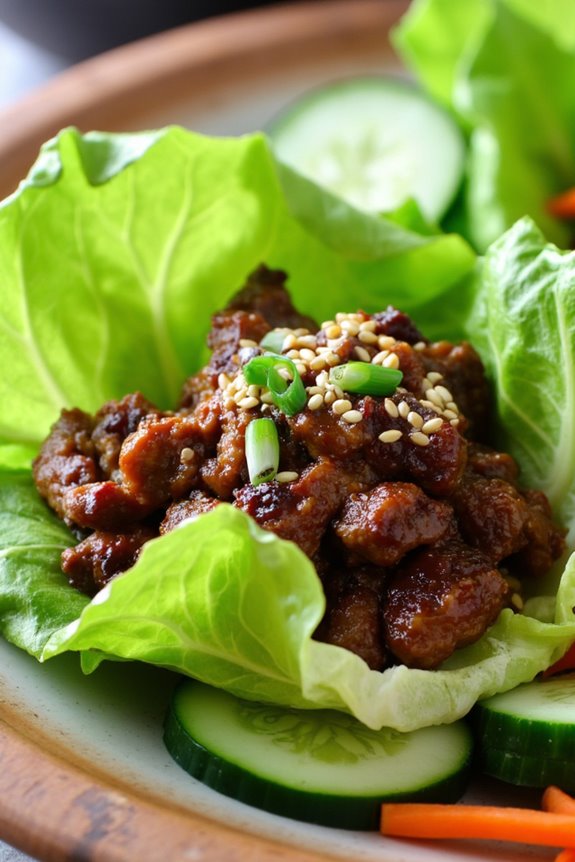
Bulgogi, a traditional Korean dish, is known for its rich flavors and tenderness, making it a popular choice for both everyday meals and special occasions. This dish features marinated beef, which is grilled or sautéed to perfection and served in crisp lettuce leaves. The combination of savory beef, fresh vegetables, and a hint of sweetness makes these Bulgogi Beef Lettuce Cups an enticing low-carb option that’s both satisfying and healthy.
Serving bulgogi in lettuce cups not only adds an invigorating crunch but also keeps the dish light and low in carbohydrates. These cups make for a fantastic appetizer or main course, allowing everyone to customize their servings with their favorite toppings. Whether you’re hosting a dinner party or enjoying a family meal, these Bulgogi Beef Lettuce Cups are sure to impress!
Ingredients (Serves 4-6)
- 1 pound thinly sliced beef sirloin or ribeye
- 1/4 cup soy sauce or coconut aminos
- 2 tablespoons brown sugar or sugar substitute (e.g., erythritol)
- 2 tablespoons sesame oil
- 3 cloves garlic, minced
- 1 teaspoon fresh ginger, grated
- 1 teaspoon black pepper
- 1 tablespoon sesame seeds
- 1 bunch green onions, chopped
- 1 head of butter or romaine lettuce, leaves separated
- Optional toppings: sliced cucumbers, shredded carrots, or kimchi
Cooking Instructions
- Marinate the Beef: In a large mixing bowl, combine the soy sauce (or coconut aminos), brown sugar (or sugar substitute), sesame oil, minced garlic, grated ginger, and black pepper. Stir until the sugar is dissolved. Add the thinly sliced beef to the marinade, ensuring each piece is well-coated. Cover and refrigerate for at least 30 minutes, or up to 2 hours for maximum flavor.
- Prepare the Grill or Pan: Heat a grill pan or skillet over medium-high heat. If using a grill, preheat it to high. Lightly coat the surface with a little oil to prevent sticking.
- Cook the Beef: Once the pan is hot, add the marinated beef in a single layer. Cook for about 3-4 minutes on each side, or until the beef is cooked through and has a nice caramelized color. You may need to do this in batches if your pan or grill isn’t large enough.
- Add Garnish: Once cooked, remove the beef from the heat and sprinkle sesame seeds and chopped green onions over the top. Toss gently to combine.
- Assemble the Lettuce Cups: To serve, take a lettuce leaf and place a generous spoonful of the bulgogi beef in the center. Add any additional toppings such as sliced cucumbers or shredded carrots, if desired.
- Serve Immediately: Enjoy the Bulgogi Beef Lettuce Cups while they’re warm, allowing everyone to customize their own cup.
Extra Tips
When making Bulgogi Beef Lettuce Cups, consider preparing the marinade the night before for even deeper flavors. If you’re short on time, a quick 30-minute marinating period will still yield delicious results.
Feel free to experiment with different toppings to suit your tastes or dietary preferences. Additionally, remember to choose fresh and crisp lettuce leaves, as they’ll provide the best texture and support for your filling.
Enjoy this vibrant and flavorful dish that’s sure to be a hit at any gathering!
Low Carb Korean BBQ Chicken Thighs
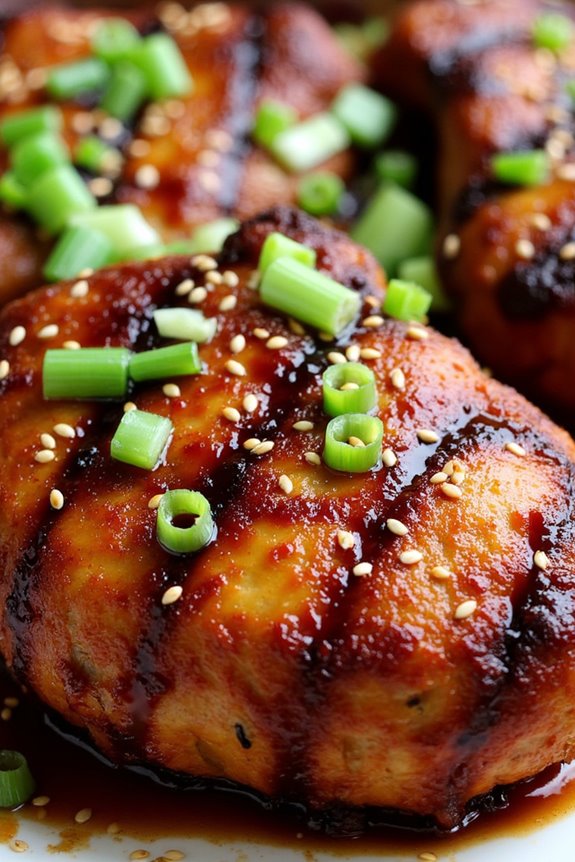
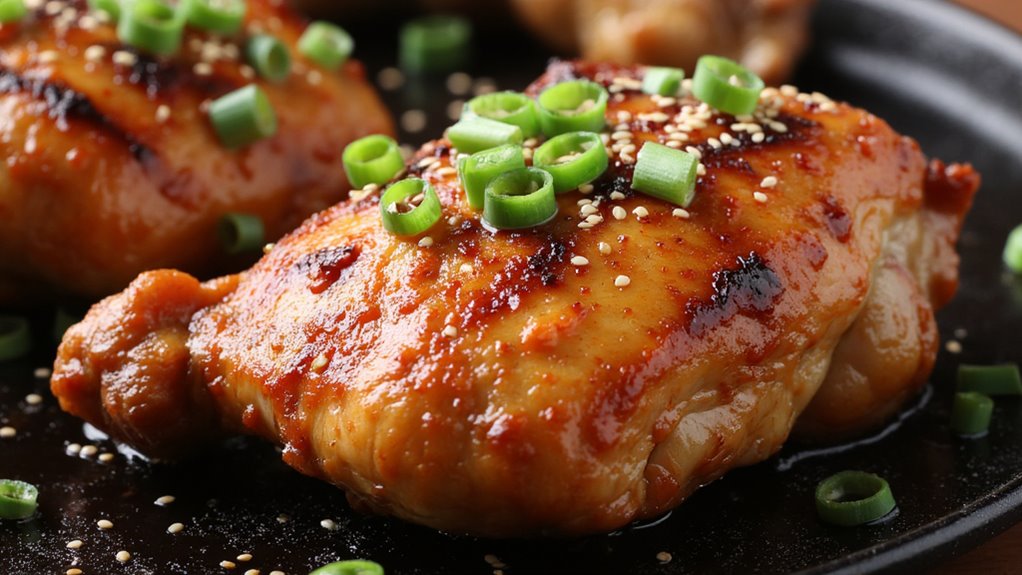
Low Carb Korean BBQ Chicken Thighs are a delicious and flavorful dish that brings the essence of Korean cuisine to your kitchen without the carbs. This recipe focuses on marinating tender chicken thighs in a savory and slightly sweet sauce, infused with traditional Korean spices. The result is a juicy, grilled chicken that’s perfect for a family dinner or a gathering with friends. Serve it hot off the grill with some low-carb vegetables for a complete meal that everyone will enjoy.
The marinade for these chicken thighs is what truly makes this dish shine. It combines the rich flavors of soy sauce, sesame oil, garlic, and ginger. These ingredients not only enhance the flavor of the chicken but also help to tenderize the meat, guaranteeing each bite is packed with deliciousness.
Whether you’re following a low-carb diet or just looking for a healthy meal option, these BBQ chicken thighs are sure to satisfy your cravings while keeping the carb count low.
Ingredients (Serves 4-6)
- 2 lbs chicken thighs, boneless and skinless
- 1/4 cup soy sauce (or tamari for gluten-free)
- 2 tablespoons sesame oil
- 3 tablespoons erythritol or another low-carb sweetener
- 4 cloves garlic, minced
- 1 tablespoon fresh ginger, minced
- 1 tablespoon rice vinegar
- 1 teaspoon red pepper flakes (optional for heat)
- 2 green onions, chopped (for garnish)
- Sesame seeds (for garnish)
Cooking Instructions
- Prepare the Marinade: In a medium bowl, whisk together the soy sauce, sesame oil, erythritol, minced garlic, minced ginger, rice vinegar, and red pepper flakes (if using). Confirm that all the ingredients are well combined to create a uniform marinade.
- Marinate the Chicken: Place the chicken thighs in a large resealable plastic bag or a shallow dish. Pour the marinade over the chicken, making sure each piece is thoroughly coated. Seal the bag or cover the dish and marinate in the refrigerator for at least 1 hour, or overnight for maximum flavor.
- Preheat the Grill: When you’re ready to cook, preheat your grill to medium-high heat. If using a grill pan, heat it over medium-high heat on the stove. Make sure the grill grates are clean and lightly oiled to prevent sticking.
- Grill the Chicken: Remove the chicken thighs from the marinade, allowing any excess marinade to drip off. Place the chicken on the grill and cook for about 6-7 minutes per side, or until the internal temperature reaches 165°F (75°C) and the chicken is nicely charred.
- Rest and Serve: Once cooked, remove the chicken from the grill and let it rest for about 5 minutes. This resting period allows the juices to redistribute, making the chicken more tender. Slice the chicken if desired and garnish with chopped green onions and sesame seeds before serving.
Extra Tips
For an even richer flavor, consider adding a tablespoon of gochujang (Korean chili paste) to the marinade for a spicy kick.
Additionally, pairing the BBQ chicken thighs with a side of sautéed low-carb vegetables, such as zucchini or bell peppers, can help create a balanced meal. If you have leftovers, they can be stored in an airtight container in the refrigerator for up to 3 days, making for a quick and tasty meal option on busy days.
