

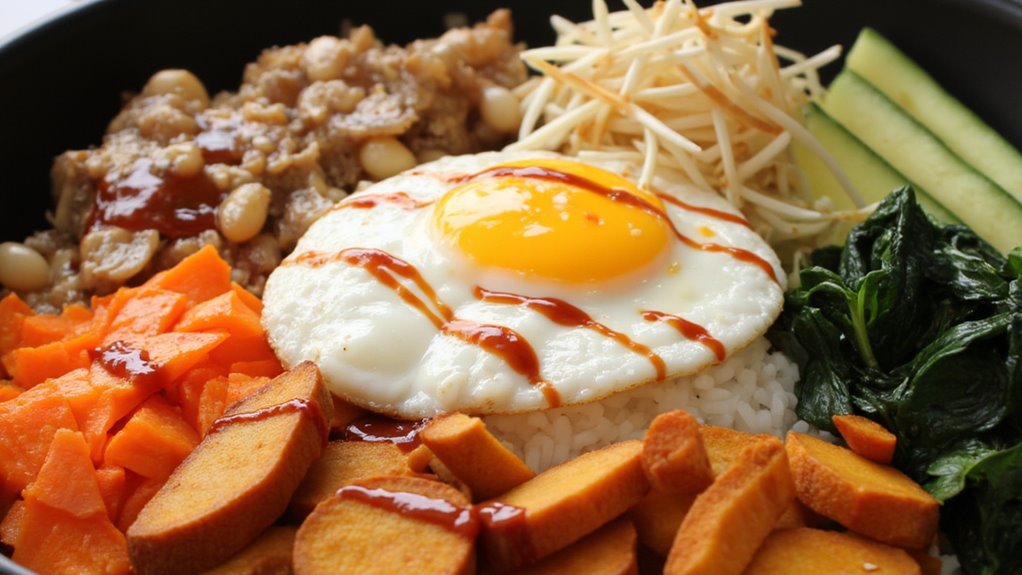
When I think of Korean cuisine, bibimbap instantly comes to mind. These beautiful bowls are a vibrant mix of flavors, colors, and textures. Each recipe, from traditional beef to spicy tofu, offers its own delightful twist on this classic dish. I love how you can easily personalize your bibimbap to match any taste. Let’s explore these 14 classic recipes and see how they can bring warmth and joy to your table.
Traditional Beef Bibimbap
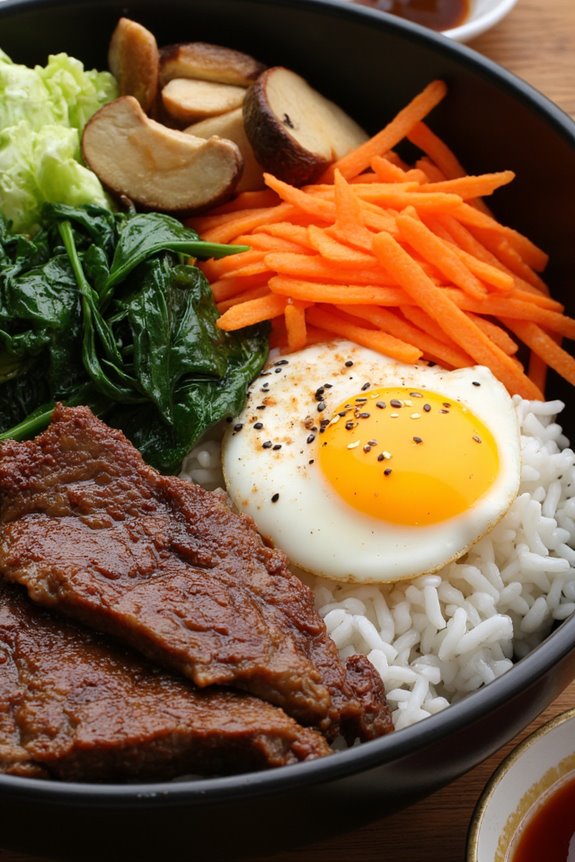
Bibimbap, a beloved Korean dish, translates to “mixed rice,” and it’s a vibrant, colorful meal that typically features a variety of vegetables, marinated beef, and a fried egg, all served over warm rice. This traditional Beef Bibimbap recipe is a celebration of flavors and textures, combining the umami of the beef with the freshness of the vegetables and the richness of the egg.
The beauty of bibimbap lies in its versatility, as you can easily customize the toppings according to your preferences or seasonal ingredients.
To prepare this delicious dish, you’ll need a selection of fresh vegetables such as spinach, carrots, and mushrooms, which are sautéed to enhance their flavors. The marinated beef is a key component, providing a savory base that pairs wonderfully with the other ingredients.
When served, each component is arranged artfully over a bowl of rice, often accompanied by a dollop of gochujang, a spicy Korean chili paste, which adds a delightful kick. Enjoy this wholesome meal with family and friends, and experience the delightful mix of flavors that makes bibimbap a true culinary gem.
Ingredients (Serves 4-6)
- 2 cups of short-grain rice
- 1 lb of ground beef
- 2 tablespoons of soy sauce
- 1 tablespoon of sesame oil
- 1 tablespoon of sugar
- 2 cloves of garlic, minced
- 2 cups of spinach, blanched
- 1 cup of carrots, julienned
- 1 cup of shiitake mushrooms, sliced
- 4-6 eggs
- 2 tablespoons of vegetable oil
- 1 tablespoon of sesame seeds
- Gochujang (to taste)
- Salt and pepper (to taste)
Cooking Instructions
1. Prepare the Rice: Rinse the short-grain rice under cold water until the water runs clear. Cook the rice according to the package instructions or in a rice cooker. Once cooked, set aside to keep warm.
2. Marinate the Beef: In a mixing bowl, combine the ground beef with soy sauce, sesame oil, sugar, minced garlic, salt, and pepper. Allow the beef to marinate for at least 30 minutes to absorb the flavors.
3. Sauté the Vegetables: In a large skillet, heat a tablespoon of vegetable oil over medium heat. Sauté the blanched spinach for about 1-2 minutes until heated through, then remove and set aside.
In the same skillet, add another tablespoon of oil and sauté the julienned carrots for about 3-4 minutes until they’re tender. Remove and set aside. Finally, add the sliced mushrooms and sauté for about 5 minutes until browned and cooked through, then set aside.
4. Cook the Beef: In the same skillet, add the marinated ground beef and cook over medium-high heat for about 5-7 minutes, stirring occasionally, until the beef is fully cooked and browned.
5. Fry the Eggs: In a separate pan, heat a little vegetable oil over medium heat. Crack the eggs into the pan and fry them sunny-side up, cooking until the whites are set but the yolks are still runny.
6. Assemble the Bibimbap: In each serving bowl, place a generous scoop of warm rice at the bottom. Arrange the sautéed spinach, carrots, mushrooms, and cooked beef on top of the rice. Finally, place a fried egg in the center of each bowl. Sprinkle sesame seeds over the top.
7. Serve: Serve the bibimbap with a side of gochujang, allowing everyone to add as much as they like for an extra kick.
Extra Tips
When making Beef Bibimbap, feel free to get creative with your vegetable choices. You can include zucchini, bean sprouts, or even kimchi for added flavor.
Additionally, cooking the vegetables quickly over high heat retains their vibrant colors and crunchy textures. If you prefer a vegetarian version, simply substitute the beef with tofu or more vegetables.
Finally, for a truly authentic experience, serve the bibimbap in a hot stone bowl (dolsot) to create a crispy rice layer at the bottom.
Spicy Tofu Bibimbap

Spicy Tofu Bibimbap is a vibrant and hearty Korean dish that beautifully combines a variety of textures and flavors. At its core, bibimbap is a mixed rice dish topped with an assortment of vegetables, protein, and a spicy sauce. This particular version elevates the dish by incorporating marinated spicy tofu, which not only adds a delightful kick but also makes it a perfect option for vegetarians or anyone looking to enjoy a plant-based meal.
The combination of fresh vegetables, perfectly cooked rice, and savory tofu creates a satisfying and nutritious bowl that’s sure to please.
Preparing Spicy Tofu Bibimbap isn’t just about the ingredients; it’s also about the presentation and the final mix. Each component is carefully arranged to create a colorful and appetizing dish, allowing diners to enjoy the beautiful medley of flavors and textures.
The key to this recipe is to guarantee that the tofu is well-marinated and cooked until it’s crispy on the outside while remaining soft on the inside. Once everything is assembled, a drizzle of gochujang (Korean chili paste) ties the dish together, making every bite a burst of flavor.
Ingredients (Serves 4-6)
- 1 cup white rice
- 1 block (14 oz) firm tofu
- 2 tablespoons soy sauce
- 1 tablespoon gochujang (Korean chili paste)
- 1 tablespoon sesame oil
- 1 tablespoon vegetable oil
- 2 cups spinach, blanched
- 1 cup carrots, julienned
- 1 cup zucchini, julienned
- 1 cup bean sprouts
- 2 eggs (optional)
- Sesame seeds, for garnish
- Green onions, chopped, for garnish
Cooking Instructions
- Prepare the Rice: Begin by cooking the white rice according to package instructions. Rinse the rice under cold water until the water runs clear, then combine with water in a rice cooker or pot, and cook until fluffy. Once done, keep it warm.
- Marinate the Tofu: While the rice cooks, drain the tofu and press it to remove excess moisture. Cut the tofu into 1-inch cubes. In a bowl, mix together soy sauce, gochujang, and sesame oil. Add the tofu cubes and gently toss to coat them in the marinade. Let it marinate for at least 15 minutes.
- Cook the Tofu: Heat vegetable oil in a non-stick pan over medium-high heat. Once hot, add the marinated tofu cubes and cook for about 8-10 minutes, turning occasionally, until they’re golden brown and crispy on all sides. Remove from heat and set aside.
- Prepare the Vegetables: In the same pan, you can sauté the julienned carrots and zucchini over medium heat for about 3-4 minutes until slightly softened but still crunchy. Add the blanched spinach and bean sprouts, and stir-fry for an additional 2-3 minutes until heated through. Season with salt to taste.
- Fry the Eggs (Optional): If using eggs, you can fry them sunny-side up in a separate skillet until the whites are set but the yolk remains runny. This adds creaminess to the dish.
- Assemble the Bibimbap: In a large serving bowl or individual bowls, place a generous scoop of the cooked rice as the base. Arrange the sautéed vegetables, crispy tofu, and fried egg (if using) artfully on top of the rice.
- Garnish and Serve: Sprinkle sesame seeds and chopped green onions over the top. Serve with additional gochujang on the side for those who prefer extra spice. Mix everything together before enjoying!
Extra Tips
When making Spicy Tofu Bibimbap, feel free to customize the vegetables based on your preferences or what you have available. Common additions include radishes, mushrooms, and bell peppers.
For added flavor, consider incorporating some pickled vegetables or kimchi on the side. Finally, don’t skip the mixing step at the end; combining all the ingredients guarantees that each bite is packed with flavor, making the dish truly delicious. Enjoy your bibimbap experience!
Seafood Bibimbap
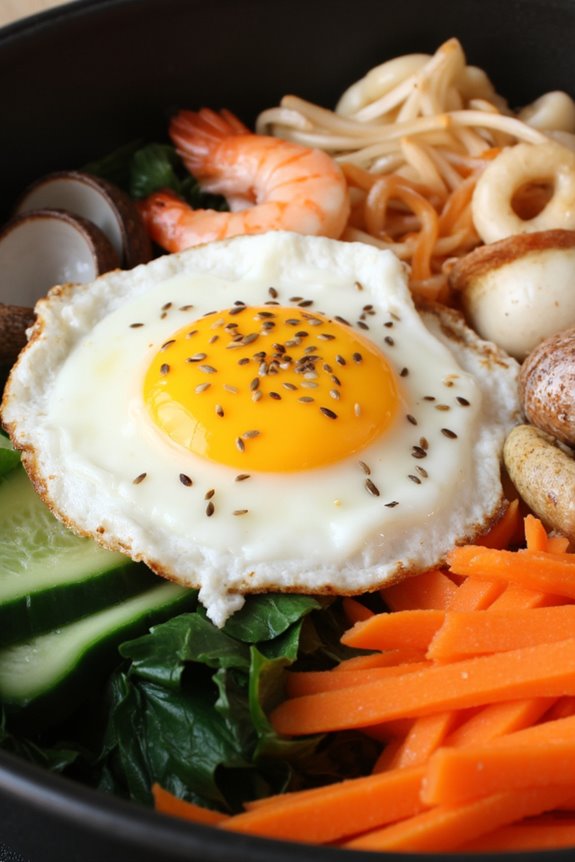
Seafood Bibimbap is a delightful variation of the traditional Korean dish that combines a colorful array of vegetables, seasoned seafood, and a perfectly cooked egg, all served over a bed of warm rice. This dish isn’t only visually appealing but also packed with flavors and textures that make it a satisfying meal for any occasion.
The seafood can vary based on personal preference, but commonly used ingredients include shrimp, squid, and clams, which add a lovely briny taste that complements the fresh vegetables.
What sets Seafood Bibimbap apart is the harmonious mix of ingredients and the vibrant sauces that are often drizzled over the top. The dish is typically served with gochujang, a fermented Korean chili paste, which adds a spicy kick, but you can adjust the amount to suit your taste. This recipe serves 4-6 people, making it perfect for family dinners or gatherings with friends.
Ingredients (Serves 4-6):
- 2 cups of cooked white rice
- 1 cup of shrimp, peeled and deveined
- 1 cup of squid, cleaned and sliced into rings
- 1 cup of clams, cleaned (optional)
- 1 cup of spinach, blanched and chopped
- 1 cup of carrots, julienned
- 1 cup of cucumber, julienned
- 1 cup of bean sprouts, blanched
- 4-6 eggs
- 3 tablespoons of gochujang (Korean chili paste)
- 2 tablespoons of sesame oil
- 2 tablespoons of vegetable oil
- 1 tablespoon of soy sauce
- 2 cloves of garlic, minced
- Sesame seeds for garnish
- Salt to taste
Cooking Instructions:
- Prepare the Vegetables: Start by preparing all the vegetables. Blanch the spinach and bean sprouts in boiling water for 1-2 minutes, then drain and rinse with cold water to stop the cooking process. Julienne the carrots and cucumber. Set all the vegetables aside.
- Cook the Seafood: In a large skillet or wok, heat 2 tablespoons of vegetable oil over medium-high heat. Add the minced garlic and sauté for about 30 seconds until fragrant. Add the shrimp, squid, and clams (if using) to the skillet, seasoning them with a pinch of salt. Stir-fry for about 3-4 minutes until the seafood is cooked through and opaque. Remove from heat and set aside.
- Fry the Eggs: In a separate pan, heat a little oil over medium heat. Crack the eggs into the pan and fry them sunny-side up or to your desired doneness. The runny yolk adds creaminess to the dish, but you can cook them harder if preferred.
- Assemble the Bibimbap: In individual bowls, place a serving of cooked rice at the bottom. Neatly arrange the cooked seafood, blanched vegetables (spinach, carrots, cucumber, and bean sprouts) on top of the rice, creating a colorful presentation.
- Add Toppings: Place a fried egg on top of each bowl. Drizzle a teaspoon of sesame oil over each bowl and add a spoonful of gochujang to taste. Sprinkle sesame seeds for garnish.
- Serve: Serve the Seafood Bibimbap immediately, encouraging diners to mix all the ingredients together before eating to enjoy the full flavor of the dish.
Extra Tips:
When preparing Seafood Bibimbap, feel free to customize it with your favorite seafood or vegetables based on availability and preference.
For an added crunch, consider including some pickled radish or adding a sprinkle of crushed seaweed on top. Additionally, if you want to reduce the spice level, you can serve the gochujang on the side so that everyone can adjust the heat according to their taste.
Enjoy your delicious and vibrant Seafood Bibimbap!
Vegetarian Bibimbap

Vegetarian Bibimbap is a colorful and healthy Korean dish that embodies the essence of harmony in cooking. This rice bowl is filled with a variety of sautéed vegetables, a savory sauce, and topped with a perfectly fried egg, making it both nutritious and satisfying. The word “bibimbap” translates to “mixed rice,” and this dish is often served in a hot stone bowl, which gives the rice a crispy texture at the bottom.
This recipe highlights the fresh flavors of seasonal vegetables and is perfect for anyone looking to enjoy a meat-free meal without compromising on taste. In addition to being visually stunning, Vegetarian Bibimbap is incredibly versatile and can be customized to suit your taste preferences or whatever vegetables are available to you.
Common ingredients include spinach, mushrooms, zucchini, and carrots, but feel free to get creative! This dish is typically served with the fiery gochujang sauce that adds depth and spice, balancing the mild flavors of the vegetables. Let’s plunge into creating this delightful dish that serves 4-6 people.
Ingredients
- 2 cups cooked short-grain rice
- 1 cup spinach, blanched and chopped
- 1 cup shiitake mushrooms, sliced
- 1 cup zucchini, julienned
- 1 cup carrots, julienned
- 1 cup bean sprouts, blanched
- 4 tablespoons sesame oil
- 4 tablespoons soy sauce
- 2 cloves garlic, minced
- 4 large eggs
- 4 tablespoons gochujang (Korean chili paste)
- 1 tablespoon sesame seeds
- Salt to taste
- Green onions for garnish (optional)
Cooking Instructions
- Prepare the Rice: Start by cooking the short-grain rice according to package instructions. Once cooked, let it sit covered for a few minutes to steam, ensuring it becomes fluffy and sticky.
- Sauté the Vegetables: In a large skillet, heat 2 tablespoons of sesame oil over medium heat. Add the minced garlic and sauté for about 30 seconds until fragrant. Next, add the shiitake mushrooms and cook for 4-5 minutes until they’re tender. Remove them from the skillet and set aside.
- Cook the Remaining Vegetables: In the same skillet, add another tablespoon of sesame oil. Sauté the zucchini for about 2-3 minutes until just tender, followed by the carrots for another 2-3 minutes. Finally, add the blanched spinach and bean sprouts, cooking them only until just warmed through (about 1-2 minutes). Season each vegetable with a pinch of salt to enhance their flavors.
- Prepare the Eggs: In a separate non-stick skillet, heat the remaining tablespoon of sesame oil over medium heat. Crack the eggs into the skillet and fry them sunny-side up until the whites are set but the yolks are still runny, about 2-3 minutes.
- Assemble the Bibimbap: In serving bowls, layer the cooked rice at the bottom. Arrange the sautéed vegetables (mushrooms, zucchini, carrots, spinach, and bean sprouts) artfully on top of the rice. Place a fried egg on top of the vegetables in each bowl.
- Add Gochujang and Garnish: Drizzle gochujang over the top of each serving, and sprinkle sesame seeds and chopped green onions for garnish.
- Serve and Enjoy: When ready to eat, give everything a good mix in the bowl to combine the flavors, and enjoy your delicious Vegetarian Bibimbap!
Extra Tips
When preparing Vegetarian Bibimbap, the key is to have all your ingredients prepped and ready to go before you start cooking, as the dish comes together quickly.
Feel free to use any seasonal vegetables you have on hand, and don’t hesitate to adjust the amount of gochujang to suit your heat preference. If you want an extra layer of flavor, consider adding a splash of rice vinegar to the sautéed vegetables. Enjoy this delightful meal with your family or friends for a wholesome dining experience!
Kimchi Bibimbap
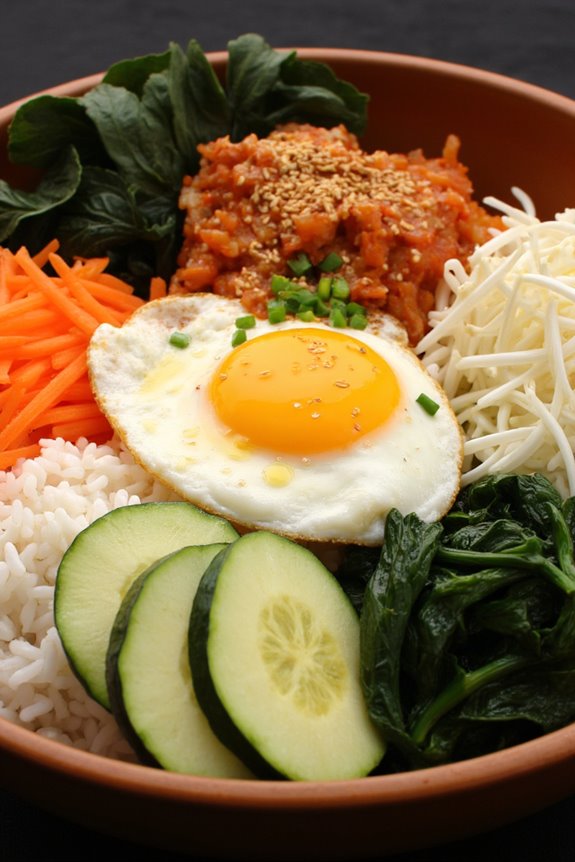
Kimchi Bibimbap is a delicious and vibrant Korean dish that takes the classic bibimbap to another level with the addition of tangy, fermented kimchi. This one-pot meal isn’t only packed with flavor but also loaded with nutrients, making it a perfect option for those seeking a healthy yet satisfying meal.
The harmony of textures and flavors—from the crunchy vegetables to the spicy kimchi—creates a delightful experience with every bite. This dish is often served with a sunny-side-up egg on top, allowing the yolk to mix with the rice and vegetables for an added richness.
Kimchi Bibimbap is versatile; you can adjust the ingredients based on your preferences or what you have available. Whether it’s a quick weeknight meal or a special occasion, this recipe will surely impress your family and friends.
Ingredients (Serves 4-6)
- 2 cups cooked short-grain rice
- 1 cup kimchi, chopped
- 1 cup carrots, julienned
- 1 cup zucchini, julienned
- 1 cup spinach, blanched
- 1 cup bean sprouts, blanched
- 4-6 eggs
- 3 tablespoons gochujang (Korean chili paste)
- 2 tablespoons sesame oil
- 1 tablespoon vegetable oil
- 1 tablespoon sesame seeds
- 1-2 green onions, chopped
- Salt, to taste
Cooking Instructions
- Prepare the Ingredients: Start by prepping all the vegetables. Julienne the carrots and zucchini, and blanch the spinach and bean sprouts in boiling water for about 2-3 minutes. Drain and rinse them under cold water to stop the cooking process. Chop the kimchi into small pieces if it isn’t already.
- Cook the Vegetables: In a large skillet, heat the vegetable oil over medium heat. Add the julienned carrots and zucchini, and sauté for about 3-4 minutes until they’re slightly softened. Season with a pinch of salt. Remove them from the skillet and set aside.
- Fry the Eggs: In the same skillet, add a little more oil if needed, and crack the eggs into the pan, cooking them sunny-side up until the whites are set but the yolks remain runny. This usually takes about 2-3 minutes.
- Assemble the Bibimbap: In serving bowls, add a scoop of the cooked rice as the base. Arrange the sautéed carrots, zucchini, blanched spinach, and bean sprouts on top of the rice. Next, add the chopped kimchi in a separate section on each bowl.
- Add the Egg and Garnish: Place one fried egg on top of each bowl, allowing the yolk to sit proudly above the other ingredients. Drizzle sesame oil over the arranged ingredients, and sprinkle with sesame seeds and chopped green onions as a garnish.
- Serve with Gochujang: Serve the bowls with gochujang on the side. Before eating, mix everything together in the bowl, ensuring that each bite is full of flavor.
Extra Tips
To enhance the flavor of your Kimchi Bibimbap, consider using homemade or high-quality store-bought kimchi, as the freshness notably impacts the overall taste.
Feel free to customize the vegetables based on seasonal availability or personal preference; mushrooms, radishes, or even meat can be great additions. If you prefer a less spicy version, reduce the amount of gochujang or serve it on the side so everyone can add to their liking.
Enjoy your cooking adventure!
Chicken Bibimbap
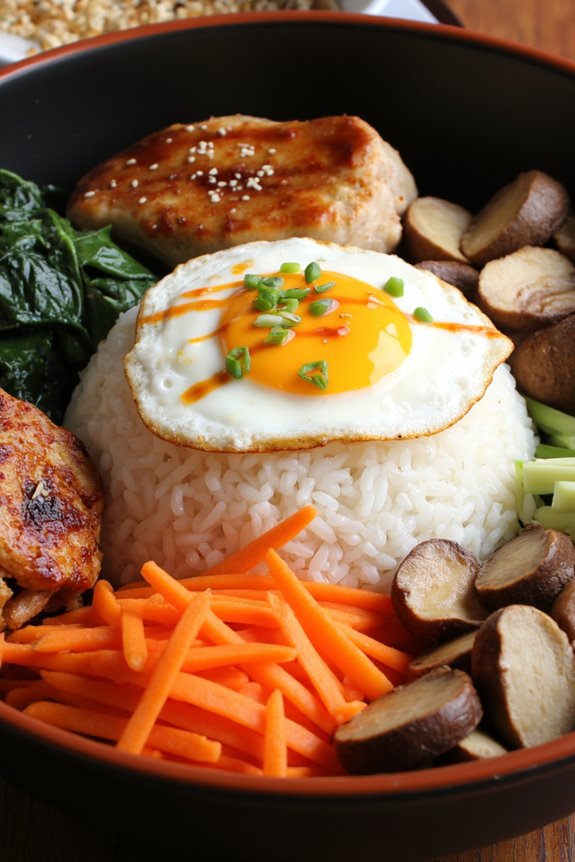
Chicken Bibimbap is a delightful Korean dish that combines a variety of colorful vegetables, marinated chicken, and a perfectly fried egg, all served over a bed of steamed rice. The word “bibimbap” translates to “mixed rice,” which is a fitting description for this meal, as all the ingredients are mixed together before eating.
This dish isn’t only visually appealing but also packed with flavors and nutrients, making it a wholesome choice for lunch or dinner.
The key to a delicious Chicken Bibimbap lies in the preparation of each component. The chicken is marinated in a savory blend of soy sauce, sesame oil, and garlic, which infuses it with rich flavors. Fresh vegetables such as spinach, carrots, and mushrooms are sautéed to bring out their natural sweetness.
Finally, the dish is topped with a runny fried egg and a drizzle of gochujang (Korean chili paste) for a spicy kick. This recipe serves 4-6 people, making it perfect for family meals or gatherings.
Ingredients:
- 2 cups of cooked white rice
- 1 pound of boneless, skinless chicken thighs
- 3 tablespoons of soy sauce
- 2 tablespoons of sesame oil
- 2 cloves of garlic, minced
- 1 tablespoon of sugar
- 2 cups of spinach, blanched
- 1 cup of carrots, julienned
- 1 cup of shiitake mushrooms, sliced
- 4 eggs
- 4 tablespoons of gochujang (Korean chili paste)
- 2 tablespoons of vegetable oil
- Sesame seeds for garnish
- Green onions, chopped for garnish
Cooking Instructions:
1. Marinate the Chicken: In a mixing bowl, combine the soy sauce, sesame oil, minced garlic, and sugar. Add the boneless chicken thighs and coat them well with the marinade. Cover the bowl and let it marinate in the refrigerator for at least 30 minutes, or up to 2 hours for better flavor.
2. Prepare the Vegetables: While the chicken is marinating, Prepare the Vegetables. Blanch the spinach in boiling water for about 1 minute, then drain and squeeze out excess water. Sauté the julienned carrots in a pan with a bit of vegetable oil over medium heat for about 5 minutes until they’re tender.
In the same pan, sauté the sliced shiitake mushrooms for about 3-4 minutes until they’re cooked through, then set aside.
3. Cook the Chicken: In the same pan, add a little more vegetable oil if needed and heat over medium-high heat. Remove the chicken from the marinade and cook it for about 6-7 minutes on each side or until fully cooked and nicely browned.
Once done, remove from heat and let it rest for a few minutes before slicing it into bite-sized pieces.
4. Fry the Eggs: In a separate pan, heat a small amount of vegetable oil over medium heat. Crack the eggs into the pan and cook until the whites are set but the yolks are still runny, about 3-4 minutes. You can cover the pan to help cook the tops if desired.
5. Assemble the Bibimbap: To serve, place a generous scoop of cooked rice at the bottom of each bowl. Arrange the sautéed vegetables, sliced chicken, and fried egg on top of the rice in an aesthetically pleasing manner.
Drizzle a tablespoon of gochujang over each bowl and sprinkle with sesame seeds and chopped green onions.
6. Mix and Enjoy: Before eating, mix all the ingredients together in the bowl, ensuring that the gochujang is well incorporated into the rice and toppings. Enjoy your Chicken Bibimbap hot!
Extra Tips:
For a more authentic experience, consider adding other traditional toppings such as bean sprouts, zucchini, or even a sprinkle of seaweed flakes.
Adjust the level of spiciness by altering the amount of gochujang you use, or you can offer it on the side for those who prefer a milder taste. This dish is versatile, so feel free to customize it by using your favorite vegetables or proteins.
If you want to save time, you can use pre-cooked rice and pre-cut vegetables to speed up the preparation process.
Mushroom Bibimbap
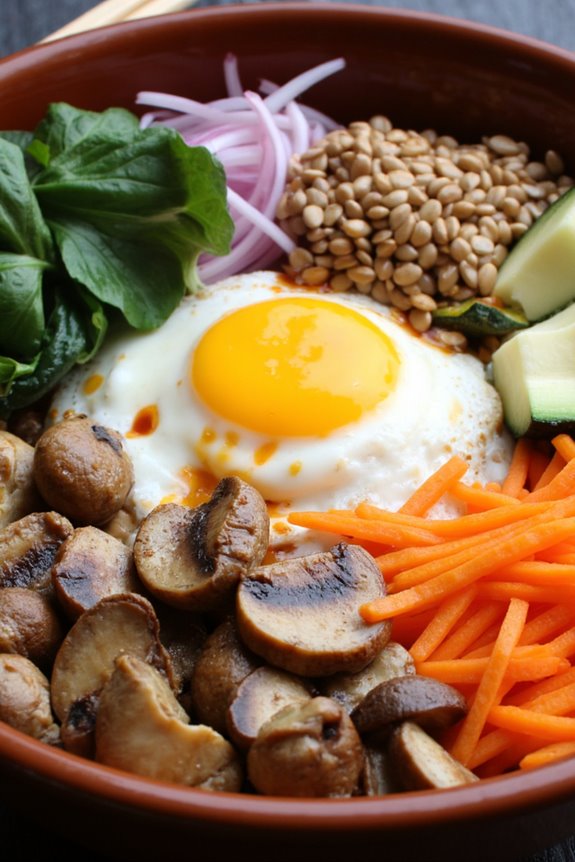
Mushroom Bibimbap is a delicious and colorful Korean dish that brings together a variety of textures and flavors in one bowl. This vibrant meal features a base of steamed rice topped with an assortment of sautéed vegetables, marinated mushrooms, and a fried egg, all drizzled with a spicy gochujang sauce. The combination of fresh ingredients and bold flavors makes this dish not only visually appealing but also incredibly satisfying.
Preparing Mushroom Bibimbap is a great way to showcase seasonal vegetables and can be easily customized to suit your taste. The earthy flavors of the mushrooms complement the crispy vegetables, while the gochujang adds a delightful kick. Whether you enjoy it as a hearty lunch or a comforting dinner, this dish is sure to impress both family and friends.
Ingredients (Serves 4-6)
- 2 cups of short-grain rice
- 4 cups of water
- 1 cup of shiitake mushrooms, sliced
- 1 cup of button mushrooms, sliced
- 1 medium carrot, julienned
- 1 cup of spinach, blanched and squeezed dry
- 1 zucchini, julienned
- 1/2 cup of bean sprouts, blanched
- 4 large eggs
- 3 tablespoons of soy sauce
- 2 tablespoons of sesame oil
- 2 tablespoons of vegetable oil
- 2 tablespoons of gochujang (Korean red chili paste)
- 1 tablespoon of sugar
- 1 tablespoon of sesame seeds
- Salt and pepper to taste
Cooking Instructions
1. Cook the Rice: Rinse the short-grain rice under cold water until the water runs clear. Combine the rice and 4 cups of water in a rice cooker or pot. Cook according to the rice cooker instructions or bring to a boil, then reduce heat to low, cover, and simmer for about 20 minutes. Once cooked, fluff with a fork and set aside.
2. Prepare the Vegetables: While the rice is cooking, Prepare the Vegetables. Heat 1 tablespoon of vegetable oil in a skillet over medium heat. Add the julienned carrots and stir-fry for about 3-4 minutes until slightly tender. Remove and set aside.
Repeat the process for the zucchini, cooking for about 2-3 minutes, and then for the bean sprouts, cooking for 1-2 minutes. Set all the sautéed vegetables aside.
3. Cook the Mushrooms: In the same skillet, add the remaining 1 tablespoon of vegetable oil. Add the sliced shiitake and button mushrooms and sauté for about 5-6 minutes until they’re browned and tender. Season with 2 tablespoons of soy sauce and 1 tablespoon of sesame oil. Stir well to combine and remove from heat.
4. Prepare the Spinach: In a small pot of boiling water, blanch the spinach for about 1 minute. Drain and immediately rinse with cold water. Squeeze out excess water and toss with a pinch of salt, pepper, and a drizzle of sesame oil.
5. Fry the Eggs: In a separate skillet, heat a little oil over medium heat and crack 4 eggs into the pan. Cook until the whites are set but the yolks are still runny (or to your desired doneness), about 3-4 minutes.
6. Assemble the Bibimbap: To serve, place a generous scoop of rice in each bowl. Arrange the sautéed mushrooms, carrots, zucchini, spinach, and bean sprouts artfully on top of the rice. Place a fried egg in the center of each bowl and sprinkle with sesame seeds.
7. Serve with Gochujang: Drizzle gochujang over the top of the assembled bibimbap for added flavor. Encourage everyone to mix their bowl thoroughly before eating to combine all the ingredients.
Extra Tips
When preparing Mushroom Bibimbap, feel free to customize the toppings based on your preferences or what you have on hand. You can add other vegetables such as bell peppers or radishes, or even include proteins like tofu or beef for additional heartiness.
The key is to ascertain that each component is seasoned well, as this will enhance the overall flavor of the dish. Also, don’t shy away from experimenting with the amount of gochujang; adjust it to your spice tolerance for the perfect kick!
Pork Bulgogi Bibimbap
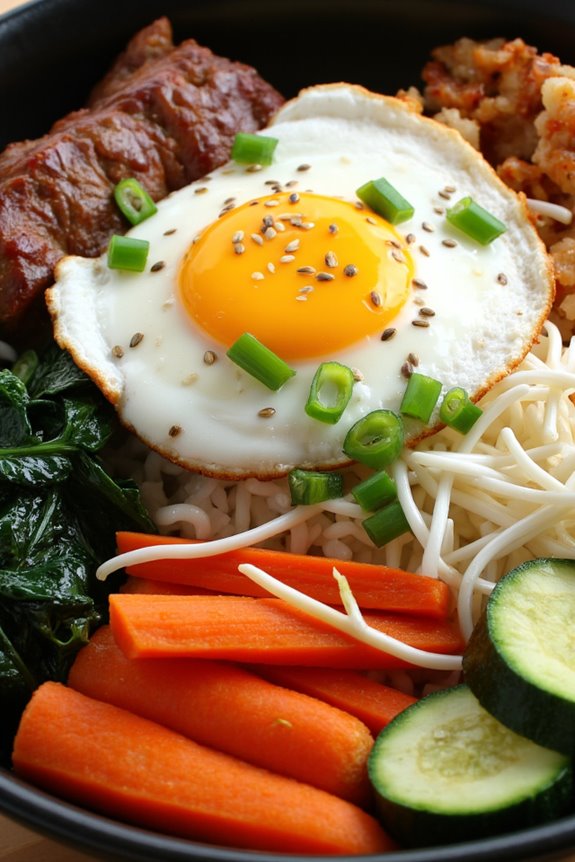
Pork Bulgogi Bibimbap is a vibrant and delicious Korean dish that combines marinated pork, assorted vegetables, and rice, all topped with a fried egg and gochujang (Korean red chili paste). This dish isn’t only visually appealing but also offers a delightful balance of flavors and textures. The sweet and savory marinated pork pairs beautifully with crisp, sautéed vegetables and fluffy rice, creating a well-rounded meal that’s bound to impress family and friends.
To create this culinary masterpiece, you’ll begin by preparing the pork bulgogi, which involves marinating the meat to enhance its flavor. While the pork is marinating, you can prepare the vegetables, rice, and any additional toppings. Once everything is cooked and ready, it’s crucial to assemble the bibimbap, making it a fun dish to share and enjoy.
Ingredients (Serves 4-6 people):
- 1 lb pork shoulder or loin, thinly sliced
- 1/4 cup soy sauce
- 2 tablespoons sugar
- 2 tablespoons sesame oil
- 3 cloves garlic, minced
- 1 tablespoon ginger, grated
- 1 tablespoon gochujang (Korean red chili paste)
- 4 cups cooked short-grain rice
- 2 cups spinach, blanched and chopped
- 1 cup carrots, julienned
- 1 cup zucchini, julienned
- 1 cup bean sprouts, blanched
- 4-6 eggs
- Sesame seeds, for garnish
- Green onions, sliced for garnish
- Additional gochujang for serving
Cooking Instructions:
- Marinate the Pork: In a bowl, combine the soy sauce, sugar, sesame oil, minced garlic, grated ginger, and gochujang. Add the thinly sliced pork and mix well to confirm the meat is evenly coated. Cover the bowl and let it marinate in the refrigerator for at least 30 minutes, or up to 2 hours for more flavor.
- Prepare the Vegetables: While the pork is marinating, prepare the vegetables. Blanch the spinach and bean sprouts in boiling water for about 1-2 minutes, then rinse them under cold water to stop the cooking process. Squeeze out any excess water and set aside. Julienne the carrots and zucchini and set them aside as well.
- Cook the Pork: Heat a large skillet or wok over medium-high heat. Once hot, add the marinated pork, cooking for about 5-7 minutes or until the meat is cooked through and nicely caramelized. Remove from heat and set aside.
- Sauté the Vegetables: In the same skillet, you can add a little oil if needed, and sauté the carrots and zucchini for about 3-4 minutes or until tender but still crisp. Season with a pinch of salt. Remove from heat and set aside.
- Fry the Eggs: In another skillet, fry the eggs sunny-side up until the whites are set but the yolks remain runny. This will provide a rich sauce when mixed into the bibimbap.
- Assemble the Bibimbap: In a large serving bowl or individual bowls, place a generous scoop of cooked rice as the base. Arrange the cooked pork, sautéed vegetables, and blanched greens on top of the rice in sections for a colorful presentation. Top each bowl with a fried egg.
- Garnish and Serve: Sprinkle sesame seeds and sliced green onions over the assembled bibimbap. Serve with additional gochujang on the side for those who prefer extra spice. Mix everything together before eating to enjoy the full flavor of the dish.
Extra Tips:
When preparing Pork Bulgogi Bibimbap, it’s important to balance the flavors and textures by using fresh, high-quality ingredients.
Feel free to customize the vegetable selection based on your preferences or what’s in season. You can also add other toppings such as kimchi or sliced avocado for extra flavor.
If you want to save time, you can prepare the rice and marinate the pork a day in advance. Enjoy your delicious homemade bibimbap!
Quinoa Bibimbap
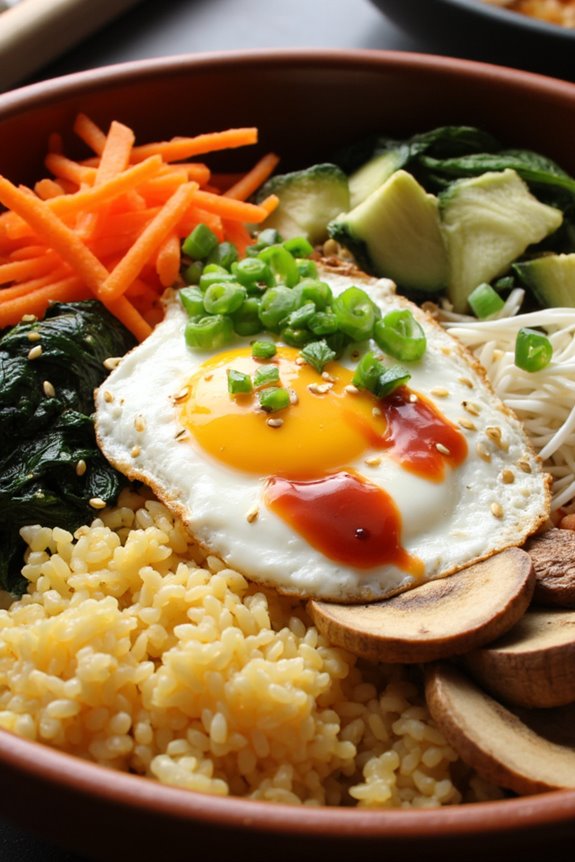
Quinoa Bibimbap is a nutritious and vibrant twist on the traditional Korean dish, bibimbap. Instead of rice, this recipe uses quinoa as a base, making it gluten-free and packed with protein. The colorful assortment of vegetables and the spicy gochujang sauce make this dish both visually appealing and flavorful.
It’s a perfect meal for anyone looking for a healthy, hearty option that can be easily customized to include their favorite veggies or proteins. This dish can be served as a main course and is ideal for meal prep, as it holds up well in the refrigerator. You can prepare the components ahead of time and toss them together just before serving, making it a convenient choice for busy weeknights.
Whether you’re a vegetarian, vegan, or simply looking for a nutritious meal, Quinoa Bibimbap is sure to satisfy your cravings.
Ingredients (Serves 4-6):
- 1 cup quinoa, rinsed
- 2 cups water
- 1 cup carrots, julienned
- 1 cup zucchini, julienned
- 1 cup spinach, sautéed
- 1 cup bean sprouts, blanched
- 1 cup shiitake mushrooms, sliced
- 4 eggs (optional, for topping)
- 4 tablespoons gochujang (Korean chili paste)
- 2 tablespoons sesame oil
- 2 tablespoons soy sauce
- 1 tablespoon sesame seeds
- Salt and pepper to taste
- Green onions, chopped (for garnish)
Cooking Instructions:
- Cook the Quinoa: In a medium saucepan, combine the rinsed quinoa and water. Bring it to a boil over medium heat. Once boiling, reduce the heat to low, cover, and simmer for about 15 minutes until the quinoa is fluffy and the water is absorbed. Remove from heat and let it sit, covered, for 5 minutes before fluffing with a fork.
- Prepare the Vegetables: While the quinoa is cooking, prepare the vegetables. Julienne the carrots and zucchini, and set them aside. In a skillet over medium heat, add a splash of sesame oil and sauté the carrots and zucchini separately until they’re tender but still crisp (about 3-4 minutes each). Remove from the skillet and set aside.
- Sauté the Mushrooms: In the same skillet, add another splash of sesame oil and the sliced shiitake mushrooms. Sauté for about 5-7 minutes until they’re golden and tender. Season with salt and pepper to taste, then remove from heat.
- Prepare the Spinach and Bean Sprouts: In a small pot, blanch the bean sprouts in boiling water for about 2-3 minutes, then drain and rinse under cold water to stop the cooking process. For the spinach, you can sauté it in the skillet for about 2 minutes until wilted, or you can serve it raw for a fresh crunch.
- Cook the Eggs: If using eggs, heat a non-stick skillet over medium heat and lightly grease it with oil. Crack the eggs into the skillet and cook sunny-side up or to your desired doneness.
- Assemble the Bibimbap: In a large bowl, start with a base of quinoa. Neatly arrange the sautéed carrots, zucchini, mushrooms, spinach, and bean sprouts on top of the quinoa. If using, place the cooked egg in the center. Drizzle the gochujang sauce over the top and garnish with sesame seeds and chopped green onions.
Extra Tips:
For added flavor, you can marinate the vegetables in a mix of soy sauce and sesame oil before cooking them. Feel free to customize the toppings by adding proteins like grilled chicken, tofu, or beef.
If you prefer a milder flavor, adjust the amount of gochujang according to your spice tolerance. Quinoa Bibimbap is versatile, so experiment with different vegetables or sauces to create your perfect bowl!
Eggplant Bibimbap

Eggplant Bibimbap is a delicious twist on the traditional Korean dish that brings together a medley of vegetables, rice, and a spicy sauce, all topped with a perfectly fried egg. This vegetarian version highlights the rich flavors of sautéed eggplant, which adds a unique creaminess and depth to the dish. Each component is carefully prepared and beautifully arranged, creating not only a satisfying meal but also a visually appealing one.
In this recipe, you’ll be combining the nutty taste of sesame oil with fresh vegetables to create a wholesome experience. The combination of textures and flavors—crunchy vegetables, soft eggplant, fluffy rice, and a runny egg yolk—makes each bite a delightful adventure. Whether you’re looking for a quick weekday dinner or a standout dish for entertaining, Eggplant Bibimbap is sure to please everyone at the table.
Ingredients (Serves 4-6)
- 2 cups cooked short-grain rice
- 1 large eggplant, diced
- 1 zucchini, julienned
- 1 carrot, julienned
- 1 cup spinach, blanched
- 4-6 eggs
- 3 tablespoons vegetable oil
- 2 tablespoons sesame oil
- 3 tablespoons soy sauce
- 1 tablespoon gochujang (Korean chili paste)
- 1 tablespoon sugar
- 2 cloves garlic, minced
- 2 green onions, chopped
- Sesame seeds for garnish
Cooking Instructions
- Prepare the Rice: Start by cooking short-grain rice according to package instructions. Typically, this involves rinsing the rice until the water runs clear, adding it to a rice cooker with the appropriate water ratio, and cooking it until fluffy. Allow the rice to rest for about 10 minutes after cooking.
- Sauté the Eggplant: In a large skillet, heat 1 tablespoon of vegetable oil over medium heat. Add the diced eggplant and sauté for about 5-7 minutes, or until it becomes tender and slightly golden. Remove the eggplant from the skillet and set aside.
- Sauté the Zucchini and Carrot: In the same skillet, add another tablespoon of vegetable oil. Add the julienned zucchini and carrot, cooking for about 3-4 minutes until they’re tender but still crisp. Season with a pinch of salt and set aside with the eggplant.
- Cook the Spinach: Blanch the spinach in boiling water for about 30 seconds until just wilted. Drain and rinse under cold water to stop the cooking process. Squeeze out excess water and set aside.
- Prepare the Sauce: In a small bowl, combine the soy sauce, gochujang, sugar, sesame oil, and minced garlic. Mix until well combined.
- Fry the Eggs: In the same skillet, add a little more oil if necessary and fry the eggs sunny-side up, cooking until the whites are set but the yolks remain runny. This will take about 2-3 minutes.
- Assemble the Bibimbap: In a large serving bowl or individual bowls, place a generous scoop of cooked rice at the bottom. Arrange the sautéed eggplant, zucchini, carrot, and blanched spinach on top of the rice. Drizzle with the sauce and place the fried egg on top.
- Garnish and Serve: Sprinkle chopped green onions and sesame seeds over the top. Serve immediately, encouraging everyone to mix their bibimbap together before enjoying.
Extra Tips
When making Eggplant Bibimbap, feel free to customize the vegetables based on your preferences or what you have on hand. You can also add protein such as tofu or tempeh for a heartier meal.
Additionally, for an extra kick, consider increasing the amount of gochujang in the sauce or serving extra on the side. Don’t forget to serve the bibimbap with a side of pickled vegetables for a traditional touch!
Bibimbap With Roasted Vegetables
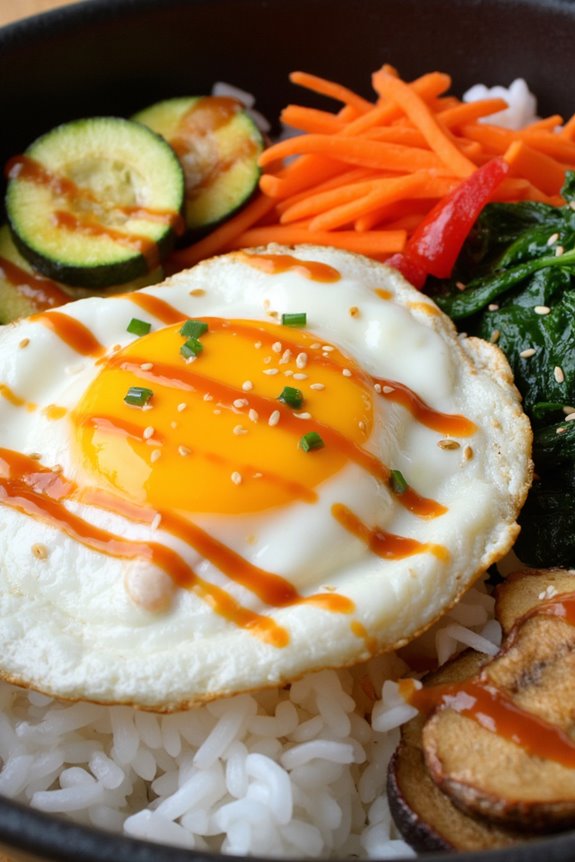
Bibimbap, a beloved Korean dish, is known for its harmonious blend of flavors and textures. The name literally means “mixed rice,” and it’s a colorful and nutritious meal that can be easily customized based on what vegetables and proteins you have available. This version of Bibimbap features an array of roasted vegetables, providing a hearty and satisfying component to the dish, while retaining the freshness and vibrant flavors typical of traditional Korean cuisine.
The beauty of Bibimbap lies in its flexibility and the balance it strikes between fresh and cooked ingredients. In this recipe, a medley of seasonal vegetables such as zucchini, carrots, and bell peppers are roasted to enhance their natural sweetness, then served over a bed of rice and topped with a fried egg and spicy gochujang sauce. This dish not only delights the palate but also nourishes the body, making it a perfect choice for lunch or dinner.
Ingredients (Serves 4-6):
- 2 cups short-grain rice
- 1 medium zucchini, sliced into thin rounds
- 1 medium carrot, julienned
- 1 red bell pepper, sliced
- 1 cup baby spinach
- 1 cup shiitake mushrooms, sliced
- 4 eggs
- 3 tablespoons vegetable oil (for roasting)
- 2 tablespoons sesame oil
- 2 tablespoons soy sauce
- 1 tablespoon gochujang (Korean chili paste)
- 1 tablespoon sugar
- 1 tablespoon sesame seeds
- Salt and pepper to taste
- Green onions, chopped (for garnish)
Cooking Instructions:
- Cook the Rice: Rinse the short-grain rice under cold water until the water runs clear. Combine rice with 2 ½ cups of water in a rice cooker or pot. Cook according to the rice cooker instructions or bring to a boil, then reduce the heat, cover, and simmer for about 18-20 minutes until the water is absorbed. Remove from heat and let it sit covered for another 10 minutes.
- Prepare the Vegetables: Preheat your oven to 425°F (220°C). On a large baking sheet, toss the zucchini, carrot, red bell pepper, and shiitake mushrooms with 2 tablespoons of vegetable oil, salt, and pepper. Spread the vegetables in a single layer and roast for about 15-20 minutes, or until they’re tender and slightly caramelized.
- Sauté the Spinach: In a skillet, heat the remaining tablespoon of vegetable oil over medium heat. Add the baby spinach and sauté for about 2-3 minutes until wilted. Season with a pinch of salt and set aside.
- Fry the Eggs: In the same skillet, crack the eggs, one at a time, and fry them sunny-side up or to your desired doneness. Season with salt and pepper.
- Make the Sauce: In a small bowl, mix together the gochujang, sesame oil, soy sauce, and sugar until well combined. Adjust the spice level by adding more gochujang if desired.
- Assemble the Bibimbap: In each serving bowl, place a generous scoop of cooked rice at the bottom. Arrange the roasted vegetables and sautéed spinach on top of the rice. Gently place a fried egg in the center of the bowl. Drizzle the gochujang sauce over the top and sprinkle with sesame seeds and chopped green onions.
Extra Tips:
For an extra layer of flavor, consider adding marinated proteins such as bulgogi (Korean marinated beef) or grilled chicken to your Bibimbap. You can also experiment with different vegetables based on the season or your personal preferences.
Preparing all the components in advance can streamline the assembly process, making it an excellent option for meal prepping. Finally, don’t forget to mix everything together before eating to fully enjoy the delicious combination of flavors!
Korean BBQ Bibimbap
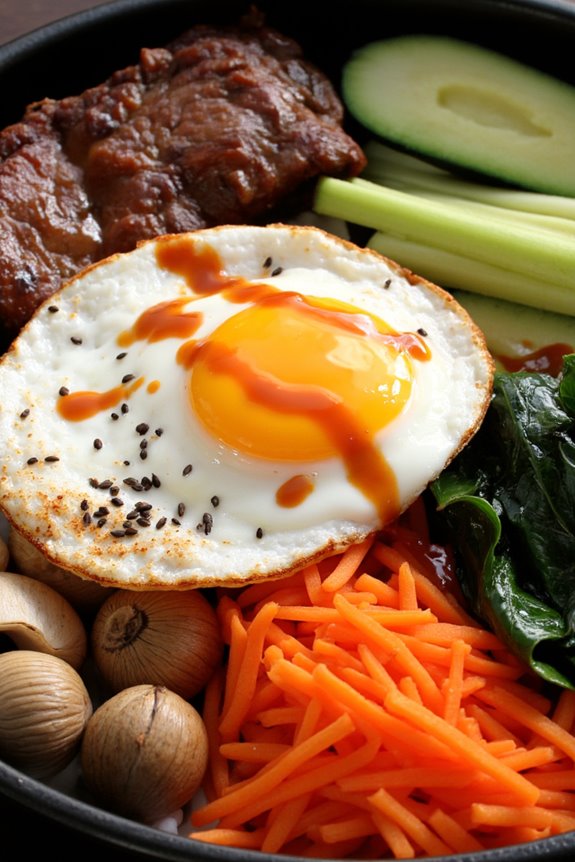
Korean BBQ Bibimbap is a vibrant and flavorful dish that beautifully combines marinated grilled meats, assorted vegetables, and a rich sauce, all served over a bed of warm rice. This dish is an exciting way to experience the harmony of flavors and textures typical in Korean cuisine. The word “bibimbap” translates to “mixed rice,” and it’s traditionally topped with a fried egg and gochujang sauce, which adds a spicy kick.
The addition of BBQ meats elevates the dish, making it a hearty meal perfect for sharing with family and friends.
To create an authentic Korean BBQ Bibimbap, you’ll want to prepare marinated beef or pork, a colorful selection of vegetables, and perfectly cooked rice. Each element contributes to the overall experience, so taking the time to prepare them thoughtfully pays off. Once everything is ready, you can assemble your bibimbap and enjoy mixing all the components together, allowing the flavors to meld beautifully in each bite.
Ingredients (Serves 4-6):
- 1 lb beef or pork (thinly sliced)
- 2 cups cooked short-grain rice
- 1 cup spinach (blanched and squeezed dry)
- 1 cup carrots (julienned)
- 1 cup zucchini (julienned)
- 1 cup shiitake mushrooms (sliced)
- 4 eggs
- 2 tablespoons vegetable oil (for cooking)
- 2 tablespoons sesame oil
- 4 tablespoons soy sauce
- 2 tablespoons sugar
- 2 tablespoons minced garlic
- 1 tablespoon gochujang (Korean chili paste)
- 1 tablespoon sesame seeds (for garnish)
- Salt and pepper (to taste)
- Optional: green onions (for garnish)
Cooking Instructions:
1. Marinate the Meat: In a bowl, combine the soy sauce, sugar, minced garlic, sesame oil, salt, and pepper. Add the thinly sliced beef or pork to the marinade, ensuring that all pieces are coated well. Allow it to marinate for at least 30 minutes, or up to 2 hours in the refrigerator for deeper flavor.
2. Prepare the Vegetables: While the meat is marinating, prepare the vegetables. Blanch the spinach in boiling water for about 30 seconds, then rinse under cold water and squeeze to remove excess moisture.
Sauté the carrots and zucchini separately in a bit of vegetable oil until they’re tender but still crisp. Sauté the shiitake mushrooms in a little oil until they’re cooked through. Season each vegetable with a pinch of salt and set aside.
3. Cook the Meat: Heat a grill pan or skillet over medium-high heat. Add the marinated meat to the pan in a single layer, cooking for about 2-3 minutes on each side until browned and cooked through. Remove from heat and let it rest for a few minutes before slicing into bite-sized pieces.
4. Fry the Eggs: In a separate skillet, heat a small amount of oil over medium heat. Crack the eggs into the pan and fry until the whites are set but the yolks are still runny, or cook to your desired doneness.
5. Assemble the Bibimbap: In large bowls, place a generous serving of warm cooked rice at the bottom. Arrange the sautéed vegetables, cooked meat, and fried egg on top. Drizzle with gochujang and sprinkle with sesame seeds and optional green onions.
6. Mix and Serve: Just before eating, mix all the components together in the bowl, ensuring the gochujang is evenly distributed. Enjoy your delicious Korean BBQ Bibimbap!
Extra Tips: When making Korean BBQ Bibimbap, feel free to customize it with your favorite vegetables or proteins. Other popular additions include bean sprouts, radish, or even tofu for a vegetarian option.
Make sure to adjust the amount of gochujang based on your spice preference, and consider serving with extra on the side for those who love a little extra heat. Finally, using short-grain rice is essential for that authentic sticky texture that holds the dish together beautifully. Enjoy this colorful and nutritious meal with family and friends!
Bibimbap With Fried Egg
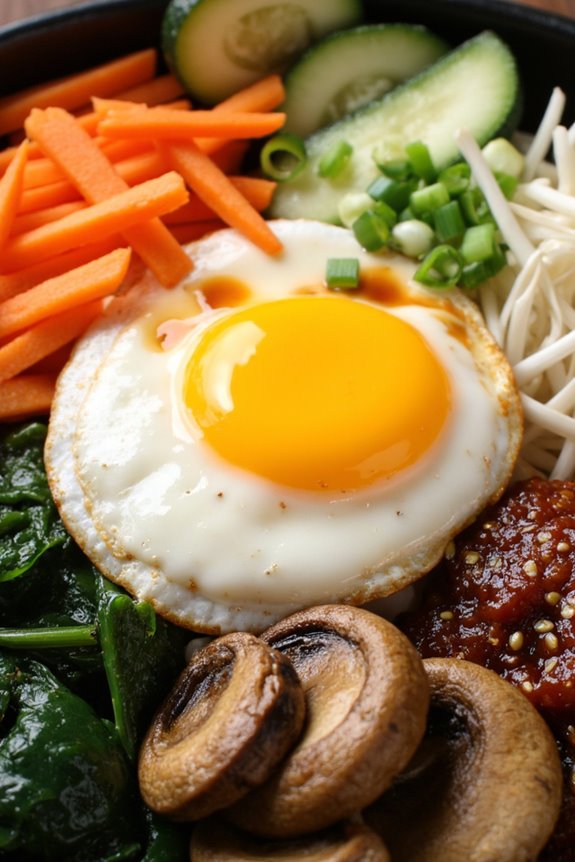
Bibimbap, a popular Korean dish, translates to “mixed rice.” It’s a vibrant and nutritious meal that combines a variety of vegetables, protein, and rice, all topped with a perfectly fried egg. This dish isn’t only visually appealing but also packed with flavor and texture. The key to a delicious bibimbap lies in the quality of its ingredients and the balance of flavors, which come together beautifully when mixed just before serving.
In this recipe, we’ll focus on creating a classic bibimbap topped with a sunny-side-up fried egg. Each ingredient adds its own character to the dish, from the earthy flavor of sautéed mushrooms to the crunchy freshness of cucumbers and the spicy kick of gochujang (Korean chili paste). With a little preparation and attention to detail, you can recreate this beloved Korean staple in your own kitchen.
Ingredients (Serves 4-6)
- 2 cups of cooked short-grain rice
- 1 cup of spinach, blanched and chopped
- 1 cup of bean sprouts, blanched
- 1 cup of carrots, julienned
- 1 cup of zucchini, julienned
- 1 cup of shiitake mushrooms, sliced
- 4-6 large eggs
- 2 tablespoons of gochujang (Korean chili paste)
- 2 tablespoons of sesame oil
- 2 tablespoons of vegetable oil
- 1 tablespoon of soy sauce
- 1 tablespoon of sesame seeds
- Salt, to taste
- Green onions, chopped (for garnish)
Cooking Instructions
1. Prepare the Rice: Start by cooking the short-grain rice according to the package instructions. Once cooked, fluff it with a fork and set it aside to keep warm. The rice serves as the base of your bibimbap, so it should be sticky enough to hold everything together.
2. Sauté the Vegetables: In a large skillet, heat 1 tablespoon of vegetable oil over medium heat. Add the sliced shiitake mushrooms and sauté until they’re tender and browned, about 5-7 minutes. Season with a pinch of salt and set them aside.
Repeat this process separately for the carrots, zucchini, and spinach, sautéing each for about 2-3 minutes, and then set them aside in separate bowls.
3. Prepare the Bean Sprouts: In the same skillet, add the blanched bean sprouts and sauté them briefly for about 2 minutes. Add a splash of soy sauce and a drizzle of sesame oil, then remove from heat. This step adds a savory flavor to the bean sprouts.
4. Fry the Eggs: In a non-stick skillet, heat the remaining tablespoon of vegetable oil over medium-low heat. Crack the eggs into the skillet, being careful not to break the yolks. Cook until the whites are set but the yolks are still runny, about 3-4 minutes. Season with a pinch of salt.
5. Assemble the Bibimbap: In each serving bowl, place a generous scoop of warm rice at the bottom. Arrange the sautéed vegetables—spinach, bean sprouts, carrots, zucchini, and mushrooms—on top of the rice in sections for a visually appealing presentation.
6. Top with the Fried Egg: Carefully place a fried egg on top of the arranged vegetables in each bowl. Drizzle sesame oil and a spoonful of gochujang over the top, and sprinkle with sesame seeds and chopped green onions for garnish.
7. Serve and Mix: Serve the bibimbap immediately with additional gochujang on the side. When ready to eat, mix all the ingredients together thoroughly to combine the flavors.
Extra Tips
When preparing bibimbap, feel free to customize the vegetables and proteins according to your preference. You can add ingredients like sliced radishes, kale, or even marinated beef for added flavor.
Additionally, using leftover rice can save time, and cooking the vegetables ahead of time will make the assembly process quicker. Finally, for those who prefer a bit of crunch, consider topping the dish with crushed seaweed or serving with pickled vegetables on the side. Enjoy your homemade bibimbap!
Bibimbap With Sweet Potato
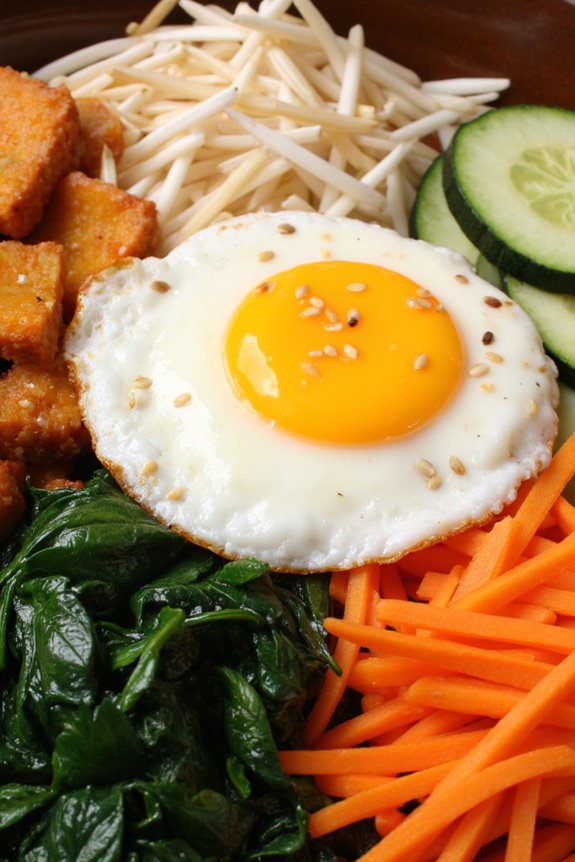
Bibimbap is a traditional Korean rice dish that combines a variety of colorful vegetables, protein, and a spicy sauce, all served over a bed of rice. This delightful version features sweet potatoes, which add a natural sweetness and creamy texture to the dish, making it both nutritious and satisfying.
The harmony of flavors and textures not only makes it visually appealing but also incredibly flavorful, appealing to both the palate and the eye.
In this recipe, we’ll guide you through the process of making Bibimbap with Sweet Potato, a complete meal that can serve 4-6 people. The combination of sautéed vegetables, perfectly cooked rice, and the savory gochujang sauce creates a balanced dish that’s sure to impress your family and friends.
Let’s immerse ourselves in the ingredients and cooking process to bring this Korean classic to your dining table.
Ingredients (Serves 4-6):
- 2 cups of cooked white rice (or brown rice)
- 1 medium sweet potato, peeled and cut into thin matchsticks
- 1 cup of spinach, blanched and drained
- 1 cup of bean sprouts, blanched and drained
- 1 carrot, julienned
- 1 zucchini, julienned
- 4-6 eggs (depending on preference)
- 3 tablespoons of vegetable oil
- 2 tablespoons of sesame oil
- 2 tablespoons of gochujang (Korean chili paste)
- 1 tablespoon of soy sauce
- 1 tablespoon of sesame seeds
- Salt to taste
- Optional: sliced green onions for garnish
Cooking Instructions:
1. Prepare the Rice: Start by cooking your rice according to package instructions. It’s best to use slightly sticky rice to help bind the ingredients together. Once cooked, keep it warm while you prepare the other components.
2. Sauté the Sweet Potato: In a large skillet, heat 1 tablespoon of vegetable oil over medium heat. Add the sweet potato matchsticks and sauté for about 5-7 minutes, or until they become tender and slightly caramelized. Season with a pinch of salt.
Once done, remove from the skillet and set aside.
3. Cook the Vegetables: In the same skillet, add another tablespoon of vegetable oil. Sauté the julienned carrots and zucchini for about 3-4 minutes until they’re tender but still crisp.
Add the blanched spinach and bean sprouts, cooking them for an additional 2 minutes. Add a splash of sesame oil for flavor, then remove from heat.
4. Fry the Eggs: In a separate pan, heat the remaining tablespoon of vegetable oil over medium heat. Crack the eggs into the pan and fry them sunny-side up or to your liking. The yolks should remain runny for mixing in with the bibimbap later.
5. Assemble the Bibimbap: In serving bowls, divide the warm rice as the base. Neatly arrange the sautéed sweet potatoes, carrots, zucchini, spinach, and bean sprouts over the rice.
Top each bowl with a fried egg. Drizzle with gochujang and sesame oil, and sprinkle sesame seeds on top.
6. Serve: Encourage everyone to mix their bibimbap thoroughly before eating to guarantee all the flavors meld together. Optionally, garnish with sliced green onions for an extra crunch.
Extra Tips:
When preparing Bibimbap with Sweet Potato, feel free to customize the vegetables based on what you have available or your personal preferences. Other popular options include mushrooms, radish, or cabbage.
Additionally, for a vegetarian version, simply skip the egg or replace it with tofu. This dish is also great for meal prep since the components can be made in advance and assembled just before serving.
Enjoy your colorful and delicious bibimbap!
