

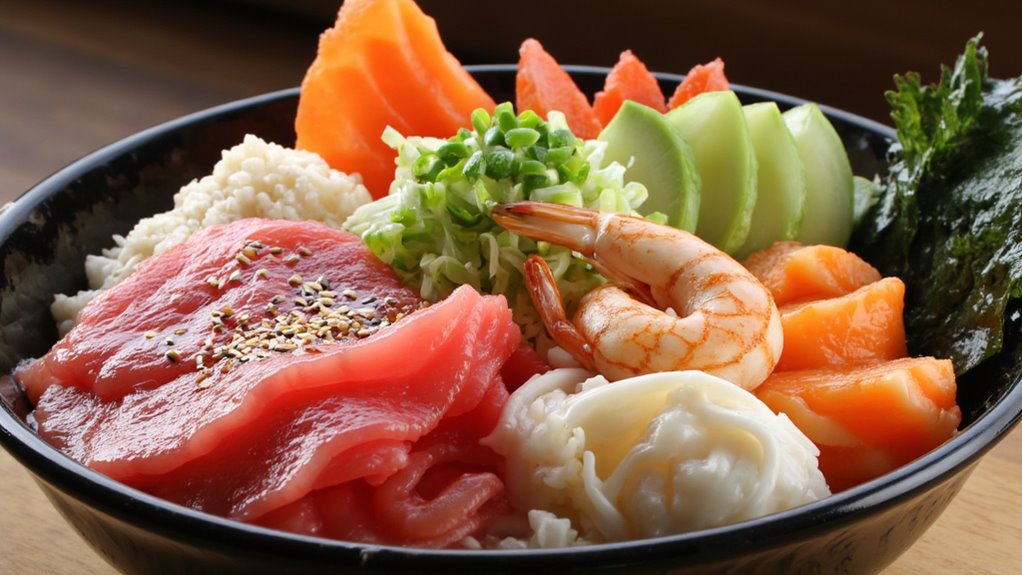
When I think about Japanese donburi, I imagine vibrant bowls filled with flavors and textures that are just irresistible. Each dish, from the tender gyudon to the comforting oyakodon, offers its own unique story. These meals are not only quick and satisfying but also visually stunning and perfectly balanced. If you’re curious about creating these simple yet beautiful bowls, you’ll love exploring a variety of donburi recipes. They have the power to elevate your dining experience.
Gyudon (Beef Bowl)
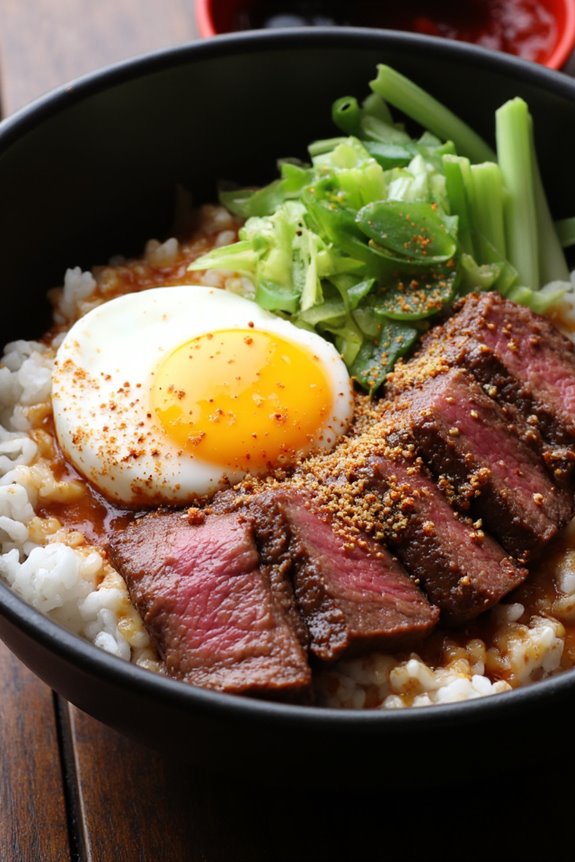
Gyudon, or beef bowl, is a popular Japanese dish that features tender slices of beef simmered in a savory sauce made from soy sauce, mirin, and dashi. Served over a steaming bowl of rice, this dish isn’t only comforting but also quick to prepare, making it an excellent choice for busy weeknight dinners.
Traditionally garnished with sliced green onions and a raw or poached egg, gyudon is a flavorful representation of Japanese home cooking that’s loved by many.
The origins of gyudon can be traced back to the late 19th century, becoming a staple in Japanese cuisine. With its simplicity and delicious flavor profile, gyudon has found its way into restaurants and homes worldwide.
This dish is versatile, allowing for a variety of toppings and side dishes, making it perfect for customizing according to personal taste.
Ingredients (Serves 4-6)
- 1 lb (450g) thinly sliced beef (such as ribeye or sirloin)
- 2 cups dashi broth (or water with dashi granules)
- 1/4 cup soy sauce
- 1/4 cup mirin
- 2 tablespoons sugar
- 1 medium onion, thinly sliced
- 4-6 bowls of cooked rice
- 2-3 green onions, finely chopped (for garnish)
- Soft-boiled or raw eggs (optional, for serving)
- Shichimi togarashi (Japanese seven spice) (optional, for garnish)
Cooking Instructions
- Prepare the Ingredients: Start by gathering all your ingredients. Confirm the beef is sliced thinly, and the onion is also thinly sliced. You can use a sharp knife or ask your butcher to slice the beef for you. Having everything ready before you start cooking will make the process smoother.
- Cook the Onions: In a large skillet or frying pan, add a little oil over medium heat. Once hot, add the sliced onions and sauté them for about 3-5 minutes or until they become translucent and fragrant. This step enhances the sweetness of the onions, which adds depth to the dish.
- Add the Beef: Once the onions are cooked, increase the heat to medium-high and add the thinly sliced beef to the skillet. Stir-fry the beef for about 2-3 minutes until it starts to brown. Make sure the beef is evenly distributed and cooked through, but don’t overcook it as it can become tough.
- Create the Sauce: In a separate bowl, mix together the dashi broth, soy sauce, mirin, and sugar. Pour this mixture over the beef and onions in the skillet. Bring the mixture to a simmer and let it cook for about 5 minutes, allowing the flavors to meld together while the sauce thickens slightly.
- Serve Over Rice: While the beef is simmering, prepare bowls of hot, cooked rice. Once the beef and sauce have finished cooking, spoon the beef mixture over the rice. Be generous with the sauce to confirm each bite is flavorful.
- Garnish and Enjoy: Top the gyudon with chopped green onions and add a soft-boiled or raw egg on top if desired. For an extra kick, sprinkle a little shichimi togarashi on top. Enjoy your homemade gyudon while hot!
Extra Tips
When making gyudon, use high-quality beef and confirm it’s sliced as thinly as possible for the best texture.
If you prefer a richer flavor, let the beef simmer for a little longer in the sauce. Additionally, if you find the sauce too salty, you can adjust the soy sauce quantity or add a little more sugar to balance it out.
For a variation, consider adding vegetables like mushrooms or bell peppers for added nutrition and flavor.
Oyakodon (Chicken and Egg Bowl)
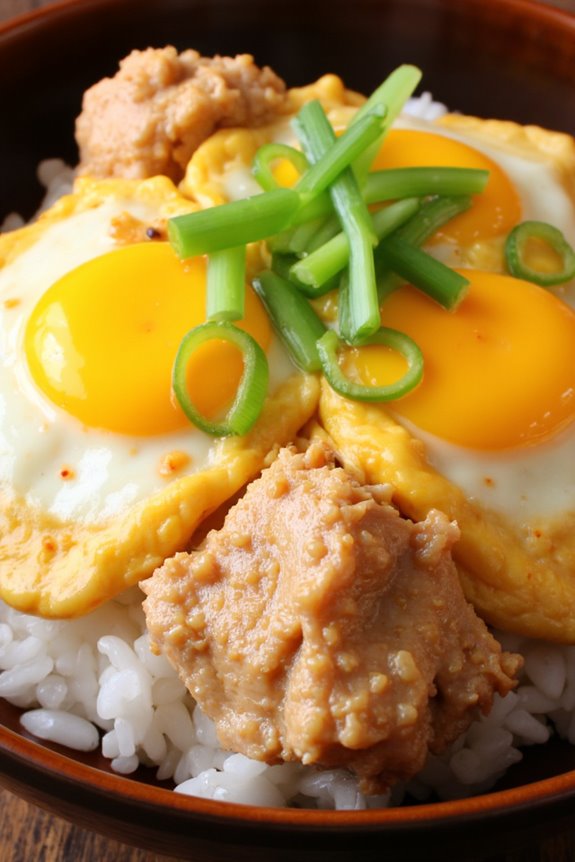
Oyakodon is a beloved Japanese dish that beautifully marries tender chicken, fluffy eggs, and a savory sauce, all served over a steaming bowl of rice. The name “oyakodon” translates to “parent and child bowl,” symbolizing the use of both chicken and eggs in the dish. This comforting meal is perfect for busy weeknights or a cozy dinner, as it comes together quickly and requires minimal ingredients while delivering maximum flavor.
To create a delicious Oyakodon, the key is to balance the flavors of the dashi, soy sauce, and mirin, which coat the chicken and eggs, resulting in a rich and satisfying dish. The chicken is typically simmered in a flavorful broth until tender, and then the eggs are gently poured over the chicken, allowing them to cook just enough to remain soft and silky.
Served over a bowl of rice, Oyakodon isn’t only a feast for the taste buds but also an inviting, colorful presentation that will impress family and friends alike.
Ingredients (Serves 4-6):
- 1 lb (450g) boneless, skinless chicken thighs, cut into bite-sized pieces
- 1 medium onion, thinly sliced
- 4 large eggs
- 2 cups dashi stock (or chicken broth)
- 4 tablespoons soy sauce
- 2 tablespoons mirin
- 1 tablespoon sake (optional)
- 2 teaspoons sugar
- 4 cups cooked rice (for serving)
- Chopped green onions (for garnish)
Cooking Instructions:
- Prepare the Ingredients: Start by slicing the onion and cutting the chicken thighs into small, bite-sized pieces. This guarantees that the chicken cooks evenly and absorbs the flavors of the broth.
- Make the Dashi Broth: In a large skillet or frying pan, combine the dashi stock, soy sauce, mirin, sake (if using), and sugar. Stir well and bring the mixture to a gentle simmer over medium heat.
- Cook the Chicken and Onions: Add the sliced onions to the simmering broth and let them cook for about 2-3 minutes until softened. Then, add the chicken pieces to the skillet. Cook the chicken for about 5-7 minutes, stirring occasionally, until it’s fully cooked and tender.
- Beat the Eggs: While the chicken is cooking, crack the eggs into a bowl and gently whisk them until just combined. This will help create a fluffy, soft texture when cooked.
- Add the Eggs: Once the chicken is cooked, reduce the heat to low. Pour the beaten eggs evenly over the chicken and broth. Cover the skillet with a lid and allow the eggs to cook gently for about 2-3 minutes, or until they’re just set but still slightly runny.
- Serve: Once the eggs are cooked to your liking, remove the skillet from heat. Scoop the cooked rice into bowls and top each serving with the chicken and egg mixture. Garnish with chopped green onions for a fresh touch.
Extra Tips:
To elevate your Oyakodon, consider adding other ingredients such as shiitake mushrooms or sliced carrots for added flavor and nutrition.
If you prefer a thicker sauce, you can mix a small amount of cornstarch with water and stir it into the broth before adding the eggs. Additionally, using high-quality dashi will greatly enhance the umami flavor of the dish, providing a deeper and richer taste.
Enjoy your homemade Oyakodon with a side of pickled vegetables for a well-rounded meal!
Katsudon (Pork Cutlet Bowl)
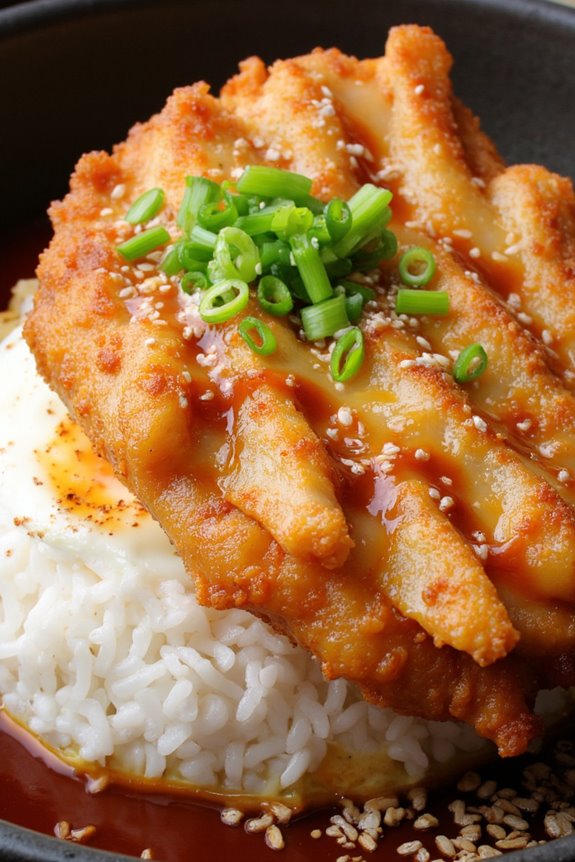
Katsudon is a beloved Japanese donburi dish that features a crispy pork cutlet served over a bed of rice, topped with a flavorful egg and onion mixture. It’s a comforting meal that combines textures and flavors, making it a favorite among food lovers. The harmony of the savory tonkatsu, the soft rice, and the rich, slightly sweet sauce makes Katsudon an excellent choice for both casual dining and special occasions.
To make this dish, you’ll need to prepare the pork cutlet first, which involves breading and frying the pork until it’s golden brown and crispy. Then, the cooked cutlet is simmered in a mixture of dashi, soy sauce, mirin, and sugar along with onions and beaten eggs. The finished product is served over steaming rice, creating a satisfying and hearty meal. With its delightful combination of flavors and textures, Katsudon is bound to impress your family and friends.
Ingredients (Serves 4-6)
- 4 boneless pork loin chops (about 1-inch thick)
- Salt and pepper, to taste
- 1 cup all-purpose flour
- 2 large eggs
- 2 cups panko breadcrumbs
- Vegetable oil, for frying
- 1 large onion, thinly sliced
- 1 cup dashi broth (or water with dashi powder)
- 4 tablespoons soy sauce
- 2 tablespoons mirin
- 1 tablespoon sugar
- 4 large eggs (for topping)
- 4-6 cups cooked Japanese short-grain rice
- Chopped green onions, for garnish (optional)
- Furikake seasoning (optional, for serving)
Cooking Instructions
- Prepare the Pork Cutlets: Season the pork loin chops with salt and pepper on both sides. Set up a breading station with three shallow bowls: one with flour, one with beaten eggs, and one with panko breadcrumbs. Dredge each pork chop in flour, dip it in the beaten eggs, and finally coat it with panko breadcrumbs, pressing lightly to ascertain the breadcrumbs stick well.
- Fry the Cutlets: Heat about 1/2 inch of vegetable oil in a large skillet over medium heat. Once the oil is hot, carefully add the breaded pork cutlets. Fry for about 4-5 minutes on each side or until golden brown and cooked through. Remove them from the skillet and place them on a paper towel-lined plate to drain excess oil.
- Slice the Cutlets: Once the pork cutlets have cooled slightly, slice them into strips. This will make it easier to serve over the rice later.
- Prepare the Sauce: In the same skillet, adjust the heat to medium-low. Add the sliced onion and sauté until soft and translucent, about 3-4 minutes. Pour in the dashi broth, soy sauce, mirin, and sugar. Stir to combine, and bring the mixture to a gentle simmer.
- Add the Cutlets and Eggs: Once the sauce is simmering, gently place the sliced pork cutlets on top of the onions in the skillet. In a separate bowl, beat the 4 large eggs, then pour them evenly over the pork and onions. Cover the skillet with a lid and let it simmer for about 2-3 minutes, or until the eggs are set but still slightly runny.
- Serve the Katsudon: Divide the cooked rice among bowls. Top each bowl of rice with the pork cutlet mixture, including the onions and eggs. Garnish with chopped green onions and serve with furikake seasoning, if desired.
Extra Tips
For the best results, verify that your oil is at the right temperature before frying the cutlets; too cool oil can result in soggy breading. You can also customize your Katsudon by adding other ingredients like mushrooms or peas to the egg mixture. If you prefer a lighter version, use chicken or tofu instead of pork. Enjoy this comforting dish with a side of pickled vegetables or miso soup for a complete meal!
Salmon Donburi
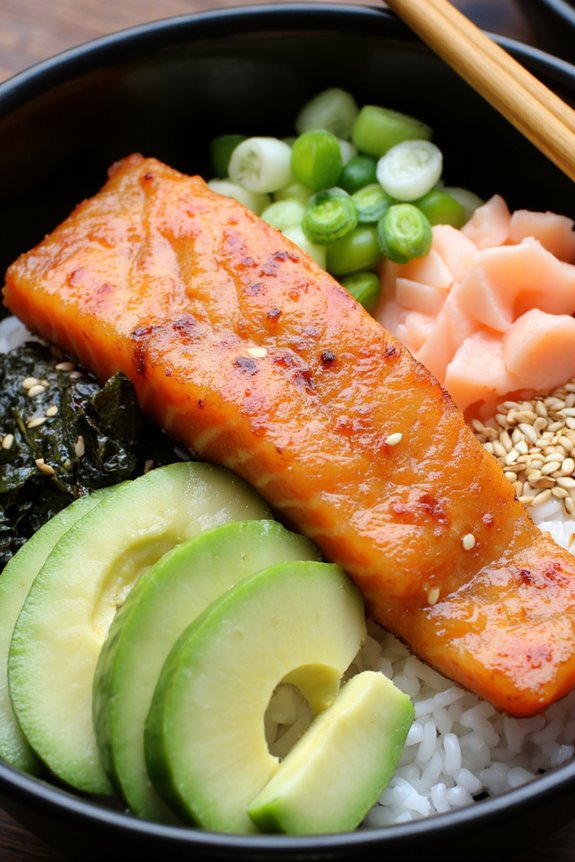
Salmon Donburi is a delightful Japanese rice bowl dish that combines tender, flavorful salmon with perfectly cooked rice and a variety of toppings. This dish not only showcases the rich umami of the salmon but also allows for a versatile combination of fresh ingredients that add color, texture, and taste.
Whether you’re enjoying it as a comforting weeknight dinner or serving it at a gathering, Salmon Donburi is sure to impress your family and friends with its simplicity and elegance.
To truly elevate the dish, consider marinating the salmon for a short time before cooking. This enhances the flavor and infuses the fish with a subtle sweetness that complements the rice and toppings beautifully. The result is a hearty, satisfying meal that brings the essence of Japanese cuisine right to your table.
Perfectly paired with a drizzle of soy sauce or a sprinkle of sesame seeds, Salmon Donburi isn’t only a feast for the palate but also for the eyes.
Ingredients (Serves 4-6)
- 4-6 pieces of salmon fillets (about 6 oz each)
- 2 cups sushi rice
- 2 ½ cups water
- 1/4 cup soy sauce
- 2 tablespoons mirin
- 1 tablespoon sugar
- 1 tablespoon sesame oil
- 1 avocado, sliced
- 1 cucumber, thinly sliced
- 2 green onions, chopped
- 1/4 cup pickled ginger
- 1 tablespoon sesame seeds
- Nori sheets, cut into strips (optional)
Cooking Instructions
1. Rinse and Cook the Rice: Begin by rinsing the sushi rice under cold water until the water runs clear. This removes excess starch and prevents the rice from becoming too sticky.
Combine the rinsed rice and water in a rice cooker or pot. Cook according to the rice cooker’s instructions or bring to a boil, then cover and simmer on low heat for about 15-20 minutes until the water is absorbed.
2. Prepare the Marinade: While the rice is cooking, whisk together soy sauce, mirin, and sugar in a small bowl until the sugar dissolves. This mixture will serve as a marinade and sauce for the salmon.
3. Marinate the Salmon: Place the salmon fillets in a shallow dish and pour half of the marinade over them. Allow the salmon to marinate for at least 15-20 minutes, turning occasionally to coat evenly.
4. Cook the Salmon: Heat sesame oil in a non-stick skillet over medium heat. Remove the salmon from the marinade and place it skin-side down in the skillet.
Cook for about 4-5 minutes on each side, or until the salmon is cooked through and flakes easily with a fork. Reserve the leftover marinade for later use.
5. Assemble the Donburi: Once the rice is cooked, fluff it with a fork and divide it into serving bowls. Top each bowl with a piece of cooked salmon.
Arrange sliced avocado, cucumber, and pickled ginger around the salmon for a colorful presentation.
6. Finish and Serve: Drizzle the reserved marinade over the assembled bowls. Garnish with chopped green onions and sprinkle with sesame seeds.
If desired, add strips of nori for an extra touch of flavor and texture. Serve immediately.
Extra Tips
When making Salmon Donburi, feel free to customize the toppings according to your preferences or what you have on hand. Other great additions include steamed vegetables, radishes, or even a soft-boiled egg for added richness.
Additionally, using fresh, high-quality salmon will make a significant difference in the flavor of the dish. For a healthier option, consider grilling the salmon instead of pan-frying, and always adjust the seasoning to suit your taste.
Enjoy experimenting with different combinations to make this dish your own!
Unadon (Grilled Eel Bowl)
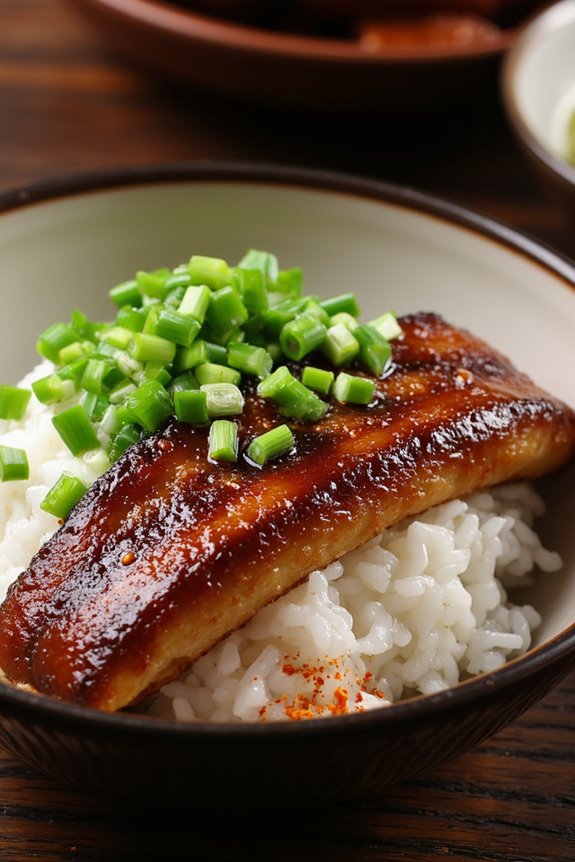
Unadon, or grilled eel bowl, is a beloved dish in Japanese cuisine, celebrated for its rich flavors and comforting texture. The star of this dish is the unagi, or freshwater eel, which is marinated in a savory-sweet sauce called kabayaki before being grilled to perfection. Served over a bed of steamed rice, this dish isn’t only delicious but also offers a unique culinary experience that transports you straight to a traditional Japanese eatery.
Preparing unadon at home may seem challenging, but with the right ingredients and techniques, you can create a restaurant-quality meal in your own kitchen. The combination of the smoky grilled eel, the umami-rich sauce, and the fluffy rice makes unadon a satisfying and indulgent option for any occasion. Whether you’re cooking for a family dinner or a special celebration, this dish is sure to impress.
Ingredients (Serves 4-6 People)
- 4-6 pieces of unagi (grilled eel fillets)
- 4 cups of cooked Japanese short-grain rice
- 1 cup of dashi stock
- 1/2 cup of soy sauce
- 1/4 cup of mirin (sweet rice wine)
- 1/4 cup of sugar
- 2 tablespoons of sake (Japanese rice wine)
- 2 green onions, finely chopped (for garnish)
- Shichimi togarashi (Japanese seven-spice blend, optional for garnish)
Cooking Instructions
- Prepare the Rice: Rinse the Japanese short-grain rice under cold water until the water runs clear to remove excess starch. Cook the rice in a rice cooker or on the stovetop according to the package instructions. Once cooked, fluff the rice with a fork and keep it warm.
- Make the Kabayaki Sauce: In a small saucepan, combine the dashi stock, soy sauce, mirin, sugar, and sake. Heat the mixture over medium heat, stirring until the sugar is completely dissolved. Let the sauce simmer for about 5-10 minutes until it thickens slightly. Remove from heat and set aside.
- Grill the Eel: If using pre-cooked unagi, you can gently heat it. Otherwise, if you have raw eel, grill it on medium heat for about 7-10 minutes on each side until it’s cooked through and has a nice char. Brush the kabayaki sauce on the eel during the last few minutes of grilling for added flavor.
- Assemble the Donburi: Place a generous serving of steamed rice into bowls. Lay the grilled eel fillets on top of the rice. Drizzle additional kabayaki sauce over the eel to enhance the flavor.
- Garnish and Serve: Sprinkle the finely chopped green onions over the top of the eel. If desired, you can also add a dash of shichimi togarashi for a bit of heat. Serve the unadon immediately while it’s hot.
Extra Tips
When preparing unadon, choosing high-quality eel is essential for the best flavor and texture. Fresh, grilled eel is ideal, but if that’s not available, frozen or pre-packaged options can work well too.
Make sure to adjust the sweetness of the kabayaki sauce to your taste by adding more or less sugar, depending on your preference. Additionally, feel free to customize the toppings by adding pickled ginger or wasabi for an extra kick, making your unadon experience uniquely yours!
Yakiniku Donburi (Grilled Meat Bowl)
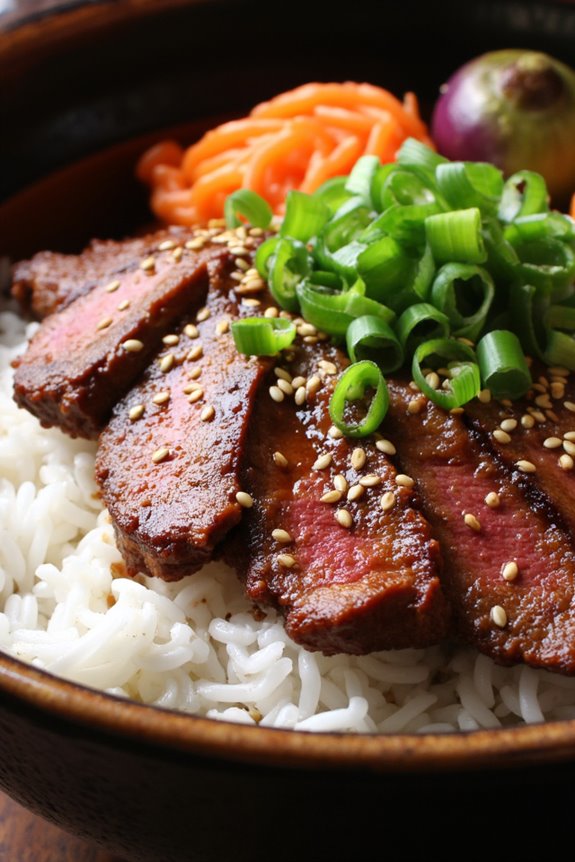
Yakiniku Donburi is a delightful Japanese dish that features grilled meat served over a steaming bowl of rice. The term “yakiniku” translates to “grilled meat,” and it typically includes a variety of meats such as beef, pork, and chicken, marinated in a savory sauce. This dish is popular for its rich flavors and the comfort it brings, making it an ideal choice for family dinners or gatherings.
The combination of tender meat, aromatic marinade, and fluffy rice creates a satisfying meal that’s both filling and delicious.
The beauty of Yakiniku Donburi lies in its versatility. You can use different types of protein based on your preference, and the marinade can be adjusted to suit your taste. Some may prefer a sweeter sauce, while others might opt for a spicier kick.
Once you’ve grilled the meat to perfection, simply layer it atop your rice, and garnish with vegetables or sesame seeds for added flavor and texture. This dish not only satisfies the hunger but also pleases the palate with its umami-rich profile.
Ingredients (Serving Size: 4-6 people)
- 1.5 lbs beef (sirloin or ribeye), thinly sliced
- 1/2 cup soy sauce
- 1/4 cup mirin
- 1/4 cup sake
- 2 tablespoons sugar
- 2 cloves garlic, minced
- 1 tablespoon ginger, grated
- 4 cups cooked Japanese rice
- 1/2 cup green onions, chopped (for garnish)
- 1 tablespoon sesame seeds (for garnish)
- Optional: pickled vegetables for serving
Cooking Instructions
- Prepare the Marinade: In a bowl, combine soy sauce, mirin, sake, sugar, minced garlic, and grated ginger. Whisk the ingredients together until the sugar dissolves completely. This marinade will infuse the meat with delicious flavors and tenderness.
- Marinate the Meat: Place the thinly sliced beef in a resealable plastic bag or a shallow dish. Pour the marinade over the meat, ensuring it’s fully coated. Seal the bag or cover the dish, and refrigerate for at least 30 minutes, allowing the flavors to penetrate the meat.
- Preheat the Grill: While the meat is marinating, preheat your grill or stovetop grill pan over medium-high heat. A hot surface is essential for achieving a good sear on the meat, which enhances the flavors.
- Grill the Meat: Remove the beef from the marinade, allowing any excess to drip off. Grill the meat for about 2-3 minutes on each side, or until it reaches your desired level of doneness. The meat should have a nice char and be tender.
- Prepare the Rice: While the meat is grilling, prepare the Japanese rice according to package instructions if not already cooked. Fluff the rice with a fork to create a light and airy texture, ready to hold the toppings.
- Assemble the Donburi: In a bowl, place a generous serving of cooked rice. Layer the grilled meat on top of the rice. Sprinkle with chopped green onions and sesame seeds for garnish. If desired, serve with pickled vegetables on the side for a tangy contrast.
- Serve and Enjoy: Serve the Yakiniku Donburi immediately, allowing everyone to enjoy the warmth and flavors of the dish while everything is fresh and hot.
Extra Tips
When preparing Yakiniku Donburi, feel free to experiment with different cuts of meat or even add vegetables like bell peppers and mushrooms to the grill for a well-rounded meal.
For an extra layer of flavor, consider adding a drizzle of sesame oil over the finished bowl. Additionally, if you have leftovers, the grilled meat can be stored in the fridge and reheated for a quick meal option later in the week. Enjoy your cooking!
Vegetable Donburi
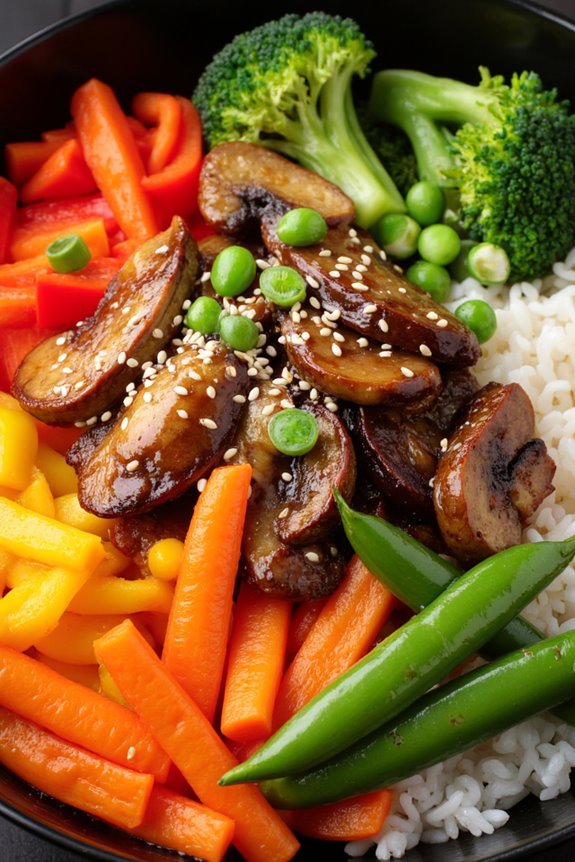
Vegetable Donburi is a delightful Japanese rice bowl dish that showcases a variety of fresh vegetables, making it a perfect option for those looking for a healthy and satisfying meal. This recipe brings together colorful vegetables, delicious sauces, and warm rice, creating a harmonious blend of flavors and textures.
Traditionally served over a generous portion of steamed rice, Vegetable Donburi isn’t only nutritious but also visually appealing, making it a favorite among vegetarians and anyone who enjoys vibrant dishes.
The beauty of Vegetable Donburi lies in its versatility, allowing you to customize the ingredients based on seasonal produce or personal preference. Whether you choose to include mushrooms, bell peppers, or leafy greens, the combination is limited only by your imagination. With a few simple steps, you can whip up this delightful dish that’s sure to please both the palate and the eye.
Ingredients (Serving Size: 4-6 people)
- 2 cups of uncooked Japanese short-grain rice
- 4 cups of water (for cooking rice)
- 1 tablespoon vegetable oil
- 1 cup sliced carrots
- 1 cup bell peppers (any color), sliced
- 1 cup broccoli florets
- 1 cup snap peas
- 1 cup shiitake mushrooms, sliced
- 2 green onions, chopped
- 3 tablespoons soy sauce
- 1 tablespoon mirin (Japanese sweet rice wine)
- 1 tablespoon sesame oil
- 1 tablespoon sesame seeds (for garnish)
- Salt and pepper to taste
Cooking Instructions
1. Prepare the Rice: Rinse the Japanese short-grain rice under cold water until the water runs clear. This helps remove excess starch. Combine the rinsed rice and 4 cups of water in a rice cooker or pot. Cook according to the rice cooker instructions or bring to a boil in the pot, then reduce the heat to low, cover, and simmer for about 18-20 minutes until the rice is tender and the water is absorbed.
Once cooked, let it sit covered for an additional 10 minutes before fluffing with a fork.
2. Sauté the Vegetables: In a large skillet or wok, heat the vegetable oil over medium-high heat. Add the sliced carrots and bell peppers first, stirring frequently for about 3-4 minutes until they begin to soften. Then, add the broccoli florets and snap peas, cooking for an additional 3 minutes.
Finally, toss in the shiitake mushrooms and continue to stir-fry until all the vegetables are tender yet still crisp, about another 3-4 minutes.
3. Flavor the Vegetables: Once the vegetables are cooked, reduce the heat to medium and add the chopped green onions, soy sauce, mirin, and sesame oil. Stir well to combine and allow the sauce to coat the vegetables evenly.
Cook for another 1-2 minutes, allowing the flavors to meld together. Season with salt and pepper to taste.
4. Assemble the Donburi: To serve, place a generous scoop of the cooked rice in a bowl. Top it with the sautéed vegetable mixture, ensuring an even distribution of colors and textures.
Sprinkle sesame seeds over the top for garnish.
Extra Tips
For an added layer of flavor, consider marinating your vegetables in a mixture of soy sauce and mirin for around 30 minutes before cooking. This will infuse the veggies with more depth and sweetness.
Additionally, feel free to experiment with different vegetables based on what’s in season or what you have on hand. Tofu or tempeh can also be added for a protein boost, making this dish even more filling.
Enjoy your Vegetable Donburi as a standalone meal or pair it with miso soup for a complete Japanese dining experience!
Chirashi Don (Scattered Sushi Bowl)
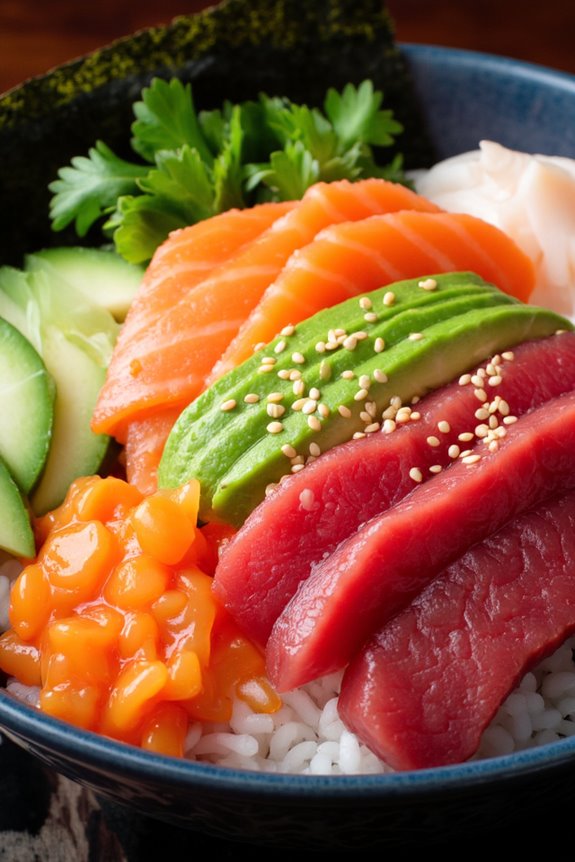
Chirashi Don, or Scattered Sushi Bowl, is a vibrant and visually appealing Japanese dish that showcases a colorful array of fresh ingredients served atop a bed of seasoned sushi rice. This delightful meal is perfect for gatherings or family dinners, allowing each person to customize their bowl with a selection of toppings.
The beauty of Chirashi Don lies in its versatility; you can use a variety of fish, vegetables, and garnishes to create a dish that reflects your personal taste and preference.
To prepare a Chirashi Don, you’ll need to start with a base of vinegared sushi rice, which is typically seasoned with rice vinegar, sugar, and salt. The toppings can range from sashimi-grade fish like tuna and salmon to vegetables such as cucumber and avocado.
Garnishes like pickled ginger and wasabi can also be added for an extra flavor kick. This dish not only tastes delicious but also offers a feast for the eyes with its colorful presentation.
Ingredients (serves 4-6):
- 2 cups sushi rice
- 2 ½ cups water
- 1/3 cup rice vinegar
- 3 tablespoons sugar
- 1 teaspoon salt
- 200g sashimi-grade tuna, sliced
- 200g sashimi-grade salmon, sliced
- 1/2 cucumber, julienned
- 1 avocado, sliced
- 1/4 cup pickled ginger
- 1/4 cup shredded nori (seaweed)
- 2 tablespoons sesame seeds
- Wasabi, for serving (optional)
- Soy sauce, for serving (optional)
Cooking Instructions:
1. Prepare the Sushi Rice:
Rinse the sushi rice under cold water until the water runs clear. This helps to remove excess starch, resulting in a better texture.
Then, soak the rice in water for about 30 minutes to 1 hour. After soaking, drain the rice and transfer it to a rice cooker or pot with 2 ½ cups of water. Cook according to the rice cooker instructions or bring to a boil, then reduce heat, cover, and simmer for 20 minutes until the rice is tender.
2. Season the Rice:
While the rice is cooking, prepare the sushi vinegar. In a small saucepan, combine the rice vinegar, sugar, and salt, and heat gently until the sugar dissolves.
Once the rice is cooked, transfer it to a large bowl and drizzle the vinegar mixture over it. Gently fold the rice with a spatula to evenly distribute the seasoning while being careful not to mash the grains. Allow the rice to cool to room temperature.
3. Prepare the Toppings:
While the rice is cooling, prepare your toppings. Slice the sashimi-grade tuna and salmon into thin slices. Julienne the cucumber and slice the avocado.
Set aside the pickled ginger and shredded nori for later use.
4. Assemble the Chirashi Don:
Once the sushi rice has cooled, divide it evenly into serving bowls. Arrange the sliced tuna and salmon on top of the rice, followed by the julienned cucumber and avocado.
Sprinkle shredded nori and sesame seeds over the top for added texture and flavor. Add a dollop of pickled ginger on the side, and serve with wasabi and soy sauce for dipping, if desired.
5. Serve and Enjoy:
Serve the Chirashi Don immediately, allowing guests to mix and match their toppings as they please. Encourage everyone to enjoy their personalized bowl of scattered sushi.
Extra Tips:
When making Chirashi Don, feel free to get creative with the toppings. You can include other seafood options like shrimp or eel, or even add seasonal vegetables such as radishes or carrots.
If you’re preparing this dish for a special occasion, consider garnishing with edible flowers or finely sliced herbs for an elegant touch. Remember to use high-quality, fresh ingredients, especially the fish, as this greatly enhances the flavor and overall experience of the dish.
Tofu Donburi
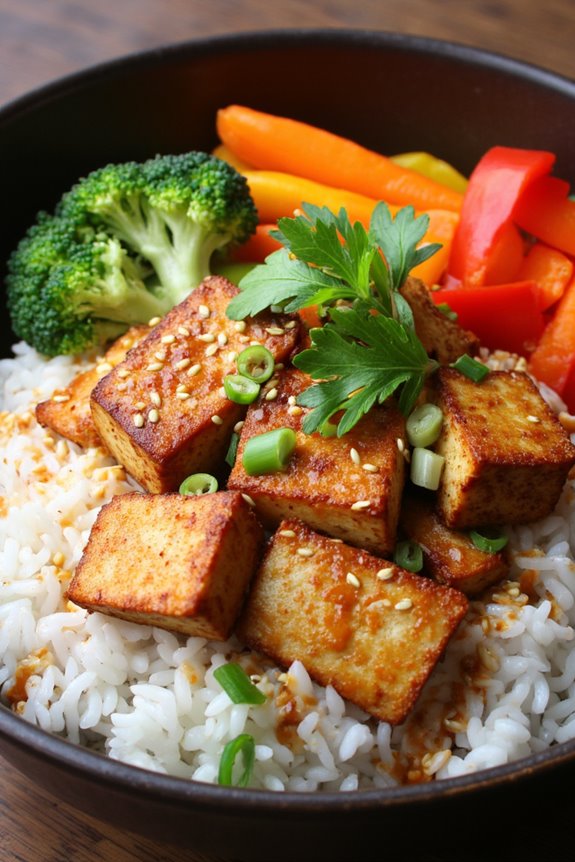
Tofu Donburi is a delightful Japanese rice bowl dish that showcases the versatility of tofu, making it a perfect option for vegetarians and anyone looking to enjoy a healthy meal. This dish combines succulent, marinated tofu with a medley of fresh vegetables and a savory sauce, all served over a warm bed of rice. The combination of textures and flavors makes Tofu Donburi not just nutritious, but also a satisfying and comforting dish.
In addition to being a delicious meal, Tofu Donburi is easy to customize according to your taste preferences. You can add or substitute vegetables as desired, making it a great way to use up any leftovers in your fridge. The harmony of flavors in the dish, along with the vibrant colors from the fresh vegetables, makes it visually appealing as well. It’s a fantastic choice for family dinners or meal prep, guaranteeing you have a delicious and filling option ready for busy days.
Ingredients (Serves 4-6)
- 14 oz (400g) firm tofu, drained and pressed
- 2 cups cooked Japanese rice (preferably short-grain)
- 1 cup broccoli florets
- 1 cup bell peppers, sliced (any color)
- 1 cup carrots, julienned
- 3 green onions, chopped
- 2 cloves garlic, minced
- 2 tablespoons soy sauce
- 1 tablespoon mirin (sweet rice wine)
- 1 tablespoon sesame oil
- 1 teaspoon cornstarch mixed with 1 tablespoon water (for thickening)
- Sesame seeds (for garnish)
- Fresh cilantro or parsley (for garnish)
Cooking Instructions
- Prepare the Tofu: Begin by draining the firm tofu and pressing it to remove excess moisture. This can be done by wrapping the tofu in a clean kitchen towel and placing a heavy object on top for about 15-20 minutes. Once pressed, cut the tofu into bite-sized cubes.
- Marinate the Tofu: In a bowl, mix together the soy sauce, mirin, and sesame oil. Add the cubed tofu to the marinade and let it sit for at least 15 minutes to absorb the flavors.
- Sauté the Vegetables: In a large skillet or wok, heat a tablespoon of oil over medium heat. Add the minced garlic and sauté for about 30 seconds until fragrant. Then, add the broccoli, bell peppers, and carrots. Stir-fry the vegetables for about 5-7 minutes until they’re tender but still crisp. Remove the vegetables from the skillet and set them aside.
- Cook the Tofu: In the same skillet, add the marinated tofu and cook over medium-high heat. Allow the tofu to sear on one side for about 3-4 minutes before gently flipping to guarantee it gets a nice golden color on all sides.
- Combine and Thicken: Once the tofu is nicely browned, return the sautéed vegetables to the skillet. Stir everything together and pour in the cornstarch mixture. Continue to cook for another 2-3 minutes until the sauce thickens and coats the tofu and vegetables.
- Serve: To assemble the Tofu Donburi, place a serving of cooked rice in each bowl. Top with the tofu and vegetable mixture, and garnish with chopped green onions, sesame seeds, and fresh herbs.
Extra Tips
For added flavor, consider using different types of vegetables based on what’s in season or what you have on hand. You can also substitute the tofu with tempeh or seitan for a different protein option.
If you want to enhance the dish further, drizzle a bit of sriracha or chili oil for some heat, or add a sprinkle of nori flakes for an extra umami touch. Enjoy your Tofu Donburi warm, and don’t hesitate to experiment with the ingredients to make it your own!
Tempura Donburi
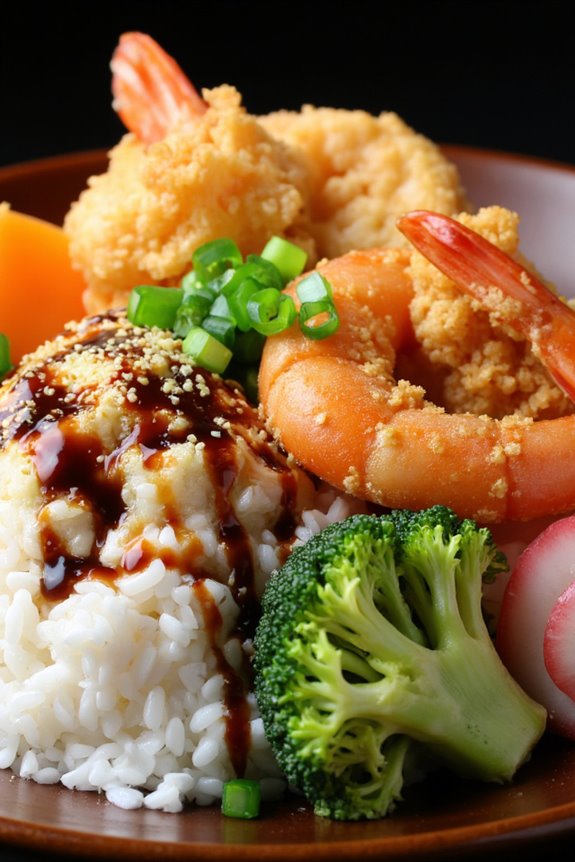
Tempura Donburi is a delicious Japanese rice bowl topped with crisp, golden tempura vegetables and seafood. This dish combines the light, airy texture of tempura with a savory sauce, served over a bed of fluffy rice. The contrast of flavors and textures makes Tempura Donburi a favorite in Japanese cuisine, perfect for a satisfying lunch or dinner.
With its vibrant colors and crispy goodness, this dish isn’t only a feast for the palate but also a visual delight.
Creating Tempura Donburi at home may seem intimidating, but with a few simple steps and fresh ingredients, you can easily replicate this restaurant-quality meal. The key to perfect tempura lies in keeping the batter cold and frying at the right temperature, guaranteeing each piece is light and crispy.
Follow this recipe to impress your family and friends with this classic Japanese dish that’s sure to become a staple in your kitchen.
Ingredients (serving size: 4-6 people)
- 2 cups sushi rice
- 2 1/2 cups water
- 1/4 cup soy sauce
- 1/4 cup mirin
- 2 tablespoons sugar
- 1 cup all-purpose flour
- 1/2 cup cornstarch
- 1 cup cold sparkling water
- 1 large egg
- 1 medium sweet potato, sliced into thin rounds
- 1 medium zucchini, sliced into thin rounds
- 1 cup broccoli florets
- 1 cup shrimp, peeled and deveined
- Vegetable oil, for frying
- Chopped green onions, for garnish
- Pickled ginger (optional), for serving
Cooking Instructions
1. Cook the Sushi Rice**: Rinse the sushi rice under cold water until the water runs clear. This removes excess starch** and guarantees the rice cooks evenly.
Combine the rinsed rice and water in a rice cooker or pot. Cook according to the rice cooker instructions or bring to a boil, then reduce to a simmer, cover, and cook for 18-20 minutes until the rice is tender and the water is absorbed. Once done, fluff the rice gently with a fork and cover to keep warm.
2. Prepare the Tempura Sauce**: In a small saucepan, combine soy sauce, mirin, and sugar. Heat over low heat**, stirring until the sugar dissolves. Once dissolved, remove from heat and set aside. This sauce will be drizzled over the tempura and rice for added flavor.
3. Make the Tempura Batter****: In a mixing bowl, whisk together the flour and cornstarch. In another bowl, beat the egg, then add the cold sparkling water.
Quickly mix the wet ingredients into the dry ingredients until just combined, being careful not to overmix. The batter should be lumpy, which is essential for achieving the perfect tempura texture.
4. Heat the Oil: In a deep frying pan or pot, heat vegetable oil to 350°F (180°C). To test if the oil is ready, drop a small amount of batter into the oil; it should sizzle and rise to the surface.
5. Fry the Tempura: Dip the prepared vegetables and shrimp into the tempura batter, allowing any excess to drip off. Carefully place them into the hot oil, frying in batches to avoid overcrowding.
Fry for about 2-3 minutes, turning occasionally until golden brown and crispy. Remove with a slotted spoon and drain on paper towels.
6. Assemble the Donburi: In serving bowls, place a generous scoop of cooked sushi rice. Top with the crispy tempura vegetables and shrimp.
Drizzle the prepared tempura sauce over the top and garnish with chopped green onions and pickled ginger, if desired.
Extra Tips
For the best results, guarantee all your ingredients are prepped and ready to go before you start frying. Keeping the batter cold is essential for achieving crispy tempura, so consider chilling your mixing bowl and utensils.
If you’re new to frying, it may take a few tries to get the oil temperature just right, but practice makes perfect. Feel free to get creative with the vegetables; seasonal options like bell peppers or eggplant can also make for a delicious twist on this traditional dish.
Enjoy your Tempura Donburi!
Chicken Teriyaki Donburi
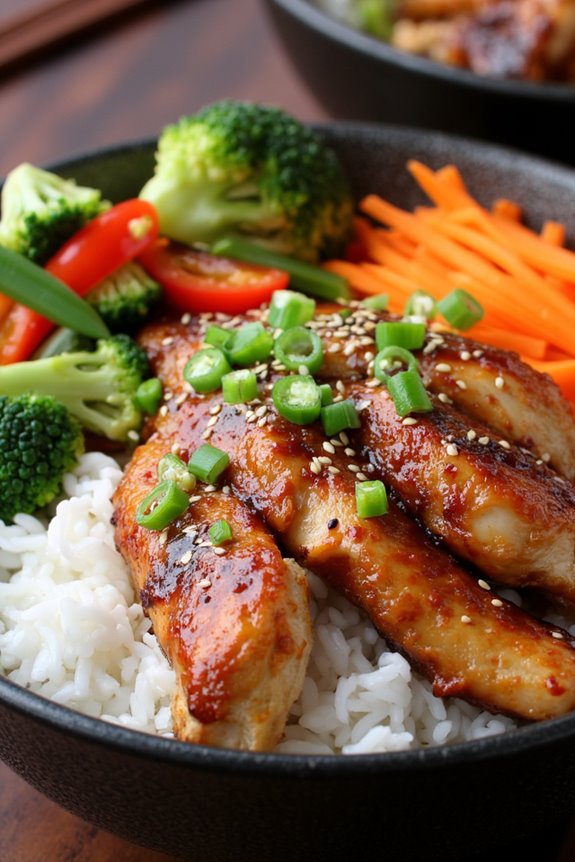
Chicken Teriyaki Donburi is a delicious and comforting Japanese rice bowl dish, perfect for family dinners or a quick weeknight meal. This dish features tender chicken glazed in a sweet and savory teriyaki sauce, served over a bed of fluffy rice and garnished with vibrant vegetables. It’s a satisfying combination of flavors and textures that will leave everyone wanting more.
Whether you’re familiar with Japanese cuisine or trying it for the first time, this Chicken Teriyaki Donburi is sure to delight your taste buds.
To prepare this dish, you’ll need some basic ingredients that are easily available at most grocery stores or Asian markets. The key to a great Chicken Teriyaki Donburi lies in the marination of the chicken and the quality of the teriyaki sauce. You can use store-bought teriyaki sauce for convenience, or you can make your own for a more authentic taste. In either case, the result will be a delightful bowl of goodness that brings the essence of Japanese home cooking right to your kitchen.
Ingredients (Serves 4-6):
- 1.5 lbs boneless, skinless chicken thighs
- 1 cup teriyaki sauce (store-bought or homemade)
- 2 cups jasmine or short-grain rice
- 4 cups water
- 1 tablespoon vegetable oil
- 1 cup broccoli florets
- 1 red bell pepper, sliced
- 1 carrot, julienned
- 3 green onions, chopped
- Sesame seeds for garnish
Cooking Instructions:
- Prepare the Chicken: Start by cutting the chicken thighs into bite-sized pieces. Place the chicken in a bowl and pour half of the teriyaki sauce over it. Allow the chicken to marinate for at least 30 minutes, or longer if possible, to absorb the flavors.
- Cook the Rice: Rinse the jasmine or short-grain rice under cold water until the water runs clear. This removes excess starch and helps achieve fluffy rice. In a medium saucepan, combine the rinsed rice and water, and bring it to a boil. Once boiling, reduce the heat to low, cover, and let it simmer for 15-20 minutes, or until the water is absorbed. Remove from heat and let it sit covered for an additional 10 minutes before fluffing with a fork.
- Sauté Vegetables: In a large skillet or wok, heat the vegetable oil over medium-high heat. Add the broccoli florets, sliced red bell pepper, and julienned carrot. Stir-fry the vegetables for 3-4 minutes until they’re tender but still crisp. Remove the vegetables from the skillet and set them aside.
- Cook the Chicken: In the same skillet, add the marinated chicken along with the remaining teriyaki sauce. Cook the chicken for about 6-8 minutes, stirring frequently, until the chicken is cooked through and slightly caramelized. Make sure the internal temperature of the chicken reaches 165°F (75°C).
- Assemble the Donburi: To serve, place a generous scoop of rice into each bowl. Top the rice with the cooked teriyaki chicken, and then add the stir-fried vegetables on the side. Garnish with chopped green onions and a sprinkle of sesame seeds.
Extra Tips: When making Chicken Teriyaki Donburi, feel free to customize it with your favorite vegetables such as snap peas, bell peppers, or mushrooms. You can also switch up the protein by using beef, shrimp, or tofu for a vegetarian option.
For an extra kick, consider adding a dash of spice with red pepper flakes or a drizzle of sriracha over the top before serving. Enjoy your meal!
Soba Noodle Donburi
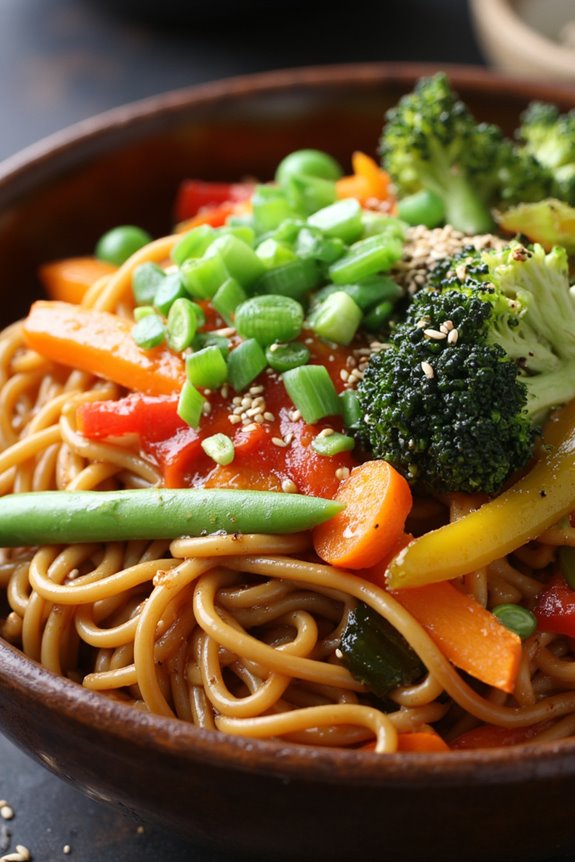
Soba Noodle Donburi is a delightful Japanese dish that combines the nutty flavor of buckwheat noodles with a medley of fresh vegetables and a savory sauce. This comforting bowl isn’t only delicious but also packed with nutrients, making it a perfect meal for any time of the day.
The versatility of soba noodles allows you to customize the dish with your favorite toppings, whether you prefer it vegetarian or with protein options such as chicken or tofu.
This dish is often served in a donburi style, which means that it’s presented in a deep bowl, allowing you to enjoy every layer of flavor. The combination of tender soba noodles, vibrant veggies, and a flavorful sauce creates a satisfying meal experience. This recipe serves 4-6 people, making it ideal for family dinners or gatherings with friends.
Ingredients
- 300g soba noodles
- 2 tablespoons sesame oil
- 2 cloves garlic, minced
- 1 small onion, sliced
- 1 bell pepper, sliced (any color)
- 1 medium carrot, julienned
- 1 cup broccoli florets
- 200g snap peas
- 3 tablespoons soy sauce
- 1 tablespoon mirin (Japanese sweet rice wine)
- 1 tablespoon rice vinegar
- 1 teaspoon grated ginger
- 2 green onions, chopped
- Sesame seeds for garnish
Cooking Instructions
- Cook the Soba Noodles: Bring a large pot of water to a boil. Add the soba noodles and cook according to package instructions, usually about 4-5 minutes. Stir occasionally to prevent sticking. Once cooked, drain and rinse under cold water to stop the cooking process. Set aside.
- Prepare the Vegetables: While the noodles are cooking, wash and slice the vegetables. Slice the onion and bell pepper, julienne the carrot, and cut the broccoli into florets. This guarantees that all vegetables are ready for stir-frying.
- Heat the Oil: In a large skillet or wok, heat the sesame oil over medium-high heat. Allow the oil to become hot but not smoking, which will infuse the dish with a rich flavor.
- Sauté the Aromatics: Add the minced garlic and sliced onion to the skillet. Sauté for about 2-3 minutes until the onion becomes translucent and fragrant. This step builds the base flavor for your donburi.
- Add the Vegetables: Toss in the bell pepper, carrot, broccoli, and snap peas. Stir-fry the vegetables for about 5-7 minutes until they’re tender but still crisp. Maintaining some crunch adds texture to the dish.
- Combine with Noodles: Once the vegetables are cooked, add the drained soba noodles into the skillet. Gently toss everything together, making sure that the noodles are well-mixed with the vegetables.
- Add the Sauce: In a small bowl, mix together the soy sauce, mirin, rice vinegar, and grated ginger. Pour this sauce over the noodle and vegetable mixture in the skillet. Stir well to coat everything evenly in the sauce and cook for an additional 2-3 minutes to warm through.
- Serve: Transfer the soba noodle donburi into individual bowls. Garnish with chopped green onions and a sprinkle of sesame seeds for added flavor and presentation.
Extra Tips
When preparing Soba Noodle Donburi, feel free to experiment with different vegetables based on the season or your preference. You can also add protein such as grilled chicken, shrimp, or tofu for a more filling meal.
Make sure to keep an eye on the noodles while cooking, as overcooking can lead to a mushy texture. Finally, if you enjoy a bit of heat, consider adding red pepper flakes or a drizzle of chili oil to the dish before serving. Enjoy your delicious and nutritious donburi!
Curry Donburi
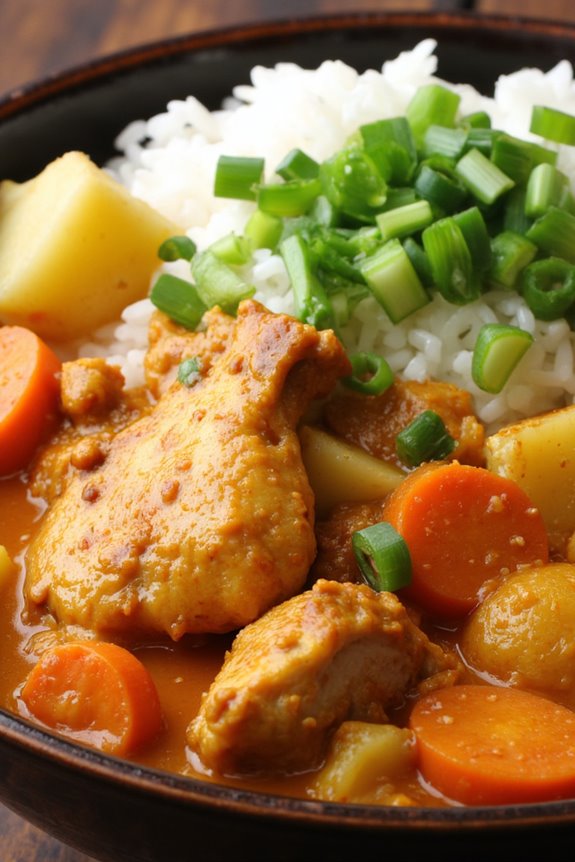
Curry Donburi is a comforting Japanese rice bowl dish that combines tender meat, vegetables, and a rich curry sauce served over a bed of fluffy rice. This dish isn’t only filling but also easy to prepare, making it perfect for weeknight dinners or when you crave something warm and satisfying.
The unique blend of spices in the curry gives it a distinctive flavor that’s both mild and aromatic, appealing to a variety of taste preferences. In Japanese cuisine, donburi refers to a rice bowl dish, and curry is a beloved staple.
While there are many variations of curry donburi, this recipe features succulent chicken, carrots, and potatoes simmered in a savory curry sauce, making it a family favorite. Serve it with a sprinkle of green onions or a side of pickled vegetables for an added touch of authenticity.
Ingredients (Serves 4-6):
- 1 lb (450g) chicken thighs or breasts, cut into bite-sized pieces
- 2 medium potatoes, peeled and diced
- 2 medium carrots, sliced
- 1 medium onion, sliced
- 2 tablespoons vegetable oil
- 4 cups water
- 3-4 tablespoons Japanese curry powder or curry roux
- 2 cups cooked white rice
- Salt and pepper to taste
- Green onions, chopped (for garnish)
Cooking Instructions:
- Prepare the Ingredients: Begin by washing and cutting your vegetables. Peel and dice the potatoes, slice the carrots, and slice the onion. Cut the chicken into bite-sized pieces. This preparation will help streamline the cooking process.
- Sauté the Vegetables: In a large pot or pan, heat the vegetable oil over medium heat. Add the sliced onions and cook until they become translucent and fragrant, about 3-4 minutes. This step will release the natural sweetness of the onions, enhancing the flavor of the dish.
- Brown the Chicken: Add the chicken pieces to the pot and cook until they’re lightly browned on all sides, approximately 5-7 minutes. Browning the chicken adds depth to the flavor and improves the overall taste of the curry.
- Add Vegetables and Water: Once the chicken is browned, add the diced potatoes and sliced carrots to the pot. Pour in the water and bring the mixture to a boil. Cooking the vegetables with the chicken will allow them to absorb the savory flavors of the broth.
- Simmer and Add Curry: Reduce the heat to a simmer, cover the pot, and let it cook for about 15 minutes or until the vegetables are tender. Afterward, stir in the Japanese curry powder or curry roux, mixing well until fully dissolved. Allow it to simmer for another 5-10 minutes to thicken the sauce.
- Season and Serve: Taste the curry and season with salt and pepper as needed. Once the sauce has thickened, serve the curry over bowls of cooked white rice. Garnish with chopped green onions for color and added flavor.
Extra Tips:
For a richer taste, consider adding a tablespoon of soy sauce or a splash of mirin to the curry during cooking.
If you want to customize the dish, feel free to include other vegetables like bell peppers or peas. You can also adjust the curry’s spiciness by choosing a milder or spicier curry powder.
Finally, let the curry sit for a few minutes before serving, as the flavors will meld together beautifully, making for an even more delicious meal.
Seafood Donburi
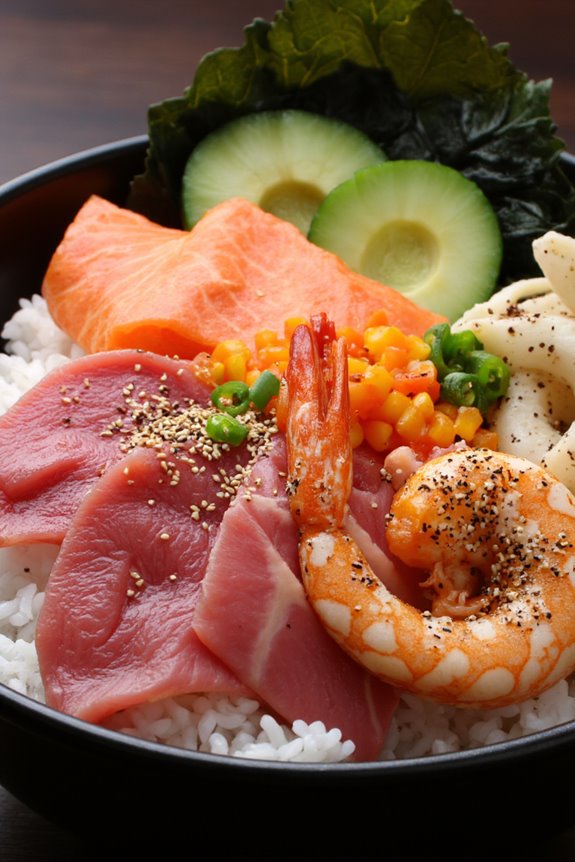
Seafood Donburi is a delightful Japanese rice bowl dish that showcases a variety of fresh seafood over a bed of fluffy rice. This dish isn’t only flavorful but also visually appealing, making it perfect for both casual family dinners and special occasions.
The combination of tender fish, succulent shrimp, and other seafood, all served with a splash of soy sauce or tare, creates a harmonious blend of flavors that transport you straight to the shores of Japan.
This dish can be customized with your choice of seafood, making it versatile and accommodating to personal preferences. Some might prefer a lighter touch with just a few slices of sashimi-grade fish, while others may enjoy a hearty bowl filled with an assortment of seafood.
Regardless of how you choose to prepare it, Seafood Donburi is sure to fulfill your cravings for a comforting, delicious meal.
Ingredients (serving size: 4-6 people)
- 3 cups sushi rice
- 4 cups water
- 1/4 cup rice vinegar
- 2 tablespoons sugar
- 1 teaspoon salt
- 200g sashimi-grade salmon, sliced
- 200g sashimi-grade tuna, sliced
- 200g cooked shrimp, peeled and deveined
- 100g squid, cleaned and sliced
- 1 avocado, sliced
- 1 cucumber, thinly sliced
- 1/4 cup seaweed salad
- Soy sauce, for drizzling
- Wasabi, for serving
- Pickled ginger, for serving
- Sesame seeds, for garnish
- Green onions, chopped for garnish
Cooking Instructions
1. Prepare the Sushi Rice: Rinse the sushi rice under cold water until the water runs clear. This removes excess starch. Drain the rice and combine it with 4 cups of water in a rice cooker or a pot.
If using a pot, bring to a boil, then reduce to a simmer and cover. Cook for about 18-20 minutes or until the rice is tender and water is absorbed. Remove from heat and let it sit covered for an additional 10 minutes.
2. Season the Rice: In a small saucepan, combine rice vinegar, sugar, and salt over low heat until dissolved. Gently fold this mixture into the cooked sushi rice using a spatula.
Be careful not to mash the rice; you want to keep it fluffy. Let the rice cool to room temperature.
3. Prepare the Seafood: While the rice is cooling, prepare your seafood. Slice the salmon and tuna into thin pieces, clean and slice the squid, and ascertain the shrimp are cooked and peeled.
Arrange the seafood beautifully on a plate for easy assembly later.
4. Assemble the Donburi: In each serving bowl, add a generous scoop of the seasoned sushi rice as the base. Layer the assorted seafood on top of the rice.
You can arrange them in a visually appealing manner or mix them for a more casual presentation.
5. Add Fresh Toppings****: Top the seafood with slices of avocado, cucumber, and a portion of seaweed salad. Drizzle a little soy sauce over the top to enhance the flavors.
Finish with a sprinkle of sesame seeds and chopped green onions for added texture and taste.
6. Serve and Enjoy: Serve the Seafood Donburi immediately with wasabi and pickled ginger on the side for those who enjoy a little kick.
Extra Tips
When making Seafood Donburi, freshness is key. Always opt for high-quality, fresh seafood, especially if you’re using raw fish.
If you’re unsure about the freshness of your seafood, consider visiting a reputable fish market. Additionally, feel free to adjust the seafood selection based on your preferences or seasonal availability.
Accompanying your donburi with a light miso soup or a side salad can create a well-rounded meal experience.
