

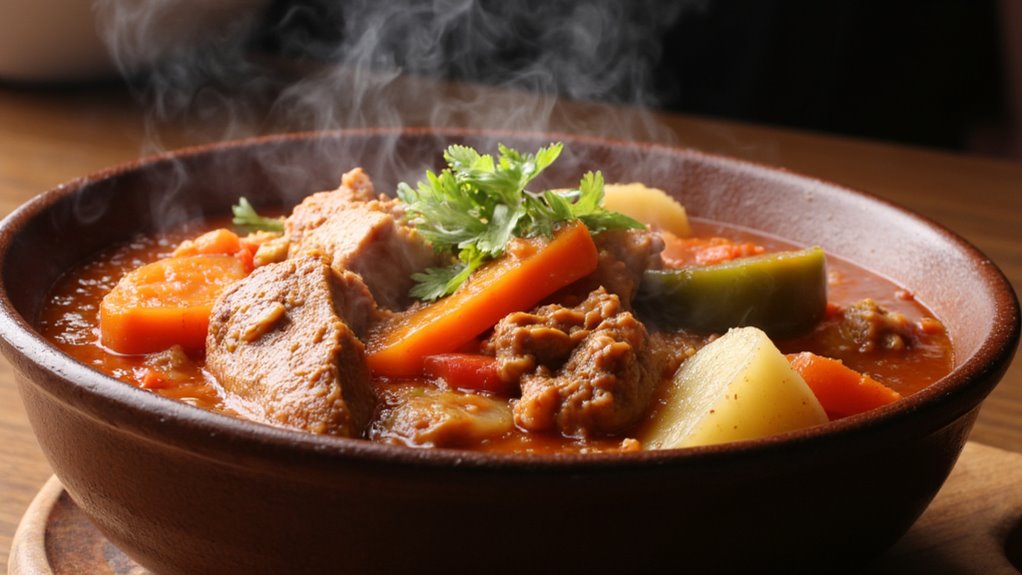
When it comes to comfort food, Filipino stews are at the top of my list. There’s just something about a bowl of Sinigang or Kare-Kare that wraps you in warmth. These dishes bring back memories of family gatherings and cozy nights. Each spoonful offers a taste of home and happiness. Ready to discover which stews can bring that comfort to your table?
Sinigang Na Baboy
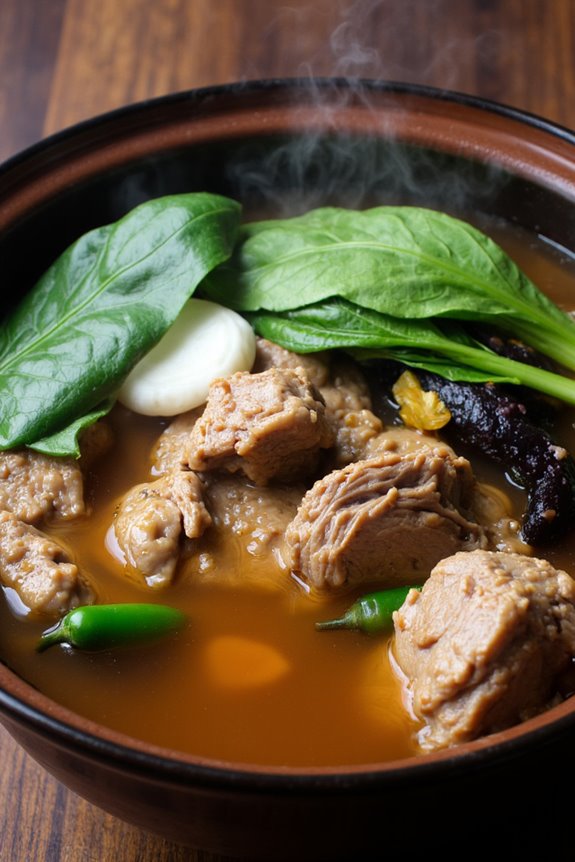
Sinigang na Baboy is a beloved Filipino sour pork soup that’s known for its invigorating and tangy flavor. This hearty dish is typically made with tender pork, a variety of vegetables, and a unique souring agent that distinguishes it from other stews. The traditional choice for souring is tamarind, but other options like calamansi or green mango can also be used for a different twist. Sinigang is often served with steamed rice, making it a perfect comfort food for family gatherings or rainy days.
What sets Sinigang apart is its versatility; you can customize it with your choice of vegetables such as radish, eggplant, and water spinach. The balance between the savory meat, the tartness of the broth, and the freshness of the vegetables creates a delightful dish that warms both the body and soul. Whether you’re a seasoned cook or trying your hand at Filipino cuisine for the first time, Sinigang Na Baboy is a rewarding recipe that promises to impress.
Ingredients (Serves 4-6)
- 2 lbs pork belly or pork shoulder, cut into chunks
- 8 cups water
- 1 large onion, quartered
- 2 medium tomatoes, quartered
- 1 radish (labanos), sliced
- 1 medium eggplant, sliced
- 1 cup water spinach (kangkong)
- 2-3 green chili peppers (siling pangsigang)
- 1 cup tamarind paste or 1-2 packs of fresh tamarind
- 2 tablespoons fish sauce (patis)
- Salt and pepper to taste
Cooking Instructions
- Prepare the Pork: In a large pot, combine the pork and water. Bring it to a boil over medium-high heat. Once boiling, reduce the heat to a simmer and skim off any scum that rises to the surface. This will help guarantee a clear broth.
- Add Aromatics: After simmering for about 30 minutes, add the quartered onion and tomatoes to the pot. These ingredients enhance the flavor of the broth. Let it simmer for an additional 15 minutes or until the pork is tender.
- Incorporate the Tamarind: If using fresh tamarind, soak it in hot water for about 10 minutes, then mash and strain to extract the juice. Add the tamarind paste or the strained juice to the pot, stirring well. This will give the stew its signature sour flavor.
- Add the Vegetables: Once the broth is sour to your liking, add the sliced radish and eggplant. Let them cook for about 5-7 minutes until they’re tender. The addition of these vegetables not only adds flavor but also nutrition.
- Finish with Greens and Seasoning: Finally, add the water spinach and green chili peppers. Cook for an additional 2-3 minutes until the spinach is wilted. Season the stew with fish sauce, salt, and pepper, adjusting to taste.
- Serve: Remove from heat and let it rest for a few minutes. Serve hot with steamed rice and enjoy the comforting flavors of Sinigang Na Baboy.
Extra Tips
To enhance the sourness of your Sinigang Na Baboy, feel free to adjust the amount of tamarind according to your taste preference. You can also experiment with different vegetables like string beans or bok choy, as they can add a delightful crunch and additional flavor.
For a spicier kick, use more chili peppers or even add a dash of chili flakes. Sinigang is best enjoyed fresh, but you can store any leftovers in an airtight container in the fridge for a couple of days. Reheat gently before serving again.
Kare-Kare
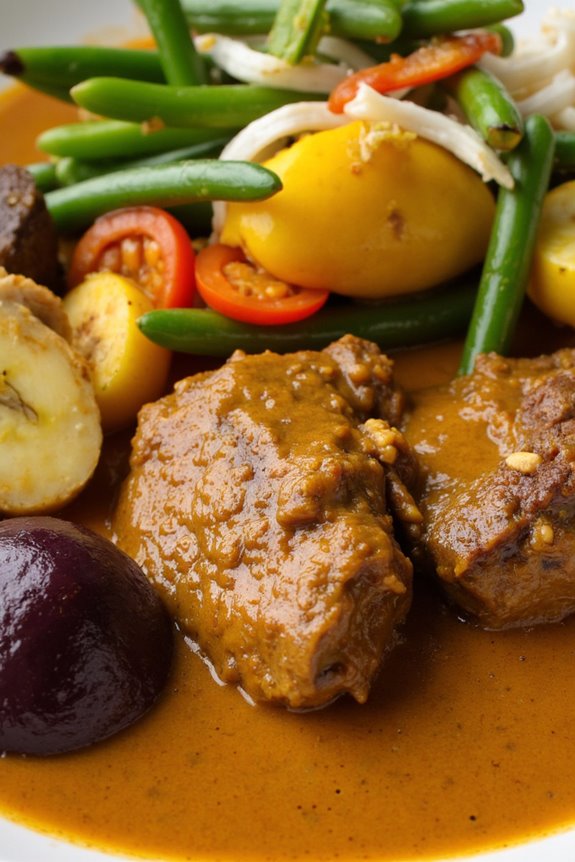
Kare-Kare is a beloved Filipino stew known for its rich peanut sauce, tender meat, and hearty vegetables. Traditionally made with oxtail, tripe, or even pork hocks, this dish is often served during special occasions and family gatherings. The creamy, nutty flavor from ground peanuts or peanut butter combined with a variety of vegetables creates a comforting dish that warms the soul.
Complemented by a side of shrimp paste (bagoong), Kare-Kare is a delightful meal that’s sure to impress your family and friends.
The preparation for Kare-Kare might seem intricate, but with a little patience, you can create this crowd-pleaser in your own kitchen. The key to a great Kare-Kare lies in the balance of flavors in the sauce and the tenderness of the meat. Allowing the stew to simmer helps develop its rich flavors, making each bite a wonderful experience.
Gather your ingredients, roll up your sleeves, and get ready to indulge in a taste of the Philippines!
Ingredients (Serves 4-6)
- 2 lbs oxtail (or beef shank)
- 1 lb tripe (optional)
- 1/2 cup peanut butter
- 1/4 cup ground peanuts
- 1/4 cup rice flour
- 1/2 cup water
- 1 large eggplant, sliced
- 1 bunch of banana hearts, cut into quarters
- 1 cup string beans, cut into 2-inch pieces
- 1 small onion, chopped
- 4 cloves garlic, minced
- 4 cups beef broth
- 3 tablespoons fish sauce
- Salt and pepper to taste
- 1 tablespoon vegetable oil
- Shrimp paste (bagoong) for serving
Cooking Instructions
- Prepare the meat: In a large pot, combine the oxtail and tripe (if using) with enough water to cover. Bring to a boil, then reduce the heat and simmer for about 2-3 hours, or until the meat is tender. Skim off any scum that rises to the surface. This step is essential for achieving clean-tasting broth and tender meat.
- Sauté the aromatics: In a separate large pan, heat the vegetable oil over medium heat. Add the minced garlic and chopped onion, sautéing until fragrant and the onions are translucent. This step helps build the foundational flavors of the stew.
- Combine meat and broth: Once the meat is tender, remove it from the pot and set aside. Strain the broth to filter out any impurities. In the same pot with the sautéed garlic and onions, add the strained beef broth and return the meat to the pot. Stir in the fish sauce and let it simmer for about 15 minutes.
- Create the sauce: In a small bowl, mix the peanut butter, ground peanuts, rice flour, and water until smooth. Slowly add this mixture to the pot, stirring continuously to avoid lumps. Simmer for another 10-15 minutes, allowing the sauce to thicken and the flavors to meld together.
- Add vegetables: Once the sauce has thickened, add the sliced eggplant, banana hearts, and string beans to the pot. Cook for an additional 10 minutes or until the vegetables are tender but still vibrant. This step adds texture and freshness to the dish.
- Season and serve: Taste the stew and season with salt and pepper as needed. Serve hot with shrimp paste on the side, allowing each person to add as much as they prefer for an extra burst of flavor.
Extra Tips
For an authentic Kare-Kare experience, consider using a mix of different meats such as beef shank and oxtail to enhance the flavor profile. If you want to make it a vegetarian dish, substitute the meat with eggplant, tofu, and more vegetables while keeping the peanut sauce the same.
Additionally, you can prepare the stew ahead of time and reheat it, as the flavors deepen with time. Enjoy your homemade Kare-Kare with loved ones for a heartwarming meal!
Beef Stew (Bistek)
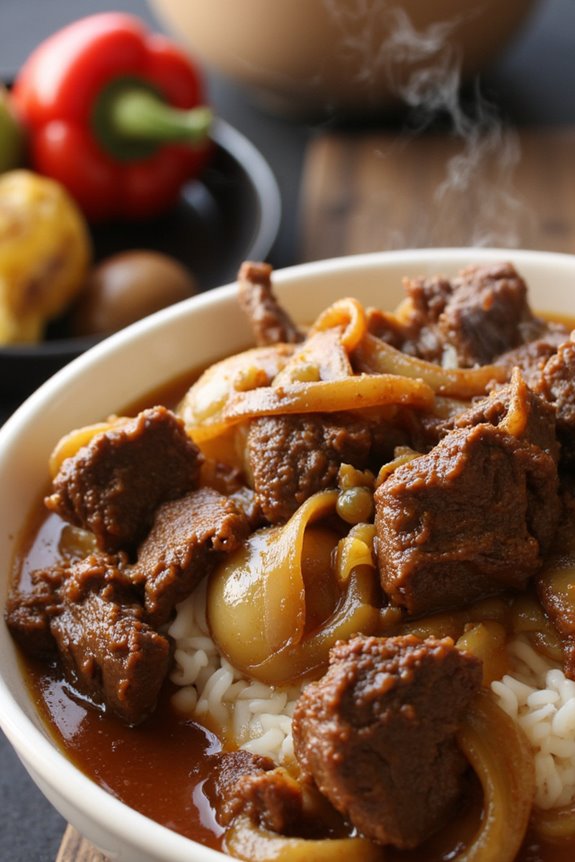
Bistek, or Filipino Beef Steak, is a hearty and flavorful dish that showcases tender beef marinated in a savory sauce made from soy sauce, calamansi (or lemon), and garlic.
It’s often served with caramelized onions, which add a touch of sweetness that beautifully balances the savory flavors of the beef. This comforting stew is perfect for family gatherings or cozy dinners at home, and it pairs wonderfully with steamed rice, soaking up the delicious sauce.
Making Bistek isn’t only straightforward but also allows for customization based on your taste preferences. You can adjust the level of tanginess and saltiness by varying the amount of calamansi and soy sauce used.
For a more robust flavor, consider adding bell peppers or mushrooms to the mix. This dish is sure to warm you up on a chilly day and bring a taste of the Philippines to your kitchen.
Ingredients (Serves 4-6):
- 2 lbs beef sirloin, sliced thinly
- 1/2 cup soy sauce
- 1/4 cup calamansi juice (or lemon juice)
- 1 tablespoon minced garlic
- 2 medium onions, sliced
- 1/4 cup vegetable oil
- Salt and pepper to taste
- 1 cup water
- Optional: sliced bell peppers or mushrooms
Cooking Instructions:
- Marinate the Beef: In a bowl, combine the sliced beef, soy sauce, calamansi juice, and minced garlic. Mix well and let it marinate for at least 30 minutes, or up to overnight in the refrigerator for deeper flavor.
- Sauté the Onions: In a large pan or skillet, heat the vegetable oil over medium heat. Add the sliced onions and sauté until they’re soft and translucent, about 5-7 minutes. Remove them from the pan and set aside.
- Cook the Beef: In the same pan, add the marinated beef along with the marinade. Cook over medium-high heat until the beef is browned on all sides, about 5-10 minutes. Stir occasionally to guarantee even cooking.
- Add Water and Simmer: Once the beef is browned, add 1 cup of water to the pan. Bring the mixture to a boil, then reduce the heat and let it simmer for about 30 minutes. This will help tenderize the beef and develop the flavors.
- Combine with Onions: After simmering, add the sautéed onions back into the pan and stir to combine. Season with salt and pepper to taste. If you’re adding bell peppers or mushrooms, include them at this stage and cook for an additional 5-10 minutes until they’re tender.
- Serve: Once everything is cooked through and the flavors have melded together, remove from heat. Serve the Bistek hot with steamed rice, allowing the sauce to be spooned over the rice.
Extra Tips:
When preparing Bistek, it’s important to slice the beef against the grain to guarantee tenderness.
If you’re short on time, marinating for just 30 minutes can still yield delicious results, but longer marination will enhance the flavor profile considerably.
For an added depth of flavor, consider using a combination of soy sauce and oyster sauce in the marinade.
Finally, adjust the seasoning according to your preference, as some may prefer a saltier dish while others might enjoy a more subtle flavor. Enjoy your cozy Filipino stew!
Chicken Adobo
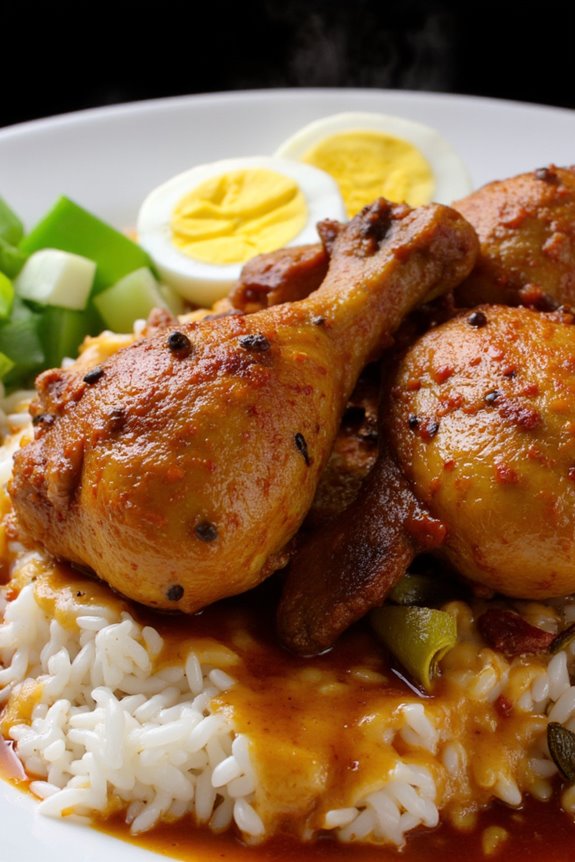
Chicken Adobo is one of the most iconic dishes in Filipino cuisine, known for its savory and slightly tangy flavor profile. This rustic stew is characterized by the use of vinegar, soy sauce, garlic, and bay leaves, creating a rich sauce that beautifully melds with the tender chicken.
Often considered the unofficial national dish of the Philippines, Chicken Adobo can vary from region to region and is often customized with additional ingredients like potatoes, hard-boiled eggs, or coconut milk, depending on personal preferences and local traditions.
The beauty of Chicken Adobo lies in its simplicity and the depth of flavor that can be achieved with just a few key ingredients. It’s a dish that can be enjoyed on its own or served with steamed rice, which perfectly absorbs the delicious sauce.
Whether you’re cooking for a family gathering or just a cozy dinner at home, Chicken Adobo is sure to warm your heart and fill your stomach.
Ingredients (serving size: 4-6 people):
- 2 lbs chicken (thighs and drumsticks, bone-in, skin-on)
- 1 cup soy sauce
- 1 cup white vinegar
- 1 cup water
- 1 medium onion, sliced
- 6 cloves garlic, crushed
- 3-4 bay leaves
- 1 teaspoon black peppercorns
- 2 tablespoons cooking oil
- 1 tablespoon sugar (optional)
- Salt to taste
- Sliced green onions or hard-boiled eggs for garnish (optional)
Cooking Instructions:
- Marinate the Chicken: In a large bowl, combine the chicken pieces with soy sauce, vinegar, crushed garlic, and black peppercorns. Make sure the chicken is well coated. Cover the bowl and marinate it in the refrigerator for at least 30 minutes, or up to overnight for better flavor.
- Sear the Chicken: Heat the cooking oil in a large pot or Dutch oven over medium-high heat. Remove the chicken from the marinade (reserve the marinade for later) and add it to the pot. Sear the chicken pieces until they’re golden brown on all sides, about 5-7 minutes. This step adds depth and flavor to the dish.
- Sauté the Aromatics: Remove the chicken from the pot and set aside. In the same pot, add sliced onions and sauté until they become translucent, about 3 minutes. This will enhance the overall flavor of the stew.
- Combine and Simmer: Return the chicken to the pot and pour in the reserved marinade along with water and bay leaves. Stir in sugar if you prefer a hint of sweetness. Bring the mixture to a boil, then reduce the heat to low. Cover the pot and let it simmer for about 30-40 minutes, or until the chicken is tender and fully cooked.
- Adjust Seasoning: After simmering, taste the sauce and adjust seasoning with salt if necessary. If you prefer a thicker sauce, you can remove the lid and let it simmer for an additional 10-15 minutes until it reduces to your desired consistency.
- Serve: Once done, transfer the Chicken Adobo to a serving dish and garnish with sliced green onions or hard-boiled eggs if desired. Serve hot with steamed rice to soak up the flavorful sauce.
Extra Tips: For an extra layer of flavor, consider adding a touch of coconut milk towards the end of the cooking process for a creamy variation. Additionally, using a mix of dark and light soy sauce can give a more balanced flavor profile.
Tinola
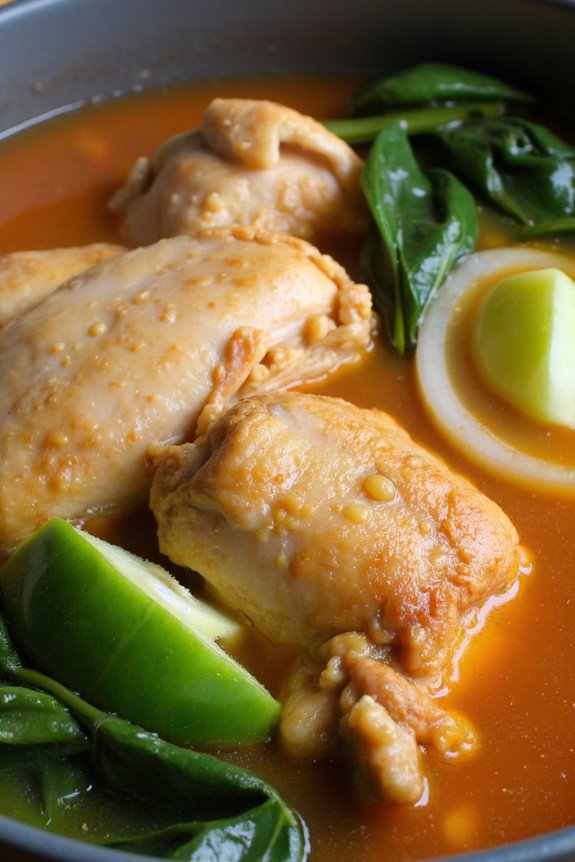
Tinola is a comforting Filipino stew that’s perfect for cool evenings or when you’re feeling under the weather. This dish is traditionally made with chicken, green papaya, and a variety of aromatic herbs and spices that create a rich, flavorful broth.
Tinola isn’t only delicious but also packed with nutrients, making it a wholesome meal for the whole family. The light yet hearty nature of this stew makes it a staple in many Filipino households.
To enjoy Tinola, serve it hot, accompanied by a bowl of steamed rice. The combination of tender chicken, soft vegetables, and savory broth is sure to warm you up. The unique blend of ginger, garlic, and fish sauce provides a wonderful depth of flavor that’s characteristic of this beloved Filipino dish.
Let’s jump in and learn how to prepare this comforting stew.
Ingredients (Serves 4-6):
- 1.5 lbs chicken (preferably bone-in, skin-on)
- 1 medium onion, sliced
- 4 cloves garlic, minced
- 1 thumb-sized piece of ginger, sliced into thin strips
- 1 medium green papaya, peeled and sliced into wedges
- 4 cups chicken broth or water
- 2 tablespoons fish sauce (patis)
- 1 cup fresh spinach or malunggay (moringa leaves)
- 2 tablespoons cooking oil
- Salt and pepper to taste
- 2-3 green chili peppers (optional)
Cooking Instructions:
- Prepare the Ingredients: Begin by gathering all your ingredients. Wash and chop the vegetables as needed, and make sure the chicken is cleaned and cut into serving pieces. This step guarantees that everything is ready for a smooth cooking process.
- Sauté Aromatics: In a large pot, heat the cooking oil over medium heat. Add the sliced onions and sauté until they become translucent, about 2-3 minutes. Then, add the minced garlic and sliced ginger, cooking for an additional 1-2 minutes until fragrant. This will create a flavorful base for your stew.
- Brown the Chicken: Add the chicken pieces to the pot, and cook them for about 5-7 minutes until they’re lightly browned on all sides. This step adds depth of flavor to the meat and enhances the overall taste of the Tinola.
- Add Liquid and Seasoning: Pour in the chicken broth (or water) and bring the mixture to a gentle boil. Add the fish sauce, and season with salt and pepper to taste. Reduce the heat to a simmer and let it cook for about 15-20 minutes, allowing the chicken to become tender and the flavors to meld together.
- Incorporate Vegetables: Once the chicken is tender, add the green papaya wedges to the pot. Allow the mixture to simmer for an additional 5-7 minutes until the papaya is cooked but still slightly firm. If using green chili peppers, add them at this stage for a bit of heat.
- Finish with Greens: Ultimately, stir in the fresh spinach or malunggay leaves, and let them wilt for about 2 minutes. This adds a fresh, vibrant color to your dish while providing essential nutrients.
- Serve: Taste the broth and adjust the seasoning if necessary. Ladle the Tinola into bowls, and serve hot with steamed rice alongside. Enjoy the comforting flavors of this traditional Filipino stew!
Extra Tips:
When preparing Tinola, feel free to customize the vegetables according to your preference or what’s available in your pantry. Common additions include chili leaves or even other types of squash.
To enhance the broth further, you can simmer the chicken with bones for a more robust flavor. Finally, don’t rush the cooking process; allowing the chicken to simmer will yield a more tender texture and richer broth.
Enjoy your delicious Tinola!
Caldereta
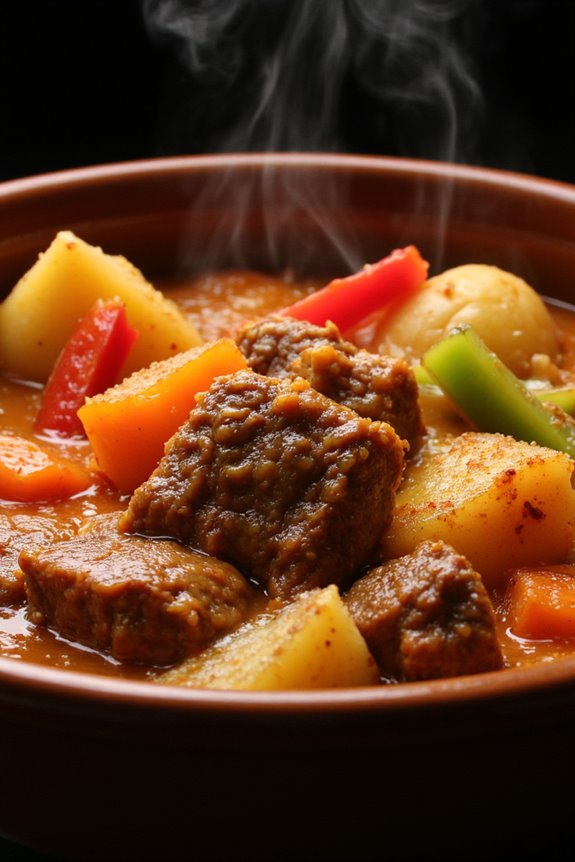
Caldereta is a classic Filipino stew that’s known for its rich and hearty flavor, making it a perfect comfort food for families and gatherings. Traditionally made with beef, this dish is simmered slowly in a savory tomato-based sauce, combined with vegetables and a hint of creaminess that elevates its taste.
The combination of spices, vegetables, and meat creates a sumptuous dish that isn’t only filling but also bursting with flavors, making it a favorite during special occasions and festive gatherings.
In making Caldereta, the key is to allow the meat to tenderize in the sauce, ensuring that every bite is infused with the rich flavors from the ingredients. This dish is often served with steamed rice, which beautifully balances the savory notes of the stew.
Whether you’re new to Filipino cuisine or a seasoned cook, Caldereta is a delightful dish to prepare and share with loved ones.
Ingredients (serving size: 4-6 people):
- 2 lbs beef (chuck or brisket), cut into cubes
- 1 medium onion, chopped
- 4 cloves garlic, minced
- 2 medium potatoes, peeled and cubed
- 1 red bell pepper, sliced
- 1 green bell pepper, sliced
- 1 cup carrots, sliced
- 1 cup tomato sauce
- 1 cup beef broth
- 1/2 cup peanut butter
- 1/4 cup soy sauce
- 2 tablespoons vinegar
- 2 tablespoons cooking oil
- 1 teaspoon ground black pepper
- 1 teaspoon salt
- 2 bay leaves
- Optional: 1/2 cup green peas (for garnish)
Cooking Instructions:
- Prepare the ingredients: Begin by chopping the onions, mincing the garlic, and cutting the beef into cubes. Also, peel and cube the potatoes, slice the bell peppers, and slice the carrots. Having all the ingredients ready will streamline the cooking process.
- Brown the beef: In a large pot or Dutch oven, heat the cooking oil over medium-high heat. Add the beef cubes in batches to avoid overcrowding. Brown the beef on all sides for about 5-7 minutes, which helps develop a deeper flavor. Once browned, remove the beef from the pot and set aside.
- Sauté the aromatics: In the same pot, add the chopped onions and minced garlic. Sauté for about 3-4 minutes until the onions are translucent and fragrant. This step builds the base flavor for the stew.
- Combine ingredients: Return the browned beef to the pot. Stir in the tomato sauce, beef broth, soy sauce, vinegar, peanut butter, ground black pepper, salt, and bay leaves. Mix well until all the ingredients are combined.
- Simmer the stew: Bring the mixture to a boil, then reduce the heat to low. Cover the pot and let it simmer for about 1.5 to 2 hours, or until the beef is tender. Stir occasionally and check the consistency; add a little more broth if needed.
- Add the vegetables: After the beef has become tender, add the cubed potatoes, sliced bell peppers, and sliced carrots. Continue to simmer for another 20-30 minutes, or until the vegetables are cooked through.
- Finish and serve: Taste the stew and adjust the seasoning with salt and pepper if necessary. Remove the bay leaves before serving. If using, stir in the green peas just before serving for added color and flavor. Serve hot with steamed rice.
Extra Tips:
For a more authentic Caldereta flavor, consider adding a splash of hot sauce or chili peppers to the stew for a bit of heat. You can also substitute beef with chicken or pork if desired.
For those who want a thicker sauce, let the stew simmer uncovered for the last 15-20 minutes to reduce the liquid. Ultimately, don’t hesitate to personalize the dish by adding your favorite vegetables or adjusting the seasonings to suit your taste!
Pork Afritada
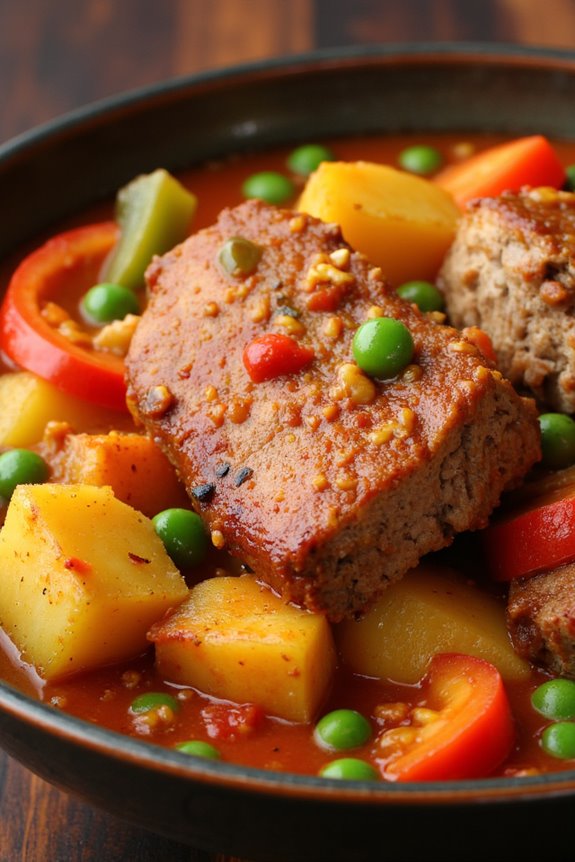
Pork Afritada is a beloved Filipino stew known for its rich and savory flavors, making it a perfect dish for family gatherings or cozy dinners. This hearty meal consists of tender pork, vibrant vegetables, and a luscious tomato-based sauce that brings everything together in a warm embrace. The blend of spices and ingredients creates a comforting dish that’s sure to please even the pickiest eaters.
Traditionally served with steamed rice, Pork Afritada is a staple in many Filipino households and is often associated with celebrations and family traditions.
Preparing Pork Afritada is relatively simple, but it does require a bit of time to let the flavors meld together. The key to a truly delicious Afritada lies in cooking the pork until it’s tender and infusing the sauce with the aroma of garlic, onions, and bell peppers.
This dish isn’t only filling but also provides a delightful combination of textures and tastes, making it a favorite among Filipino cuisine enthusiasts. With just a few ingredients and some patience, you can create a dish that will warm both the heart and the stomach.
Ingredients (serving size: 4-6 people)
- 2 lbs pork shoulder or pork belly, cut into bite-sized pieces
- 2 tablespoons vegetable oil
- 1 medium onion, chopped
- 4 cloves garlic, minced
- 2 medium potatoes, peeled and cubed
- 1 carrot, peeled and sliced
- 1 red bell pepper, sliced
- 1 green bell pepper, sliced
- 1 cup tomato sauce
- 1 cup water or chicken broth
- 1 tablespoon soy sauce
- 1 teaspoon salt
- 1/2 teaspoon black pepper
- 1 bay leaf
- 1 cup frozen peas (optional)
- 1 tablespoon sugar (optional)
Cooking Instructions
- Sauté the Aromatics: In a large pot or deep skillet, heat the vegetable oil over medium heat. Add the chopped onion and minced garlic. Sauté for about 3-4 minutes until the onions become translucent and fragrant. This will form the base flavor for your stew.
- Brown the Pork: Add the pork pieces to the pot and cook until they’re browned on all sides, which should take about 5-7 minutes. Browning the meat enhances its flavor and gives the stew a deeper color.
- Add the Vegetables: Once the pork is browned, add the cubed potatoes and sliced carrots to the pot. Stir everything together and sauté for another 3-4 minutes. The vegetables will begin to soften and soak up the flavors from the pork and aromatics.
- Incorporate the Sauce: Pour in the tomato sauce and stir well to combine. Then add the water or chicken broth to the pot. Season with soy sauce, salt, black pepper, and add the bay leaf. Mix everything together, ensuring the pork and vegetables are submerged in the liquid.
- Simmer the Stew: Bring the mixture to a boil, then reduce the heat to low. Cover the pot and let it simmer for about 45 minutes to 1 hour, or until the pork is tender. Stir occasionally to prevent sticking, and add more water or broth if necessary to maintain the desired consistency.
- Add the Bell Peppers and Peas: About 10 minutes before the stew is finished, add the sliced red and green bell peppers, and frozen peas if using. This will add a pop of color and freshness to the dish. Continue to simmer until the vegetables are tender.
- Final Adjustments: Taste the stew and adjust the seasoning if needed. If you prefer a slightly sweeter sauce, you can add a tablespoon of sugar at this point. Remove the bay leaf before serving.
- Serve: Serve the Pork Afritada hot over steamed rice, allowing the flavorful sauce to soak into the rice for an extra delicious experience.
Extra Tips
When making Pork Afritada, consider using a variety of vegetables based on your preference or what you have on hand. For added richness, you can incorporate some chopped tomatoes or even a splash of vinegar for a tangy twist.
If time allows, let the stew rest for a few hours or overnight in the refrigerator; the flavors will deepen and meld together beautifully. Reheat gently before serving, and enjoy a comforting bowl of this traditional Filipino stew!
Laing
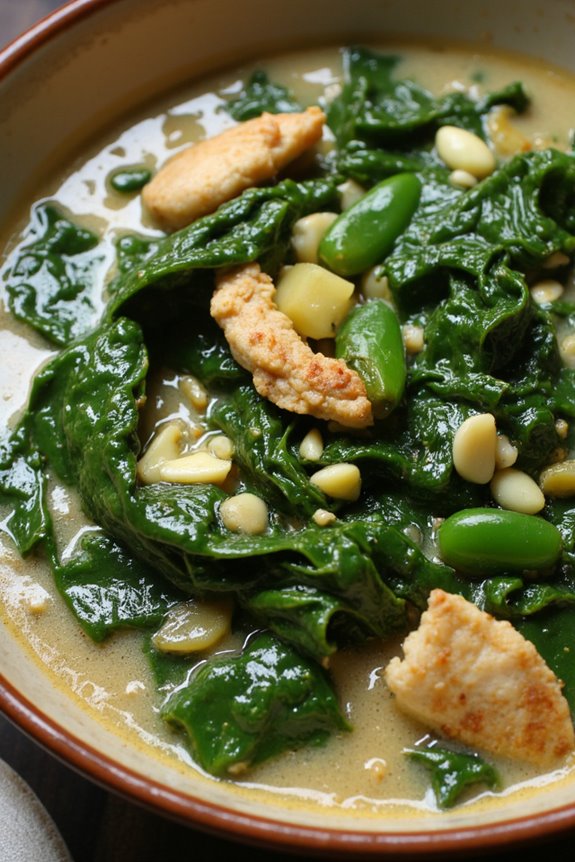
Laing is a rich and flavorful Filipino dish made primarily from dried taro leaves simmered in coconut milk. This delightful stew is a staple in Bicol, a region known for its spicy dishes and coconut-based recipes. The combination of creamy coconut milk, chili peppers, and the earthy taste of taro leaves creates a comforting dish that’s often enjoyed with steamed rice.
Laing is versatile, and you can add different proteins like shrimp, pork, or even tofu to make it heartier. This dish isn’t only delicious but also relatively easy to prepare. With the right ingredients and a bit of patience, you can create a pot of Laing that will warm your home and satisfy your appetite.
Whether you’re having a casual family dinner or a gathering with friends, Laing is sure to impress with its vibrant flavors and comforting aroma.
Ingredients (Serves 4-6):
- 200 grams dried taro leaves
- 2 cups coconut milk
- 1 cup water
- 1 medium onion, chopped
- 4 cloves garlic, minced
- 1 thumb-sized ginger, minced
- 2-4 pieces green chili peppers (adjust to taste)
- 2 tablespoons shrimp paste (bagoong)
- 1 tablespoon fish sauce (optional)
- Salt and pepper to taste
- 2 tablespoons cooking oil
Cooking Instructions:
- Prepare the Taro Leaves: Rinse the dried taro leaves thoroughly in cold water to remove any impurities. Drain and set aside. If you’re using fresh taro leaves, verify they’re young and tender, as older leaves can be tough and bitter.
- Sauté Aromatics: In a large pot, heat the cooking oil over medium heat. Add the chopped onion and sauté until it becomes translucent, about 2-3 minutes. Then, add the minced garlic and ginger, stirring for another minute until fragrant.
- Add the Shrimp Paste: Stir in the shrimp paste (bagoong) and fish sauce (if using) to the pot. Cook for about 2 minutes, allowing the flavors to meld together. This step adds depth and umami to the dish.
- Combine Liquid Ingredients: Pour in the coconut milk and water, mixing well. Bring the mixture to a gentle simmer, making certain it doesn’t boil aggressively, as this can cause the coconut milk to separate.
- Incorporate the Taro Leaves: Once the coconut milk is simmering, add the dried taro leaves to the pot. Stir to combine and make sure the leaves are submerged in the liquid. Add the green chili peppers for heat, adjusting the amount based on your spice preference.
- Simmer and Cook: Let the stew simmer for about 30-40 minutes, stirring occasionally. This allows the taro leaves to soften and absorb the flavors of the coconut milk. The dish is done when the leaves are tender and the mixture has thickened to a creamy consistency.
- Season to Taste: Taste the Laing and adjust the seasoning with salt and pepper. If you prefer a spicier dish, you can add more chili peppers at this stage.
- Serve: Once cooked, remove the pot from heat and serve the Laing hot with steamed rice. Enjoy the rich and comforting flavors of this traditional Filipino stew.
Extra Tips:
When making Laing, always verify that the taro leaves are properly cooked, as undercooked taro leaves can be toxic.
If you prefer a spicier kick, consider adding chopped red chili peppers or even a dash of chili flakes. For a heartier version, feel free to incorporate proteins like diced pork or shrimp during the sautéing step.
Finally, remember that Laing tastes even better the next day as the flavors continue to develop, so consider making it ahead of time!
Pochero
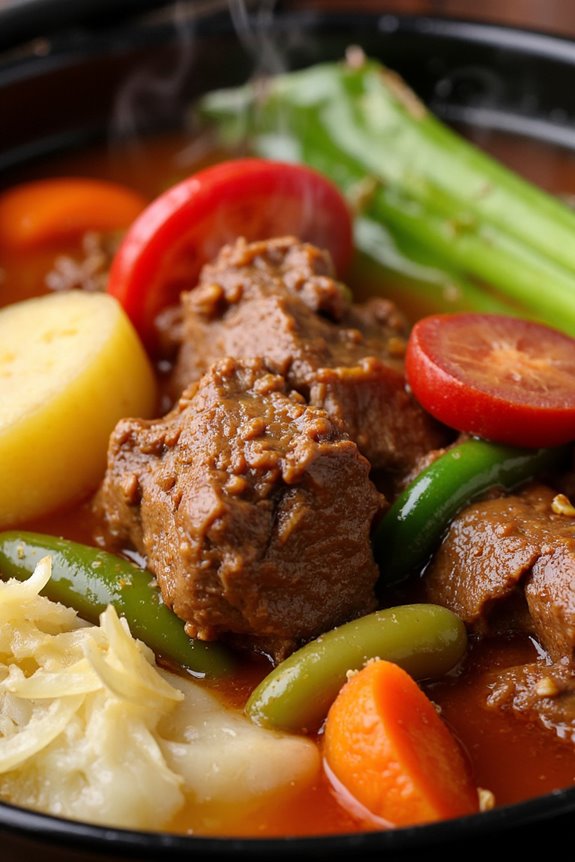
Pochero is a beloved Filipino stew that reflects the heart and soul of traditional Filipino cooking. This hearty dish typically combines meat, vegetables, and a rich broth, making it perfect for family gatherings and special occasions.
The beautiful medley of flavors comes from the slow-cooking process, where the ingredients meld together, creating a comforting and satisfying meal that warms the heart and fills the stomach. While there are many variations, the classic Pochero often features beef, chorizo, and an array of vegetables such as plantains and cabbage, making it a delightful way to enjoy the diverse flavors of Filipino cuisine.
To prepare Pochero, you’ll need to gather fresh ingredients and allow ample time for cooking to guarantee that the flavors develop beautifully. This dish can be served with steamed rice, allowing you to soak up its delicious broth. Whether it’s for a family dinner or a festive gathering, Pochero is sure to be a crowd-pleaser that brings everyone together around the table.
Ingredients (Serves 4-6):
- 1 lb beef shank, cut into chunks
- 1/2 lb chorizo de Bilbao, sliced
- 4 cups water
- 1 medium onion, chopped
- 3 cloves garlic, minced
- 2 medium potatoes, peeled and cubed
- 1 medium carrot, sliced
- 1 ripe plantain, peeled and sliced
- 1 cup green beans, trimmed
- 2 cups cabbage, chopped
- 2 tbsp fish sauce
- Salt and pepper to taste
- 2 tbsp cooking oil
- Optional: hard-boiled eggs for garnish
Cooking Instructions:
- Sauté Aromatics: In a large pot, heat the cooking oil over medium heat. Add the chopped onion and minced garlic, sautéing until the onion becomes translucent and fragrant. This step builds the foundation of flavor for your stew.
- Brown the Beef: Add the beef shank to the pot, stirring to brown the meat on all sides. This process locks in the juices and enhances the overall flavor profile of the stew.
- Add Chorizo: Once the beef is browned, add the sliced chorizo de Bilbao. Sauté for another 2-3 minutes until the chorizo releases its oils and flavors into the pot.
- Pour in Water: Add the 4 cups of water to the pot, scraping the bottom to deglaze and incorporate all the flavorful bits. Bring the mixture to a boil, then reduce heat to a simmer.
- Season the Broth: Stir in the fish sauce, and season with salt and pepper to taste. Allow the stew to simmer for about 45 minutes, or until the beef is tender.
- Incorporate Vegetables: Add the cubed potatoes, sliced carrots, and plantain to the pot. Continue to simmer for an additional 15 minutes, or until the vegetables are tender yet firm.
- Finish with Green Beans and Cabbage: Finally, add the green beans and chopped cabbage to the pot. Cook for an additional 5-7 minutes, until the cabbage is wilted and the beans are bright green.
- Serve: Once all ingredients are cooked through, taste and adjust seasoning if necessary. Ladle the Pochero into bowls and serve hot, optionally garnished with hard-boiled eggs.
Extra Tips:
When making Pochero, feel free to customize the vegetables based on what you have on hand or your personal preferences. Popular additions include sweet potatoes, bell peppers, or even corn.
Also, allowing the stew to rest for a little while before serving can help the flavors meld even further. If you’re looking for a thicker broth, you can mash some of the potatoes into the stew just before serving. Enjoy your delicious Pochero with a side of steamed rice for a truly comforting meal!
Ginataang Baka
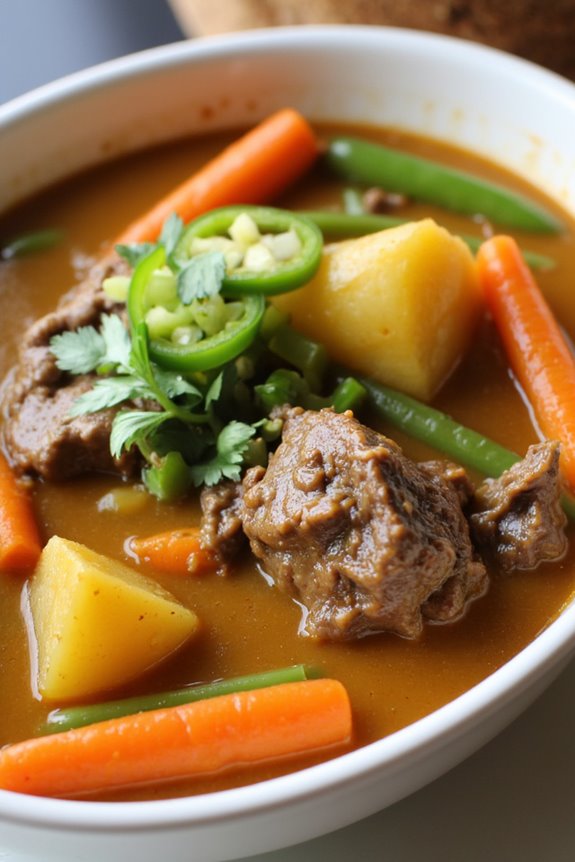
Ginataang Baka is a delightful Filipino stew that showcases the rich and creamy flavors of coconut milk combined with tender beef. This comforting dish marries the hearty textures of meat and vegetables, making it a staple in many Filipino households, especially during special occasions or family gatherings. The use of coconut milk not only enhances the taste but also adds a luxurious creaminess that binds all the ingredients together.
This dish typically includes a variety of vegetables and aromatic spices, which contribute to its depth of flavor. The slow-cooked beef absorbs the essence of coconut and spices, resulting in a savory and slightly sweet stew that’s best served with steamed rice. Whether you’re introducing someone to Filipino cuisine or simply craving a warm and filling meal, Ginataang Baka is sure to satisfy your appetite and warm your heart.
Ingredients (Serves 4-6)
- 2 lbs beef chuck, cut into cubes
- 1 can (13.5 oz) coconut milk
- 1 cup beef broth
- 2 medium potatoes, peeled and cubed
- 1 large carrot, sliced
- 1 medium onion, chopped
- 4 cloves garlic, minced
- 1 thumb-sized ginger, sliced
- 2-3 green chili peppers (optional)
- 2 tablespoons fish sauce
- 2 tablespoons vegetable oil
- Salt and pepper to taste
- 1 cup green beans, trimmed
- 1 tablespoon soy sauce (optional)
- 1 tablespoon sugar (optional)
- Fresh cilantro or green onions for garnish (optional)
Cooking Instructions
- Prepare the Ingredients: Start by cutting the beef into cubes and chopping the vegetables. Having everything prepped will make the cooking process smoother and more efficient.
- Sauté Aromatics: In a large pot, heat the vegetable oil over medium heat. Add the chopped onions, minced garlic, and sliced ginger. Sauté for about 3-5 minutes until the onions become translucent and fragrant. This step builds a strong flavor base for the stew.
- Brown the Beef: Increase the heat to medium-high and add the cubed beef to the pot. Cook until the beef is browned on all sides, which should take about 5-7 minutes. Browning the meat adds a rich flavor and depth to the dish.
- Season the Meat: Once the beef is browned, pour in the fish sauce and soy sauce (if using). Stir well to coat the meat with the sauces. Let it cook for another 2-3 minutes to infuse the flavors.
- Add Coconut Milk and Broth: Pour in the coconut milk and beef broth, stirring to combine. Bring the mixture to a gentle boil, then reduce the heat to low. Cover the pot and let it simmer for about 1 hour, or until the beef is tender.
- Incorporate Vegetables: After an hour, add the cubed potatoes and sliced carrots to the pot. Stir to combine and continue to simmer for another 15-20 minutes until the vegetables are cooked through.
- Finish with Green Beans and Seasoning: Finally, add the green beans and optional sugar. Let it simmer for another 5-10 minutes. Taste and adjust the seasoning with salt and pepper as needed. The stew should have a balanced flavor with a hint of sweetness from the coconut milk.
- Serve: Once everything is cooked and the flavors have melded together, remove the pot from heat. Serve the Ginataang Baka hot, garnished with fresh cilantro or green onions if desired, alongside steamed rice.
Extra Tips
When cooking Ginataang Baka, it’s important to use a cut of beef that becomes tender when slow-cooked, such as chuck or brisket. If you have time, marinating the beef in soy sauce, garlic, and ginger for a few hours or overnight can enhance the flavors even further.
Additionally, feel free to adjust the vegetables based on your preference or what you have on hand. Adding a splash of vinegar or lime juice right before serving can also brighten the dish and balance the richness of the coconut milk. Enjoy your cozy meal!
Menudo
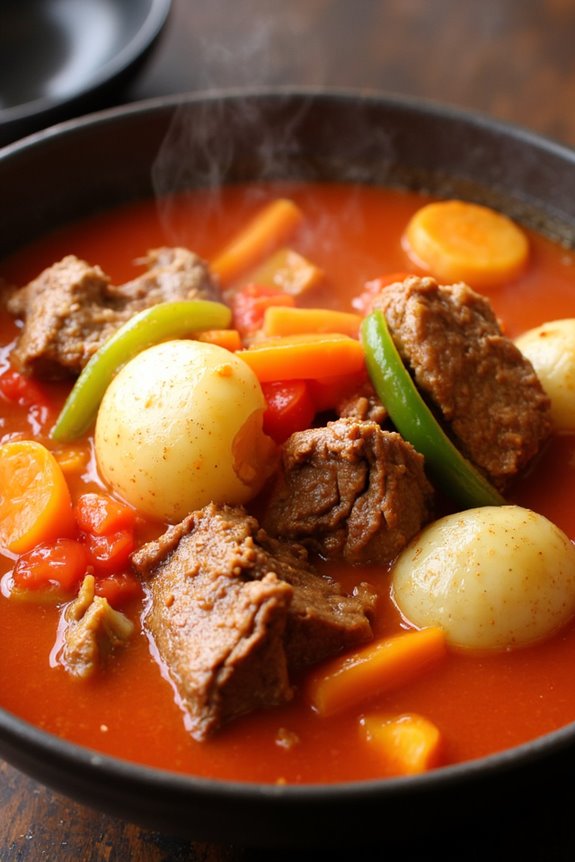
Menudo is a beloved Filipino stew that brings warmth and comfort to any dining table. This hearty dish is characterized by its rich tomato sauce and tender meat, often featuring pork and liver, along with a medley of vegetables. Perfect for family gatherings and celebrations, Menudo isn’t just a meal but a tradition that echoes the essence of Filipino home cooking. The dish is usually served with steamed rice, making it a complete and satisfying meal.
Cooking Menudo involves a few simple steps but requires a bit of patience to allow the flavors to meld beautifully. The combination of spices and ingredients creates a deliciously savory stew that’s both filling and flavorful. Whether you’re new to Filipino cooking or a seasoned chef, this recipe is sure to impress your family and friends alike.
Ingredients (Serves 4-6)
- 1 lb pork belly, diced into small cubes
- 1/2 lb pork liver, diced into small cubes
- 2 tablespoons vegetable oil
- 1 medium onion, chopped
- 4 cloves garlic, minced
- 2 medium tomatoes, chopped
- 2 medium carrots, diced
- 1 medium potato, diced
- 1 cup bell peppers (red and green), diced
- 1 cup tomato sauce
- 2 cups water
- 2 tablespoons soy sauce
- 1 tablespoon fish sauce
- 1 teaspoon sugar
- Salt and pepper to taste
- Bay leaves (2-3 pieces)
- Optional: raisins for sweetness
Cooking Instructions
- Heat the Oil: In a large pot or Dutch oven, heat the vegetable oil over medium heat. This will be the base for sautéing your aromatics and meat.
- Sauté Aromatics: Add the chopped onions and minced garlic to the pot. Sauté them until the onions become translucent and fragrant, which should take about 2-3 minutes.
- Cook the Tomatoes: Stir in the chopped tomatoes and cook until they soften and begin to break down, about 4-5 minutes. This will enhance the flavor base of your Menudo.
- Brown the Pork: Add the diced pork belly to the pot. Cook until the meat is browned on all sides, stirring occasionally. This step helps to develop the rich flavors of the dish.
- Incorporate Liver: Once the pork is nicely browned, add the diced pork liver. Cook for another 3-4 minutes, allowing the liver to absorb the flavors and cook through.
- Add Tomato Sauce and Water: Pour in the tomato sauce and water. Stir well to combine all the ingredients. This forms the stew base for Menudo.
- Season the Mixture: Add the soy sauce, fish sauce, sugar, bay leaves, and season with salt and pepper. Stir to incorporate everything, then bring the mixture to a gentle simmer.
- Add Vegetables: Once simmering, add the diced carrots, potatoes, and bell peppers. These vegetables not only add nutrition but also color and texture to the stew.
- Simmer: Cover the pot and let it simmer for about 30-40 minutes, or until the meat is tender and the flavors have melded together. Stir occasionally and check the consistency; add more water if necessary.
- Adjust Seasoning: Taste the stew and adjust the seasoning if needed. If you prefer a bit of sweetness, you can add raisins at this stage.
- Serve: Once everything is cooked and the flavors are to your liking, remove the bay leaves and serve the Menudo hot with steamed rice.
Extra Tips
When making Menudo, consider marinating the pork in soy sauce and garlic for a few hours beforehand to enhance the flavor. Additionally, feel free to customize the vegetables based on your preferences or what you have on hand.
For a spicier kick, you can add chili peppers. Remember, the longer the stew simmers, the more flavorful it becomes, so don’t rush the cooking process!
