

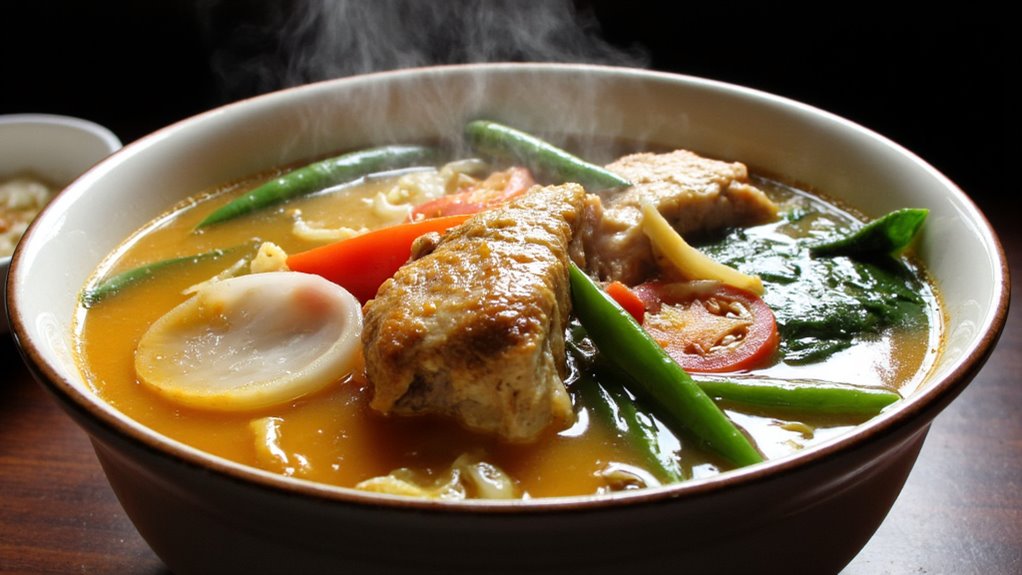
Exploring the vibrant world of Filipino sinigang is like embarking on a tangy adventure. This sour soup brings people together with its invigorating flavors and comforting warmth. Whether you love the classic pork version or enjoy a unique twist with guava, each recipe offers something special. It’s a dish that invites you to savor every spoonful. Let’s uncover some delightful variations that might just become your new favorites.
Classic Pork Sinigang
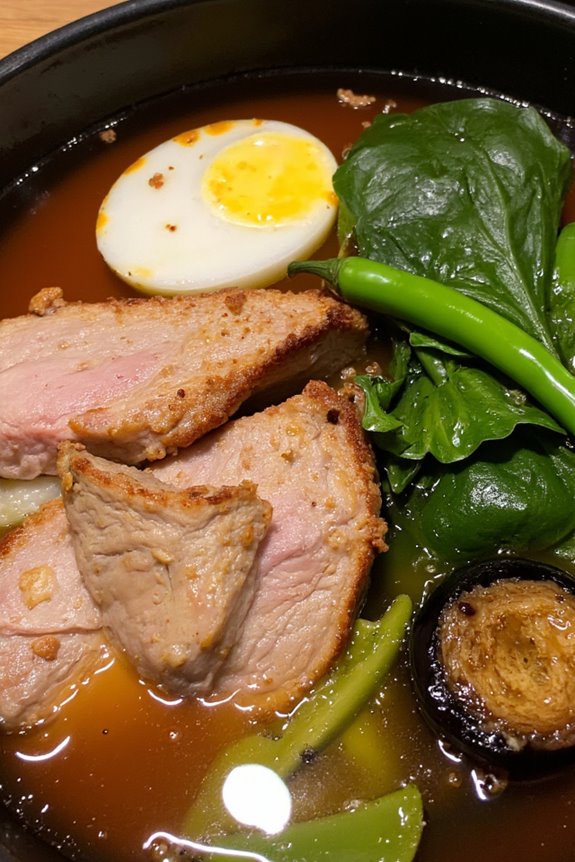
Sinigang is a traditional Filipino soup known for its savory and sour flavor, often enhanced by the use of tamarind. The dish is usually made with pork, which adds a rich and hearty texture, making it a favorite among families.
With a variety of vegetables commonly included, such as radish, eggplant, and water spinach, Classic Pork Sinigang isn’t only delicious but also packed with nutrients. The balance of flavors and the comforting warmth of the soup make it an ideal meal for any occasion.
Cooking Classic Pork Sinigang is a straightforward process that allows the natural flavors of the ingredients to shine through. The key to a great sinigang lies in the broth, which should be tangy but not overly sour. This recipe will guide you through the steps to create this beloved dish, bringing a taste of Filipino cuisine right into your kitchen.
Ingredients (serving size: 4-6 people)
- 1.5 lbs pork belly, cut into bite-sized pieces
- 8 cups water
- 1 medium onion, quartered
- 2 medium tomatoes, quartered
- 1 radish (labanos), sliced
- 1 cup water spinach (kangkong)
- 1 medium eggplant, sliced
- 2-3 green chili peppers (siling pangsigang)
- 1 cup tamarind paste or 1 pack of sinigang mix
- Salt to taste
- Fish sauce (patis) to taste
Cooking Instructions
- Prepare the Pork: Start by rinsing the pork belly under cold water. Cut it into bite-sized pieces, guaranteeing that they’re uniform for even cooking. This guarantees that each piece cooks through properly and absorbs the flavors of the broth.
- Boil the Water: In a large pot, add 8 cups of water and bring it to a boil over high heat. The boiling water will help to extract the flavors from the pork and vegetables, creating a rich broth.
- Add the Pork and Aromatics: Once the water is boiling, add the pork belly pieces along with the quartered onion and tomatoes. Reduce the heat to medium and let it simmer for about 45 minutes to 1 hour. This slow cooking process allows the pork to become tender and flavorful while the onions and tomatoes infuse the broth.
- Incorporate the Tamarind: After simmering, add the tamarind paste (or sinigang mix) to the pot. Stir well to guarantee that the sour flavor is evenly distributed throughout the broth. Adjust the level of sourness according to your taste preference, and let it simmer for an additional 10 minutes.
- Add the Vegetables: Next, add the sliced radish and eggplant. Cook for about 5 minutes until the vegetables are tender but still crisp. Finally, add the water spinach and green chili peppers, cooking for an additional 2-3 minutes until the spinach is wilted.
- Season the Soup: Taste the sinigang and add salt and fish sauce as needed to enhance the flavors. Remember that the soup should have a nice balance of sourness and saltiness.
- Serve: Once everything is cooked to your liking, remove the pot from heat. Ladle the sinigang into bowls, making sure to include a generous portion of the pork and vegetables. Serve hot with steamed rice for a complete meal.
Extra Tips
When cooking Classic Pork Sinigang, feel free to customize the vegetables based on your preference or what’s available in your pantry. Common additions include string beans or bok choy.
It’s also a good idea to taste the broth as you go, adjusting the tamarind and seasoning to achieve your desired flavor profile. For a richer taste, you can also try using beef or shrimp instead of pork, each offering a unique twist on this classic dish. Enjoy your culinary journey with sinigang!
Sinigang Na Baka (Beef Sinigang)
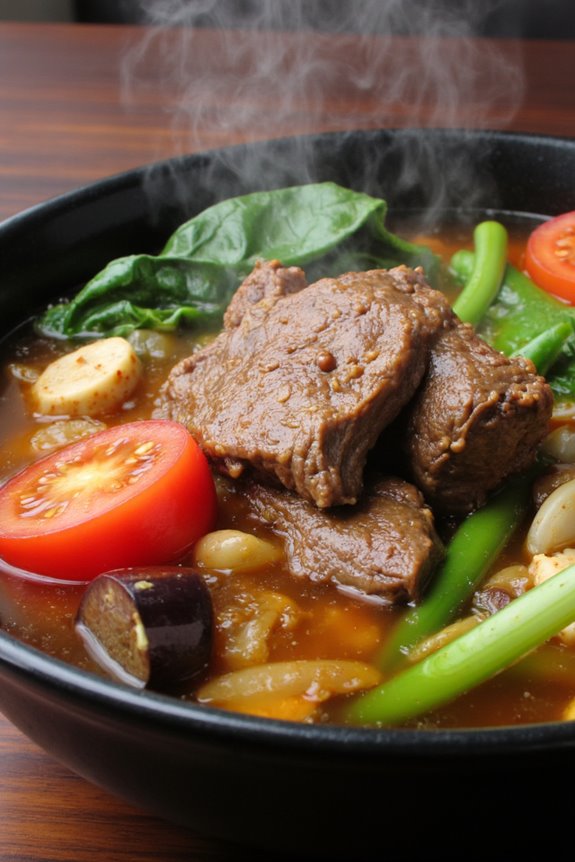
Sinigang na Baka, or Beef Sinigang, is a popular Filipino sour soup that’s known for its tangy flavor and rich broth. The delightful combination of tender beef, fresh vegetables, and souring agents like tamarind or calamansi creates a comforting dish that’s perfect for any occasion.
This dish epitomizes the essence of Filipino cuisine, showcasing the balance of flavors and the use of local ingredients. The sourness of the broth is beautifully complemented by the savory beef, making it a beloved family meal in many Filipino households.
Cooking Sinigang na Baka isn’t only simple but also allows for flexibility regarding ingredients. You can customize the vegetables based on what you have available or what you prefer. Common additions include radish, eggplant, and water spinach.
With its hearty ingredients and vibrant flavors, Sinigang na Baka is sure to warm the heart and satisfy the appetite. Let’s explore this comforting dish with a straightforward recipe that serves 4-6 people.
Ingredients:
- 1.5 lbs beef shank or brisket, cut into chunks
- 8 cups water
- 1 medium onion, quartered
- 2 medium tomatoes, quartered
- 1 radish (labanos), sliced
- 1 cup eggplant, sliced
- 1 cup long green beans (sitaw), trimmed
- 1 cup water spinach (kangkong) or any leafy green
- 1-2 cups tamarind paste (or 1-2 packs of sinigang mix)
- Fish sauce (patis), to taste
- Salt and pepper, to taste
- Optional: green chili peppers (siling pangsigang), for added spice
Cooking Instructions:
- Prepare the Beef: In a large pot, combine the beef and water. Bring to a boil over medium-high heat. Skim off any foam that rises to the surface to guarantee a clear broth.
- Add Aromatics: Once the beef is boiling, add the quartered onions and tomatoes to the pot. This will add depth to the broth. Reduce the heat to low and let it simmer for about 1.5 to 2 hours, or until the beef is tender.
- Incorporate the Radish: After the beef has become tender, add the sliced radish to the pot. Cook for about 5 minutes, allowing the radish to soften slightly while still retaining some crunch.
- Add Remaining Vegetables: Next, stir in the sliced eggplant and long green beans. Cook for another 5-7 minutes until these vegetables are tender but not overcooked.
- Sour the Soup: Pour in the tamarind paste or add the sinigang mix to the pot, stirring well to incorporate the sour flavor evenly throughout the broth. Taste the soup and season with fish sauce, salt, and pepper according to your preference.
- Finish with Greens: Finally, add the water spinach and cook for another 2-3 minutes until the leaves are wilted. If desired, add green chili peppers for an extra kick.
- Serve: Remove the pot from heat and serve the Sinigang na Baka hot, ideally with steamed rice on the side.
Extra Tips:
When making Sinigang na Baka, feel free to experiment with different souring agents such as fresh tamarind, calamansi, or even green mango to achieve your desired level of sourness.
Adjust the saltiness by adding fish sauce gradually, tasting as you go. Additionally, let the soup simmer longer if you prefer a more concentrated flavor. This dish can also be made in advance, as the flavors deepen and improve when allowed to sit for a while.
Enjoy your comforting bowl of Sinigang na Baka!
Sinigang Na Hipon (Shrimp Sinigang)
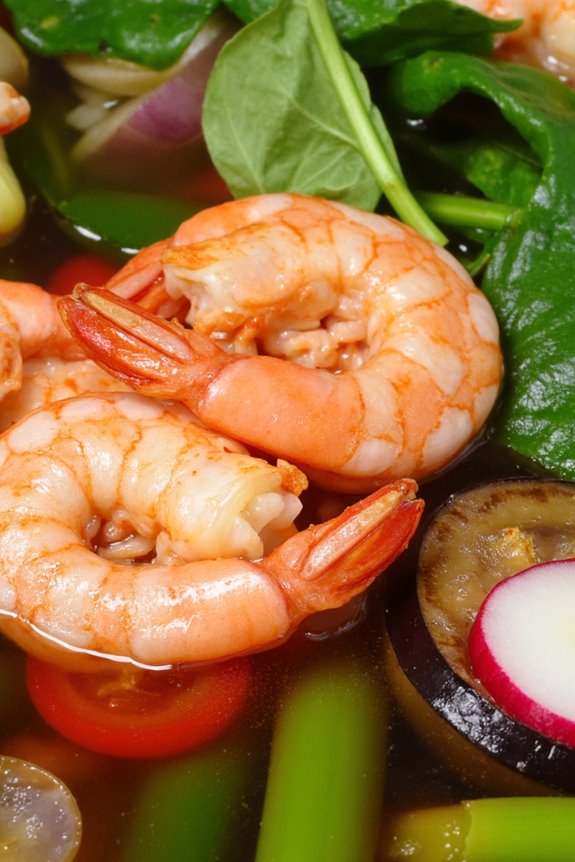
Sinigang na Hipon is a beloved Filipino sour soup that showcases the vibrant flavors of tamarind, complemented by fresh shrimp and a medley of vegetables. This dish is perfect for a warm meal, bringing comfort and satisfaction to the table. The combination of the tart broth and succulent shrimp creates a delightful contrast that’s both invigorating and hearty.
Often enjoyed with steamed rice, this sinigang is a staple in many Filipino households and is sure to become a favorite in yours too.
Preparing this dish is a straightforward process, requiring just a few key ingredients that are commonly found in any Filipino market or grocery store. The natural sourness from the tamarind, along with the umami of the shrimp, makes this dish not only delicious but also a great way to incorporate healthy ingredients into your diet.
Whether you’re cooking for family or friends, Sinigang Na Hipon is an impressive dish that highlights the essence of Filipino cuisine.
Ingredients (Serves 4-6):
- 1 lb (450g) shrimp, cleaned and deveined
- 6 cups water
- 1 medium onion, quartered
- 2 medium tomatoes, quartered
- 1 pack (about 1 oz) tamarind soup base mix (or 1 cup fresh tamarind pulp)
- 1 radish (daikon), sliced
- 1 cup long green beans, cut into 2-inch pieces
- 1 cup eggplant, sliced
- 1 cup water spinach (kangkong) or spinach
- 2-3 green chili peppers (optional)
- Fish sauce (patis) to taste
- Salt and pepper to taste
Cooking Instructions:
- Prepare the Broth: In a large pot, bring the 6 cups of water to a boil over medium-high heat. Once boiling, add the quartered onion and tomatoes. Allow them to simmer for about 5-7 minutes until the tomatoes are soft and the onions are translucent, which will enhance the flavor of the broth.
- Add the Tamarind: Stir in the tamarind soup base mix, or if using fresh tamarind, dissolve the pulp in a cup of warm water and strain it into the pot. Allow the broth to simmer for another 5 minutes. Taste the broth and adjust the sourness according to your preference, adding more tamarind mix if desired.
- Incorporate the Vegetables: Add the sliced radish, long green beans, and eggplant to the pot. Let them cook for about 5-7 minutes until the vegetables are tender but still crisp. This step adds a variety of textures and flavors to the dish.
- Cook the Shrimp: Once the vegetables are cooked, add the cleaned shrimp to the pot. Cook for an additional 3-5 minutes, or until the shrimp turns pink and opaque. Be careful not to overcook the shrimp, as they can become tough.
- Add the Greens and Season: Finally, add the water spinach (kangkong) and green chili peppers if using. Allow them to cook for an additional 2 minutes. Season the soup with fish sauce, salt, and pepper to taste. Stir well and let it simmer for a minute to meld the flavors.
- Serve: Remove the pot from heat and serve the Sinigang Na Hipon hot, with steamed rice on the side. Enjoy the comforting flavors and the delightful sourness of the broth.
Extra Tips:
When preparing Sinigang Na Hipon, using fresh ingredients can greatly enhance the flavor of the dish. If you prefer a more intense sour flavor, you can also experiment with adding other souring agents like calamansi or green mangoes.
Additionally, feel free to customize the vegetables based on what you have on hand or your personal preferences; common alternatives include bok choy or cabbage. Remember, the key to a great sinigang is balancing the sourness, so taste as you go!
Sinigang Na Isda (Fish Sinigang)
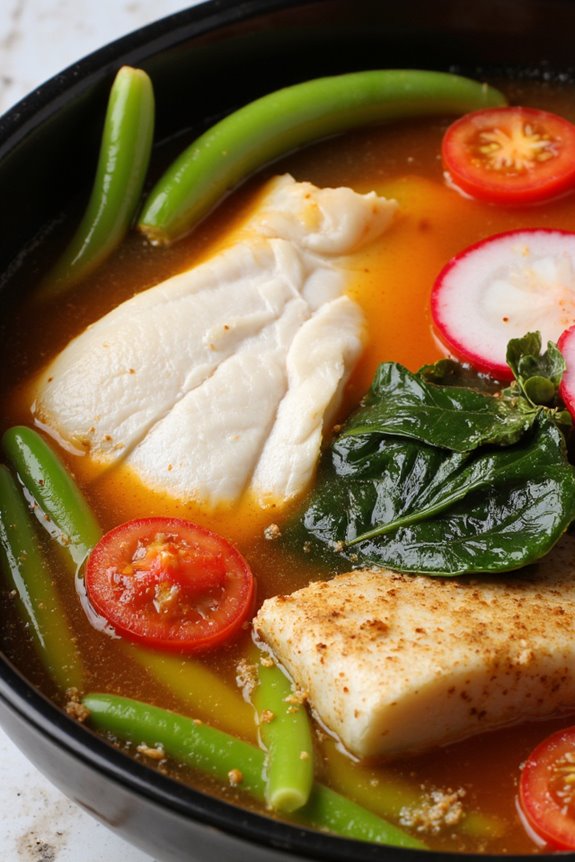
Sinigang Na Isda, or Fish Sinigang, is a beloved Filipino sour soup that highlights the fresh flavors of fish and vegetables combined with a tangy broth. This dish is traditionally made with tamarind, which gives it that signature sour taste, and is often enjoyed with rice. The combination of fresh fish, assorted vegetables, and savory broth makes this a comforting and satisfying meal perfect for family gatherings or a cozy dinner at home.
This dish not only showcases the versatility of sinigang but also allows for various adaptations with different types of fish, such as bangus (milkfish), tilapia, or any firm white fish. The balance of flavors in Sinigang Na Isda is what makes it special, as the heat from the chili peppers, the sourness from the tamarind, and the freshness of the vegetables meld perfectly to create a delicious and nourishing soup.
Ingredients (Serves 4-6):
- 1 pound fish (bangus, tilapia, or any firm white fish)
- 8 cups water
- 1 medium onion, quartered
- 2 medium tomatoes, quartered
- 1 radish (labanos), sliced
- 1 cup string beans (sitaw), cut into 2-inch lengths
- 1 cup water spinach (kangkong) or any leafy greens
- 2-3 green chili peppers (siling pangsigang)
- 1 cup tamarind paste or 1-2 cups fresh tamarind (if available)
- Fish sauce (patis), to taste
- Salt and pepper, to taste
Cooking Instructions:
- Prepare the Broth: In a large pot, bring the 8 cups of water to a boil. Add the quartered onion and tomatoes and let it simmer for about 5-10 minutes. This helps to infuse the water with the flavors of the onions and tomatoes.
- Add Tamarind: If using fresh tamarind, remove the pods and boil them in a separate pot of water for about 10-15 minutes until soft. Mash and strain the mixture to extract the sour juice, then add it to the boiling broth. If using tamarind paste, simply stir it in at this point. Adjust the sourness according to your preference.
- Cook the Fish: Gently add the fish to the pot and let it cook for about 5-7 minutes, depending on the thickness of the fish. Be careful not to stir too vigorously to avoid breaking the fish apart.
- Incorporate Vegetables: Add the sliced radish and string beans to the pot. Allow them to cook for another 5 minutes until they’re tender but still crisp.
- Season the Soup: Season the soup with fish sauce, salt, and pepper to taste. You can also add the green chili peppers at this point for a bit of heat.
- Finish with Greens: Finally, add the water spinach or any leafy greens and let them wilt in the soup for about 1-2 minutes. Turn off the heat and let the soup rest for a few minutes before serving.
Extra Tips:
When cooking Sinigang Na Isda, feel free to customize the vegetables based on what you have on hand or your personal preferences. Popular additions include eggplant or bok choy.
If you prefer a richer flavor, you can also consider adding a bit of shrimp paste for an umami boost. The key to a great sinigang is balancing the sourness and saltiness to your liking, so don’t hesitate to adjust the tamarind and fish sauce levels as you go.
Enjoy your Sinigang Na Isda with a bowl of steamed rice for a complete meal!
Sinigang Na Baboy Sa Bayabas (Pork Sinigang With Guava)
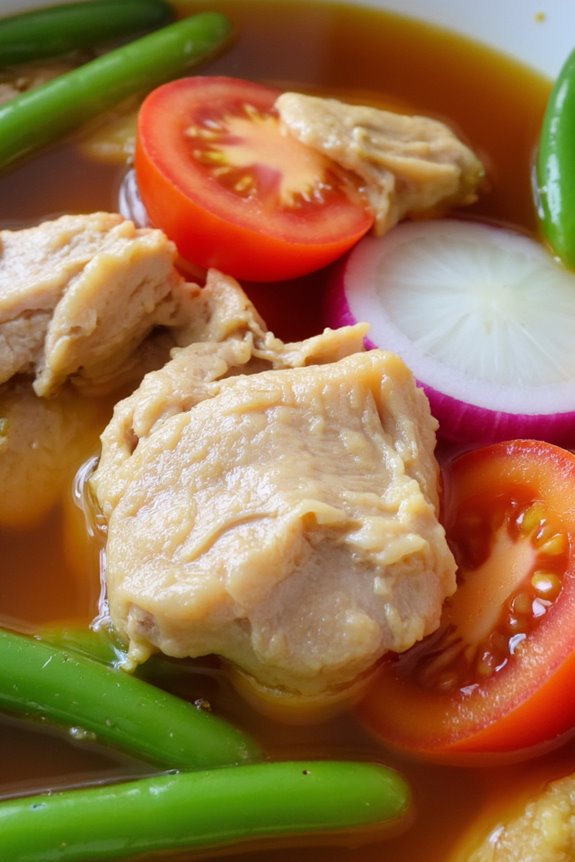
Sinigang na Baboy sa Bayabas is a delightful Filipino dish that combines the rich flavors of pork with the unique sweetness of guava. This comforting sour soup is a staple in many Filipino households, celebrated for its balance of savory and tangy notes. The infusion of guava not only enhances the flavor profile but also adds a subtle sweetness that complements the savory pork, making it a crowd-pleaser. The dish is often enjoyed with steamed rice, and its heartwarming properties make it perfect for family gatherings or rainy days.
Preparing Sinigang na Baboy sa Bayabas is relatively simple, yet it requires attention to detail to guarantee the balance of flavors is just right. The cooking process involves simmering pork until tender, allowing the flavors of the guava and vegetables to meld beautifully. This dish can be customized with various vegetables and seasonings according to personal preferences, making it versatile and adaptable to different tastes.
Ingredients (serving size: 4-6 people)
- 1 kg pork belly, cut into chunks
- 3-4 ripe guavas, quartered
- 1 large onion, quartered
- 2-3 tomatoes, quartered
- 1 radish (labanos), sliced
- 1 cup long green beans (sitaw), cut into 2-inch lengths
- 2-3 green chili peppers (siling haba)
- 6-8 cups water
- 2 tablespoons fish sauce (patis)
- Salt and pepper to taste
- Fresh cilantro or green onions for garnish (optional)
Cooking Instructions
- Prepare the Pork: In a large pot, combine the pork belly chunks and water. Bring the mixture to a boil, then reduce the heat to medium-low. Skim any scum that rises to the surface to guarantee a clear broth. This initial boiling helps to remove impurities from the pork.
- Add Aromatics: Once the broth is clear, add the quartered onion and tomatoes to the pot. These ingredients will infuse the broth with flavor as they simmer. Continue to cook for about 30 minutes until the pork is tender.
- Incorporate the Guava: After the pork is tender, add the quartered guavas to the pot. Allow them to simmer for about 10-15 minutes. As the guavas cook, they’ll soften and release their sweetness into the broth, providing a unique taste to the sinigang.
- Add Vegetables: Next, add the sliced radish and green beans. These vegetables will add texture and additional flavors to the dish. Cook for another 5-7 minutes until the vegetables are tender but still crisp.
- Adjust Seasoning: Taste the broth and season with fish sauce, salt, and pepper according to your preference. If you like a spicier kick, you can add the green chili peppers at this stage as well.
- Serve: Once everything is cooked through, remove the pot from heat. Ladle the hot soup into bowls and garnish with fresh cilantro or green onions if desired. Serve with steamed rice for a complete meal.
Extra Tips
When cooking Sinigang na Baboy sa Bayabas, it’s essential to choose ripe guavas for the best flavor. If guavas are unavailable, you can substitute with tamarind or other souring agents, but the unique sweetness of guava is hard to replicate.
For a richer taste, consider using a mix of pork cuts, including bones and belly, to enhance the broth’s flavor. Feel free to adjust the sourness by adding more guava or tamarind, depending on your preference. Enjoy this delicious dish with family and friends!
Sinigang Na Baboy Sa Miso (Pork Sinigang With Miso)
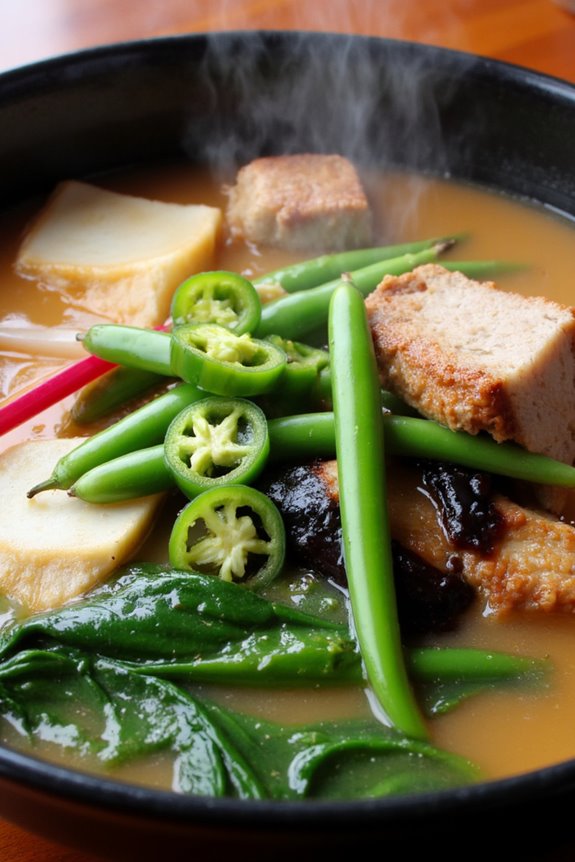
Sinigang Na Baboy Sa Miso is a delicious and tangy Filipino soup that combines the rich flavors of pork with the umami depth of miso paste. This hearty dish is a favorite among many Filipino families, particularly during rainy days when a warm bowl of soup brings comfort. The combination of fresh vegetables and the sourness from tamarind gives it a unique taste that’s both invigorating and satisfying.
To make this dish, you’ll need a variety of ingredients, including pork, vegetables, and the key ingredient, miso. The cooking process involves simmering the pork until tender and then adding the vegetables and miso for flavor. This recipe is perfect for serving 4 to 6 people, making it an ideal choice for family gatherings or cozy dinners at home.
Ingredients
- 1.5 lbs pork belly or pork shoulder, cut into chunks
- 8 cups water
- 1 medium onion, quartered
- 2 medium tomatoes, quartered
- 1/4 cup miso paste (preferably white or yellow miso)
- 2-3 green chili peppers (siling pangsigang)
- 1 radish (labanos), sliced
- 1 cup eggplant, sliced
- 1 cup long green beans (sitaw), cut into 2-inch pieces
- 2 cups water spinach (kangkong) or other leafy greens
- 2 tablespoons fish sauce (patis)
- Salt and pepper to taste
Cooking Instructions
- Prepare the Pork: In a large pot, add the pork chunks and cover them with water. Bring the water to a boil over medium-high heat. Once boiling, reduce the heat to medium-low and skim off any impurities that rise to the surface. This will ensure a clear broth.
- Add Aromatics: Once the broth is clear, add the quartered onion and tomatoes to the pot. Let the mixture simmer for about 30-45 minutes, or until the pork becomes tender. This step allows the flavors from the onion and tomatoes to infuse into the broth.
- Incorporate Miso: After the pork is tender, take a ladleful of the hot broth and mix it with the miso paste in a small bowl until smooth. This helps to dissolve the miso evenly before adding it to the pot. Stir the miso mixture back into the pot of simmering soup.
- Add Vegetables: Next, add the sliced radish, eggplant, and green beans to the pot. Allow the soup to simmer for another 5-10 minutes until the vegetables are tender but still crisp. This step ensures that the vegetables maintain their texture while absorbing the flavors of the broth.
- Final Touches: Finally, add the green chili peppers and water spinach to the pot. Season the dish with fish sauce, salt, and pepper to taste. Let it simmer for an additional 2-3 minutes until the water spinach wilts.
- Serve: Once everything is well combined and the soup is hot, remove from heat and serve hot with steamed rice. Enjoy your Sinigang Na Baboy Sa Miso!
Extra Tips
When cooking Sinigang Na Baboy Sa Miso, feel free to adjust the level of sourness to your preference by adding more or less tamarind or using different souring agents like calamansi or green mango.
Additionally, you can experiment with various vegetables such as bok choy or taro for a unique twist. For an extra layer of flavor, consider marinating the pork in a bit of fish sauce and garlic before cooking.
Enjoy your cooking experience and the delightful taste of this traditional dish!
Sinigang Na Baboy With Green Mango
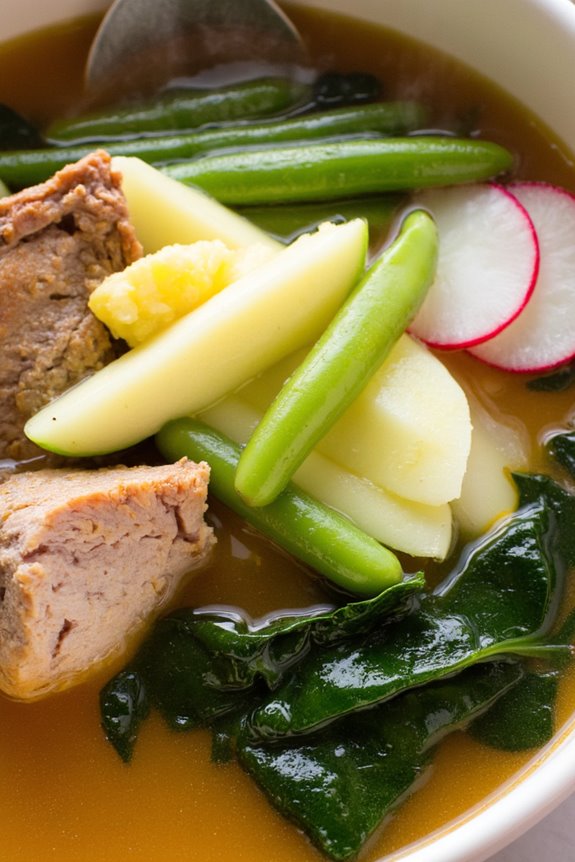
Sinigang na Baboy with Green Mango is a delightful Filipino dish that combines the savory flavor of pork with the tangy goodness of green mangoes, creating a perfect balance of taste that’s both comforting and invigorating. This traditional sour soup is a favorite among many Filipinos, often enjoyed during family gatherings or rainy days. The combination of the tender pork, assorted vegetables, and the distinct sourness of the green mango makes this dish a must-try for anyone who appreciates hearty and flavorful meals.
Cooking Sinigang na Baboy with Green Mango is a straightforward process that allows you to appreciate the fresh ingredients and their harmonious flavors. The dish isn’t only nourishing but also offers a unique twist on the classic sinigang recipe by incorporating green mangoes, which add a delightful tartness that elevates the overall taste. With the right balance of ingredients and careful preparation, you can create a bowl of sinigang that warms the heart and satisfies the palate.
Ingredients (Serves 4-6)
- 1.5 lbs pork belly, cut into chunks
- 6 cups water
- 1 medium onion, quartered
- 2-3 medium tomatoes, quartered
- 1-2 green mangoes, unripe and sliced
- 1 radish (labanos), sliced
- 1 cup long green beans (sitaw), cut into 2-inch lengths
- 2-3 cups spinach or water spinach (kangkong)
- 2-3 tablespoons fish sauce (patis)
- 1-2 teaspoons tamarind paste or 1-2 packs sinigang mix (optional)
- Salt and pepper, to taste
Cooking Instructions
- Prepare the Ingredients: Begin by cutting the pork belly into chunks, quartering the onion and tomatoes, and slicing the green mangoes. This prep work will make the cooking process smoother.
- Boil the Pork: In a large pot, add the pork belly and pour in the water. Bring it to a boil over medium heat. Skim off any scum that rises to the surface to create a clear broth.
- Add Aromatics: Once the pork is boiling and the scum has been removed, add the quartered onion and tomatoes to the pot. This will infuse the broth with rich flavors as the pork cooks. Simmer for about 30 minutes or until the pork is tender.
- Incorporate the Green Mango: After the pork is tender, add the sliced green mangoes to the pot. The mangoes will release their tangy flavor into the soup while cooking. Let it simmer for about 5-10 minutes.
- Add the Vegetables: Next, add the sliced radish and long green beans to the pot. These vegetables add texture and nutrition to the dish. Cook for an additional 5-7 minutes or until the beans are tender but still crisp.
- Season the Soup: Stir in the fish sauce, tamarind paste or sinigang mix (if using), and season with salt and pepper to taste. Adjust the sourness and seasoning according to your preference.
- Finish with Greens: Finally, add the spinach or water spinach to the pot and cook for another 2-3 minutes until the greens are wilted and vibrant.
- Serve: Once everything is cooked and well combined, remove the pot from heat. Serve the sinigang hot with steamed rice on the side for a complete meal.
Extra Tips
When making Sinigang na Baboy with Green Mango, feel free to adjust the sourness by modifying the amount of green mango or tamarind paste you use. If you’re looking for an even deeper flavor, consider adding a few pieces of green chili peppers for a slight kick.
Additionally, you can experiment with different vegetables based on what you have on hand, such as eggplant or bok choy, to make the dish your own. Enjoy the process and savor the comforting flavors of this Filipino classic!
Sinigang Na Baboy With Watermelon
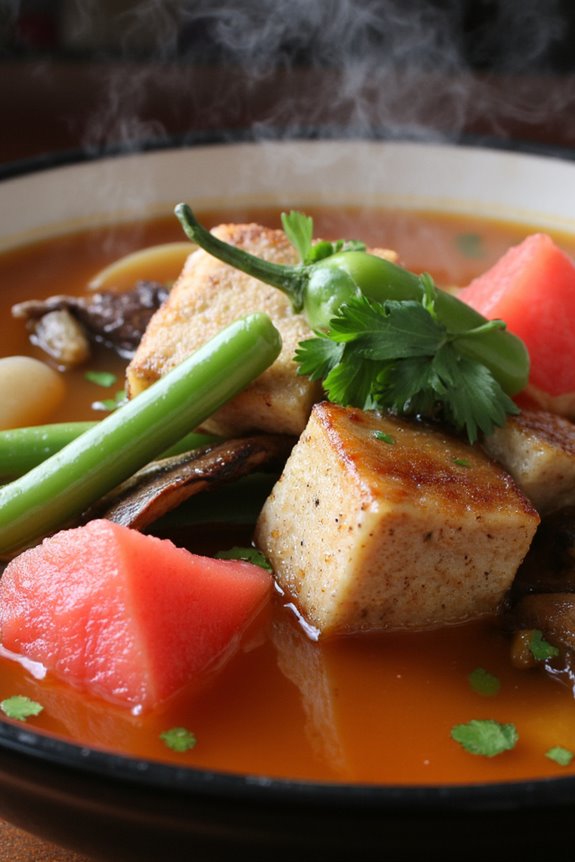
Sinigang Na Baboy with Watermelon is a delightful twist on the classic Filipino sour soup. This recipe combines the rich flavors of pork with the revitalizing sweetness of watermelon, creating a unique balance that’s both savory and slightly sweet. The dish is traditionally made with tamarind as the souring agent, but the addition of watermelon not only enhances the flavor but also adds a delightful color and texture to the dish.
Perfect for a family meal, this hearty soup is sure to warm the hearts of everyone at the table. This version of Sinigang isn’t just about the pork and watermelon; it includes various vegetables that add both nutrition and flavor. From the tartness of the tamarind to the tender meat and fresh produce, every bite is bursting with umami goodness.
Serve this comforting dish with a side of steamed rice, and you have a fulfilling meal that showcases the best of Filipino cuisine.
Ingredients (Servings: 4-6)
- 1.5 lbs pork belly, cut into cubes
- 4 cups water
- 1 cup watermelon, diced
- 1 medium onion, quartered
- 2 medium tomatoes, quartered
- 4-5 pieces green chili peppers
- 1 cup radish (labanos), sliced
- 1 cup eggplant, sliced
- 1 cup long green beans (sitaw)
- 1/2 cup tamarind paste or 1 cup fresh tamarind pods
- Fish sauce (patis) to taste
- Salt and pepper to taste
- Fresh cilantro or green onions for garnish (optional)
Cooking Instructions
- Prepare the Pork: In a large pot, add the cubed pork belly and pour in the water. Bring it to a boil over medium-high heat. Skim off any foam that rises to the surface to guarantee a clearer broth. Once boiling, reduce the heat to medium-low and let it simmer for about 30 minutes until the pork is tender.
- Add Aromatics: After the pork has cooked for 30 minutes, add the quartered onion and tomatoes to the pot. These ingredients will enhance the flavor of the broth. Continue simmering for another 10-15 minutes until the onions are soft.
- Incorporate the Tamarind: If using fresh tamarind, peel and soak the pods in a cup of hot water for about 10 minutes. Then, mash and strain the mixture to extract the juice. Add the tamarind paste or the extracted juice to the pot, stirring well to combine. This is the key step that provides the signature sour flavor to the Sinigang.
- Add Vegetables: Next, add the sliced radish, eggplant, and long green beans to the pot. These vegetables will add texture and nutrition to the dish. Let them cook for about 5-7 minutes, until they’re tender but still crisp.
- Finish with Watermelon and Seasonings: Stir in the diced watermelon and green chili peppers. Allow everything to simmer together for an additional 5 minutes. Taste the broth and adjust the seasoning with fish sauce, salt, and pepper according to your preference.
- Serve: Once everything is cooked through, remove from heat. Ladle the Sinigang Na Baboy with Watermelon into bowls and garnish with fresh cilantro or green onions if desired. Serve hot with steamed rice on the side.
Extra Tips
When cooking Sinigang Na Baboy with Watermelon, feel free to adjust the sourness to your taste by adding more or less tamarind. If you prefer a spicier kick, you can add more chili peppers or even some chili flakes.
Additionally, using a combination of both tamarind and other souring agents like calamansi or green mangoes can add a layer of complexity to the flavor. Finally, the watermelon can be replaced with other fruits like pineapple for a different sweet twist, so don’t hesitate to experiment!
Vegetarian Sinigang
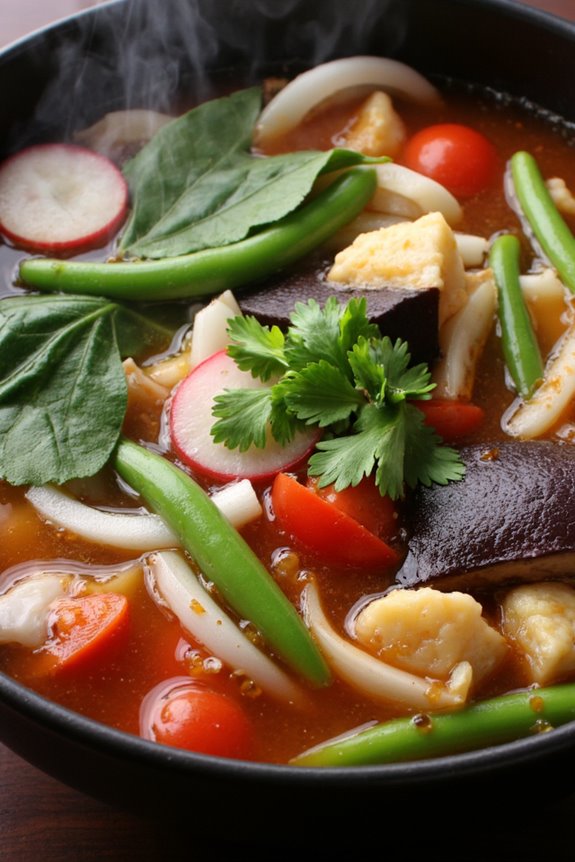
Sinigang is a beloved Filipino sour soup that’s traditionally made with meat, but this vegetarian version retains the essence of the dish while catering to plant-based diets. The soup is characterized by its tangy flavor, typically achieved through tamarind, and it’s loaded with a variety of vegetables that provide both nutrition and texture. In this recipe, we’ll use fresh produce to create a vibrant and hearty vegetarian sinigang that will satisfy your cravings for a comforting bowl of soup.
To make this vegetarian sinigang, you can use a combination of seasonal vegetables and a plant-based broth as the base. The addition of tamarind paste or fresh tamarind will give the dish its signature sourness, while ingredients like tomatoes and radishes complement the overall flavor. This dish is perfect for sharing, making it an excellent option for family dinners or gatherings with friends.
Ingredients (Serves 4-6):
- 1 tablespoon vegetable oil
- 1 medium onion, sliced
- 2 medium tomatoes, quartered
- 6 cups vegetable broth
- 1 cup water
- 1 cup radish, sliced
- 1 cup eggplant, diced
- 1 cup green beans, trimmed and cut into 2-inch pieces
- 1 cup spinach or water spinach
- 1-2 green chili peppers (optional for heat)
- 1/4 cup tamarind paste (or 1 cup fresh tamarind, peeled and soaked in warm water)
- Salt and pepper to taste
- Fresh cilantro or green onions for garnish (optional)
Cooking Instructions:
- Sauté Onion and Tomatoes: In a large pot, heat the vegetable oil over medium heat. Add the sliced onion and sauté until translucent, about 3-4 minutes. Then, add the quartered tomatoes and cook until they soften and release their juices, stirring occasionally for another 3-5 minutes.
- Add Broth and Water: Pour in the vegetable broth and water into the pot with the sautéed onions and tomatoes. Stir well to combine and bring the mixture to a boil over high heat.
- Incorporate the Vegetables: Once boiling, reduce the heat to medium-low and add the sliced radish, diced eggplant, and green beans to the pot. Allow the soup to simmer for about 10-15 minutes, or until the vegetables are tender.
- Add Spinach and Tamarind: Stir in the spinach or water spinach, then add the tamarind paste (or the soaked fresh tamarind along with the water). Mix well and let it simmer for an additional 5 minutes, allowing the flavors to meld together. If using green chili peppers, you can add them at this stage for extra heat.
- Season and Serve: Taste the soup and season with salt and pepper as needed. Once everything is well combined and heated through, remove the pot from the heat. Ladle the vegetarian sinigang into bowls and garnish with fresh cilantro or green onions if desired.
Extra Tips:
To enhance the flavor of your vegetarian sinigang, consider adding a variety of seasonal vegetables such as bok choy, mushrooms, or zucchini. You can also play around with different souring agents such as calamansi or green mango if tamarind isn’t available.
For a more robust broth, simmer the vegetable broth with aromatics like lemongrass or ginger before adding the other ingredients. Enjoy your delicious vegetarian sinigang with steamed rice for a complete meal!
Sinigang Na Baboy With Pineapple
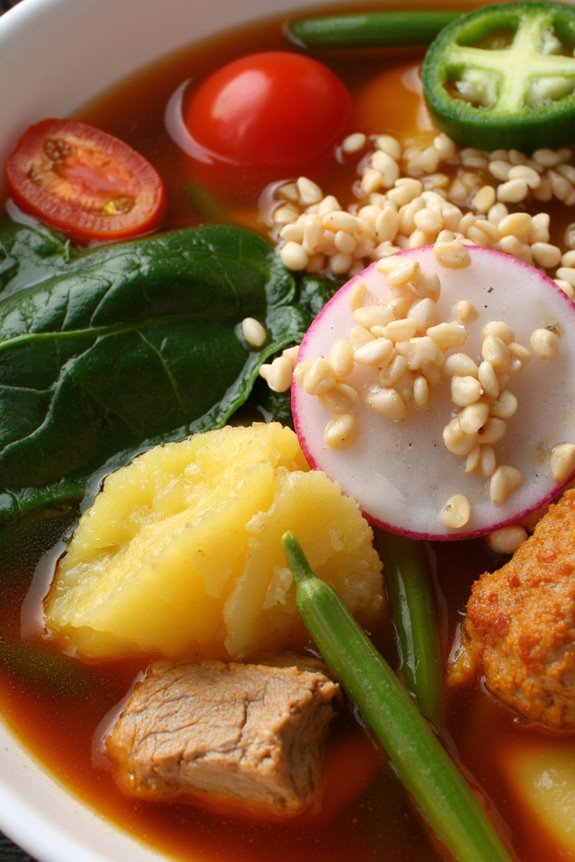
Sinigang Na Baboy With Pineapple is a delightful twist on the traditional Filipino sour soup, incorporating the sweetness of pineapple to balance the tangy broth. This comforting dish is perfect for family gatherings or a cozy dinner at home, bringing a burst of flavor that warms the soul.
The interplay between the savory pork, tart tamarind, and sweet pineapple creates a unique and irresistible flavor profile that will leave your taste buds wanting more.
To create this dish, you’ll need to gather fresh ingredients that will provide the best taste and texture. The combination of pork, vegetables, and fruits in a sour broth not only makes for a delicious meal but also offers a nutritious option that’s packed with vitamins.
Serving Sinigang Na Baboy With Pineapple with steamed rice elevates the experience, making it a complete meal that everyone will enjoy.
Ingredients (serves 4-6):
- 1 lb pork belly or pork shoulder, cut into cubes
- 1 medium onion, quartered
- 2 medium tomatoes, quartered
- 1 cup pineapple chunks (fresh or canned)
- 1-2 green chili peppers (siling pangsigang)
- 1 radish (labanos), sliced
- 1 cup water spinach (kangkong) or spinach
- 1 cup string beans (sitaw), cut into 2-inch lengths
- 1-2 tablespoons tamarind paste or fresh tamarind
- 6 cups water
- 2 tablespoons fish sauce (patis)
- Salt and pepper to taste
Cooking Instructions:
- Prepare the Ingredients: Start by cutting the pork into bite-sized cubes and washing all the vegetables thoroughly. This guarantees that everything is clean and ready to cook.
- Boil the Pork: In a large pot, combine the pork cubes, water, and quartered onions. Bring to a boil over medium-high heat. Once boiling, reduce the heat to low and simmer for about 30 minutes. This will help tenderize the pork and develop a flavorful broth.
- Add Tomatoes and Pineapple: After the pork has simmered, add the quartered tomatoes and pineapple chunks to the pot. Cook for an additional 10-15 minutes until the tomatoes have softened, adding a sweet and tangy flavor to the broth.
- Incorporate Vegetables: Next, add the sliced radish and string beans to the pot. Allow them to cook for about 5-7 minutes, or until they’re tender but still crisp. This will add texture and nutrition to the dish.
- Season the Broth: Stir in the tamarind paste (or fresh tamarind) and fish sauce. Taste the broth and season with salt and pepper as needed. Adjust the sourness by adding more tamarind if desired.
- Finish with Greens and Chili: Finally, add the water spinach and green chili peppers to the pot. Cook for an additional 2-3 minutes until the greens are wilted. This adds a fresh element to the soup.
- Serve: Once everything is cooked through, remove the pot from heat. Serve the Sinigang Na Baboy With Pineapple hot, ideally with a side of steamed rice.
Extra Tips:
When making Sinigang, it’s essential to adjust the sourness to your preference; some people love it more sour, while others prefer a milder taste.
If you can find fresh tamarind, it often yields a richer flavor compared to the paste. Additionally, you can enhance the dish by experimenting with different vegetables like eggplant or bok choy, which can also complement the flavors beautifully.
Enjoy your cooking!
Sinigang Na Baboy With Tamarind Paste
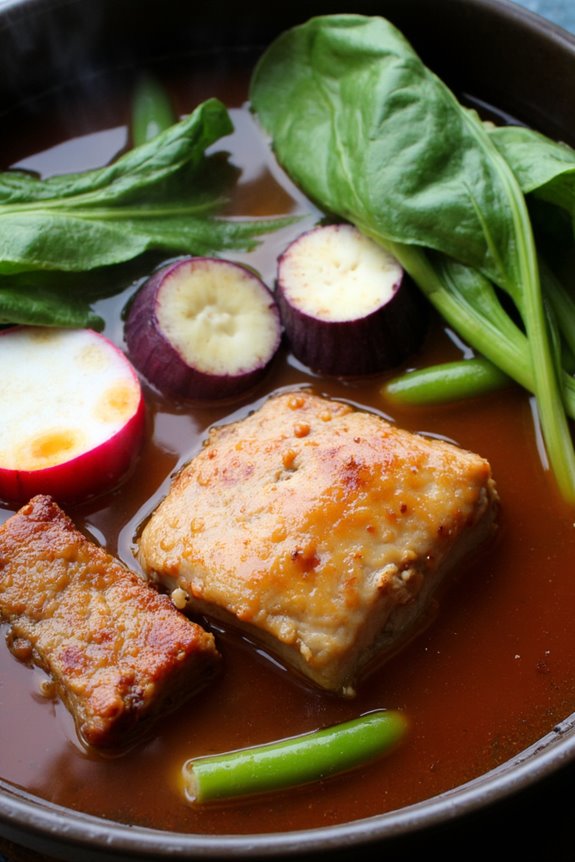
Sinigang Na Baboy, or Pork Sinigang, is a beloved Filipino dish known for its savory and tangy flavor profile. This comforting soup typically features tender pork, a variety of vegetables, and a souring agent that gives it its distinctive taste.
While there are several variations of Sinigang, this recipe highlights the use of tamarind paste, which delivers a robust sourness that pairs perfectly with the richness of the pork. The dish isn’t only flavorful but also nourishing, making it a staple in many Filipino households.
This hearty soup is perfect for family gatherings or cozy dinners, and it’s often served with steamed rice. The combination of pork, fresh vegetables, and the bold flavor of tamarind creates a delightful experience for your taste buds. Whether you’re a longtime fan of Filipino cuisine or trying it for the first time, Sinigang Na Baboy With Tamarind Paste is sure to impress.
Ingredients (Serves 4-6):
- 1.5 lbs pork belly or pork ribs, cut into chunks
- 8 cups water
- 1 medium onion, quartered
- 2 medium tomatoes, quartered
- 1 radish (labanos), sliced
- 1 cup eggplant, sliced
- 1 cup long green beans (sitaw), cut into 2-inch pieces
- 1 cup water spinach (kangkong) or any leafy green
- 2-3 tablespoons tamarind paste (adjust to taste)
- 2 tablespoons fish sauce (patis)
- Salt and pepper to taste
- Optional: 1-2 green chili peppers for added spice
Cooking Instructions:
- Prepare the Pork: In a large pot, add the pork belly or ribs and cover with water. Bring to a boil over medium-high heat. Skim off any scum that rises to the surface to guarantee a clear broth.
- Add Aromatics: Once the water is boiling and the scum has been removed, add the quartered onion and tomatoes to the pot. These ingredients will enhance the flavor of the broth. Reduce the heat to low and let it simmer for about 30 minutes or until the pork becomes tender.
- Incorporate Vegetables: After the pork is tender, add the sliced radish and eggplant to the pot. Allow them to cook for about 5-7 minutes until they’re slightly softened. This will ensure they retain some texture in the soup.
- Add Green Beans and Seasoning: Next, stir in the long green beans and tamarind paste. If you prefer a spicier broth, you can also add green chili peppers at this stage. Allow everything to simmer for another 5-10 minutes.
- Finish with Leafy Greens: Ultimately, add the water spinach (or any leafy greens you’re using) to the pot and season the soup with fish sauce, salt, and pepper to taste. Cook for an additional 2-3 minutes, just until the greens are wilted and tender.
- Serve: Once everything is cooked through, taste the broth and adjust seasoning if necessary. Serve the Sinigang Na Baboy hot with steamed rice on the side.
Extra Tips:
When making Sinigang Na Baboy, feel free to adjust the level of sourness according to your preference by adding more or less tamarind paste.
You can also experiment with different vegetables such as bok choy or taro for added texture and flavor. For a richer broth, consider adding a little bit of pork fat or even using bone-in cuts of pork.
Finally, enjoy the dish with a squeeze of fresh lime or calamansi for an extra zing!
Sinigang Na Baboy With Kamias (Bilimbi)
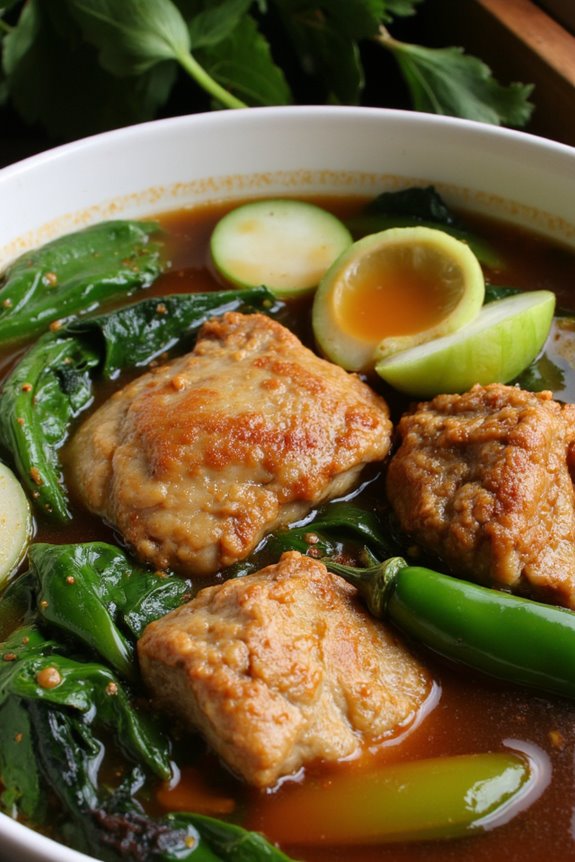
Sinigang Na Baboy With Kamias is a delightful Filipino sour soup that showcases the savory flavor of pork combined with the distinct tartness of kamias (bilimbi). This dish is a favorite among many Filipinos, celebrated for its invigorating taste and comforting warmth, making it perfect for a family gathering or a rainy day. The blend of fresh vegetables and the unique sourness of kamias elevate the sinigang broth, making it not only delicious but also nutritious.
Cooking sinigang is a wonderful opportunity to bring out the rich flavors of the ingredients while enjoying the process. The pork is simmered until tender, allowing it to absorb the tangy flavors of the broth. With the addition of kamias, the soup takes on a unique twist that sets it apart from the traditional sinigang made with tamarind or other souring agents. Gather your ingredients, and let’s commence on this culinary adventure!
Ingredients (Serves 4-6):
- 1 kg pork belly or pork ribs, cut into pieces
- 1 liter water
- 1 cup kamias (bilimbi), sliced
- 1 medium onion, quartered
- 2 medium tomatoes, quartered
- 4-5 pieces green chili peppers
- 1 cup radish (labanos), sliced
- 1 cup eggplant, sliced
- 1 cup water spinach (kangkong) or other leafy greens
- 2 tablespoons fish sauce (patis)
- Salt and pepper to taste
Cooking Instructions:
- Prepare the Pork: In a large pot, combine the pork belly or ribs with water. Bring to a boil over medium-high heat. Skim off any scum that rises to the surface to guarantee a clear broth. This initial boiling helps to clean the meat and gives the broth a purer flavor.
- Add Aromatics: Once the broth is boiling and scum has been removed, add the quartered onion and tomatoes. These ingredients enhance the flavor of the broth. Let it simmer for about 10 minutes until the tomatoes are soft and have infused their flavor into the broth.
- Incorporate Kamias: After the 10 minutes, add the sliced kamias to the pot. Kamias will provide the signature sourness to the sinigang. Allow it to cook for another 5-7 minutes until the kamias softens and releases its tangy flavor into the broth.
- Add Vegetables: Next, add the sliced radish and eggplant to the pot. These vegetables not only add texture but also absorb the flavors of the broth. Cook for an additional 5-7 minutes until they’re tender but still firm.
- Season the Broth: Pour in the fish sauce and adjust the seasoning with salt and pepper to taste. Fish sauce adds depth and umami to the dish, complementing the sourness of the kamias. Taste the broth and adjust the seasoning as desired.
- Finish with Greens: Finally, add the green chili peppers and water spinach (or other leafy greens) to the pot. Cook for 2-3 minutes until the greens are tender and bright. The heat from the chili peppers adds a subtle spice that rounds out the dish.
- Serve: Once everything is cooked, remove the pot from the heat. Serve the sinigang hot in bowls, guaranteeing each serving has a good amount of broth and vegetables. It’s best enjoyed with steamed rice on the side.
Extra Tips:
When cooking sinigang, feel free to adjust the sourness to your liking by adding more or less kamias as desired. If kamias isn’t available, you can substitute it with tamarind paste or fresh tamarind. For a heartier version, consider adding more vegetables like string beans or taro.
Always remember to taste as you go; sinigang is all about balancing the flavors to suit your palate. Enjoy your cooking and the delightful sourness of this Filipino classic!
Sinigang Na Labanos (Radish Sinigang)
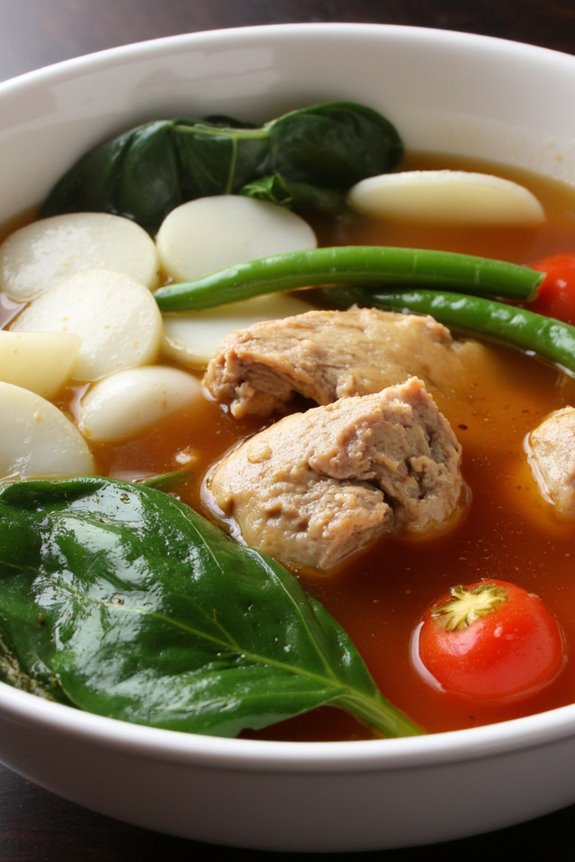
Sinigang Na Labanos, or Radish Sinigang, is a delightful variation of the traditional Filipino sour soup that showcases the unique flavor of labanos (radish). This dish is characterized by its tangy broth, usually achieved through the use of tamarind, and is often complemented by a medley of fresh vegetables and protein, such as pork or shrimp. The addition of labanos not only enhances the flavor but also adds a satisfying crunch to every bite, making it a beloved choice for many Filipino families.
This comforting dish is perfect for rainy days or any occasion that calls for a warm, hearty meal. Cooking Sinigang Na Labanos is relatively simple and can be done in under an hour, allowing you to enjoy a homemade version of this classic dish without too much hassle. As you prepare this recipe, remember that the key to a great sinigang lies in balancing the sourness with the richness of the broth and the freshness of the ingredients.
Whether you’re an experienced cook or a beginner, this recipe will guide you through the steps to create a delicious and satisfying bowl of Sinigang Na Labanos that your family will love.
Ingredients (Serves 4-6)
- 500g pork belly or pork ribs
- 1 medium onion, quartered
- 2 medium tomatoes, quartered
- 1 radish (labanos), peeled and sliced into rounds
- 1 cup green beans (sitaw), trimmed
- 2-3 cups water
- 1-2 cups tamarind paste or 1 packet of sinigang mix
- 2-3 green chili peppers (siling pangsigang)
- 2 tablespoons fish sauce (patis)
- Salt and pepper to taste
- Fresh spinach or water spinach (kangkong) for garnish
Cooking Instructions
- Prepare the Pork: In a large pot, add the pork belly or ribs and cover it with water. Bring the water to a boil over medium-high heat. Once boiling, reduce the heat to medium-low and let it simmer for about 30 minutes. This process helps tenderize the meat and creates a flavorful broth.
- Add Aromatics: After simmering the pork, add the quartered onion and tomatoes to the pot. These ingredients will enhance the broth’s flavor. Continue to simmer for another 10 minutes until the onions become translucent and the tomatoes soften.
- Incorporate the Radish: Add the sliced radish (labanos) to the pot. Allow it to cook for about 5-7 minutes until it becomes slightly tender but still retains its crunch. This will add a wonderful texture to your sinigang.
- Season the Broth: Stir in the tamarind paste or sinigang mix and fish sauce. Adjust the sourness to your taste, adding more tamarind if desired. Season with salt and pepper as needed. Let the broth simmer for an additional 5 minutes to allow the flavors to meld.
- Add Vegetables: Finally, add the green beans and green chili peppers to the pot. Cook for another 3-5 minutes until the beans are tender but still crisp. This step will bring freshness and color to your sinigang.
- Finish with Greens: Just before serving, stir in fresh spinach or water spinach (kangkong) and cook for about a minute until just wilted. This adds a nutritious component to your dish.
- Serve: Ladle the Sinigang Na Labanos into bowls and serve hot with steamed rice on the side. Enjoy the comforting flavors of this classic Filipino dish!
Extra Tips
When cooking Sinigang Na Labanos, feel free to experiment with the protein of your choice—pork, shrimp, or even beef can work wonderfully. Additionally, if you’re looking for an extra kick, you can add more green chili peppers or even a splash of lime juice for added tartness.
Always taste and adjust the seasoning throughout the cooking process to achieve the perfect balance of flavors. Enjoy your homemade Sinigang Na Labanos with loved ones for a truly satisfying meal!
