

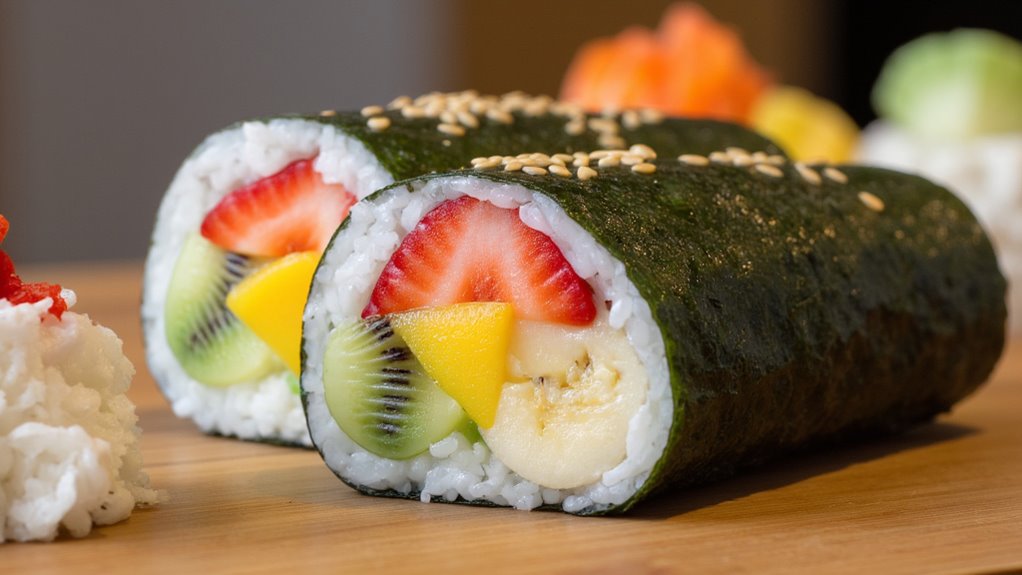
Gimbap is such a delightful dish, full of vibrant colors and flavors that can light up any table. These neat rolls, packed with everything from savory beef to fresh veggies, are always a crowd-pleaser. Each recipe offers its own special twist, making gimbap a versatile option for any gathering. As we explore these 15 popular recipes, you might find a new favorite that turns your meals into something truly special. Let’s get started!
Classic Beef Gimbap
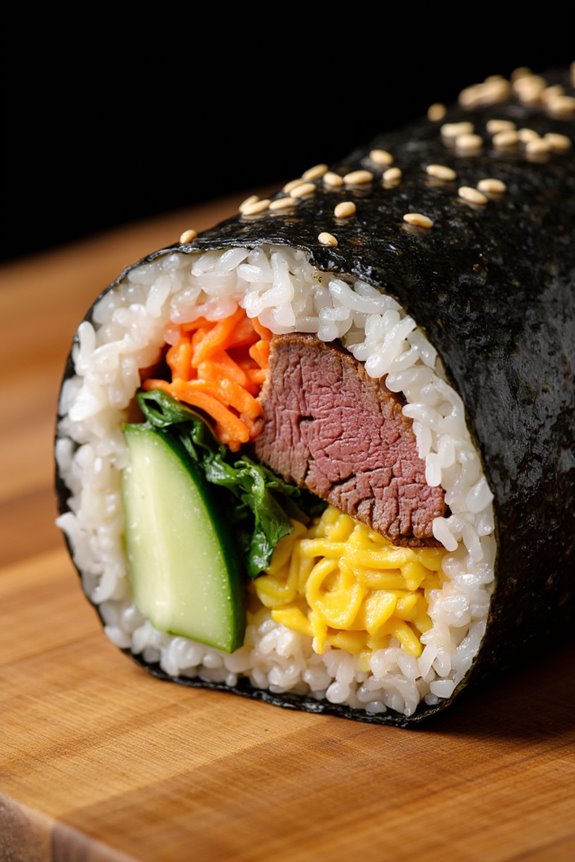
Gimbap, a beloved Korean dish, is often compared to sushi but boasts a unique flavor profile that sets it apart. The Classic Beef Gimbap features seasoned beef, vibrant vegetables, and fragrant sesame oil, all rolled into perfectly cooked rice and wrapped in seaweed. This dish isn’t only visually appealing but also packed with nutrients, making it a prime choice for lunch, picnics, or a light dinner.
Preparing Classic Beef Gimbap is a delightful culinary experience that brings together various textures and flavors. Each bite of the gimbap reveals a delicious combination of tender beef, crunchy vegetables, and the nutty essence of sesame. Whether you’re a seasoned cook or a beginner, this recipe is straightforward and satisfying, allowing you to impress your family and friends with your cooking skills.
Ingredients (Serves 4-6)
- 2 cups cooked short-grain rice
- 1 tablespoon sesame oil
- 1 teaspoon salt
- 200 grams beef (ribeye or sirloin), thinly sliced
- 1 tablespoon soy sauce
- 1 teaspoon sugar
- 1 tablespoon minced garlic
- 1 carrot, julienned
- 1 cucumber, julienned
- 4 sheets of nori (seaweed)
- 3 eggs, beaten
- 1 tablespoon vegetable oil
- 1 cup spinach, blanched and squeezed dry
- Sesame seeds for garnish
Cooking Instructions
- Prepare the Rice: Begin by cooking the short-grain rice according to package instructions. Once cooked, allow the rice to cool slightly before mixing in the sesame oil and salt for flavor. This step makes sure that the rice is well-seasoned and sticky enough to hold the gimbap together.
- Cook the Beef: In a skillet over medium-high heat, add a bit of vegetable oil and sauté the minced garlic until fragrant. Then, add the thinly sliced beef, soy sauce, and sugar. Cook until the beef is browned and cooked through, which should take about 5-7 minutes. Set aside to cool.
- Prepare the Vegetables: In the same skillet, add a little more oil if needed and sauté the julienned carrots for about 2-3 minutes until slightly softened. Remove them from the skillet and set aside. Repeat this process for the spinach, briefly cooking it until wilted, then squeezing out any excess water.
- Make the Omelette: In a separate pan, heat a tablespoon of oil over medium heat. Pour in the beaten eggs, swirling them to form an even layer. Cook until set, then flip and cook the other side briefly. Once cooked, remove from the pan and slice into thin strips.
- Assemble the Gimbap: Lay a sheet of nori on a bamboo sushi mat or a clean surface, shiny side down. Spread a thin layer of seasoned rice over the nori, leaving about 1 inch at the top edge. Arrange a line of beef, sautéed carrots, cucumbers, spinach, and omelette strips horizontally across the rice.
- Roll It Up: Starting from the bottom edge, carefully roll the gimbap away from you, pressing gently to keep the filling tight. Continue rolling until you reach the top edge of the nori. You can wet the edge with water to seal the roll. Repeat this process with the remaining ingredients.
- Slice and Serve: Using a sharp knife, slice the gimbap into bite-sized pieces, about 1 inch thick. Arrange the pieces on a plate and sprinkle with sesame seeds for garnish. Serve with pickled radish or soy sauce for dipping, if desired.
Extra Tips
When making Classic Beef Gimbap, feel free to customize the filling based on your preferences. You can add other vegetables like radishes or bell peppers, or substitute the beef with chicken or tofu for a vegetarian option.
To keep the rice from sticking to your hands while rolling, wet your hands slightly with water. Additionally, gimbap can be made ahead of time and stored in the refrigerator for a few hours, but it’s best enjoyed fresh for maximum flavor and texture.
Tuna Mayo Gimbap
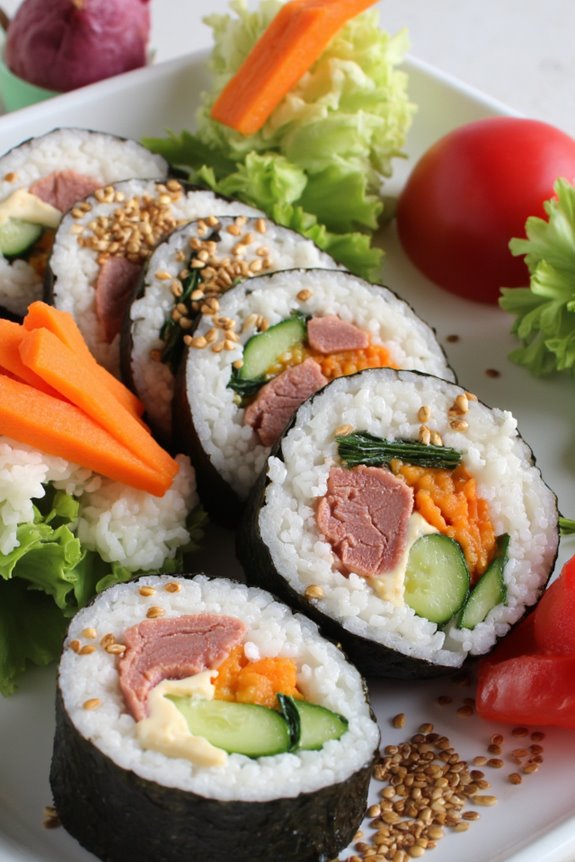
Tuna Mayo Gimbap is a delicious and satisfying Korean dish that combines seasoned rice with a savory tuna salad, all wrapped in seaweed. This easy-to-make dish is popular for picnics, lunch boxes, or a quick snack at home. The creamy tuna filling pairs wonderfully with the fresh vegetables and nutty flavor of sesame oil, making it a delightful meal that everyone will enjoy.
Making Tuna Mayo Gimbap isn’t only simple but also allows for customization to suit your taste. You can add your favorite vegetables or adjust the tuna mixture for extra flavor. This recipe is perfect for 4-6 people, making it an ideal choice for gatherings or family meals. Let’s explore the ingredients and cooking instructions to create this tasty dish!
Ingredients (Serves 4-6):
- 2 cups cooked short-grain rice
- 1 can (5 oz) tuna in water, drained
- 2 tablespoons mayonnaise
- 1 teaspoon sesame oil
- 1 tablespoon soy sauce
- 1 teaspoon gochugaru (Korean red pepper flakes) – optional
- 4 sheets of seaweed (gim)
- 1 small cucumber, julienned
- 1 carrot, julienned
- 4-5 pickled radish strips (danmuji)
- Sesame seeds for garnish
- Salt, to taste
Cooking Instructions:
- Prepare the Rice: Cook 2 cups of short-grain rice according to package instructions. Once cooked, let it cool slightly. You can add a pinch of salt and a teaspoon of sesame oil to the rice for added flavor. Mix well and set aside.
- Make the Tuna Filling: In a mixing bowl, combine the drained tuna, mayonnaise, sesame oil, soy sauce, and gochugaru (if using). Mix until well combined, making sure the tuna is flaked and coated evenly with the mayonnaise. Adjust the seasoning with salt if necessary.
- Prepare the Vegetables: Wash and julienne the cucumber and carrot into thin strips. If you’re using pickled radish, cut them into long strips as well. These fresh ingredients will add crunch and flavor to your gimbap.
- Assemble the Gimbap: Place a sheet of seaweed on a bamboo mat or a clean surface. Spread a thin layer of the prepared rice evenly across the seaweed, leaving about an inch at the top edge. Spread a generous amount of the tuna mixture along the center of the rice, and then layer the cucumber, carrot, and pickled radish on top of the tuna.
- Roll the Gimbap: Starting from the bottom edge (the edge closest to you), gently roll the bamboo mat away from you while applying slight pressure to form a tight roll. Continue rolling until you reach the edge of the seaweed. Use a little water on your fingers to seal the edge of the seaweed. Repeat this process with the remaining ingredients.
- Slice and Serve: Using a sharp knife, slice the rolled gimbap into bite-sized pieces. Wipe the knife with a damp cloth after each cut to maintain clean slices. Optionally, sprinkle sesame seeds on top for garnish before serving.
Extra Tips:
When making Tuna Mayo Gimbap, feel free to get creative with your fillings! Consider adding ingredients like avocado, cooked egg strips, or even kimchi for a spicy kick.
Make sure your rice isn’t too hot when assembling the gimbap, as it can make the seaweed soggy. Additionally, you can store any leftover gimbap in an airtight container in the refrigerator for a quick snack the next day, but it’s best enjoyed fresh.
Vegetable Gimbap
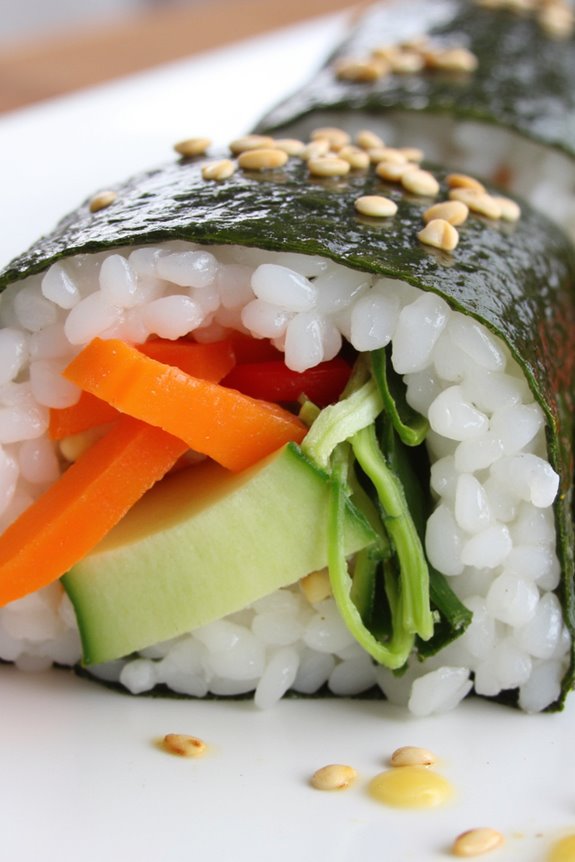
Vegetable Gimbap is a delicious and nutritious Korean dish that’s similar to sushi, featuring a variety of fresh vegetables rolled in seasoned rice and seaweed. This vibrant dish isn’t only visually appealing but also highly customizable, making it a perfect option for vegetarians and those looking to enjoy a healthy meal.
Traditionally served as a snack or picnic food, Vegetable Gimbap can be enjoyed at any time of day and pairs wonderfully with pickled radishes and a side of soy sauce.
The key to making great Vegetable Gimbap lies in the quality of ingredients and the seasoning of the rice. The rice should be slightly sticky, which helps hold the rolls together, and the vegetables should be fresh and colorful to enhance both the taste and presentation. This recipe serves 4-6 people, making it ideal for sharing with family and friends or for meal prep throughout the week.
Ingredients:
- 2 cups short-grain rice
- 2 1/2 cups water
- 1 tablespoon sesame oil
- 1 tablespoon rice vinegar
- 1 teaspoon salt
- 4 sheets of seaweed (nori)
- 1 medium carrot, julienned
- 1 cucumber, julienned
- 1 bell pepper (any color), julienned
- 1 cup spinach, blanched and squeezed dry
- 1/2 cup pickled radish (danmuji), sliced into strips
- 1 tablespoon sesame seeds (optional)
- Soy sauce (for dipping)
Cooking Instructions:
1. Prepare the Rice: Rinse the short-grain rice under cold water until the water runs clear. This removes excess starch and helps the rice become sticky when cooked.
Add the rinsed rice and water to a rice cooker or pot, and cook according to the rice cooker instructions or bring to a boil, then reduce heat to low and cover for about 20 minutes until the water is absorbed.
2. Season the Rice: Once the rice is cooked, transfer it to a large bowl. While it’s still warm, gently fold in sesame oil, rice vinegar, and salt. Make sure to mix it well, but be careful not to mash the rice. Let it cool to room temperature.
3. Prepare the Vegetables: While the rice is cooling, julienne the carrot, cucumber, and bell pepper. Blanch the spinach in boiling water for about 30 seconds, then rinse under cold water and squeeze out excess moisture. Set all the vegetables aside.
4. Assemble the Gimbap: Place a bamboo sushi mat on a flat surface and lay a sheet of seaweed on top, shiny side down. With wet hands, take a portion of the cooled rice (about 1 cup) and spread it evenly over the seaweed, leaving about 1 inch at the top edge.
5. Add the Fillings: Arrange a few sticks of each vegetable—carrot, cucumber, bell pepper, spinach, and pickled radish—horizontally across the rice-covered seaweed, about 2 inches from the bottom edge. Sprinkle sesame seeds over the vegetables, if desired.
6. Roll the Gimbap: Using the bamboo mat, carefully lift the edge of the mat closest to you and begin to roll it away from you, pressing it tightly as you roll. Continue rolling until you reach the bare edge of the seaweed. Moisten the edge with a little water to seal the roll. Repeat the process with the remaining ingredients.
7. Slice and Serve: Once all rolls are made, use a sharp knife to slice each roll into bite-sized pieces, wiping the knife with a damp cloth between cuts to prevent sticking. Serve the Vegetable Gimbap with soy sauce for dipping.
Extra Tips:
When making Vegetable Gimbap, it’s crucial to use fresh, high-quality ingredients for the best flavor and texture. Feel free to experiment with different vegetables based on your preferences or what’s in season.
Some popular additions include avocado, radish sprouts, or even tofu for added protein. If you’re preparing these rolls ahead of time, wrap them tightly in plastic wrap to keep them fresh until ready to serve, and cut them just before eating to maintain their shape.
Enjoy your delightful and healthy Vegetable Gimbap!
Spicy Pork Gimbap
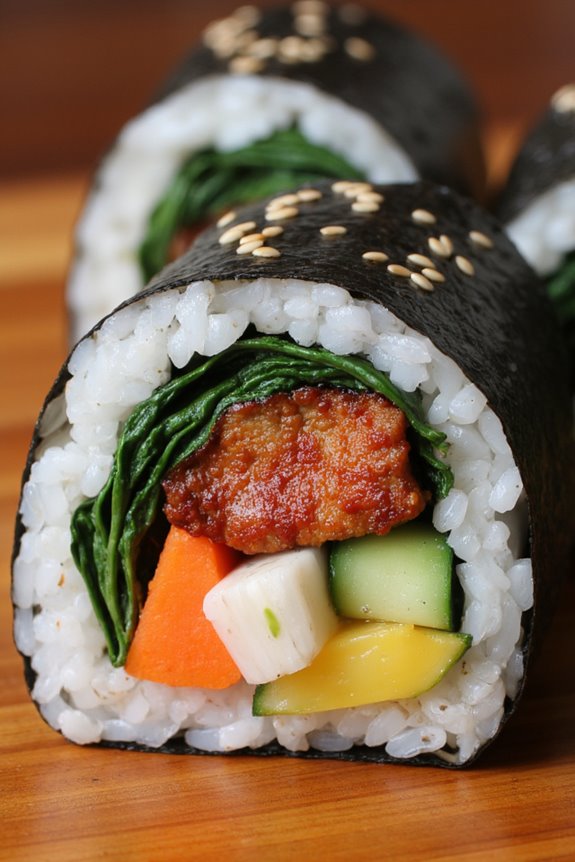
Spicy Pork Gimbap is a delectable Korean dish that combines the flavors of marinated pork with fresh vegetables and seasoned rice, all wrapped in seaweed. This variation of gimbap offers a perfect balance of spiciness and savory goodness, making it an ideal choice for lunch boxes, picnics, or a savory snack. The dish isn’t only delicious but also visually appealing, showcasing vibrant colors from the fresh ingredients.
Making Spicy Pork Gimbap is straightforward, and it can be customized to suit your taste preferences. The key to achieving that mouthwatering flavor lies in the marinade for the pork, which infuses the meat with a delightful kick. Once you have your ingredients ready, the assembly is quick, and you’ll be enjoying this tasty treat in no time!
Ingredients (Serves 4-6):
- 1 pound pork belly or pork shoulder, thinly sliced
- 2 tablespoons gochujang (Korean chili paste)
- 1 tablespoon soy sauce
- 1 tablespoon sesame oil
- 1 tablespoon sugar
- 1 teaspoon minced garlic
- 4 cups cooked sushi rice
- 1 tablespoon rice vinegar
- 6 sheets of seaweed (nori)
- 1 cup spinach, blanched and drained
- 1 carrot, julienned
- 1 cucumber, julienned
- 4-6 pickled radish strips (danmuji)
- Sesame seeds for garnish
Cooking Instructions:
- Marinate the Pork: In a mixing bowl, combine gochujang, soy sauce, sesame oil, sugar, and minced garlic. Add the thinly sliced pork to the marinade, making sure each piece is well coated. Let it marinate for at least 30 minutes for the flavors to meld.
- Cook the Pork: Heat a skillet over medium-high heat. Add the marinated pork and cook until fully cooked and caramelized, about 5-7 minutes. Stir occasionally to guarantee even cooking. Once done, remove from heat and set aside.
- Prepare the Rice: If you haven’t already, cook the sushi rice according to package instructions. Once cooked, mix in rice vinegar gently to season the rice and let it cool to room temperature.
- Prepare the Vegetables: While the rice is cooling, prepare your vegetables. Blanch the spinach in boiling water for about 1 minute, then drain and rinse under cold water to stop the cooking process. Squeeze out excess water. Julienne the carrot and cucumber, and set all the vegetables aside.
- Assemble the Gimbap: Place a sheet of nori on a bamboo mat or a clean surface. Wet your hands to prevent sticking and spread a thin layer of sushi rice over the nori, leaving about an inch at the top edge. Layer the cooked spicy pork, spinach, carrot, cucumber, and pickled radish in the center of the rice.
- Roll the Gimbap: Starting from the bottom, lift the bamboo mat and roll it over the filling tightly. Continue rolling until you reach the exposed edge of the nori. Use a little water to seal the edge. Repeat with the remaining ingredients.
- Slice the Gimbap: Using a sharp knife, slice the rolled gimbap into bite-sized pieces. Wipe the knife with a damp cloth between cuts to maintain clean edges.
- Serve: Arrange the sliced gimbap on a platter and sprinkle sesame seeds on top for garnish. Serve with soy sauce or pickled radish on the side for dipping.
Extra Tips:
When making Spicy Pork Gimbap, feel free to adjust the level of spiciness by adding more or less gochujang to the marinade. Additionally, you can substitute or add other vegetables such as bell peppers, zucchini, or even avocado for extra flavor and texture.
Make sure that all your ingredients are prepped before you start rolling to make the assembly process smooth and quick. Enjoy your homemade gimbap fresh, but they can also be stored in the refrigerator for a day if needed.
Kimchi Gimbap
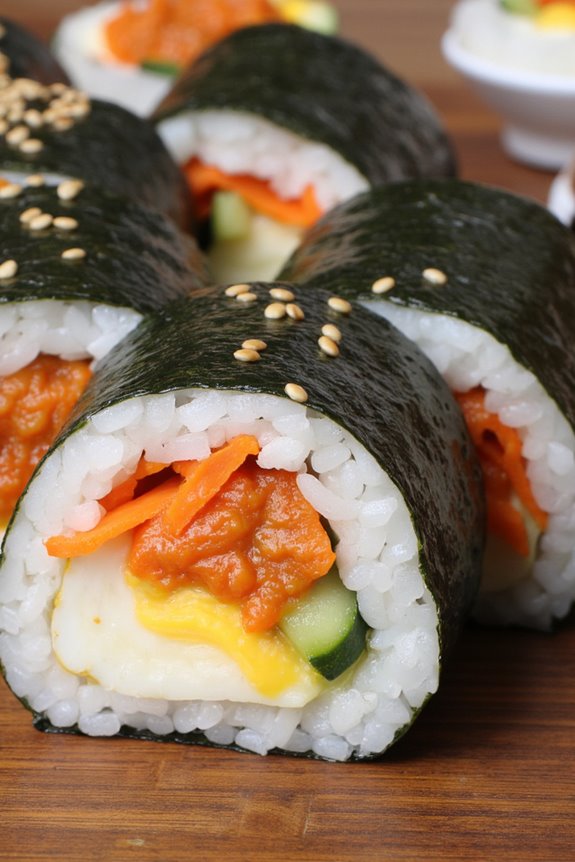
Kimchi Gimbap is a delightful Korean dish that combines the classic flavors of gimbap with the spicy, tangy kick of kimchi. This dish is perfect for a picnic or lunchbox, as it’s easy to make and can be enjoyed both fresh and at room temperature. The combination of seasoned rice, vibrant vegetables, and the unique taste of fermented kimchi makes this a standout dish that’s both nutritious and satisfying.
To create the best Kimchi Gimbap, it’s vital to use high-quality ingredients. Freshly prepared rice is the foundation of this dish, while the addition of kimchi provides a distinct flavor profile that elevates the gimbap. This recipe serves 4-6 people, making it ideal for sharing or enjoying over several meals. Get ready to roll up some deliciousness!
Ingredients:
- 2 cups short-grain rice
- 2 1/2 cups water
- 1 tablespoon sesame oil
- 1 tablespoon soy sauce
- 1 teaspoon salt
- 4-6 sheets of seaweed (nori)
- 1 cup kimchi, chopped
- 1 medium cucumber, julienned
- 1 medium carrot, julienned
- 4-6 eggs
- 1 tablespoon vegetable oil
- Sesame seeds for garnish
Cooking Instructions:
- Prepare the Rice: Rinse 2 cups of short-grain rice under cold water until the water runs clear. This helps remove excess starch. Combine the rinsed rice with 2 1/2 cups of water in a rice cooker or pot. Cook according to the rice cooker instructions or bring to a boil on the stove, then reduce the heat, cover, and simmer for about 20 minutes until the water is absorbed. Once cooked, let it cool slightly.
- Season the Rice: In a large bowl, combine the warm rice with 1 tablespoon of sesame oil, 1 tablespoon of soy sauce, and 1 teaspoon of salt. Mix gently to confirm that the rice is well-seasoned but not mushy. Allow the rice to cool to room temperature.
- Prepare the Vegetables: While the rice is cooling, julienne the cucumber and carrot. Heat 1 tablespoon of vegetable oil in a pan over medium heat and scramble the eggs until fully cooked, then remove from heat. Allow the eggs to cool, then slice them into thin strips.
- Assemble the Gimbap: Place a sheet of seaweed on a bamboo mat or a clean surface, shiny side down. With wet hands, spread a thin layer of seasoned rice over the seaweed, leaving about 1 inch of space at the top. In the center of the rice, layer a portion of the chopped kimchi, julienned cucumber, julienned carrot, and a few strips of egg.
- Roll the Gimbap: Starting from the bottom, carefully lift the edge of the bamboo mat and begin to roll the gimbap away from you, pressing gently to keep the filling in place. Continue rolling until you reach the exposed edge of the seaweed. Use a little water to seal the edge of the seaweed. Repeat this process with the remaining ingredients.
- Slice and Serve: Once all rolls are complete, use a sharp knife to cut the gimbap into bite-sized pieces. Wipe the knife with a damp cloth between cuts to confirm clean slices. Sprinkle with sesame seeds for garnish.
Extra Tips: When making Kimchi Gimbap, feel free to customize the filling based on your preferences. You can add ingredients like pickled radish, spinach, or even cooked protein like beef or tofu.
Also, make sure that your rice isn’t too hot when spreading it on the seaweed; otherwise, it may cause the seaweed to become soggy. Enjoy your homemade Kimchi Gimbap fresh or store it in an airtight container in the refrigerator for a couple of days.
Egg Gimbap
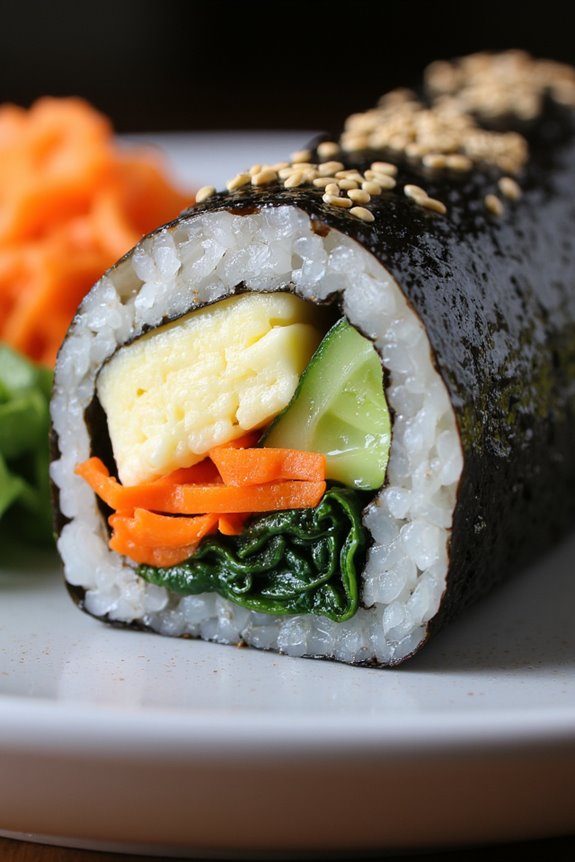
Egg Gimbap is a delightful twist on the traditional Korean Gimbap, featuring a fluffy and flavorful egg filling that adds both texture and richness to the dish. This recipe is perfect for a light lunch or a picnic, as it’s easy to pack and eat on the go. The combination of seasoned rice, vibrant vegetables, and the protein-packed egg makes for a nutritious meal that’s sure to please everyone at the table.
Whether you’re a seasoned chef or a beginner in the kitchen, this Egg Gimbap recipe will guide you through every step to achieve a delicious result. To make Egg Gimbap, you’ll need to prepare the essential ingredients, including sushi rice, roasted seaweed, and a variety of fillings. The egg is the star of the show, providing a soft, custardy texture that complements the crunchy vegetables.
Once you have everything ready, the assembly is straightforward, and you’ll be enjoying your homemade Egg Gimbap in no time. Gather your ingredients, and let’s get cooking!
Ingredients (serving size: 4-6 people):
- 2 cups sushi rice
- 2 ½ cups water
- 4 large eggs
- 2 teaspoons soy sauce
- 1 teaspoon sesame oil
- 1 tablespoon vegetable oil
- 4 sheets of roasted seaweed (nori)
- 1 medium carrot, julienned
- 1 cucumber, julienned
- 1 cup spinach, blanched
- Salt to taste
- Sesame seeds (for garnish)
Cooking Instructions:
1. Cook the Sushi Rice: Rinse the sushi rice under cold water until the water runs clear to remove excess starch. Combine the rinsed rice with 2 ½ cups of water in a rice cooker or pot. If using a rice cooker, follow the manufacturer’s instructions. If cooking on the stovetop, bring the water to a boil, then reduce to low heat, cover, and simmer for about 20 minutes or until the water is absorbed.
Once cooked, let it sit covered for 10 minutes, then fluff with a fork.
2. Prepare the Egg: In a bowl, whisk together the eggs, soy sauce, and a pinch of salt. Heat a non-stick skillet over medium heat and add the vegetable oil. Pour in the egg mixture and gently swirl it around to create a thin layer. Cook until the edges begin to set, then carefully flip and cook the other side until fully set.
Remove from heat, let cool slightly, and slice into thin strips.
3. Sauté the Vegetables: In the same skillet, you can lightly sauté the julienned carrots in a bit of oil until they’re tender but still crisp. Season with a little salt if desired. The spinach should be blanched in boiling water for just a minute until wilted, then drained and squeezed to remove excess water.
Set both vegetables aside.
4. Assemble the Gimbap: Place a sheet of roasted seaweed on a bamboo mat or a clean surface. Spread a thin layer of cooked sushi rice evenly over the seaweed, leaving about an inch at the top edge. Lay the strips of egg, sautéed carrots, julienned cucumber, and blanched spinach across the rice.
5. Roll the Gimbap: Starting from the bottom, roll the bamboo mat tightly while pressing the fillings inside. Make sure to roll away from you while tucking in the fillings. Once rolled, use a bit of water to seal the edge of the seaweed.
6. Slice and Serve: Using a sharp knife, slice the Gimbap into bite-sized pieces, about 1 inch thick. Sprinkle sesame seeds on top for extra flavor and garnish. Serve fresh, or pack for a picnic!
Extra Tips: When making Egg Gimbap, feel free to customize the fillings based on your preferences. You can add other ingredients like pickled radish or avocado to enhance the flavor.
Make sure the rice is slightly warm but not hot when rolling, as this will help the seaweed to stick without becoming too soggy. If you plan to store the Gimbap, wrap each roll in plastic wrap to keep it fresh and prevent it from drying out. Enjoy your culinary adventure!
Chicken Teriyaki Gimbap
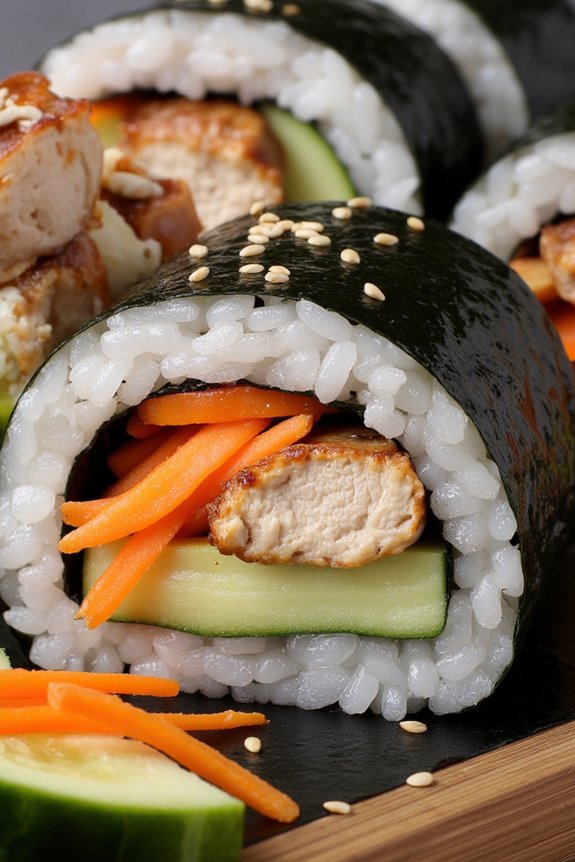
Chicken Teriyaki Gimbap is a delicious and flavorful twist on the traditional Korean rice rolls. This dish combines tender chicken marinated in a savory teriyaki sauce with fresh vegetables and seasoned rice, all wrapped in a sheet of seaweed. Gimbap, which literally means “rice wrapped in seaweed,” is a popular Korean snack or meal that can be enjoyed at home or on-the-go. The combination of the sweet and savory chicken with crisp veggies and the umami of the seaweed makes this gimbap not only tasty but also visually appealing.
Making Chicken Teriyaki Gimbap is relatively simple and can be a fun activity for families or friends. The key to a perfect gimbap lies in the preparation of the ingredients and the rolling technique. Carefully chosen fillings and a balance of flavors will guarantee that each bite is satisfying. This recipe serves 4-6 people, making it an excellent choice for a picnic, party, or a light meal.
Ingredients
- 2 cups of cooked short-grain rice
- 2 tablespoons of rice vinegar
- 1 tablespoon of sugar
- 1 teaspoon of salt
- 1 pound of boneless chicken thighs
- 1/4 cup of teriyaki sauce
- 1 tablespoon of sesame oil
- 1 cucumber, julienned
- 1 large carrot, julienned
- 4-6 sheets of roasted seaweed (nori)
- 2 tablespoons of sesame seeds (optional)
- Soy sauce for dipping (optional)
Instructions
- Prepare the Rice: Begin by cooking the short-grain rice according to the package instructions. Once cooked, let it cool slightly. In a small bowl, mix rice vinegar, sugar, and salt until dissolved, then fold this mixture into the warm rice. Allow the rice to cool to room temperature.
- Marinate the Chicken: Cut the chicken thighs into small, bite-sized pieces. In a bowl, combine the chicken with teriyaki sauce and sesame oil. Let the chicken marinate for at least 15-30 minutes to absorb the flavors.
- Cook the Chicken: Heat a non-stick skillet over medium heat and add the marinated chicken. Cook until the chicken is fully cooked and the sauce has thickened, about 5-7 minutes. Once cooked, let it cool slightly.
- Prepare the Vegetables: While the chicken is cooking, prepare the vegetables. Julienne the cucumber and carrot into thin, long strips. Set them aside.
- Assemble the Gimbap: Place a sheet of roasted seaweed on a bamboo sushi mat or a clean surface. Spread a thin layer of the seasoned rice evenly across the seaweed, leaving about an inch of space at the top. Lay a few pieces of chicken, cucumber, and carrot horizontally across the rice.
- Roll the Gimbap: Starting from the bottom (the side closest to you), use the mat to roll the gimbap tightly away from you. Apply gentle pressure to confirm it holds together, and continue to roll until you reach the exposed edge of the seaweed. Use a little water to seal the edge.
- Slice and Serve: Using a sharp knife, slice the rolled gimbap into bite-sized pieces. Wipe the knife with a damp cloth between cuts to confirm clean slices. Arrange the gimbap on a plate and sprinkle with sesame seeds if desired. Serve with soy sauce for dipping.
Extra Tips
When preparing Chicken Teriyaki Gimbap, feel free to customize your fillings based on your preferences. You can add other vegetables like spinach, pickled radish, or bell peppers for added flavor and texture.
If you find rolling the gimbap challenging, practice makes perfect, and using a bamboo mat can help achieve a tighter roll. Finally, serve the gimbap fresh for the best taste, but they can be stored in the refrigerator for a day or two if wrapped tightly. Enjoy your homemade gimbap!
Shrimp Gimbap
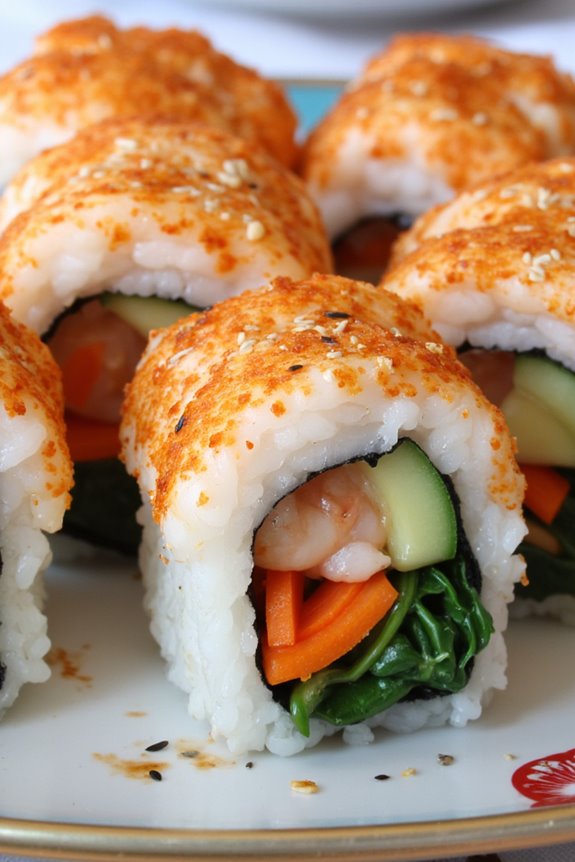
Shrimp Gimbap is a delightful variation of the traditional Korean dish, gimbap, which is often compared to sushi rolls. This vibrant dish is a perfect combination of seasoned rice, fresh vegetables, and succulent shrimp, all wrapped in seaweed.
Shrimp Gimbap isn’t just delicious but also visually appealing, making it an ideal choice for picnics, lunch boxes, or any gathering where you want to impress your guests with a healthy and tasty option.
Making Shrimp Gimbap at home is easier than you might think. With just a few ingredients and some simple steps, you can create this popular Korean dish that’s both satisfying and nutritious.
The balance of flavors and textures, from the crunch of the vegetables to the tenderness of the shrimp, will leave everyone wanting more. Let’s plunge into the recipe and explore how to make this scrumptious Shrimp Gimbap.
Ingredients (Serves 4-6 people)
- 2 cups cooked short-grain rice
- 1 tablespoon sesame oil
- 1 teaspoon salt
- 4 sheets of seaweed (nori)
- 12 medium shrimp, peeled and deveined
- 1 cucumber, julienned
- 1 carrot, julienned
- 1 cup spinach, blanched and squeezed dry
- 1 tablespoon sesame seeds
- Soy sauce for dipping
Cooking Instructions
- Prepare the Rice: Start by cooking the short-grain rice according to package instructions. Once cooked, transfer the rice to a large bowl and mix in the sesame oil and salt while the rice is still warm. This will enhance the flavor of the rice and help prevent it from becoming too sticky.
- Cook the Shrimp: In a skillet over medium heat, add a splash of oil and the shrimp. Cook for about 2-3 minutes on each side until they turn pink and opaque. Season lightly with salt and set aside to cool.
- Prepare the Vegetables: While the shrimp cools, prepare the vegetables. Julienne the cucumber and carrot into thin strips. Blanch the spinach in boiling water for just a minute, then cool it in ice water to maintain its vibrant green color. Squeeze out excess water from the spinach.
- Assemble the Gimbap: Place a sheet of nori on a bamboo mat or a clean surface. With wet hands, take a portion of the seasoned rice and spread it evenly over the nori, leaving about 1 inch at the top edge. Layer the shrimp, cucumber, carrot, and spinach on top of the rice.
- Roll the Gimbap: Starting from the bottom, use the bamboo mat to roll the gimbap away from you, applying gentle pressure to keep it tight. Once you reach the exposed edge of the nori, moisten it with a little water to seal the roll. Repeat the process with the remaining ingredients.
- Cut and Serve: Using a sharp knife, slice the gimbap into bite-sized pieces. Wipe the knife with a damp cloth between cuts to guarantee clean edges. Arrange the slices on a serving platter and sprinkle with sesame seeds. Serve with soy sauce for dipping.
Extra Tips
When making Shrimp Gimbap, feel free to customize the filling to suit your taste preferences. You can add ingredients like pickled radish, avocado, or even other proteins such as crab or tofu.
To make the rice easier to handle, keep a small bowl of water nearby to wet your hands while spreading the rice and rolling the gimbap. This prevents sticking and helps you achieve a neat roll.
Finally, for a pop of flavor, consider adding a dash of gochujang (Korean chili paste) to the soy sauce for dipping, giving your gimbap an extra kick!
Avocado and Crab Gimbap
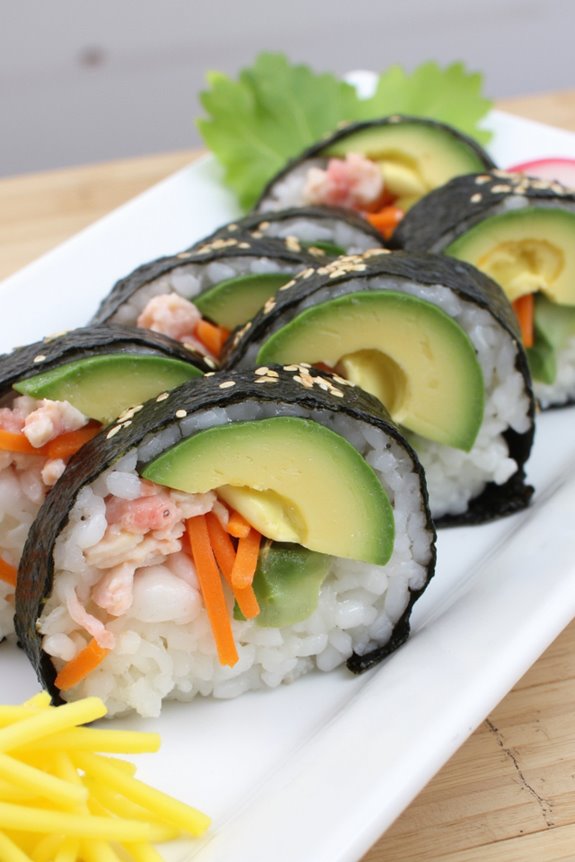
Avocado and Crab Gimbap is a delightful twist on the traditional Korean rice roll, incorporating the creamy texture of ripe avocados and the delicate flavor of crab meat. This fusion dish not only offers a fresh take on gimbap but also provides a nutritious option that’s perfect for a light lunch or a fun picnic. The combination of ingredients creates a satisfying experience, and the vibrant colors make it visually appealing as well.
Making Avocado and Crab Gimbap at home is easier than it may seem. With just a few simple ingredients and steps, you can prepare a delicious meal that everyone will enjoy. This recipe serves 4-6 people, making it an ideal choice for family gatherings or get-togethers with friends. Gather your ingredients, roll up your sleeves, and let’s get started on this flavorful journey!
Ingredients
- 4 sheets of seaweed (nori)
- 2 cups of cooked short-grain rice
- 1 ripe avocado, sliced
- 1 cup of imitation crab meat, shredded
- 1 small cucumber, julienned
- 1 carrot, julienned
- 2 tablespoons of sesame oil
- 1 tablespoon of soy sauce
- 1 teaspoon of salt
- 1 tablespoon of sesame seeds
- Pickled radish (for serving, optional)
Cooking Instructions
- Prepare the Rice: Begin by cooking the short-grain rice according to package instructions. Once cooked, let it cool slightly before mixing in the sesame oil, soy sauce, and salt. This seasoning enhances the flavor of the rice and gives it a delicious aroma.
- Prepare the Vegetables: While the rice is cooling, julienne the cucumber and carrot. This means cutting them into thin matchstick-sized strips, which will make them easier to roll and eat. Set these vegetables aside.
- Prepare the Avocado and Crab: Slice the ripe avocado into thin strips, similar in size to the cucumber and carrot. Shred the imitation crab meat into bite-sized pieces. Having all fillings prepared in advance will streamline the rolling process.
- Assemble the Gimbap: Lay a sheet of seaweed on a bamboo sushi mat, shiny side down. With wet hands (to prevent sticking), take a portion of the seasoned rice (about 1/2 cup) and spread it evenly over the nori, leaving about an inch of space at the top edge.
- Add the Fillings: In the center of the rice, place a few strips of avocado, shredded crab meat, julienned cucumber, and carrot. Be careful not to overfill, as this can make rolling difficult.
- Roll the Gimbap: Starting from the bottom edge of the mat, lift it to begin rolling the gimbap away from you, applying gentle pressure to keep the roll tight. Roll until you reach the edge of the nori, then use a little water to seal the edge.
- Slice and Serve: Using a sharp knife, slice the rolled gimbap into bite-sized pieces, about 1 inch thick. Serve with sesame seeds sprinkled on top and pickled radish on the side, if desired. Enjoy your delicious Avocado and Crab Gimbap!
Extra Tips
When making Avocado and Crab Gimbap, it’s essential to use fresh ingredients for the best flavor and texture.
If you want to add a bit of spice, consider including a thin layer of spicy mayonnaise or Sriracha sauce inside the roll.
Additionally, you can substitute imitation crab with real crab meat if you prefer a more authentic taste.
Make sure to keep your knife wet when slicing the gimbap to achieve clean cuts without squishing the roll. Enjoy your culinary adventure!
Sweet Potato Gimbap
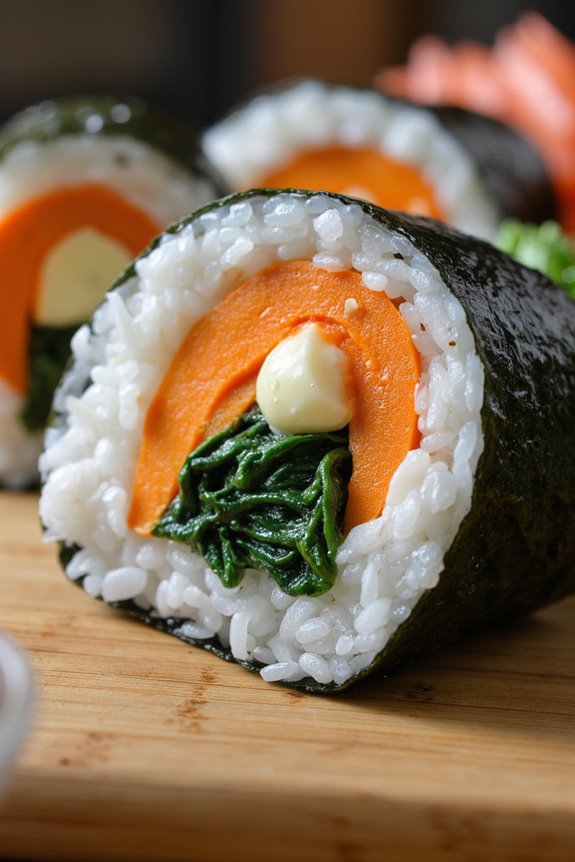
Sweet Potato Gimbap is a delightful twist on the traditional Korean gimbap, featuring the natural sweetness and creaminess of sweet potatoes. This vibrant dish isn’t only visually appealing but also packed with flavor and nutrients, making it a perfect meal option or snack for any occasion. The combination of fresh vegetables, seasoned rice, and the sweet undertones of the sweet potato creates a harmonious blend that will satisfy your taste buds and leave you feeling energized.
Making Sweet Potato Gimbap is a fun and engaging process, perfect for family gatherings or meal prep. Gimbap is typically rolled with a variety of fillings, and in this recipe, we’ll highlight sweet potatoes along with other complementary ingredients. Whether you’re a seasoned cook or a beginner, this recipe will guide you through each step to create delicious rolls that are sure to impress.
Ingredients (Serves 4-6):
- 2 cups cooked short-grain rice
- 1 medium sweet potato, peeled and cut into thin strips
- 1 cup spinach, blanched
- 1 carrot, julienned
- 4 sheets of roasted seaweed (nori)
- 2 tablespoons sesame oil
- 1 tablespoon soy sauce
- 1 tablespoon sesame seeds
- Salt, to taste
- 1 teaspoon sugar (optional)
Cooking Instructions:
- Prepare the Rice: Begin by cooking the short-grain rice as per package instructions. Once cooked, let it cool slightly before seasoning with sesame oil, soy sauce, salt, and sesame seeds. Mix well and set aside to allow the flavors to meld.
- Cook the Sweet Potato: In a pot, bring water to a boil and add the sweet potato strips. Boil for about 5-7 minutes until they’re tender but still firm. Drain and let them cool. Optionally, you can lightly season them with a pinch of salt and sugar to enhance their sweetness.
- Blanch the Spinach: In the same pot of boiling water, briefly blanch the spinach for about 30 seconds until wilted. Remove from the water, rinse under cold water to stop the cooking process, and squeeze out excess moisture. Season with a little salt and sesame oil.
- Sauté the Carrots: In a small pan, lightly sauté the julienned carrots in a teaspoon of sesame oil over medium heat for about 2-3 minutes until they’re just tender. Remove from heat and let them cool.
- Assemble the Gimbap: Place a sheet of roasted seaweed on a bamboo sushi mat or a clean surface. Spread a thin layer of seasoned rice over the seaweed, leaving a small border at the top edge. Lay down a few sweet potato strips, some blanched spinach, and sautéed carrots in a line across the center of the rice.
- Roll the Gimbap: Starting from the bottom edge, carefully roll the mat away from you, pressing gently to form a tight roll. Continue rolling until you reach the top edge, which should have a little rice to help seal the roll. Use a sharp knife to cut the rolled gimbap into bite-sized pieces, about 1-inch thick.
- Serve: Arrange the cut pieces on a serving platter. You can sprinkle additional sesame seeds on top for garnish if desired. Sweet Potato Gimbap is best enjoyed fresh, but can also be stored in the refrigerator for a few hours before serving.
Extra Tips:
When making Sweet Potato Gimbap, feel free to customize the fillings according to your taste preferences. You can add other vegetables like cucumber or pickled radish, or even some protein like tofu or egg.
For an extra layer of flavor, consider adding a drizzle of spicy gochujang sauce when serving. Remember to keep the rolls tightly packed to guarantee they hold their shape when sliced. Enjoy the process and have fun experimenting with different ingredients!
Tofu Gimbap
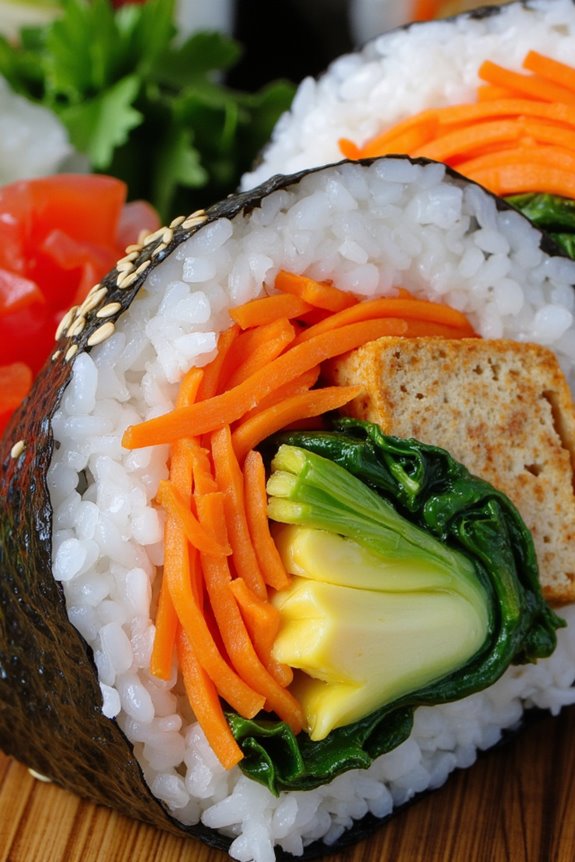
Tofu Gimbap is a delightful Korean dish that combines the wholesome goodness of tofu with vibrant vegetables, all wrapped in savory rice and seaweed. Traditionally enjoyed as a convenient snack or light meal, gimbap can be customized to suit various tastes and dietary preferences. This tofu version isn’t only vegetarian-friendly but also packed with protein, making it an excellent choice for anyone looking to enjoy a healthy and satisfying meal.
The preparation of Tofu Gimbap involves marinating and sautéing tofu to enhance its flavor, while combining it with colorful vegetables such as carrots, spinach, and pickled radish. The dish is then rolled tightly in seaweed (nori) with rice, creating a beautiful and portable meal that’s perfect for lunchboxes, picnics, or a quick dinner at home. With its appealing presentation and delicious taste, Tofu Gimbap is sure to impress family and friends alike.
Ingredients (Serves 4-6 people)
- 2 cups cooked short-grain rice
- 1 tablespoon sesame oil
- 1 teaspoon salt
- 1 package (14 oz) firm tofu
- 2 tablespoons soy sauce
- 1 tablespoon gochujang (optional)
- 1 tablespoon vegetable oil
- 1 carrot, julienned
- 1 cup baby spinach
- 1/2 cup pickled radish, sliced
- 4 sheets of nori (seaweed)
- Sesame seeds for garnish
Cooking Instructions
- Prepare the Rice: Begin by cooking the short-grain rice according to package instructions. Once cooked, let it cool slightly before mixing in sesame oil and salt. This will enhance the flavor of the rice and make it easier to work with when rolling the gimbap.
- Marinate and Cook the Tofu: Drain the tofu and press it to remove excess moisture. Cut the tofu into thin strips. In a bowl, mix soy sauce and gochujang (if using) and marinate the tofu strips for about 15 minutes. Heat vegetable oil in a skillet over medium heat and sauté the marinated tofu until golden brown on all sides. Set aside to cool.
- Sauté the Vegetables: In the same skillet, quickly sauté the julienned carrot and baby spinach until they’re just tender. This should take about 2-3 minutes. Remove from heat and let them cool.
- Assemble the Gimbap: Place a sheet of nori on a bamboo sushi mat or a clean surface. With wet hands, spread a thin layer of the seasoned rice over the nori, leaving about an inch at the top edge. Lay down the sautéed tofu, carrots, spinach, and pickled radish in a line along the bottom edge of the rice.
- Roll the Gimbap: Carefully lift the bamboo mat and start rolling the gimbap away from you, keeping the filling tightly packed. Roll until you reach the exposed edge of the nori, then wet the edge to seal the roll. Repeat this process with the remaining ingredients.
- Slice and Serve: Using a sharp knife, slice the rolled gimbap into bite-sized pieces. Sprinkle sesame seeds on top for added flavor and garnish. Serve immediately or pack them for later enjoyment.
Extra Tips
When making Tofu Gimbap, feel free to get creative with the fillings! You can add other vegetables like cucumber or bell peppers, or even include ingredients like avocado for a creamier texture.
It’s also a great way to use up leftover veggies in your fridge. For the best flavor, guarantee that your rice is slightly warm when assembling, as it will help in sealing the rolls better.
Finally, if you plan to store the gimbap, wrap them in plastic wrap to keep them fresh and prevent them from drying out. Enjoy your delicious homemade Tofu Gimbap!
Rainbow Gimbap
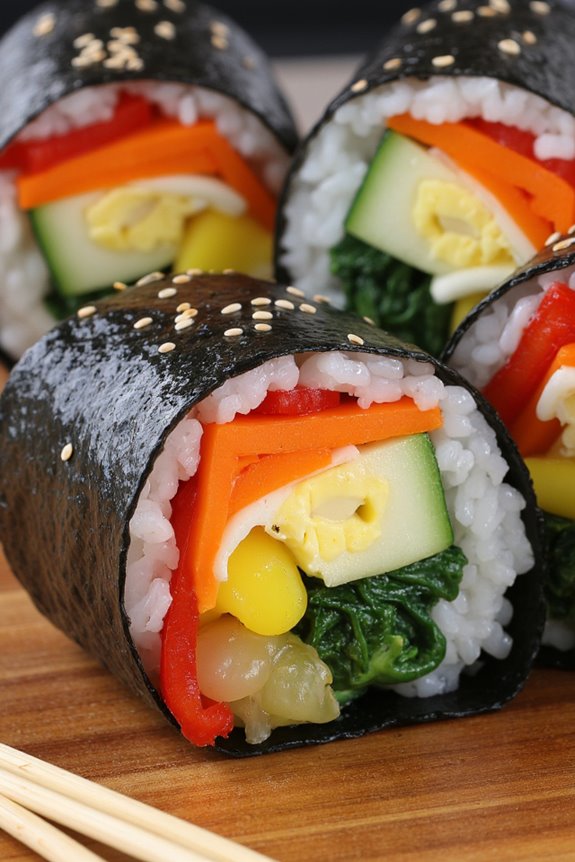
Rainbow Gimbap is a vibrant and colorful twist on the traditional Korean gimbap, which is a popular dish made with rice and various fillings wrapped in seaweed. This delightful recipe not only showcases a variety of colors but also an assortment of flavors that come together beautifully in each bite. The combination of fresh vegetables, protein, and seasoned rice makes it a nutritious and visually appealing meal perfect for picnics, lunch boxes, or family gatherings.
Preparing Rainbow Gimbap is a fun and creative process that allows you to customize the ingredients based on your preferences. Whether you opt for classic fillings or experiment with unique choices, the outcome is sure to impress. The key to achieving that vibrant rainbow appearance is to use a variety of colorful vegetables and proteins that contrast well with the glossy black seaweed. This dish isn’t only delicious but also a feast for the eyes!
Ingredients (Serves 4-6 people):
- 4 sheets of seaweed (nori)
- 2 cups of cooked sushi rice
- 1 tablespoon sesame oil
- 1 tablespoon rice vinegar
- 1 teaspoon salt
- 1 carrot, julienned
- 1 cucumber, julienned
- 1 red bell pepper, julienned
- 1 yellow bell pepper, julienned
- 4-6 strips of cooked egg omelette (or scrambled eggs)
- 1 cup of spinach, blanched and squeezed dry
- 1 cup of pickled radish (danmuji), cut into strips
- Sesame seeds for garnish
Cooking Instructions:
- Prepare the Sushi Rice: Rinse the sushi rice under cold water until the water runs clear. Cook the rice according to the package instructions. Once cooked, transfer the rice to a bowl and let it cool slightly. Mix in sesame oil, rice vinegar, and salt while the rice is still warm to enhance its flavor.
- Prepare the Fillings: While the rice is cooling, prepare your vegetables. Julienne the carrot, cucumber, red bell pepper, and yellow bell pepper into thin strips. Blanch the spinach in boiling water for about 30 seconds, then plunge it into ice water to keep its bright color. Drain and squeeze out excess moisture.
- Cook the Egg Omelette: In a non-stick skillet, whisk together a few eggs and season with a pinch of salt. Pour the mixture into the skillet and cook over medium heat until set, then flip and cook the other side. Once fully cooked, remove from the pan and cut into thin strips.
- Assemble the Gimbap: Place a bamboo mat on a flat surface and lay a sheet of seaweed on top, shiny side down. With wet hands, spread a thin, even layer of sushi rice over the seaweed, leaving about 1 inch at the top edge. Arrange the julienned vegetables, egg strips, and pickled radish in a line across the rice.
- Roll the Gimbap: Using the bamboo mat, gently lift the edge of the mat closest to you and start rolling away from you, tucking the filling tightly as you go. Roll until you reach the exposed edge of the seaweed. Wet the edge with a little water to seal the roll.
- Slice and Serve: Use a sharp knife to cut the gimbap into bite-sized pieces, wiping the knife with a damp cloth between cuts to facilitate clean slices. Arrange the pieces on a serving platter and sprinkle with sesame seeds for garnish.
Extra Tips:
When making Rainbow Gimbap, feel free to experiment with different fillings based on seasonal vegetables or personal preferences. You can also add proteins like tofu, crab meat, or cooked chicken to enhance the flavor.
For extra crunch, consider adding some roasted sesame seeds or crushed nuts. Remember to keep the rice and fillings at room temperature for best taste and presentation, and enjoy your beautiful and delicious Rainbow Gimbap!
Korean BBQ Gimbap
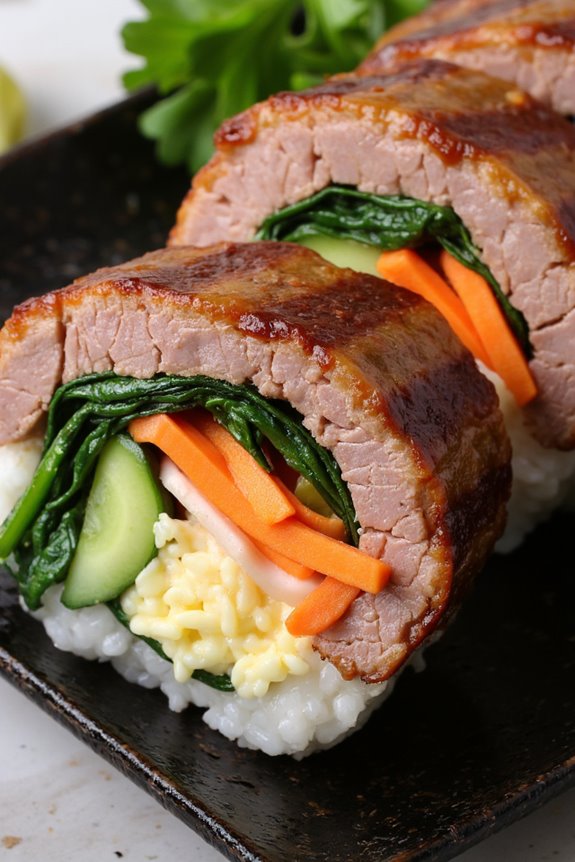
Korean BBQ Gimbap is a delightful twist on traditional gimbap, incorporating the rich, smoky flavors of grilled meat. This savory dish features tender pieces of marinated beef or pork, along with vibrant vegetables, all rolled up in seasoned rice and seaweed.
Perfect for picnics, lunch boxes, or as a fun meal to share with friends and family, this easy-to-make recipe is bound to impress! To create this delicious gimbap, you’ll need to prepare the marinated meat, sautéed vegetables, and seasoned rice. The combination of flavors and textures will transport your taste buds to a Korean BBQ, making it a favorite for those who crave something both hearty and revitalizing.
Grab your ingredients and get ready to roll!
Ingredients (Serves 4-6)
- 2 cups cooked short-grain rice
- 2 tablespoons sesame oil
- 1 tablespoon rice vinegar
- 1 teaspoon salt
- 1 pound beef or pork, thinly sliced
- 2 tablespoons soy sauce
- 1 tablespoon sugar
- 1 tablespoon minced garlic
- 1 tablespoon sesame seeds
- 1 carrot, julienned
- 1 cucumber, julienned
- 4-6 sheets of seaweed (nori)
- 2 eggs, beaten
- Vegetable oil for frying
- 1 cup spinach, blanched
- Pickled radish (danmuji), sliced
Cooking Instructions
- Prepare the Rice: In a large bowl, combine the cooked short-grain rice with sesame oil, rice vinegar, and salt. Mix well to ascertain that the rice is evenly seasoned. Allow it to cool slightly before assembling the gimbap.
- Marinate the Meat: In a bowl, mix together soy sauce, sugar, minced garlic, and sesame seeds. Add the thinly sliced beef or pork to the marinade and let it sit for at least 30 minutes, allowing the flavors to meld.
- Cook the Meat: In a heated skillet over medium-high heat, add a bit of oil and cook the marinated meat until it’s browned and cooked through, approximately 4-5 minutes. Remove from heat and set aside.
- Sauté the Vegetables: In the same skillet, add a bit more oil if necessary and sauté the julienned carrots for about 2-3 minutes until they’re slightly tender. Remove from the skillet and set aside.
- Cook the Eggs: Pour the beaten eggs into the skillet and cook them on low heat, swirling to create a thin omelet. Once fully cooked, remove from heat and cut into thin strips.
- Assemble the Gimbap: Lay a sheet of seaweed on a bamboo mat or flat surface. Spread a thin layer of seasoned rice evenly across the seaweed, leaving about an inch at the top edge. Place a few pieces of cooked meat, sautéed carrots, julienned cucumber, blanched spinach, pickled radish, and egg strips in a line across the center of the rice.
- Roll the Gimbap: Starting from the edge closest to you, roll the bamboo mat away from you, pressing gently but firmly to create a tight roll. Continue rolling until you reach the edge of the seaweed. Use a little water to seal the edge.
- Slice and Serve: Using a sharp knife, slice the rolled gimbap into bite-sized pieces. Serve immediately or wrap tightly for later.
Extra Tips
When making Korean BBQ Gimbap, feel free to customize the filling based on your preferences. You can add other ingredients like grilled mushrooms, bell peppers, or even kimchi for added flavor.
Make sure to keep your knife wet when slicing the gimbap to achieve clean cuts without tearing the seaweed. Finally, if you’re making this dish ahead of time, it’s best to store the gimbap in an airtight container in the refrigerator, but consume it within a day for peak freshness. Enjoy your gimbap creation!
Pickled Radish Gimbap
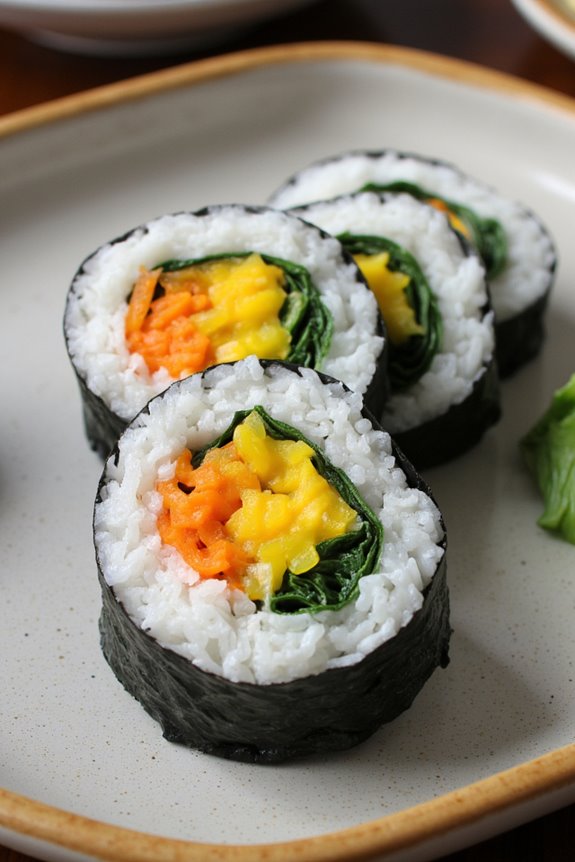
Pickled Radish Gimbap is a delightful Korean dish that showcases the vibrant flavors and textures of various ingredients wrapped in seaweed. Gimbap, often compared to sushi, features rice and fillings that are rolled up in sheets of seaweed called nori. The star of this particular recipe is the pickled radish, which adds a rejuvenating crunch and a tangy bite that perfectly complements the other fillings.
This dish isn’t only visually appealing but also makes for a healthy and satisfying meal, ideal for lunch boxes or picnics.
To make Pickled Radish Gimbap, you’ll need to gather fresh ingredients and prepare them with care. The pickled radish, known as “danmuji,” is a key component that provides a beautiful yellow hue and a burst of flavor. Combined with seasoned rice, vegetables, and other fillings, this gimbap is sure to impress both family and friends.
The process may seem intricate, but with a little practice, you’ll be able to roll these delicious bites like a pro!
Ingredients (Serves 4-6):
- 4 sheets of nori (seaweed)
- 2 cups cooked short-grain rice
- 1 cup pickled radish (danmuji), thinly sliced
- 1 cup spinach, blanched and squeezed dry
- 1 medium carrot, julienned
- 1 large cucumber, julienned
- 4 eggs, beaten and cooked into a thin omelet
- 1 tablespoon sesame oil
- 1 teaspoon salt
- 1 teaspoon sesame seeds (optional)
Cooking Instructions:
- Prepare the Rice: Begin by cooking the short-grain rice according to package instructions. Once cooked, transfer it to a large bowl and let it cool slightly. Add the sesame oil and salt to the rice, mixing it well to make sure of even seasoning.
- Prepare the Vegetables: While the rice is cooling, prepare the other fillings. Blanch the spinach in boiling water for about 30 seconds, then plunge it into cold water to stop the cooking process. Drain and squeeze out excess water, then season with a pinch of salt. Julienne the carrot and cucumber into thin strips for easy rolling.
- Make the Omelet: In a non-stick skillet, heat a little oil over medium heat. Pour in the beaten eggs, swirling to cover the bottom of the pan evenly. Cook until the omelet is set and lightly browned, then slide it out onto a cutting board. Allow it to cool before slicing it into strips.
- Assemble the Gimbap: Place a sheet of nori, shiny side down, on a bamboo mat or a clean surface. Spread a thin layer of seasoned rice over the nori, leaving about an inch at the top edge. Layer the pickled radish, spinach, carrot, cucumber, and omelet strips neatly across the rice.
- Roll the Gimbap: Start rolling from the bottom edge, using the bamboo mat to help keep everything tightly packed. Roll it away from you, applying gentle pressure as you go. When you reach the top edge, use a little water to seal the edge of the nori.
- Slice and Serve: Using a sharp knife, slice the rolled gimbap into bite-sized pieces, about 1-inch thick. Wipe the knife with a damp cloth between cuts to make sure of clean edges. Arrange the gimbap on a serving platter and sprinkle with sesame seeds if desired.
Extra Tips:
When making Pickled Radish Gimbap, feel free to customize the fillings according to your taste preferences. You can add ingredients like imitation crab, beef, or tofu for additional protein.
Additionally, using fresh, high-quality ingredients will enhance the overall flavor of the dish. For the best presentation, slice the gimbap just before serving, and serve it with a side of soy sauce or gochujang for dipping. Enjoy your homemade gimbap!
Fruit Gimbap
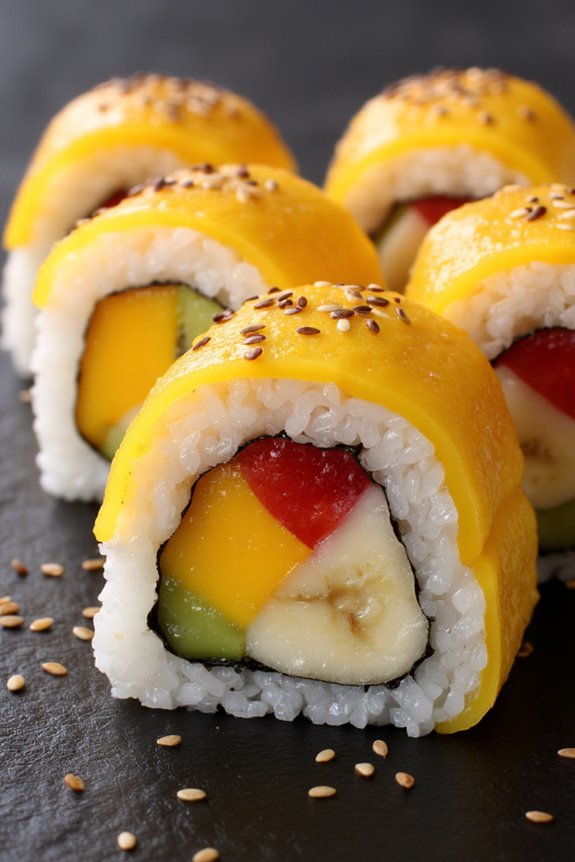
Fruit Gimbap is a delightful twist on the traditional Korean gimbap, which typically includes savory ingredients like vegetables and proteins. Instead, this version features an array of colorful fruits wrapped in a layer of rice and seaweed, making it a rejuvenating and visually appealing dish. It’s perfect for a picnic, a light lunch, or a fun snack for kids. The sweetness of the fruits combined with the nutty flavor of sesame oil creates a delicious balance that’s sure to please anyone’s palate.
Making Fruit Gimbap is a simple process that doesn’t require much cooking, making it an ideal recipe for those looking to enjoy a healthy, homemade meal without spending hours in the kitchen. The vibrant colors of the fruits not only make the dish more appetizing but also provide a range of vitamins and nutrients. With a little bit of preparation, you can impress your family and friends with this beautiful and tasty treat.
Ingredients (Serves 4-6):
- 2 cups cooked sushi rice
- 2 tablespoons rice vinegar
- 1 tablespoon sugar
- 1 teaspoon salt
- 4 sheets of nori (seaweed)
- 1 ripe banana, sliced
- 1 cup strawberries, hulled and sliced
- 1 cup kiwi, peeled and sliced
- 1 cup mango, peeled and sliced
- 1/2 cup cream cheese (optional)
- 1 tablespoon sesame seeds (for garnish)
Cooking Instructions:
- Prepare the Sushi Rice: Rinse 2 cups of sushi rice under cold water until the water runs clear. Cook the rice according to package instructions. Once cooked, let it cool slightly and then mix in 2 tablespoons of rice vinegar, 1 tablespoon of sugar, and 1 teaspoon of salt. This will give the rice a flavor similar to traditional sushi rice.
- Prepare the Fruits: While the rice is cooling, wash and slice the fruits. Use a banana, strawberries, kiwi, and mango, cutting them into thin, long strips. If you’re using cream cheese, you can also spread it on the nori for added creaminess.
- Assemble the Gimbap: Place a sheet of nori on a bamboo sushi mat or a clean surface, shiny side down. Spread a thin layer of the seasoned sushi rice over the nori, leaving about 1 inch of space at the top. If using, spread a thin layer of cream cheese on top of the rice.
- Add the Fruits: Arrange the sliced fruits in a line across the center of the rice. Feel free to mix and match the fruits according to your preference.
- Roll the Gimbap: Starting from the bottom, use the bamboo mat to gently lift and roll the nori over the fruits. Press firmly but gently as you roll to guarantee everything stays together. Continue rolling until you reach the uncovered edge of the nori. You can wet the edge with a little water to help seal the roll.
- Cut and Serve: Once rolled, use a sharp knife to cut the gimbap into bite-sized pieces. Wipe the knife with a damp cloth between cuts to guarantee clean slices. Arrange the pieces on a serving plate and sprinkle with sesame seeds for garnish.
Extra Tips:
When preparing Fruit Gimbap, feel free to get creative with the fruits you use based on seasonal availability or personal preference. You can also add a drizzle of honey or a sprinkle of coconut flakes for added flavor.
If you’re making these for kids, consider using their favorite fruits to make them more appealing. Additionally, serving the gimbap with a side of yogurt or a light fruit dip can enhance the experience, making it not just a meal but a fun, interactive snack!
