

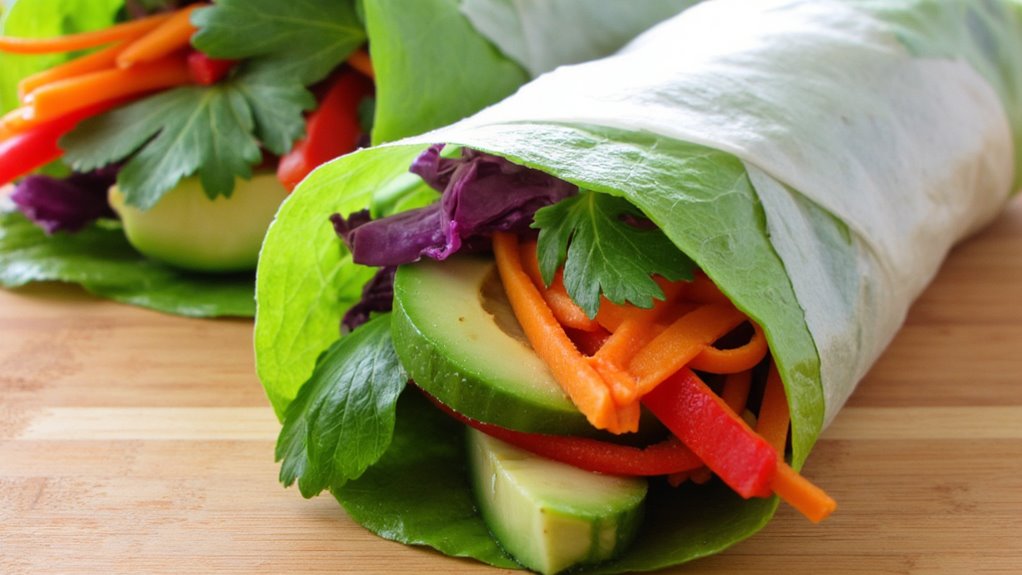
When I’m juggling a busy schedule but still want the delightful taste of Chinese cuisine, quick lunch bowls are my go-to solution. Recipes like Chicken and Broccoli Stir-Fry and Beef Chow Mein are ready in no time, making them ideal for hectic days. I appreciate how adaptable these dishes are, combining fresh ingredients with bold sauces. Let me share some favorites that not only tantalize the taste buds but also fit seamlessly into my day. You’ll definitely want to try these out for yourself.
Chicken and Broccoli Stir-Fry
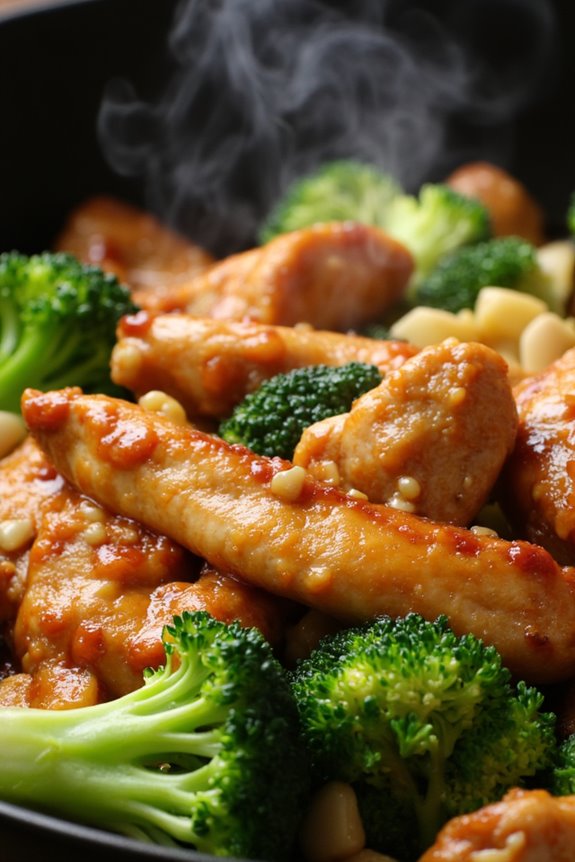
Chicken and Broccoli Stir-Fry is a classic Chinese dish that beautifully marries tender chicken pieces with vibrant broccoli, all coated in a savory sauce. It’s a quick and healthy meal option, perfect for a busy lunch or dinner. The combination of protein, vegetables, and a flavorful sauce makes it a well-rounded dish that can be served over steamed rice or noodles.
This stir-fry isn’t only delicious but also versatile. Feel free to add other vegetables like bell peppers, snap peas, or carrots to enhance the nutritional value and flavor profile. The key to a great stir-fry lies in the preparation and cooking technique, guaranteeing that all the ingredients are cooked evenly and remain crisp.
Let’s plunge into the ingredients and cooking steps to create this delightful dish!
Ingredients (Serves 4-6)
- 1 pound boneless, skinless chicken breasts, sliced into thin strips
- 4 cups broccoli florets
- 3 tablespoons vegetable oil
- 2 cloves garlic, minced
- 1 tablespoon fresh ginger, minced
- 1/4 cup soy sauce
- 2 tablespoons oyster sauce
- 1 tablespoon cornstarch
- 1/2 cup chicken broth
- 1 tablespoon sesame oil
- Salt and pepper to taste
- Cooked rice or noodles, for serving
Cooking Instructions
- Prepare the Chicken: Begin by slicing the boneless, skinless chicken breasts into thin strips. This allows for quick cooking and guarantees the chicken remains tender. Season the chicken with a pinch of salt and pepper, and set aside.
- Blanch the Broccoli: In a large pot of boiling water, add the broccoli florets and blanch for 2-3 minutes until they turn bright green and are slightly tender. Drain and immediately transfer to a bowl of ice water to stop the cooking process. This helps preserve their vibrant color and crispness.
- Make the Sauce: In a small bowl, whisk together the soy sauce, oyster sauce, cornstarch, and chicken broth. This mixture will create a flavorful sauce that thickens as it cooks. Set aside.
- Stir-Fry the Chicken: In a large skillet or wok, heat 2 tablespoons of vegetable oil over medium-high heat. Once the oil is hot, add the sliced chicken and stir-fry for about 5-7 minutes, or until the chicken is cooked through and lightly browned. Remove the chicken from the skillet and set aside.
- Sauté Garlic and Ginger: In the same skillet, add another tablespoon of vegetable oil if necessary, then add the minced garlic and ginger. Sauté for 30 seconds until fragrant, being careful not to burn them.
- Combine Ingredients: Add the blanched broccoli back into the skillet along with the cooked chicken. Pour the prepared sauce over the chicken and broccoli, stirring well to coat all ingredients. Cook for an additional 2-3 minutes, allowing the sauce to thicken and everything to heat through.
- Finish and Serve: Drizzle with sesame oil for added flavor and give it one last stir. Serve the Chicken and Broccoli Stir-Fry hot over cooked rice or noodles.
Extra Tips
To elevate your Chicken and Broccoli Stir-Fry, try marinating the chicken in the soy sauce and ginger for about 15-30 minutes before cooking. This will enhance the flavor even more.
Additionally, make sure to have all your ingredients prepped and ready to go before you start cooking, as stir-frying is a quick process. If you like a bit of spice, consider adding some red pepper flakes or sliced chili peppers to the stir-fry for a kick!
Beef Chow Mein
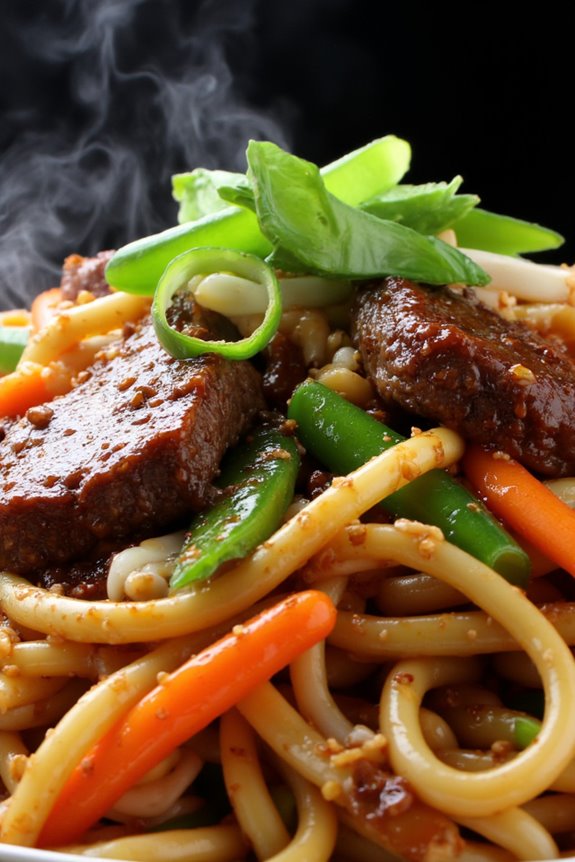
Beef Chow Mein is a classic Chinese dish that combines tender beef slices with a medley of crisp vegetables and flavorful noodles. This dish isn’t only satisfying but also quick to prepare, making it an ideal choice for a delicious lunch. The combination of savory soy sauce, fresh vegetables, and perfectly cooked noodles brings a delightful taste that’s sure to please your family and friends.
This recipe offers a wonderful way to enjoy homemade Beef Chow Mein, allowing you to customize the ingredients according to your preferences. Whether you’re a fan of extra veggies or prefer a spicier kick, this dish is versatile enough to accommodate your cravings. With a preparation time of about 15 minutes and cooking time of 15 minutes, you’ll have a fabulous meal ready in no time!
Ingredients (Serves 4-6):
- 8 oz chow mein noodles
- 1 lb flank steak or sirloin, thinly sliced
- 2 tablespoons vegetable oil
- 1 cup bell peppers, sliced (any color)
- 1 cup bean sprouts
- 1 cup carrots, julienned
- 1 cup cabbage, shredded
- 4 green onions, sliced
- 3 cloves garlic, minced
- 2 tablespoons soy sauce
- 1 tablespoon oyster sauce
- 1 tablespoon cornstarch
- 1 teaspoon sesame oil
- Salt and pepper to taste
Cooking Instructions:
- Prepare the Noodles: Begin by cooking the chow mein noodles according to the package instructions until al dente. Drain the noodles and rinse them under cold water to stop the cooking process. Set aside.
- Marinate the Beef: In a medium bowl, combine the thinly sliced beef with soy sauce, oyster sauce, cornstarch, sesame oil, and a pinch of salt and pepper. Mix well to guarantee the beef is evenly coated. Allow to marinate for about 10 minutes while you prepare the vegetables.
- Stir-Fry the Beef: Heat 1 tablespoon of vegetable oil in a large skillet or wok over high heat. Once the oil is hot, add the marinated beef in a single layer. Stir-fry for 3-4 minutes until the beef is browned and cooked through. Remove the beef from the skillet and set aside.
- Cook the Vegetables: In the same skillet, add the remaining tablespoon of vegetable oil. Add the minced garlic and stir-fry for about 30 seconds until fragrant. Then, add the bell peppers, carrots, and cabbage. Stir-fry for 3-4 minutes until the vegetables are tender yet still crisp.
- Combine Ingredients: Return the cooked beef to the skillet with the vegetables. Add the cooked chow mein noodles and bean sprouts. Toss everything together, ensuring the noodles and beef are well mixed with the vegetables.
- Final Touches: Drizzle a little extra soy sauce if desired and season with additional salt and pepper to taste. Stir-fry for an additional 1-2 minutes until everything is heated through.
- Serve the Dish: Once everything is well combined and heated, remove from heat. Garnish with sliced green onions and serve hot.
Extra Tips:
For an enhanced flavor profile, consider adding other vegetables such as snap peas or broccoli. You can also adjust the level of seasoning by incorporating chili paste or Szechuan sauce for a spicy kick.
If you prefer a richer sauce, feel free to add a bit more oyster sauce or a splash of chicken broth during the cooking process. Finally, using a wok will allow for better heat distribution, resulting in perfectly stir-fried ingredients. Enjoy your homemade Beef Chow Mein!
Vegetable Fried Rice
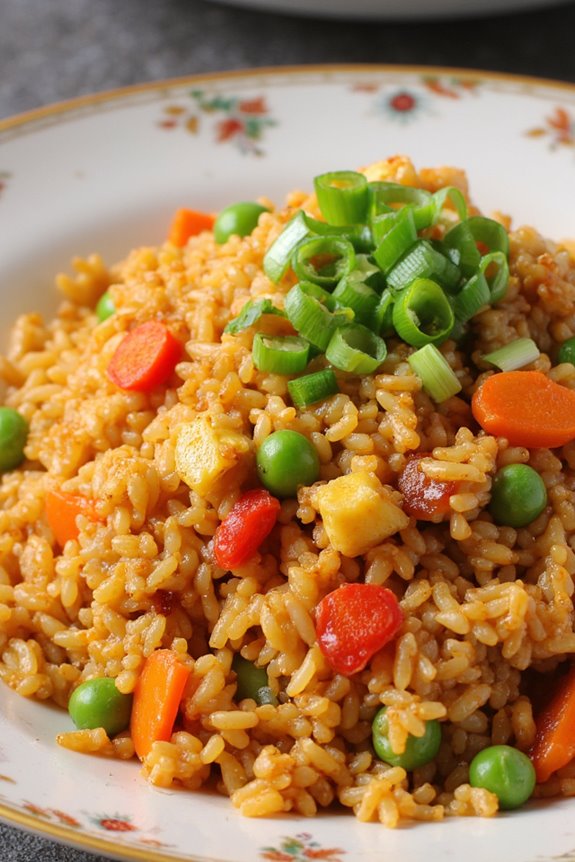
Vegetable Fried Rice is a delightful and versatile dish that combines the rich flavors of stir-fried vegetables with perfectly cooked rice. It’s a staple in Chinese cuisine and is loved by many for its simplicity and ability to adapt to various dietary preferences.
This dish isn’t only a fantastic way to use leftover rice but also an excellent opportunity to incorporate a mix of your favorite vegetables, making it a colorful and nutritious meal option.
Cooking Vegetable Fried Rice is an easy and quick process, perfect for a busy lunch or dinner. With a few simple ingredients and minimal preparation, you can have a delicious, homemade dish ready in no time.
The key to achieving the best flavor and texture lies in using cold, day-old rice, which prevents the grains from becoming mushy during cooking and allows them to absorb the flavors of the soy sauce and sesame oil beautifully.
Ingredients (Serves 4-6)
- 4 cups cooked rice (preferably day-old)
- 2 tablespoons vegetable oil
- 1 cup mixed vegetables (carrots, peas, bell peppers, and corn)
- 1 small onion, finely chopped
- 3 cloves garlic, minced
- 2 eggs, lightly beaten
- 3-4 tablespoons soy sauce
- 1 tablespoon sesame oil
- 2 green onions, chopped
- Salt and pepper, to taste
Cooking Instructions
- Prepare the Rice: If using freshly cooked rice, spread it out on a baking sheet to cool and dry slightly. Ideally, use rice that has been refrigerated overnight to guarantee it’s firm and less sticky.
- Heat the Oil: In a large wok or skillet, heat the vegetable oil over medium-high heat. Make sure the oil is hot enough before adding other ingredients to prevent sticking.
- Sauté the Aromatics: Add the chopped onion and minced garlic to the pan. Stir-fry for about 1-2 minutes until the onions become translucent and aromatic. This step builds the base flavor of the dish.
- Cook the Vegetables: Add the mixed vegetables to the pan and stir-fry for another 3-4 minutes until they’re tender but still crisp. If you’re using frozen vegetables, make sure they’re thawed first or add them directly from the freezer while increasing the cooking time slightly.
- Scramble the Eggs: Push the vegetable mixture to the side of the pan and pour the beaten eggs into the cleared space. Allow the eggs to set for about 1 minute, then scramble them until fully cooked and mixed with the vegetables.
- Add the Rice: Add the cooked rice to the pan in sections, breaking up any clumps with your spatula. Stir everything together so that the rice is well combined with the vegetables and eggs.
- Season the Dish: Pour the soy sauce and sesame oil over the rice mixture, stirring continuously to guarantee even distribution. Taste and adjust with salt and pepper as needed.
- Finish and Serve: Once everything is heated through and well combined, remove from heat. Stir in the chopped green onions just before serving for a fresh touch.
Extra Tips
For an extra burst of flavor, consider adding some crushed red pepper flakes for spice or a splash of rice vinegar for tanginess.
You can also customize your Vegetable Fried Rice by incorporating other proteins such as tofu, shrimp, or chicken. Remember that using cold, leftover rice is essential for achieving the right texture, so plan ahead for the best results.
Enjoy your delicious and colorful Vegetable Fried Rice!
Sweet and Sour Pork
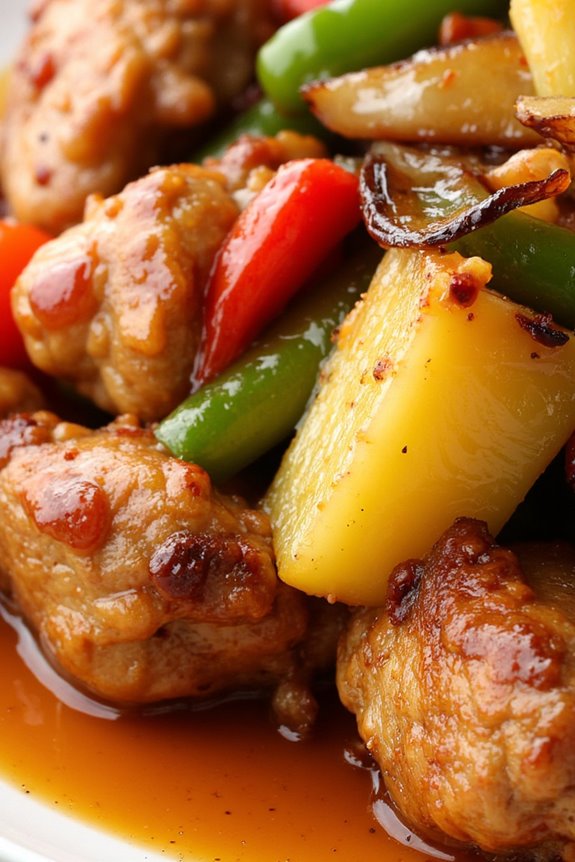
Sweet and Sour Pork is a beloved dish in Chinese cuisine known for its vibrant colors and delightful balance of flavors. The dish features tender pieces of pork that are stir-fried and then coated in a tangy sweet and sour sauce, typically made from a combination of vinegar, sugar, and ketchup. The addition of bell peppers, pineapple, and onion creates a medley of textures and tastes that make this dish a favorite among many.
It’s perfect for a comforting family lunch or a festive gathering, bringing a taste of Chinese takeout right into your home.
Cooking Sweet and Sour Pork might seem intimidating, but with the right ingredients and a few simple steps, you can create this delicious dish effortlessly. The secret lies in marinating the pork to enhance its flavor and ensuring the sauce has the perfect balance of sweetness and acidity. Serve this dish over steamed rice or with fried rice for a complete meal that will impress your family and friends.
Ingredients (Serves 4-6):
- 1 pound pork tenderloin, cut into bite-sized pieces
- 1/4 cup cornstarch
- 1/4 cup vegetable oil
- 1 bell pepper, chopped (red or green)
- 1 onion, chopped
- 1 cup pineapple chunks (fresh or canned)
- 1/4 cup sugar
- 1/4 cup white vinegar
- 1/4 cup ketchup
- 2 tablespoons soy sauce
- 1 tablespoon oyster sauce
- 1 teaspoon garlic, minced
- 1 teaspoon ginger, minced
- Salt and pepper, to taste
Cooking Instructions:
- Marinate the Pork: In a bowl, combine the pork pieces with a pinch of salt and pepper. Let it marinate for at least 15 minutes to enhance the flavor and tenderness of the meat.
- Coat with Cornstarch: After marinating, toss the pork pieces in cornstarch until they’re evenly coated. This will help create a crispy texture when the pork is fried.
- Prepare the Sauce: In a separate bowl, mix together the sugar, white vinegar, ketchup, soy sauce, oyster sauce, minced garlic, and minced ginger. Stir well until the sugar dissolves completely. Set aside.
- Fry the Pork: Heat vegetable oil in a large skillet or wok over medium-high heat. Once hot, add the coated pork pieces. Fry until golden brown and crispy, about 5-7 minutes. Remove the pork from the skillet and set aside.
- Sauté the Vegetables: In the same skillet, add the chopped bell pepper and onion. Stir-fry for about 3-4 minutes until they’re slightly softened.
- Add Pineapple: Stir in the pineapple chunks and cook for an additional 2 minutes, allowing the flavors to meld.
- Combine Everything: Return the crispy pork to the skillet with the sautéed vegetables and pineapple. Pour the prepared sauce over the mixture and stir well to coat everything evenly. Cook for another 2-3 minutes until the sauce thickens and everything is heated through.
- Serve: Remove from heat and serve the Sweet and Sour Pork hot over a bed of steamed rice or fried rice.
Extra Tips:
For an authentic taste, you can experiment with adding more vegetables such as snap peas or carrots for added crunch and color.
If you prefer a thicker sauce, add a slurry of cornstarch and water towards the end of cooking to achieve your desired consistency. Additionally, adjusting the sugar or vinegar can help you customize the sweetness and tanginess of the sauce to your liking.
Enjoy your homemade Sweet and Sour Pork!
Kung Pao Chicken
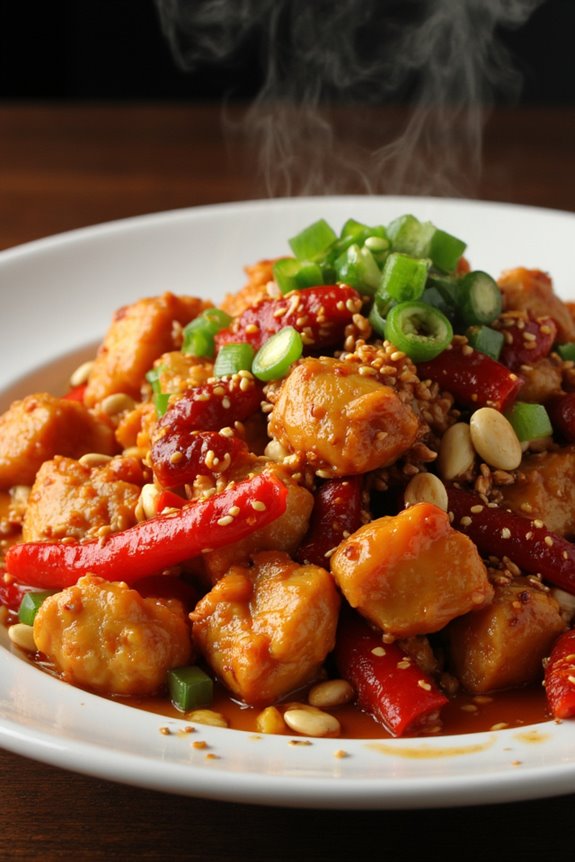
Kung Pao Chicken is a classic dish that hails from Sichuan cuisine, known for its bold flavors and delightful combination of textures. This savory stir-fry is typically made with diced chicken, peanuts, and vegetables, all coated in a spicy, tangy sauce that packs a punch. Not only is it delicious, but it also showcases the perfect balance of heat, sweetness, and umami, making it a favorite among many.
It’s traditionally served with steamed rice, which complements the rich flavors of the dish and makes for a satisfying meal. This recipe is perfect for a lunch gathering or a weeknight dinner, serving about 4-6 people. With just a few simple ingredients and straightforward cooking steps, you can recreate this beloved dish right in your own kitchen.
The use of Sichuan peppercorns adds a unique flavor profile that elevates the dish, while the peanuts provide a satisfying crunch. Let’s explore the ingredients and cooking instructions for this delightful Kung Pao Chicken.
Ingredients
- 1 pound boneless, skinless chicken breast, diced
- 3 tablespoons soy sauce
- 2 tablespoons rice vinegar
- 1 tablespoon hoisin sauce
- 1 tablespoon sugar
- 2 tablespoons cornstarch, divided
- 2 tablespoons vegetable oil
- 4-5 dried red chilies (adjust for spice preference)
- 3 cloves garlic, minced
- 1-inch piece ginger, minced
- 1 bell pepper, diced (any color)
- 1 cup roasted unsalted peanuts
- 3 green onions, sliced
- Salt and pepper to taste
Cooking Instructions
- Marinate the Chicken: In a bowl, combine the diced chicken with 1 tablespoon of soy sauce, 1 tablespoon of rice vinegar, and 1 tablespoon of cornstarch. Mix well to guarantee the chicken is evenly coated. Let it marinate for at least 15-20 minutes. This step not only adds flavor but also helps tenderize the chicken.
- Prepare the Sauce: In a separate bowl, whisk together the remaining soy sauce, rice vinegar, hoisin sauce, sugar, and 1 tablespoon of cornstarch until smooth. This will be the sauce that coats the chicken and vegetables, giving them a rich flavor.
- Heat the Oil: In a large skillet or wok, heat the vegetable oil over medium-high heat. Once the oil is hot, add the dried red chilies and stir-fry for about 30 seconds until they become fragrant. Be careful not to burn them, as they can become bitter.
- Cook the Chicken: Add the marinated chicken to the skillet and stir-fry for about 5-7 minutes until it’s cooked through and slightly browned. Make sure to stir frequently to guarantee even cooking.
- Add Aromatics: Once the chicken is cooked, add the minced garlic, minced ginger, and diced bell pepper to the skillet. Stir-fry for an additional 2-3 minutes until the vegetables are tender-crisp and the garlic and ginger are fragrant.
- Combine with Sauce: Pour the prepared sauce over the cooked chicken and vegetables. Stir well to combine and cook for another 1-2 minutes until the sauce thickens slightly and coats the chicken evenly.
- Finish with Peanuts and Green Onions: Finally, stir in the roasted peanuts and sliced green onions. Toss everything together for an additional minute to combine. Season with salt and pepper to taste, and remove from heat.
- Serve: Serve the Kung Pao Chicken hot over steamed rice, garnished with additional green onions if desired.
Extra Tips
When preparing Kung Pao Chicken, feel free to customize the vegetables based on your preference or what you have on hand. Broccoli, zucchini, or snap peas can also work wonderfully in this dish.
For an added layer of flavor, consider adding a splash of sesame oil before serving. Additionally, if you prefer a milder version, you can reduce the number of dried chilies or remove the seeds. Enjoy your homemade Kung Pao Chicken and impress your family and friends with this flavorful dish!
Shrimp Lo Mein
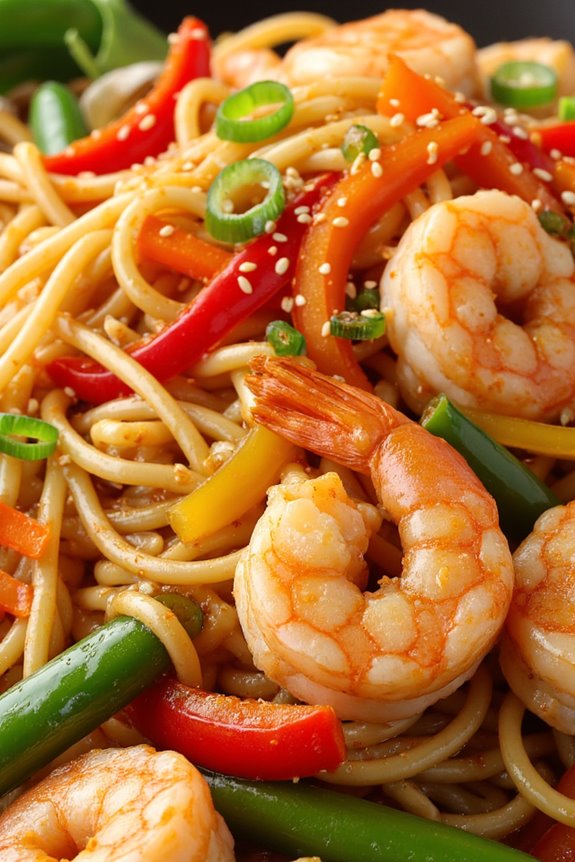
Shrimp Lo Mein is a delicious and satisfying dish that brings the vibrant flavors of Chinese cuisine right to your kitchen. This classic stir-fried noodle dish features succulent shrimp tossed with fresh vegetables and a savory sauce, all combined with al dente egg noodles. Perfect for lunch or a light dinner, Shrimp Lo Mein isn’t only quick to prepare but also allows for creativity regarding the vegetables and sauces you can use, making it a versatile option for any palate.
Making Shrimp Lo Mein at home means you can control the ingredients and customize the flavors to your liking. This recipe serves 4-6 people, making it an excellent choice for family meals or gatherings with friends. With just a few simple steps, you can whip up this delightful dish in under 30 minutes, ensuring you have a wholesome meal ready to enjoy in no time.
Ingredients
- 12 oz egg noodles
- 1 lb shrimp, peeled and deveined
- 2 tablespoons vegetable oil
- 1 cup bell peppers, sliced (any color)
- 1 cup snap peas or snow peas
- 1 cup carrots, julienned
- 3 green onions, chopped
- 2 cloves garlic, minced
- 2 tablespoons soy sauce
- 1 tablespoon oyster sauce
- 1 tablespoon hoisin sauce
- 1 teaspoon sesame oil
- Salt and pepper to taste
- Optional: sesame seeds for garnish
Cooking Instructions
- Cook the Noodles: Begin by bringing a large pot of salted water to a boil. Add the egg noodles and cook according to the package instructions until al dente. Once cooked, drain the noodles and rinse them under cold water to stop the cooking process. Set aside.
- Prepare the Shrimp: In a large skillet or wok, heat 1 tablespoon of vegetable oil over medium-high heat. Add the peeled and deveined shrimp to the pan and season with salt and pepper. Cook the shrimp for about 2-3 minutes on each side or until they turn pink and opaque. Remove the shrimp from the skillet and set them aside.
- Sauté the Vegetables: In the same skillet, add the remaining tablespoon of vegetable oil. Add the minced garlic and stir-fry for about 30 seconds until fragrant. Next, add the bell peppers, snap peas, and carrots. Stir-fry the vegetables for 3-4 minutes until they’re just tender but still crisp.
- Combine Ingredients: Return the cooked shrimp to the skillet with the vegetables. Add the cooked egg noodles, green onions, soy sauce, oyster sauce, hoisin sauce, and sesame oil. Toss everything together gently to combine, ensuring the noodles and shrimp are evenly coated with the sauce. Stir-fry for an additional 2-3 minutes to heat everything through.
- Serve and Garnish: Once everything is thoroughly heated and combined, remove the skillet from the heat. Serve the Shrimp Lo Mein in bowls and garnish with sesame seeds if desired.
Extra Tips
For an added layer of flavor, consider marinating the shrimp in a mixture of soy sauce, garlic, and ginger for about 15 minutes before cooking. You can also customize the dish by adding other vegetables such as broccoli, mushrooms, or bok choy, depending on what you have on hand.
If you prefer a spicier version, add a splash of chili sauce or red pepper flakes to the mix. Finally, be sure to keep the heat high during the stir-frying process to achieve that perfect, slightly charred flavor that elevates this dish. Enjoy your homemade Shrimp Lo Mein!
Spicy Tofu and Bok Choy
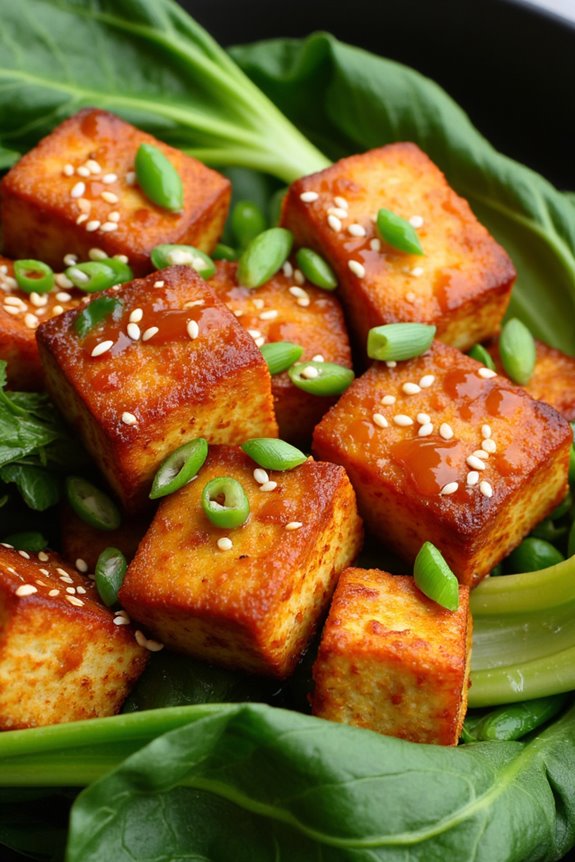
Spicy Tofu and Bok Choy is a vibrant and flavorful dish that beautifully combines the earthy taste of tofu with the crisp freshness of bok choy. This dish isn’t only quick to prepare but also packed with nutrients, making it an ideal choice for a wholesome lunch.
The spicy sauce adds a kick that elevates the dish, harmonizing perfectly with the soft texture of the tofu and the crunch of the bok choy. This recipe is perfect for serving 4-6 people, making it a great option for family meals or gatherings with friends.
Whether you’re a seasoned cook or a beginner in the kitchen, you’ll find this dish simple yet satisfying. The balance of flavors and textures will leave everyone asking for seconds!
Ingredients:
- 1 block (14 oz) firm tofu, drained and pressed
- 2 tablespoons vegetable oil
- 4 cups bok choy, chopped
- 3 cloves garlic, minced
- 1 tablespoon ginger, minced
- 2 tablespoons soy sauce
- 1 tablespoon chili paste (adjust to taste)
- 1 tablespoon rice vinegar
- 1 tablespoon sesame oil
- 1 teaspoon sugar
- 2 green onions, sliced (for garnish)
- Sesame seeds (for garnish)
Cooking Instructions:
- Prepare the Tofu: Begin by draining the tofu and pressing it between paper towels or a clean kitchen towel to remove excess moisture. This will help the tofu crisp up when cooked. Once pressed, cut the tofu into bite-sized cubes.
- Heat the Oil: In a large skillet or wok, heat the vegetable oil over medium-high heat. Make sure the oil is hot before adding the tofu; this will help it brown nicely.
- Cook the Tofu: Carefully add the tofu cubes to the hot oil. Let them cook undisturbed for about 5-7 minutes until golden brown on one side. Then, gently flip the tofu to brown the other sides. Once browned, remove the tofu from the skillet and set it aside on a plate.
- Sauté Aromatics: In the same skillet, add the minced garlic and ginger. Sauté for about 1-2 minutes until fragrant, being careful not to burn them.
- Add Bok Choy: Add the chopped bok choy to the skillet and stir-fry for about 3-4 minutes, or until the bok choy is tender yet still vibrant in color.
- Make the Sauce: In a small bowl, whisk together the soy sauce, chili paste, rice vinegar, sesame oil, and sugar until combined. Pour this sauce over the bok choy in the skillet.
- Combine Tofu and Bok Choy: Return the browned tofu to the skillet, gently tossing everything together to coat the tofu and bok choy in the sauce. Cook for an additional 2-3 minutes to heat through.
- Serve: Once everything is heated and well combined, remove from heat. Serve the Spicy Tofu and Bok Choy in bowls, garnished with sliced green onions and a sprinkle of sesame seeds.
Extra Tips:
For an extra layer of flavor, consider marinating the tofu in the soy sauce and chili paste mixture for 30 minutes before cooking. This allows the tofu to absorb more flavor.
Additionally, feel free to customize the level of spiciness by adjusting the amount of chili paste to suit your taste. You can also add other vegetables such as bell peppers or snap peas for added color and crunch!
Egg Drop Soup
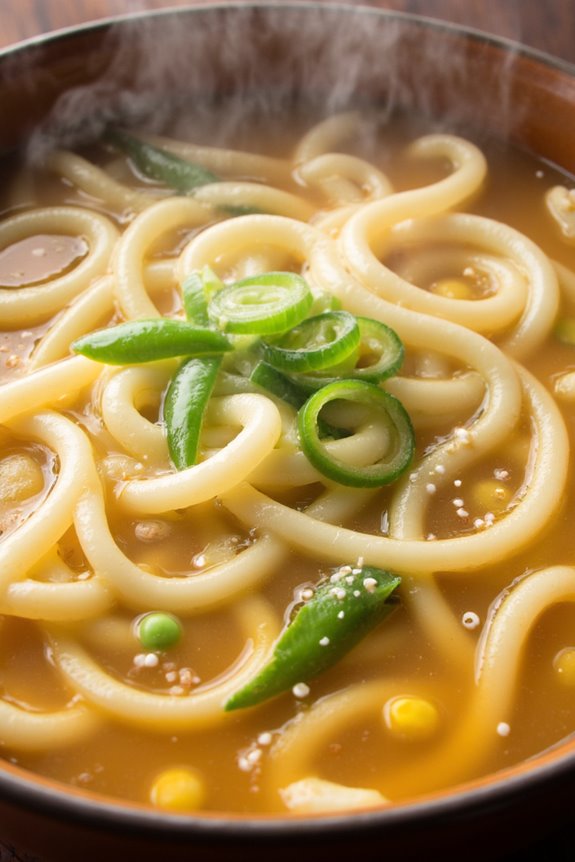
Egg Drop Soup is a classic Chinese dish known for its simplicity and comforting flavors. This velvety soup features delicate strands of beaten eggs floating in a flavorful broth, often enhanced with vegetables and seasonings. It’s a staple in Chinese cuisine, frequently enjoyed as an appetizer or a light meal.
The beauty of Egg Drop Soup lies in its versatility; you can easily customize it with your favorite ingredients or whatever you have on hand, making it perfect for any occasion.
Making Egg Drop Soup at home is quick and easy, allowing you to enjoy this delicious dish without the need for takeout. With just a few simple ingredients and steps, you can create a warm bowl of soup that’s rich in flavor and texture.
Whether you pair it with fried rice, dumplings, or enjoy it on its own, this recipe will surely become a favorite in your kitchen.
Ingredients (Serves 4-6):
- 4 cups chicken broth (or vegetable broth)
- 3 large eggs
- 2 tablespoons cornstarch
- 3 tablespoons water
- 1 teaspoon soy sauce
- 1 teaspoon sesame oil
- 1/2 teaspoon white pepper
- 2 green onions, finely sliced
- Salt to taste
- Optional: 1 cup frozen peas or corn for added texture
Cooking Instructions:
- Prepare the Broth: In a large pot, bring the chicken broth to a gentle simmer over medium heat. This will serve as the base for your soup, so make certain it’s well-seasoned and flavorful.
- Mix Cornstarch Slurry: In a small bowl, mix the cornstarch and water together until smooth. This mixture will help thicken your soup slightly, giving it a nice body.
- Add Seasonings: Once the broth is simmering, stir in the soy sauce, sesame oil, and white pepper. Taste the broth and add salt if needed. These ingredients enhance the overall flavor of the soup.
- Thicken the Soup: Gradually stir the cornstarch slurry into the simmering broth. Continue to stir until the soup thickens slightly. This should take about 1-2 minutes.
- Prepare the Eggs: In a separate bowl, beat the eggs until they’re well mixed. This will create the signature silky strands in your soup.
- Add the Eggs: With the broth still simmering, slowly drizzle the beaten eggs into the pot while gently stirring with a fork or chopsticks. This will create the lovely egg ribbons in your soup.
- Add Optional Vegetables: If you’re using frozen peas or corn, add them at this stage and allow them to heat through for about 1 minute.
- Garnish and Serve: Remove the pot from the heat, and stir in the sliced green onions for freshness. Serve the soup hot in bowls, and enjoy your homemade Egg Drop Soup!
Extra Tips:
To achieve the best texture in your Egg Drop Soup, make sure that the broth is at a gentle simmer before adding the eggs. If the broth is boiling too vigorously, the eggs may clump together rather than form delicate ribbons.
Additionally, feel free to experiment with different vegetables or proteins, such as tofu or shredded chicken, to make the soup more substantial. Garnishing with a sprinkle of additional green onions or a dash of chili oil can add an extra layer of flavor. Enjoy your cooking!
Mongolian Beef
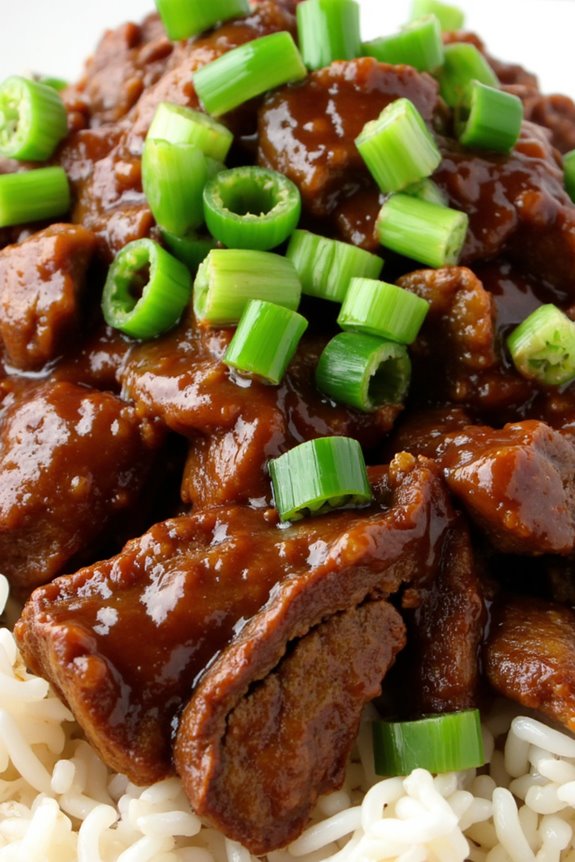
Mongolian Beef is a flavorful and satisfying dish that hails from the rich culinary traditions of Chinese cuisine. It features tender slices of beef cooked in a savory sauce made with soy sauce, ginger, and garlic, combined with green onions and a hint of sugar for sweetness. The result is a delightful balance of flavors that pairs beautifully with steamed rice or noodles, making it a perfect dish for lunch or dinner.
This recipe is quick and easy to prepare, making it an ideal choice for busy weekdays or a casual gathering with friends and family. With just a few simple ingredients and straightforward steps, you can create a mouth-watering meal that showcases the best of Asian flavors right in your kitchen.
Ingredients (Serves 4-6):
- 1 pound flank steak, sliced against the grain
- 1/4 cup soy sauce
- 1/4 cup brown sugar
- 2 tablespoons vegetable oil
- 3 cloves garlic, minced
- 1 inch piece of ginger, minced
- 1/2 cup green onions, chopped (white and green parts separated)
- 1 tablespoon cornstarch
- 1/4 cup water
- Cooked rice or noodles, for serving
Cooking Instructions:
- Marinate the Beef: In a bowl, combine the sliced flank steak with 2 tablespoons of soy sauce and 1 tablespoon of cornstarch. Mix well to ascertain the beef is evenly coated. Let it marinate for at least 15 minutes. This step helps tenderize the meat and adds flavor.
- Prepare the Sauce: In another bowl, whisk together the remaining soy sauce, brown sugar, and water until the sugar dissolves. This mixture will serve as the base of the sauce that will coat the beef.
- Cook the Beef: Heat 2 tablespoons of vegetable oil in a large skillet or wok over medium-high heat. Once the oil is hot, add the marinated beef in a single layer. Cook for about 3-4 minutes until browned, turning the beef occasionally to ascertain even cooking. Avoid overcrowding the pan for the best sear.
- Add Aromatics: Once the beef is cooked through, add the minced garlic, ginger, and the white parts of the green onions to the skillet. Stir-fry for about 1-2 minutes until fragrant, being careful not to burn the garlic.
- Combine Sauce with Beef: Pour the prepared sauce over the beef and mix well to coat. Allow the sauce to simmer for another 2-3 minutes until it thickens slightly. Stir occasionally to prevent sticking.
- Finish with Green Onions: Add the chopped green parts of the green onions to the skillet and stir to combine. Cook for an additional minute, just until the green onions are slightly wilted.
- Serve: Remove the skillet from heat and serve the Mongolian Beef hot over a bed of steamed rice or noodles. Enjoy your delicious homemade meal!
Extra Tips:
When making Mongolian Beef, you can customize the recipe by adding vegetables such as bell peppers or broccoli for added nutrition and color.
Be sure to slice the beef against the grain for maximum tenderness, and adjust the sweetness of the sauce to your preference by varying the amount of brown sugar.
For an extra kick, consider adding a pinch of red pepper flakes or some sliced chili peppers to the mix!
Sesame Noodle Salad
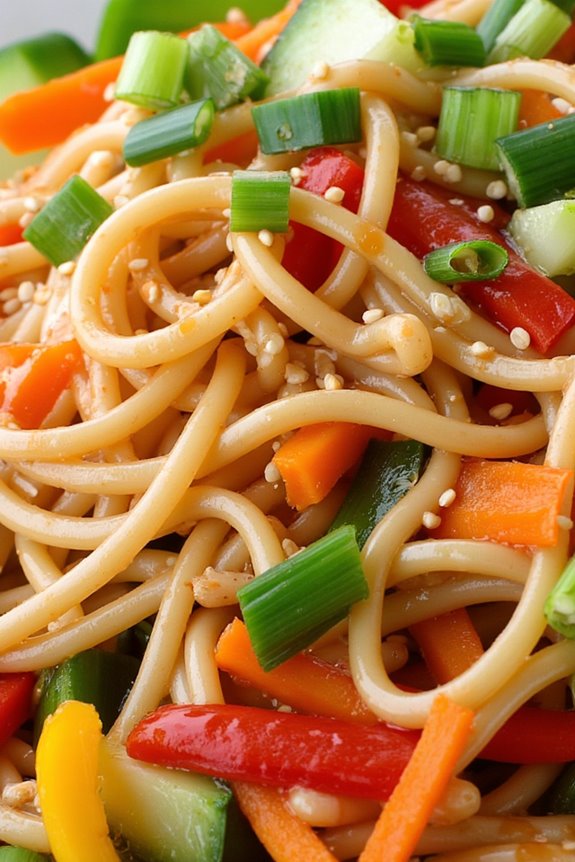
Sesame Noodle Salad is a revitalizing and flavorful dish that combines the delightful taste of sesame oil with fresh vegetables and noodles, making it a perfect lunch option. This dish isn’t only quick and easy to prepare, but it also offers a balance of textures and flavors that are sure to please everyone at the table.
The celebration of colors from the vegetables, along with the nutty aroma of sesame, creates a visually appealing and appetizing meal. This salad can be served either cold or at room temperature, making it ideal for meal prep or a picnic.
The recipe is versatile, allowing for various add-ins such as proteins like chicken, tofu, or shrimp based on personal preference. With this Sesame Noodle Salad, you can enjoy a delicious and healthy meal that’s packed with nutrients and can be customized to your liking.
Ingredients (Serves 4-6):
- 8 oz. spaghetti or soba noodles
- 1 cup shredded carrots
- 1 cup sliced bell peppers (any color)
- 1 cup cucumber, julienned
- 1/4 cup chopped green onions
- 1/4 cup sesame seeds
- 1/4 cup soy sauce
- 2 tbsp sesame oil
- 2 tbsp rice vinegar
- 1 tbsp honey or maple syrup (for a vegan option)
- 1 clove garlic, minced
- 1 tsp grated fresh ginger
- Salt and pepper to taste
Cooking Instructions:
- Cook the Noodles: Begin by bringing a large pot of salted water to a boil. Add the spaghetti or soba noodles and cook according to the package instructions until al dente. Once cooked, drain the noodles and rinse them under cold water to stop the cooking process and cool them down. Set aside.
- Prepare the Dressing: In a small bowl, whisk together the soy sauce, sesame oil, rice vinegar, honey (or maple syrup), minced garlic, and grated ginger until well combined. Taste the dressing and add salt and pepper as desired. This dressing will infuse the noodles and vegetables with a rich flavor.
- Chop the Vegetables: While the noodles are cooling, prepare the vegetables. Shred the carrots, slice the bell peppers, and julienne the cucumber. Chop the green onions and set aside. These fresh vegetables will add crunch and color to your salad.
- Combine Ingredients: In a large mixing bowl, combine the cooled noodles with the shredded carrots, sliced bell peppers, cucumber, and chopped green onions. Pour the dressing over the top and toss everything together until the noodles and vegetables are evenly coated with the dressing.
- Garnish and Serve: Finally, sprinkle the sesame seeds over the salad and give it one last gentle toss. You can serve the Sesame Noodle Salad immediately, or refrigerate it for 30 minutes to allow the flavors to meld together even more.
Extra Tips:
For added protein in your Sesame Noodle Salad, consider including grilled chicken, shrimp, or tofu. If you prefer a spicier kick, add some red pepper flakes or a dash of sriracha to the dressing.
Feel free to customize the vegetables based on what you have on hand or what’s in season. This dish isn’t only great as a standalone meal but also pairs nicely with a side of edamame or spring rolls for a complete lunch experience.
Mapo Tofu
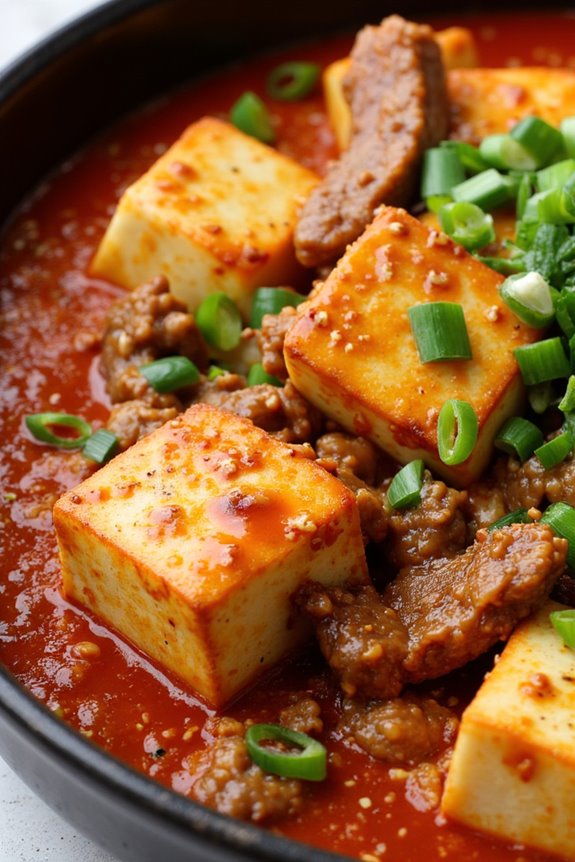
Mapo Tofu is a classic dish from Sichuan cuisine, renowned for its bold flavors and unique combination of ingredients. This spicy and numbing stir-fry features soft tofu, ground meat (usually pork or beef), and a special sauce that’s made with Doubanjiang (fermented broad bean paste) and Sichuan peppercorns. The dish isn’t only a favorite among locals but has also gained popularity worldwide due to its delectable taste and comforting texture.
Cooking Mapo Tofu is a delightful experience that brings the warmth of Chinese culinary tradition into your kitchen. With its rich and spicy sauce, this dish pairs wonderfully with steamed rice, making it an ideal choice for lunch or dinner. The balance of heat from the spices and the creaminess of the tofu creates a harmonious dish that will satisfy your taste buds and leave you craving more.
Ingredients (Serves 4-6):
- 400g soft tofu
- 200g ground pork or beef
- 2 tablespoons vegetable oil
- 2 tablespoons Doubanjiang (fermented broad bean paste)
- 1 tablespoon Tianmianjiang (sweet bean sauce)
- 1 tablespoon soy sauce
- 1 teaspoon Sichuan peppercorns (ground)
- 2-3 cloves garlic (minced)
- 1-inch piece ginger (minced)
- 1-2 green onions (chopped)
- 1 teaspoon cornstarch (mixed with 2 tablespoons water for thickening)
- Salt to taste
- Cooked rice (for serving)
Cooking Instructions:
- Prepare the Tofu: Start by draining the soft tofu and cutting it into 1-inch cubes. To remove excess moisture, you can gently blanch the tofu in boiling water for 2-3 minutes. This step guarantees that the tofu holds its shape during cooking. After blanching, carefully drain the tofu and set it aside.
- Cook the Meat: In a large skillet or wok, heat the vegetable oil over medium-high heat. Add the ground pork or beef and sauté until browned and cooked through, breaking it apart with a spatula. This should take about 3-5 minutes. Confirm the meat is well-cooked for a rich flavor.
- Add Aromatics: Once the meat is cooked, add the minced garlic and ginger to the skillet. Stir-fry for about 30 seconds until fragrant, being careful not to burn them. This step infuses the oil with aromatic flavors, which will enhance the overall taste of the dish.
- Incorporate Sauces: Next, add the Doubanjiang and Tianmianjiang to the skillet. Stir well to combine, allowing the pastes to cook for 1-2 minutes. This process develops the sauce’s flavor and brings out the umami notes.
- Add Tofu and Seasonings: Gently fold in the prepared tofu, soy sauce, and ground Sichuan peppercorns. Be careful not to break the tofu cubes. Stir to coat the tofu in the sauce, and let it simmer for about 5 minutes. This allows the tofu to soak in the flavors.
- Thicken the Sauce: To thicken the sauce, add the cornstarch-water mixture to the skillet while gently stirring. Cook for an additional minute until the sauce thickens. This step guarantees that the dish has a nice coating that clings to the tofu and meat.
- Finish and Serve: Finally, adjust the seasoning with salt if necessary. Remove the skillet from heat and sprinkle the chopped green onions on top. Serve the Mapo Tofu hot over steamed rice for a delicious meal.
Extra Tips:
When preparing Mapo Tofu, feel free to adjust the amount of Doubanjiang to suit your spice tolerance. For an extra touch of flavor, consider adding a splash of sesame oil at the end of cooking. If you want to make this dish vegetarian, you can substitute the ground meat with finely chopped mushrooms or use plant-based ground meat alternatives. Enjoy the rich, spicy flavors, and don’t forget to serve it with a side of rice to balance the heat!
Teriyaki Salmon Rice Bowl
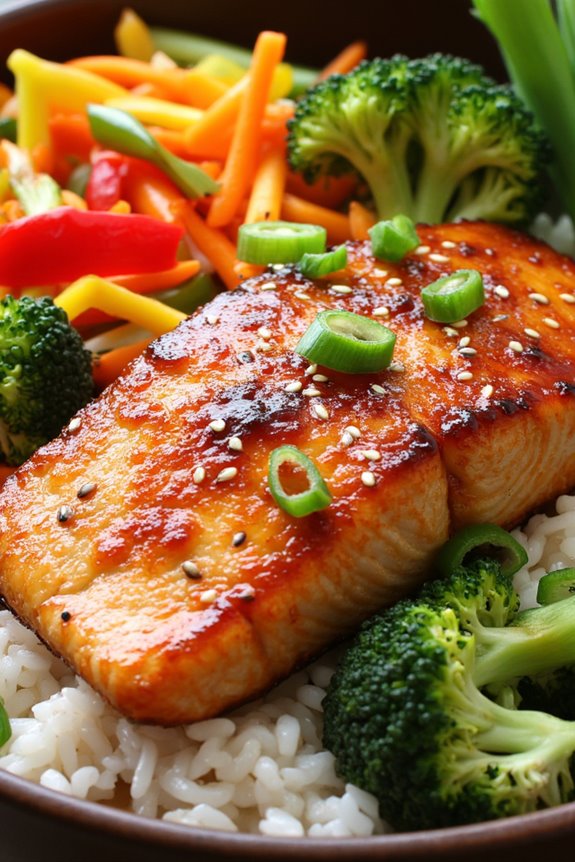
The Teriyaki Salmon Rice Bowl is a delicious and nutritious dish that brings together the vibrant flavors of teriyaki sauce and perfectly cooked salmon, all served over a bed of fluffy rice. This dish isn’t only satisfying but also easy to prepare, making it a fantastic choice for a quick lunch or a relaxed dinner.
The combination of tender salmon, sweet and savory teriyaki sauce, and fresh vegetables creates a delightful harmony that will please any palate. In addition to being flavorful, this Teriyaki Salmon Rice Bowl is packed with nutrients. Salmon is an excellent source of omega-3 fatty acids, which are essential for heart health, and when paired with colorful vegetables and whole grains, it makes for a balanced meal.
Whether you’re cooking for family or entertaining guests, this dish is sure to impress with its vibrant colors and rich flavors.
Ingredients (serving size: 4-6 people)
- 4 salmon fillets (about 6 ounces each)
- 1 cup teriyaki sauce
- 2 cups jasmine rice
- 4 cups water
- 1 tablespoon sesame oil
- 1 cup broccoli florets
- 1 cup sliced bell peppers (red and yellow)
- 1 cup shredded carrots
- 1 tablespoon green onions, chopped (for garnish)
- 1 tablespoon sesame seeds (for garnish)
Cooking Instructions
- Prepare the rice: Rinse the jasmine rice under cold water until the water runs clear to remove excess starch. In a medium saucepan, combine the rinsed rice and 4 cups of water. Bring to a boil over medium-high heat, then reduce the heat to low, cover, and simmer for about 15 minutes, or until the rice is tender and the water is absorbed. Remove from heat and let it sit covered for an additional 5 minutes.
- Marinate the salmon: While the rice is cooking, place the salmon fillets in a shallow dish and pour the teriyaki sauce over them. Let the salmon marinate for at least 15 minutes to absorb the flavors. You can also marinate it longer for a more intense flavor.
- Cook the vegetables: In a large skillet or wok, heat the sesame oil over medium-high heat. Add the broccoli florets, sliced bell peppers, and shredded carrots. Stir-fry the vegetables for about 5-7 minutes, or until they’re tender-crisp. Remove the vegetables from the skillet and set them aside.
- Cook the salmon: In the same skillet, add the marinated salmon fillets skin-side down. Cook for about 4-5 minutes on each side, or until the salmon is cooked through and flakes easily with a fork. Brush additional teriyaki sauce over the salmon while cooking for extra flavor.
- Assemble the rice bowl: Fluff the cooked rice with a fork and divide it among serving bowls. Top each bowl with the stir-fried vegetables and a salmon fillet. Drizzle any remaining teriyaki sauce over the top.
- Garnish and serve: Sprinkle chopped green onions and sesame seeds over each rice bowl for added flavor and visual appeal. Serve immediately and enjoy your Teriyaki Salmon Rice Bowl!
Extra Tips
When preparing the Teriyaki Salmon Rice Bowl, feel free to customize the vegetables based on your preferences or what’s in season. You can also substitute the salmon with other proteins like chicken or tofu for a different twist.
If you prefer a thicker sauce, you can reduce the teriyaki sauce in a saucepan over medium heat until it thickens before drizzling it over the salmon. Always keep an eye on the salmon while cooking to avoid overcooking, which can make it dry. Enjoy your meal!
Veggie Spring Roll Wraps
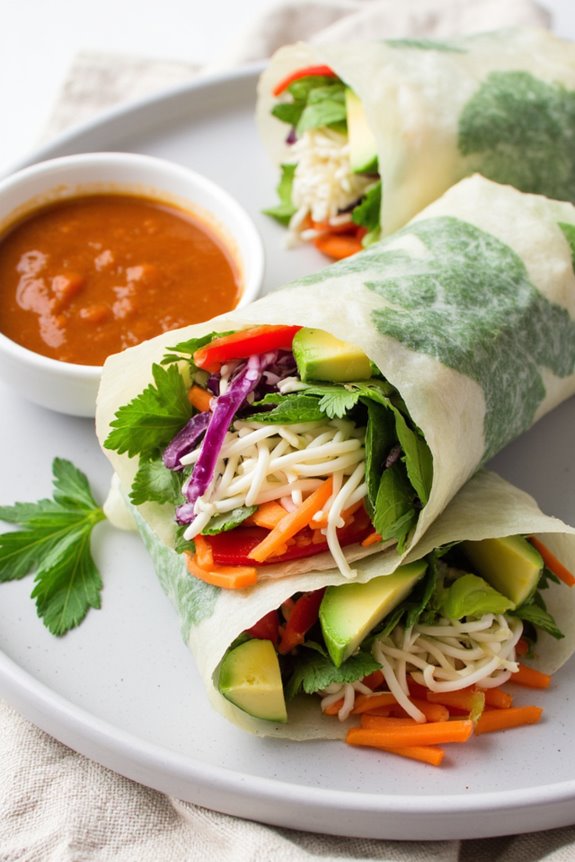
Veggie Spring Roll Wraps are a delightful and healthy addition to any Chinese lunch. These crispy, fresh bites are packed with colorful vegetables and wrapped in delicate rice paper, making them a perfect choice for those looking for a light yet satisfying meal. Not only are they easy to prepare, but they also offer a fun way to enjoy a variety of vegetables, guaranteeing you get your daily dose of nutrients. The accompanying dipping sauce adds a burst of flavor that complements the freshness of the rolls.
Making your own veggie spring rolls is a rewarding experience that allows you to customize the filling to suit your taste. Whether you’re hosting a lunch gathering, meal prep for the week, or simply craving a light dish, these wraps can be made ahead of time and served with a sweet and spicy dipping sauce. This recipe will guide you through creating delicious veggie spring roll wraps that serve 4-6 people.
Ingredients
- 12 rice paper wrappers
- 1 cup shredded carrots
- 1 cup shredded red cabbage
- 1 cup cucumber, julienned
- 1 bell pepper, thinly sliced (any color)
- 1 cup bean sprouts
- 1/4 cup fresh cilantro, chopped
- 1/4 cup fresh mint leaves, chopped
- 1 avocado, sliced
- 1/4 cup soy sauce (for dipping)
- 1 tablespoon rice vinegar (for dipping)
- 1 tablespoon honey or agave syrup (for dipping)
- 1 teaspoon sesame oil (for dipping)
Cooking Instructions
- Prepare the Vegetables: Start by washing and chopping all the vegetables into thin strips. This includes shredding the carrots and cabbage, julienning the cucumber, and slicing the bell pepper. Make sure all the vegetables are uniform in size for easier rolling.
- Set Up Your Rolling Station: Prepare a clean, flat surface for rolling. Fill a large shallow dish or a wide bowl with warm water. This will be used to soften the rice paper wrappers.
- Soften the Rice Paper Wrappers: Take one rice paper wrapper and dip it into the warm water for about 15-20 seconds until it becomes pliable. Be careful not to let it soak too long, as it can become too soft and tear easily.
- Fill the Wrapper: Place the softened rice paper on the rolling surface. In the center, layer a small handful of the prepared vegetables, a few slices of avocado, and some herbs like cilantro and mint.
- Roll the Spring Roll: Starting from the side closest to you, fold the wrapper over the filling tightly but gently. Then, fold in the sides and continue rolling until the entire filling is enclosed in the wrapper. Repeat this process for the remaining wrappers and filling.
- Prepare the Dipping Sauce: In a small bowl, combine soy sauce, rice vinegar, honey (or agave syrup), and sesame oil. Whisk until well mixed and set aside.
- Serve: Arrange the finished veggie spring rolls on a platter and serve with the dipping sauce on the side. Enjoy your fresh, homemade spring rolls!
Extra Tips
When making veggie spring rolls, feel free to get creative with your fillings! You can include other ingredients like cooked vermicelli noodles, tofu, or even fruit for a sweeter twist.
Additionally, affirm that your vegetables are as dry as possible before rolling to prevent the wrappers from becoming soggy. If you’re preparing these ahead of time, store the rolls in a single layer with a damp paper towel over them to keep them fresh and prevent them from sticking together.
Enjoy your delicious and colorful veggie spring roll wraps!
