

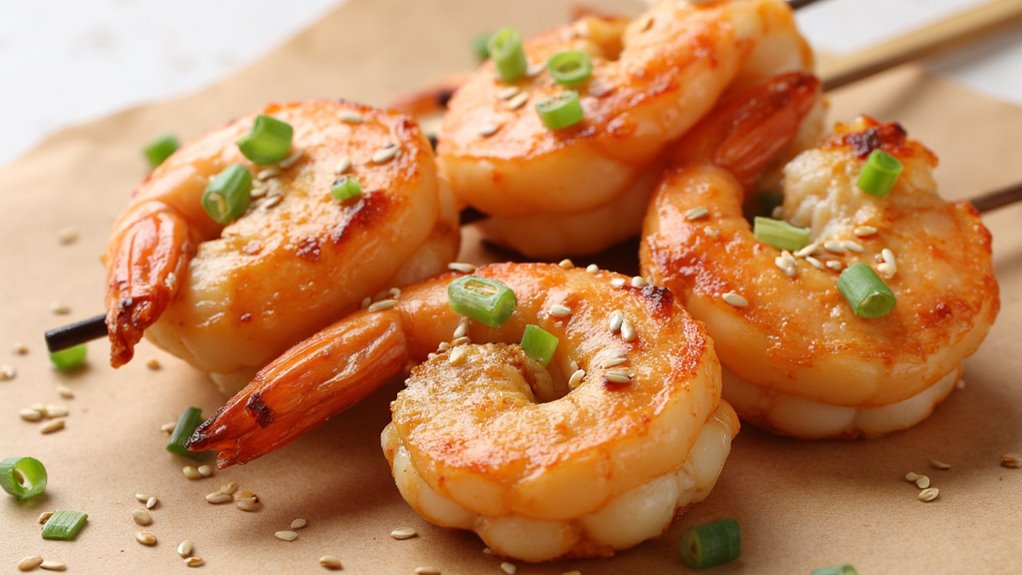
I’m thrilled to bring you a collection of 12 colorful Korean seafood recipes that celebrate the ocean’s bounty. These dishes are bursting with vibrant colors and flavors, from the spicy kick of Spicy Squid Stir-Fry to the refreshing taste of Seaweed Salad. Whether you’re craving the crispy texture of Korean Seafood Pancakes or a warm, comforting bowl of Seafood Tofu Soup, these recipes promise to delight your taste buds. Let’s embark on this culinary journey and discover the delicious dishes that await!
Spicy Squid Stir-Fry (Ojingeo Bokkeum)
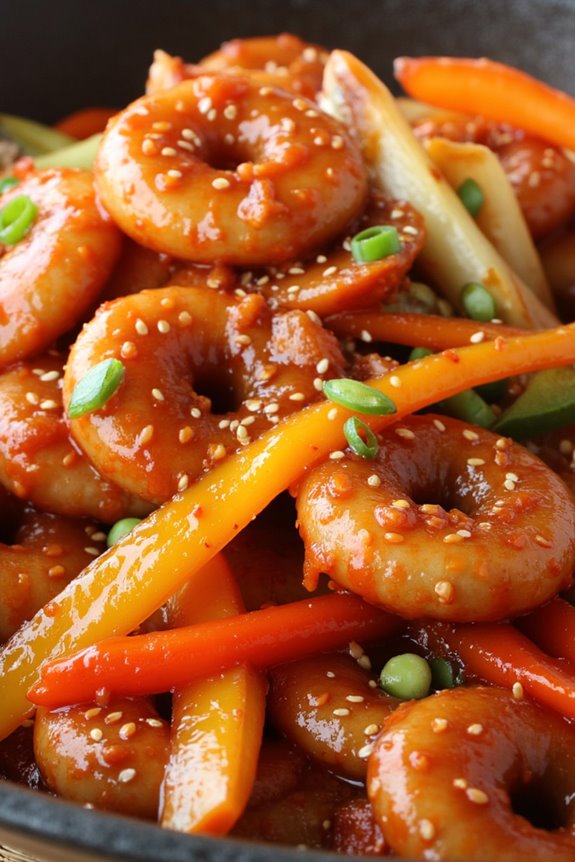
Spicy Squid Stir-Fry, known as Ojingeo Bokkeum in Korean, is a vibrant and flavorful dish that brings the taste of the sea right to your table. This dish is celebrated for its tender squid, perfectly complemented by a spicy sauce that combines gochujang (Korean chili paste), garlic, and sesame oil.
The stir-fry is often served with various vegetables, adding texture and freshness to the overall dish. It’s a perfect way to introduce a taste of Korean cuisine to your family and friends, and it pairs wonderfully with steamed rice.
Making Ojingeo Bokkeum at home isn’t only easy but also allows for customization based on your taste preferences. You can adjust the level of spiciness or incorporate seasonal vegetables to enhance the dish.
The combination of flavors and textures makes it an exciting dish that’s sure to be a hit at any dinner gathering. Whether you’re a seasoned cook or a beginner, this recipe will guide you through the steps to create this delicious Korean seafood delight.
Ingredients (Serves 4-6)
- 1 pound (450g) fresh squid, cleaned and sliced into rings
- 1 medium carrot, julienned
- 1 medium bell pepper (red or green), sliced
- 1 medium onion, sliced
- 4 green onions, chopped
- 4 tablespoons gochujang (Korean chili paste)
- 2 tablespoons soy sauce
- 1 tablespoon sesame oil
- 1 tablespoon vegetable oil
- 1 tablespoon minced garlic
- 1 teaspoon sugar
- 1 teaspoon sesame seeds (for garnish)
- Salt and pepper to taste
Cooking Instructions
- Prepare the Ingredients: Start by cleaning the squid thoroughly under cold running water. Remove the insides and the cartilage, then slice the squid into rings about 1/4 inch thick. Set aside. Julienne the carrot, slice the bell pepper and onion, and chop the green onions.
- Make the Sauce: In a small bowl, combine the gochujang, soy sauce, sesame oil, minced garlic, and sugar. Mix well until smooth. This sauce will be the key to the dish’s flavor, so make sure to taste it and adjust the ingredients according to your preference.
- Heat the Pan: In a large skillet or wok, heat the vegetable oil over medium-high heat. Confirm the oil is hot before adding the vegetables to achieve a good stir-fry texture.
- Stir-Fry the Vegetables: Add the sliced onions, carrots, and bell peppers to the skillet. Stir-fry for about 3-4 minutes, or until the vegetables are slightly tender but still crisp. This will enhance their flavors and provide a nice crunch to the dish.
- Add the Squid: Next, add the sliced squid to the skillet. Stir-fry for about 2-3 minutes until the squid turns opaque. Be careful not to overcook the squid, as it can become rubbery.
- Incorporate the Sauce: Pour the prepared sauce over the squid and vegetables. Toss everything together to guarantee the dish is well-coated with the sauce. Stir-fry for another 2 minutes, allowing the sauce to thicken slightly.
- Finish with Green Onions and Season: Add the chopped green onions and stir-fry for an additional minute. Taste the dish and season with salt and pepper as desired.
- Serve: Remove from heat, transfer to a serving platter, and sprinkle with sesame seeds for garnish. Serve hot with steamed rice.
Extra Tips
To enhance the flavor of your Spicy Squid Stir-Fry, consider marinating the squid in a bit of soy sauce and sesame oil for 15-30 minutes before cooking. This step adds an extra depth of flavor and tenderness.
Additionally, feel free to add other vegetables such as zucchini or snap peas for an even more colorful and nutritious dish. If you enjoy a bit more heat, increase the amount of gochujang or add sliced fresh chili peppers. Enjoy your cooking adventure!
Grilled Mackerel (Godeungeo Gui)
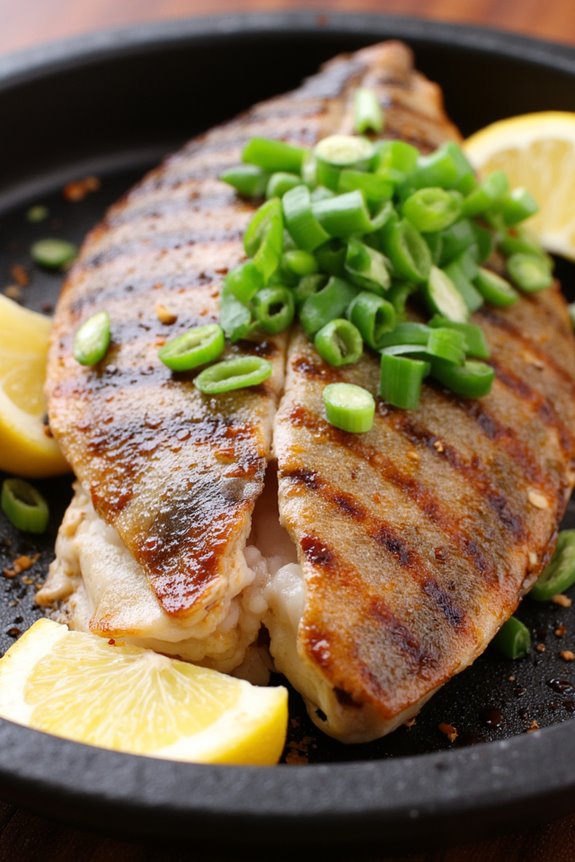
Grilled Mackerel, known as Godeungeo Gui in Korean, is a beloved dish that showcases the natural flavors of the fish while highlighting the simplicity of Korean cooking. This dish is often enjoyed in households across Korea, especially during the summer months when grilling is a popular cooking method. The mackerel is rich in Omega-3 fatty acids, making it not only delicious but also a healthy option. The grilling process enhances the fish’s flavors, and when paired with a side of rice and kimchi, it becomes a wholesome meal.
Preparing Grilled Mackerel is straightforward and requires minimal ingredients. The key is to use fresh mackerel, which has a firm texture and a slightly oily flesh that holds up well on the grill. The fish is typically seasoned with salt and sometimes a splash of soy sauce or sesame oil, allowing the natural taste to shine through. Serve it with a squeeze of lemon or lime for an added zest, and enjoy this classic Korean seafood dish at your next meal.
Ingredients (serving size: 4-6 people)
- 2 whole mackerel, cleaned and scaled
- 2 tablespoons sea salt
- 1 tablespoon sesame oil (optional)
- 1 tablespoon soy sauce (optional)
- Lemon or lime wedges (for serving)
- Chopped green onions (for garnish, optional)
Cooking Instructions
- Prepare the Mackerel: Rinse the mackerel under cold water and pat it dry with paper towels. Make sure to remove any remaining scales and verify the fish is clean. Use a sharp knife to make a few diagonal slashes on each side of the mackerel. This will help the seasoning penetrate the flesh and allow for even cooking.
- Season the Fish: Generously sprinkle sea salt over both sides of the mackerel, ensuring that it gets into the slashes made earlier. If using, drizzle sesame oil and soy sauce over the fish for added flavor. Let the seasoned fish sit for about 15-20 minutes at room temperature to absorb the flavors.
- Preheat the Grill: While the fish is marinating, preheat your grill to medium-high heat. If you’re using a charcoal grill, wait until the coals are ashed over. For a gas grill, allow it to heat up for approximately 10-15 minutes. If grilling indoors, you can use a grill pan over medium-high heat on the stove.
- Grill the Mackerel: Once the grill is hot, place the mackerel on the grates, skin side down. Grill for about 5-7 minutes, then carefully flip the fish using a spatula or tongs. Grill the other side for another 5-7 minutes until the skin is crispy and the flesh is cooked through. The fish should flake easily when done.
- Serve the Dish: Once grilled to perfection, remove the mackerel from the grill and place it on a serving platter. Garnish with chopped green onions if desired, and serve with lemon or lime wedges on the side for an added burst of flavor. Pair with steamed rice and kimchi for a complete meal.
Extra Tips
When grilling mackerel, it’s essential to avoid moving the fish around too much on the grill, as this can cause it to stick and break apart. If you find the fish is sticking, give it a little more time before attempting to flip it.
Additionally, if you have access to a grill basket, it can help keep the fish from falling apart during grilling. Finally, confirm the grill is well-oiled to prevent sticking and achieve that desirable crispy skin. Enjoy your freshly grilled mackerel!
Korean Seafood Pancakes (Haemul Pajeon)
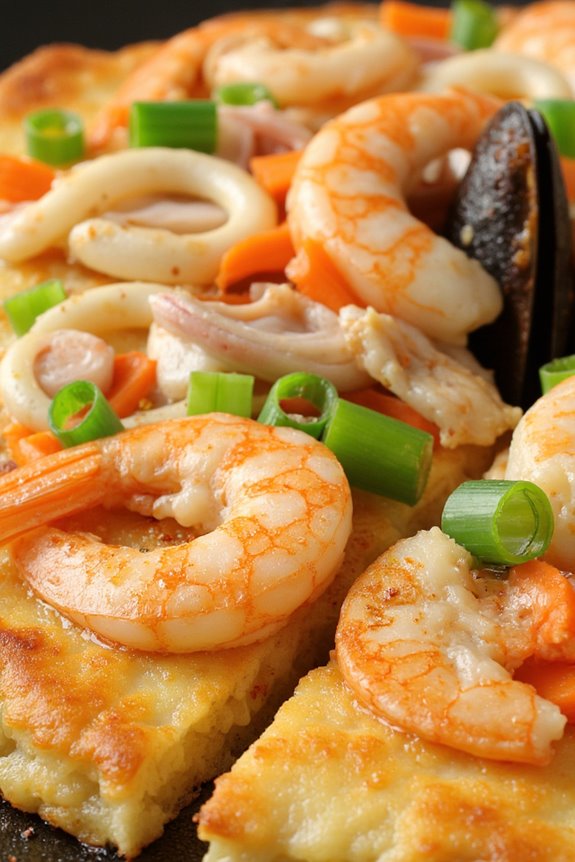
Korean Seafood Pancakes, known as Haemul Pajeon, are a delightful dish that combines a variety of seafood with green onions in a savory batter. This mouthwatering creation is a popular snack or appetizer in Korean cuisine, often enjoyed with a soy dipping sauce. The crispy outer layer envelops the tender seafood and scallions, creating a symphony of flavors and textures that’s simply irresistible.
Making Haemul Pajeon isn’t only straightforward but also a fun way to incorporate fresh seafood into your meals. This dish is versatile; you can use whatever seafood you have on hand, such as shrimp, squid, or even clams. Whether you’re hosting a gathering or simply treating yourself to a delicious meal, these pancakes are bound to impress and satisfy.
Ingredients (Serves 4-6)
- 1 cup all-purpose flour
- 1/2 cup rice flour
- 1 1/4 cups cold water
- 1/2 teaspoon salt
- 1/2 teaspoon black pepper
- 1 cup mixed seafood (shrimp, squid, mussels, etc.), chopped
- 1 cup green onions, chopped
- 1/2 cup carrots, julienned (optional)
- Vegetable oil, for frying
- Soy sauce, for dipping
Cooking Instructions
- Prepare the Batter: In a large mixing bowl, combine the all-purpose flour, rice flour, salt, and black pepper. Gradually add the cold water while whisking to create a smooth batter. The consistency should be similar to pancake batter—thick but pourable.
- Add Seafood and Vegetables: Once the batter is smooth, gently fold in the chopped mixed seafood, green onions, and julienned carrots if using. Make sure everything is evenly coated with the batter.
- Heat the Oil: In a large skillet or frying pan, heat about 2-3 tablespoons of vegetable oil over medium-high heat. You want enough oil to coat the bottom of the pan to ascertain a crispy pancake.
- Cook the Pancake: Once the oil is hot, pour half of the batter mixture into the pan, spreading it out evenly to form a round pancake about 1/2 inch thick. Cook for about 4-5 minutes or until the bottom is golden brown and crispy.
- Flip the Pancake: Carefully flip the pancake using a spatula. Cook for an additional 4-5 minutes on the other side until it’s also golden brown and cooked through. If necessary, add a bit more oil before flipping or if you’re cooking a second pancake.
- Repeat: Remove the pancake from the pan and place it on a paper towel-lined plate to absorb excess oil. Repeat the process for the remaining batter, adding more oil to the pan as needed.
- Serve: Cut the pancakes into wedges and serve hot with a side of soy sauce for dipping.
Extra Tips
For an extra flavor boost, you can add a splash of sesame oil to the batter or mix in some finely chopped chili peppers for a touch of heat.
Always verify your oil is hot enough before adding the batter to achieve that desirable crispy texture. If you have any leftover batter, store it in the refrigerator for a couple of days and make more pancakes later.
Enjoy your Haemul Pajeon with a revitalizing drink or as part of a larger Korean meal!
Seaweed Salad (Miyeok Salad)
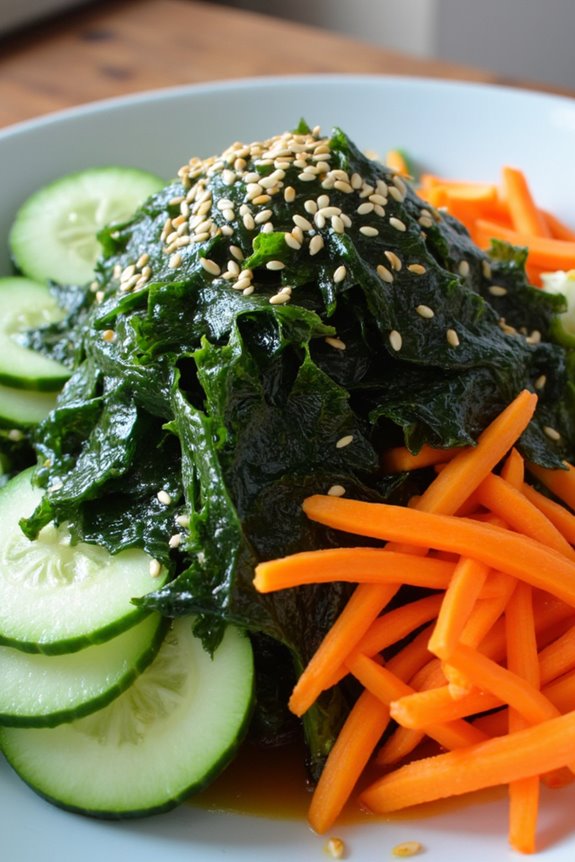
Seaweed salad, or Miyeok Salad, is a revitalizing and nutritious dish that highlights the umami flavors of edible seaweed. Commonly enjoyed in Korean cuisine, this salad isn’t only packed with vitamins and minerals but also adds a unique texture and taste to your meal. The combination of seaweed with sesame oil and other fresh ingredients makes it a delightful accompaniment to various dishes or a light standalone dish.
Preparing Miyeok Salad is quick and simple, making it an excellent choice for both experienced cooks and beginners. The primary ingredient, dried seaweed, expands when soaked, offering a chewy texture that pairs beautifully with the dressing. This salad can be served chilled as part of a banchan (side dish) spread or as a fresh starter for any meal.
Ingredients (Serves 4-6)
- 1 cup dried miyeok (wakame seaweed)
- 1 medium cucumber, thinly sliced
- 1 medium carrot, julienned
- 3 tablespoons soy sauce
- 2 tablespoons sesame oil
- 1 tablespoon rice vinegar
- 1 tablespoon sugar
- 1 tablespoon sesame seeds
- 2 cloves garlic, minced
- Salt, to taste
Cooking Instructions
- Soak the Seaweed: Start by rinsing the dried miyeok under cold water to remove any salt or impurities. Then, place the seaweed in a large bowl and cover it with warm water. Let it soak for about 15-20 minutes until it expands and softens. Once done, drain and gently squeeze out excess water.
- Prepare the Vegetables: While the seaweed is soaking, wash and prepare the cucumber and carrot. Cut the cucumber into thin slices and julienne the carrot into thin strips. This adds crunch and color to the salad, enhancing both its visual appeal and texture.
- Make the Dressing: In a small mixing bowl, combine soy sauce, sesame oil, rice vinegar, sugar, minced garlic, and a pinch of salt. Whisk these ingredients together until the sugar is dissolved and the dressing is well mixed.
- Combine the Ingredients: In a large salad bowl, add the soaked miyeok, sliced cucumber, and julienned carrot. Pour the dressing over the top and gently toss everything together until the seaweed and vegetables are well coated with the dressing.
- Garnish and Serve: Finally, sprinkle sesame seeds over the salad for added flavor and crunch. Allow the salad to sit for a few minutes to let the flavors meld together before serving. It can be enjoyed chilled or at room temperature.
Extra Tips
When preparing Miyeok Salad, feel free to customize it by adding other ingredients such as sliced radishes, bell peppers, or even proteins like shrimp or tofu for added nutrition.
Adjust the seasoning to your taste; if you prefer a tangier flavor, increase the amount of rice vinegar. Also, remember that the seaweed will absorb some of the dressing, so for leftovers, you may want to add a little extra dressing before serving again.
Braised Spicy Crab (Kkanari Jjim)
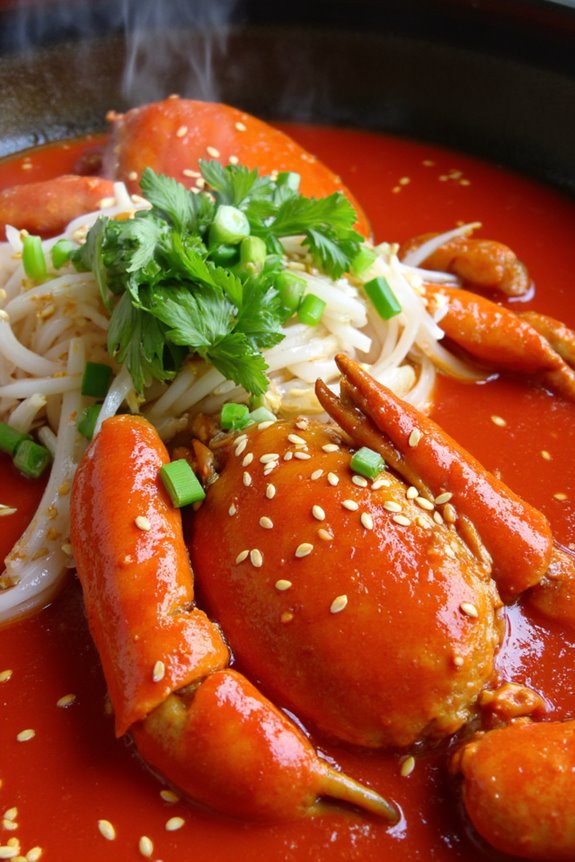
Braised Spicy Crab, or Kkanari Jjim, is a beloved dish in Korean cuisine that brings the flavors of the ocean straight to your dining table. This dish features succulent crabs infused with a rich, spicy sauce that combines gochugaru (Korean red pepper flakes), garlic, and soy sauce, among other ingredients. The result is a savory and slightly sweet dish that captivates the palate and warms the soul.
Whether served for a special occasion or a family gathering, Kkanari Jjim is sure to impress and delight your guests. Preparing this dish may seem intimidating at first, but its straightforward steps make it accessible to cooks of all levels. As the crab simmers in the spicy sauce, it absorbs all the flavors, creating a mouthwatering experience.
Served with steamed rice, this dish isn’t only a feast for the eyes but also a celebration of the rich culinary traditions of Korea. Gather your ingredients and get ready to commence a flavorful journey with Braised Spicy Crab!
Ingredients (Serving Size: 4-6 people)
- 2-3 live crabs (about 2-3 pounds total)
- 1 cup water
- 1/4 cup soy sauce
- 3 tablespoons gochugaru (Korean red pepper flakes)
- 1 tablespoon sugar
- 1 tablespoon minced garlic
- 1 tablespoon minced ginger
- 1 tablespoon sesame oil
- 1 medium onion, sliced
- 2 green onions, chopped
- 1 tablespoon sesame seeds (for garnish)
- Fresh cilantro (for garnish, optional)
Cooking Instructions
- Prepare the Crabs: Begin by thoroughly cleaning the crabs under cold running water. Using a sharp knife, carefully remove the top shell of each crab. Discard the gills and any internal organs. Cut the crabs into quarters for easier cooking and serving. If you prefer, you can also leave them whole.
- Make the Sauce: In a large mixing bowl, combine the water, soy sauce, gochugaru, sugar, minced garlic, minced ginger, and sesame oil. Whisk the ingredients together until well combined, creating a flavorful marinade.
- Sauté Aromatics: In a large pot or deep skillet, heat a little oil over medium heat. Add the sliced onion and sauté for about 3-4 minutes until they become translucent and fragrant. This step adds depth to the dish.
- Add Crabs: Carefully place the cleaned and cut crabs into the pot with the sautéed onions. Stir gently to coat the crabs with the sautéed onions.
- Pour the Sauce: Pour the prepared sauce over the crabs, making certain they’re evenly covered. Bring the mixture to a gentle simmer over medium-high heat.
- Braised Cooking: Once the sauce starts to simmer, reduce the heat to low and cover the pot. Cook for about 20-25 minutes, occasionally stirring to confirm the crabs are evenly cooked and coated with the sauce. The crabs will turn a vibrant red as they cook.
- Finish with Green Onions: After 20-25 minutes, uncover the pot and add the chopped green onions. Stir to combine and allow to cook for an additional 5 minutes. This will enhance the aroma and add fresh flavor.
- Serve: Once fully cooked, transfer the crabs to a serving platter, pouring the sauce and onions over the top. Garnish with sesame seeds and fresh cilantro if desired. Serve hot with steamed rice.
Extra Tips
When preparing Braised Spicy Crab, it’s essential to choose fresh, live crabs for the best flavor and texture. If you’re not comfortable handling live crabs, you can ask your local seafood market to clean and prepare them for you.
Additionally, feel free to adjust the level of spiciness by varying the amount of gochugaru based on your heat tolerance. Always make certain that the crabs are fully cooked before serving; they should be bright red and opaque. Enjoy your cooking adventure, and don’t hesitate to share this delightful dish with friends and family!
Seafood Tofu Soup (Sundubu Jjigae)
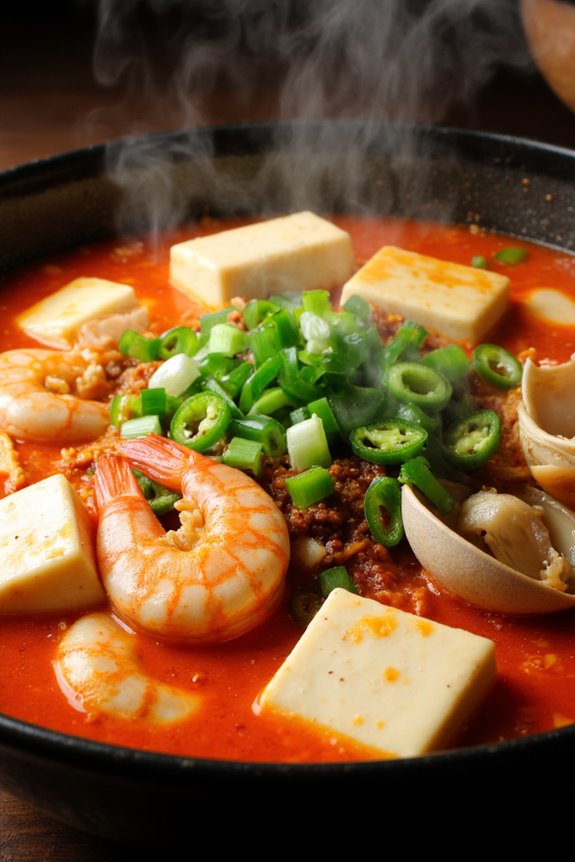
Sundubu Jjigae, or Korean Seafood Tofu Soup, is a delightful and comforting dish that embodies the essence of Korean cuisine. Its rich and spicy broth is filled with soft, silky tofu, an array of fresh seafood, and vibrant vegetables. This dish can be enjoyed as a warming meal on a chilly day or as a flavorful accompaniment to a larger Korean feast. The key to a perfect Sundubu Jjigae lies in the quality of the ingredients and the balance of flavors, which can be adjusted based on personal preference.
This soup isn’t only delicious but also highly nutritious, making it a popular choice among health-conscious individuals. The use of fresh seafood provides essential omega-3 fatty acids, while the tofu adds protein and a satisfying texture.
This dish is typically served bubbling hot in a stone pot, accompanied by a side of steamed rice and various banchan (side dishes). Whether you’re cooking for family or friends, Sundubu Jjigae is sure to impress with its vibrant colors and delectable taste.
Ingredients (Serves 4-6):
- 1 tablespoon vegetable oil
- 1 onion, sliced
- 3 cloves garlic, minced
- 1 green chili pepper, sliced (adjust for spice preference)
- 1 tablespoon gochugaru (Korean red pepper flakes)
- 4 cups seafood broth (or water)
- 1 cup of chopped kimchi (optional)
- 300g (about 10 oz) mixed seafood (shrimp, clams, squid, etc.)
- 1 package (300g) silken tofu, cut into cubes
- 1 tablespoon soy sauce
- 2 green onions, chopped
- 1 egg (optional)
- Salt and pepper to taste
Cooking Instructions:
- Heat the Oil: Begin by heating the vegetable oil in a large pot over medium heat. This will serve as the base for your soup, allowing the flavors to develop as you sauté the aromatics.
- Sauté the Aromatics: Add the sliced onion and minced garlic to the pot. Sauté them for about 3-4 minutes until the onion becomes translucent and fragrant. This step builds the foundational flavor of your Sundubu Jjigae.
- Add the Chili and Gochugaru: Stir in the sliced green chili pepper and gochugaru. Cook for an additional 1-2 minutes, allowing the chili and pepper flakes to release their heat and color into the oil, creating a spicy red base for the soup.
- Pour in the Broth: Add the seafood broth (or water) to the pot and bring it to a gentle boil. If you’re using kimchi, this is the time to add it in for extra flavor. Let the broth simmer for about 5 minutes to meld the flavors together.
- Incorporate the Seafood: Once the broth is boiling, add in the mixed seafood. Allow it to cook for about 3-4 minutes until the seafood is just cooked through. Be careful not to overcook, as seafood can become tough.
- Add Tofu and Seasoning: Gently add the silken tofu cubes into the pot, being careful not to break them apart. Add the soy sauce and season with salt and pepper to taste. Let the soup simmer for another 2-3 minutes, allowing the tofu to warm up.
- Finish with Green Onions and Egg: Just before serving, stir in the chopped green onions. If you like, crack an egg directly into the bubbling soup and let it poach for a minute or two for added richness.
- Serve Hot: Ladle the Sundubu Jjigae into individual bowls or stone pots. Serve immediately with a side of steamed rice and your favorite banchan.
Extra Tips:
For an even richer flavor, you can enhance the broth by adding a dash of fish sauce or a few dried anchovies while simmering. If you prefer a vegetarian version, simply omit the seafood and use vegetable broth instead.
Additionally, you can adjust the level of spiciness by varying the amount of gochugaru and chili peppers used. Sundubu Jjigae is versatile, so feel free to customize it with your favorite ingredients, like mushrooms or zucchini, for added depth and texture!
Vinegared Octopus Salad (Nakji Muchim)
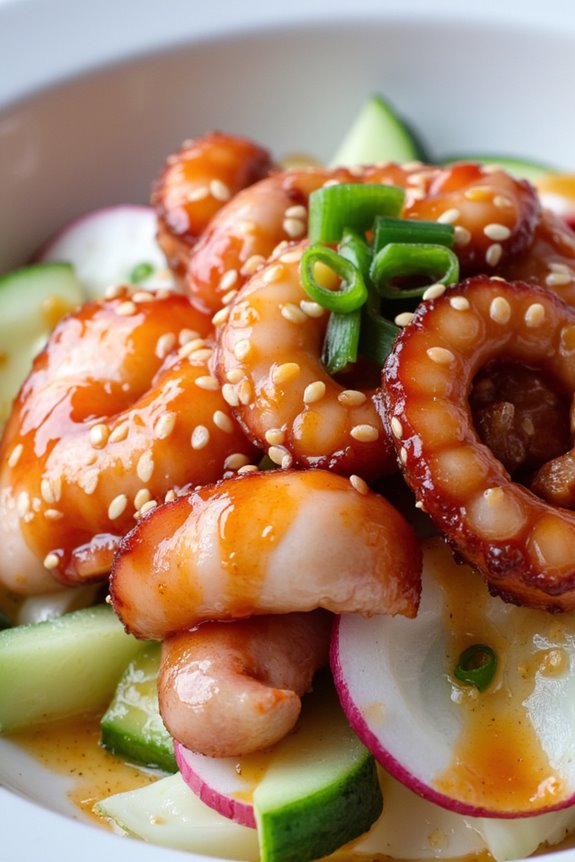
Vinegared Octopus Salad, known as Nakji Muchim in Korean, is a vibrant and invigorating dish that showcases the tender, succulent octopus paired with a zesty dressing. This salad isn’t only visually appealing with its bright colors but also packs a punch of flavor, thanks to the combination of spicy, sweet, and tangy ingredients.
It’s a popular side dish in Korean cuisine, often served during family gatherings or special occasions, making it a delightful addition to any meal.
Preparing Nakji Muchim requires a bit of attention to detail, especially when cooking the octopus to guarantee it remains tender. The dish is typically served cold, allowing the flavors to meld beautifully. With the right ingredients and techniques, you can create this delicious seafood salad that will impress your family and friends.
Ingredients (Serves 4-6):
- 1 pound octopus, cleaned and tentacles separated
- 1 tablespoon salt
- 1/4 cup gochugaru (Korean red pepper flakes)
- 2 tablespoons sugar
- 3 tablespoons rice vinegar
- 2 tablespoons soy sauce
- 1 tablespoon sesame oil
- 2 green onions, finely chopped
- 1/2 cup cucumber, thinly sliced
- 1/2 cup radish, thinly sliced
- 1 tablespoon sesame seeds
Cooking Instructions:
- Cook the Octopus: In a large pot, bring water to a boil and add 1 tablespoon of salt. Add the cleaned octopus and boil for about 3-5 minutes until it turns tender. Remove the octopus from the pot and let it cool in a bowl. This quick cooking method helps to keep the octopus tender and prevents it from becoming rubbery.
- Prepare the Dressing: In a separate bowl, combine gochugaru, sugar, rice vinegar, soy sauce, and sesame oil. Whisk the mixture until the sugar dissolves completely, creating a flavorful dressing that will coat the octopus and vegetables.
- Slice the Octopus: Once the octopus has cooled, slice the tentacles into bite-sized pieces. This will make them easier to mix with the other ingredients and enhance the overall experience of the salad.
- Combine Ingredients: In a large mixing bowl, combine the sliced octopus, chopped green onions, cucumber, and radish. Pour the dressing over the mixture and gently toss everything together until the octopus and vegetables are evenly coated. Be careful not to mash the ingredients as you mix.
- Garnish and Serve: Sprinkle the sesame seeds over the top of the salad for added flavor and crunch. Chill the salad in the refrigerator for at least 30 minutes before serving to allow the flavors to meld together. Serve cold as a side dish or appetizer.
Extra Tips:
When cooking octopus, it’s important not to overcook it, as this can make it tough and chewy. If you’re unsure, you can test the tenderness by piercing it with a fork.
Additionally, feel free to adjust the level of spiciness by adding more or less gochugaru according to your taste preference. This dish can be made a few hours ahead of time, making it perfect for entertaining, as the flavors only get better as they marinate.
Enjoy your Nakji Muchim with a side of rice or as part of a larger Korean feast!
Stir-Fried Clams With Garlic (Manila Clam Bokkeum)
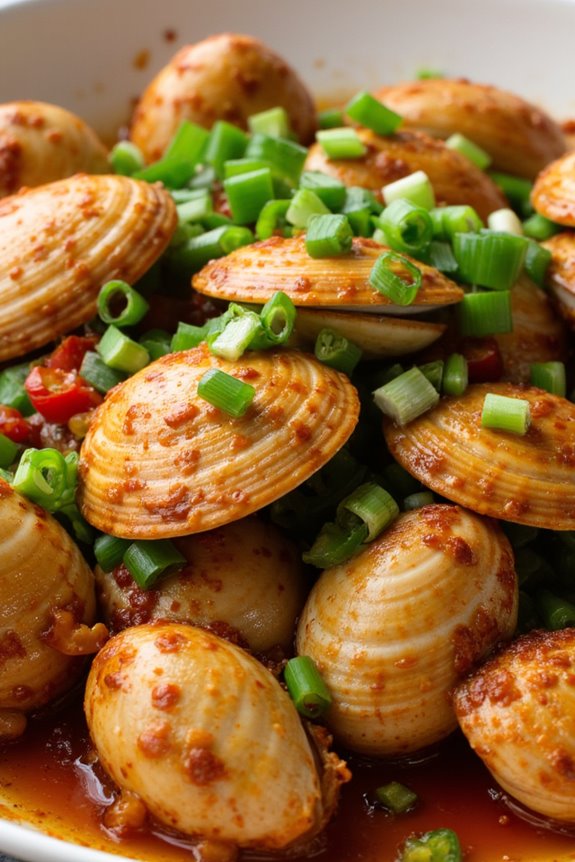
Stir-Fried Clams With Garlic, or Manila Clam Bokkeum, is a delightful and flavorful Korean dish that showcases the natural sweetness of clams paired with the aromatic essence of garlic. This quick and easy recipe is perfect for seafood lovers looking for a simple yet delicious meal. The dish is typically served as a side or a main course, and it pairs wonderfully with steamed rice, making it an ideal addition to any Korean meal.
The key to a successful Stir-Fried Clams With Garlic lies in using fresh clams and making certain they’re properly cleaned before cooking. The combination of garlic, chili pepper, and soy sauce not only enhances the flavor of the clams but also creates a delectable sauce that can be enjoyed with rice. This dish isn’t only satisfying but also packed with nutrients, making it a great choice for a healthy dinner.
Ingredients (serves 4-6):
- 1.5 pounds Manila clams, thoroughly cleaned
- 2 tablespoons vegetable oil
- 6 cloves garlic, minced
- 1-2 green chili peppers, sliced (adjust to taste)
- 1 tablespoon soy sauce
- 1 tablespoon oyster sauce
- 1 teaspoon sesame oil
- 1 tablespoon chopped green onions (for garnish)
- Salt and pepper to taste
Cooking Instructions:
- Prepare the Clams: Before cooking, it’s important to clean the clams properly. Soak them in cold water for about 20-30 minutes to allow them to expel any sand. Rinse them under running water to remove any remaining grit. Set aside.
- Heat the Oil: In a large skillet or wok, heat the vegetable oil over medium-high heat. Make sure the oil is hot enough before adding the garlic, as this will help to release its flavor.
- Sauté Garlic and Chili: Once the oil is hot, add the minced garlic and sliced green chili peppers. Sauté them for about 1-2 minutes until the garlic becomes fragrant and golden brown. Be careful not to burn the garlic, as it can turn bitter.
- Add the Clams: Add the cleaned Manila clams to the skillet, stirring well to coat them with the garlic and chili mixture. Cover the skillet with a lid and let the clams steam for about 4-5 minutes, or until they’ve opened up. Discard any clams that remain closed after cooking.
- Season the Clams: Once the clams are cooked, add the soy sauce, oyster sauce, and sesame oil to the skillet. Stir well to combine all the flavors, and let it cook for another 1-2 minutes, allowing the clams to absorb the sauce. Taste and adjust seasoning with salt and pepper as needed.
- Garnish and Serve: Remove the skillet from heat and transfer the clam mixture to a serving dish. Garnish with chopped green onions. Serve immediately with steamed rice for a fulfilling meal.
Extra Tips:
When making Stir-Fried Clams With Garlic, freshness is key, so always choose the best quality clams available.
If you want to add more variety to the dish, feel free to incorporate vegetables like bell peppers or bok choy for added nutrition and color.
Additionally, for those who enjoy a bit of heat, consider adding a splash of Korean red pepper flakes (gochugaru) for an extra kick!
Korean Fish Cake Soup (Eomuk Guk)
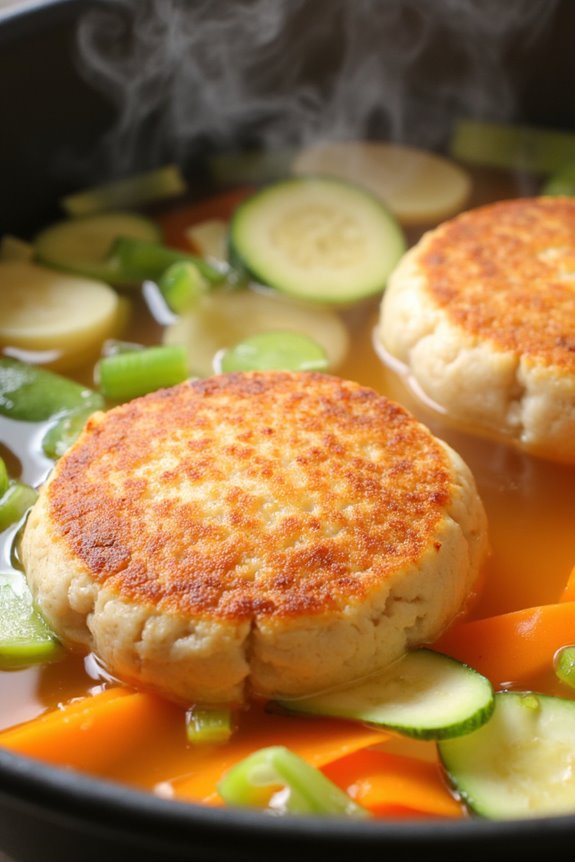
Korean Fish Cake Soup, known as Eomuk Guk, is a comforting and savory dish that embodies the essence of Korean home cooking. This dish is particularly popular during the winter months, providing warmth and nourishment.
Eomuk, or fish cakes, are the star of this soup, made from ground fish and various seasonings, offering a delightful texture and flavor. The broth is usually a delicate combination of anchovy stock, soy sauce, and other seasonings, which enhances the taste of the fish cakes and melds beautifully with the vegetables included in the dish.
Creating Eomuk Guk is a simple yet rewarding process, allowing you to enjoy a traditional Korean dish right in your kitchen. It can be served as a main course or as a side dish with rice.
The beauty of this recipe lies in its versatility; you can add different vegetables or even tofu to cater to your taste preferences. With its heartwarming flavor and nutritious ingredients, Eomuk Guk is perfect for family gatherings or a cozy night in.
Ingredients (serves 4-6 people):
- 200g Korean fish cakes (eomuk)
- 1 medium onion, sliced
- 2-3 green onions, chopped
- 2 medium carrots, julienned
- 1 small zucchini, julienned
- 4 cups anchovy stock (or water)
- 2 tablespoons soy sauce
- 1 tablespoon sesame oil
- 1 tablespoon minced garlic
- Salt and pepper to taste
Cooking Instructions:
- Make the Anchovy Stock: If using anchovies, start by preparing the anchovy stock. In a pot, combine 4 cups of water with 5-6 dried anchovies. Bring it to a boil, then reduce to a simmer for about 10-15 minutes. Once done, strain the stock to remove the anchovies and set the liquid aside.
- Prepare the Vegetables: While the stock is simmering, prepare your vegetables. Slice the onion, julienne the carrots and zucchini, and chop the green onions. This will guarantee that all ingredients are ready for cooking.
- Combine Ingredients in a Pot: In a large pot, heat 1 tablespoon of sesame oil over medium heat. Add the sliced onion and minced garlic, sautéing them until the onion becomes translucent and fragrant, which should take about 3-4 minutes.
- Add the Stock and Vegetables: Pour the prepared anchovy stock into the pot with the sautéed onions. Bring the mixture back to a boil, and then add the julienned carrots and zucchini. Allow the soup to simmer for about 5 minutes until the vegetables are tender.
- Incorporate the Fish Cakes: Add the Korean fish cakes to the pot, letting them cook for an additional 5 minutes. This will allow the flavors to meld and the fish cakes to heat through.
- Season the Soup: Stir in the soy sauce, and season with salt and pepper to taste. Adjust the seasoning according to your preference, remembering that the fish cakes may already bring some saltiness to the dish.
- Finish with Green Onions: Just before serving, add the chopped green onions to the soup, stirring them in for a fresh flavor boost.
- Serve Hot: Ladle the Eomuk Guk into bowls and serve hot, ideally with a side of steamed rice.
Extra Tips:
When making Eomuk Guk, feel free to customize the soup by adding sliced mushrooms, tofu, or even other vegetables like spinach or bok choy to enhance its richness and nutritional value.
If you prefer a spicier kick, consider adding a dash of gochugaru (Korean red pepper flakes) to the broth. Additionally, using homemade anchovy stock can greatly elevate the flavor of the soup, making it even more authentic and delicious. Enjoy your cooking adventure!
Spicy Shrimp With Gochujang (Gochujang Saewoo)
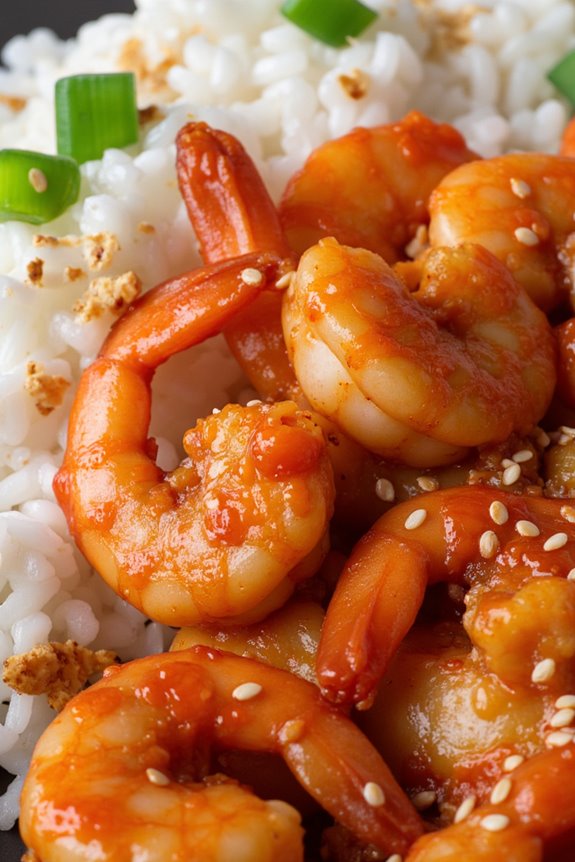
Spicy Shrimp with Gochujang, or Gochujang Saewoo, is a delectable dish that brings the bold flavors of Korean cuisine to your table. This dish features succulent shrimp tossed in a savory and spicy sauce made from gochujang, a Korean red chili paste that adds depth and a unique flavor profile.
The combination of sweet, spicy, and umami makes it an irresistible option for seafood lovers, perfect for serving over rice or alongside a fresh salad. In addition to its mouthwatering taste, Gochujang Saewoo is also quick and easy to prepare, making it an excellent choice for weeknight dinners or entertaining guests.
The vibrant colors and aromatic ingredients create a feast for the senses, ensuring your meal isn’t only satisfying but also visually appealing. Gather your ingredients and get ready to impress your family and friends with this authentic Korean seafood dish.
Ingredients (serving size: 4-6 people):
- 1 lb (450g) large shrimp, peeled and deveined
- 2 tablespoons gochujang (Korean red chili paste)
- 2 tablespoons soy sauce
- 1 tablespoon sesame oil
- 2 tablespoons sugar
- 2 cloves garlic, minced
- 1 tablespoon ginger, minced
- 1 tablespoon rice vinegar
- 2 green onions, chopped (for garnish)
- 1 tablespoon sesame seeds (for garnish)
- Cooked rice (for serving)
Cooking Instructions:
1. Prepare the Shrimp: Start by rinsing the peeled and deveined shrimp under cold water. Pat them dry with paper towels and set aside. Dry shrimp will allow the sauce to adhere better during cooking.
2. Make the Sauce: In a medium bowl, combine gochujang, soy sauce, sesame oil, sugar, minced garlic, minced ginger, and rice vinegar. Mix well until the sugar dissolves and the sauce is smooth. This sauce will add a rich flavor to the shrimp.
3. Marinate the Shrimp: Add the shrimp to the bowl with the sauce and toss until they’re evenly coated. Allow the shrimp to marinate for at least 15 minutes, which allows the flavors to penetrate the shrimp.
4. Cook the Shrimp: Heat a large skillet or wok over medium-high heat. Once hot, add the marinated shrimp to the pan, spreading them out in a single layer. Cook for about 2-3 minutes on one side until they turn pink and opaque, then flip them over and cook for an additional 2-3 minutes on the other side.
Be careful not to overcook the shrimp, as they can become tough.
5. Garnish and Serve: Once cooked, remove the skillet from heat. Transfer the spicy shrimp to a serving platter and garnish with chopped green onions and sesame seeds. Serve hot over a bed of cooked rice for a complete meal.
Extra Tips:
For an extra layer of flavor, consider adding vegetables such as bell peppers or snap peas to the skillet while cooking the shrimp. This not only enhances the dish’s nutritional value but also adds a delightful crunch.
Additionally, adjusting the amount of gochujang can help tailor the spiciness to your preference—feel free to start with less if you’re sensitive to heat. Enjoy your Spicy Shrimp with Gochujang!
Korean Sashimi Salad (Hoe)
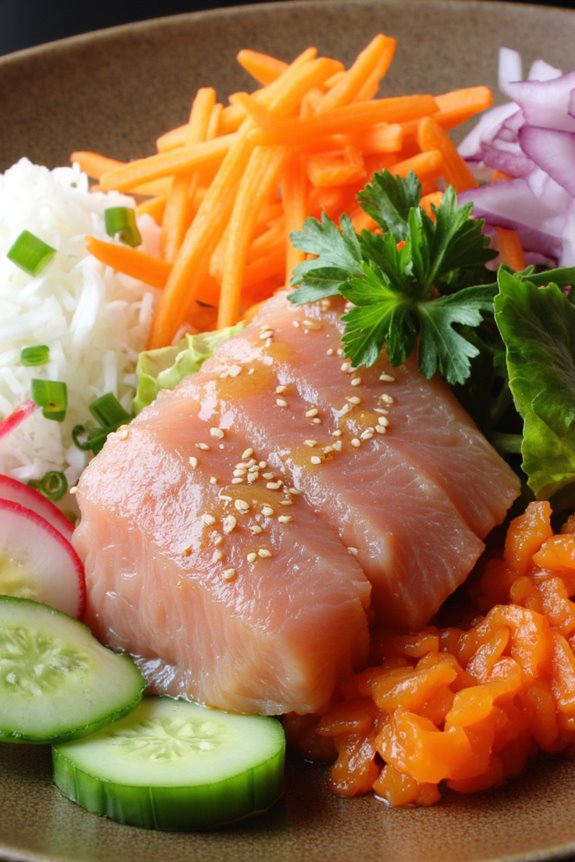
Korean Sashimi Salad, known as Hoe, is a revitalizing and vibrant dish that celebrates the delicate flavors of fresh seafood. This dish combines beautifully sliced raw fish with an array of colorful vegetables, all tossed in a zesty dressing that enhances the natural sweetness of the seafood.
Hoe isn’t only a feast for the eyes but also a wholesome option for those seeking a light yet satisfying meal. It’s typically enjoyed as an appetizer or can serve as a main course for seafood lovers.
Making Hoe at home is easier than you might think, and it allows you to customize the ingredients based on your preferences. While fresh fish is the star of the dish, the accompanying vegetables add crunch and texture, while the dressing ties everything together with a burst of flavor.
Enjoy this dish on a warm day, or serve it for a special occasion to impress your guests with its elegance and taste.
Ingredients (Serves 4-6)
- 1 pound fresh sashimi-grade fish (such as tuna, salmon, or yellowtail)
- 2 cups mixed salad greens (such as romaine, arugula, or spinach)
- 1 cup sliced cucumbers
- 1 cup shredded carrots
- 1/2 cup sliced radishes
- 1/2 cup thinly sliced red onion
- 1/4 cup chopped fresh cilantro
- 1/4 cup chopped green onions
- 1/4 cup sesame seeds (toasted, optional)
Dressing:
- 3 tablespoons soy sauce
- 2 tablespoons rice vinegar
- 1 tablespoon sesame oil
- 1 tablespoon gochujang (Korean chili paste)
- 1 tablespoon honey or sugar
- 1 tablespoon water
Cooking Instructions
- Prepare the Fish: Start by cleaning and filleting the fish, making sure that you remove any skin and bones. Using a sharp knife, slice the fish into thin, bite-sized pieces. It’s important to use sashimi-grade fish to guarantee safety and quality.
- Prepare the Vegetables: Wash and dry the salad greens thoroughly. Slice the cucumbers, shred the carrots, and thinly slice the radishes and red onion. Place all the vegetables in a large mixing bowl to combine them.
- Make the Dressing: In a separate small bowl, whisk together the soy sauce, rice vinegar, sesame oil, gochujang, honey (or sugar), and water until well combined. This dressing will provide a nice balance of savory, tangy, and spicy flavors.
- Combine the Ingredients: Once the fish and vegetables are prepared, add the fish slices to the bowl with the vegetables. Pour the dressing over the salad and gently toss everything together to verify that the fish and vegetables are evenly coated in the dressing.
- Garnish and Serve: Transfer the Hoe to a serving platter or individual bowls. Sprinkle with chopped cilantro, green onions, and toasted sesame seeds for added flavor and presentation. Serve immediately to enjoy the freshness of the ingredients.
Extra Tips
When preparing Korean Sashimi Salad, the key to a successful dish lies in the freshness of the ingredients, particularly the fish. Make sure to source your seafood from a reputable market or seafood shop that offers sashimi-grade fish.
Additionally, feel free to experiment with other vegetables or herbs according to your taste—avocado, bell peppers, or even fruits like mango can add a unique twist to the salad.
Finally, if you prefer a milder version, reduce the amount of gochujang in the dressing. Enjoy your culinary journey into Korean cuisine!
Grilled Shrimp Skewers (Saewoo Gui)
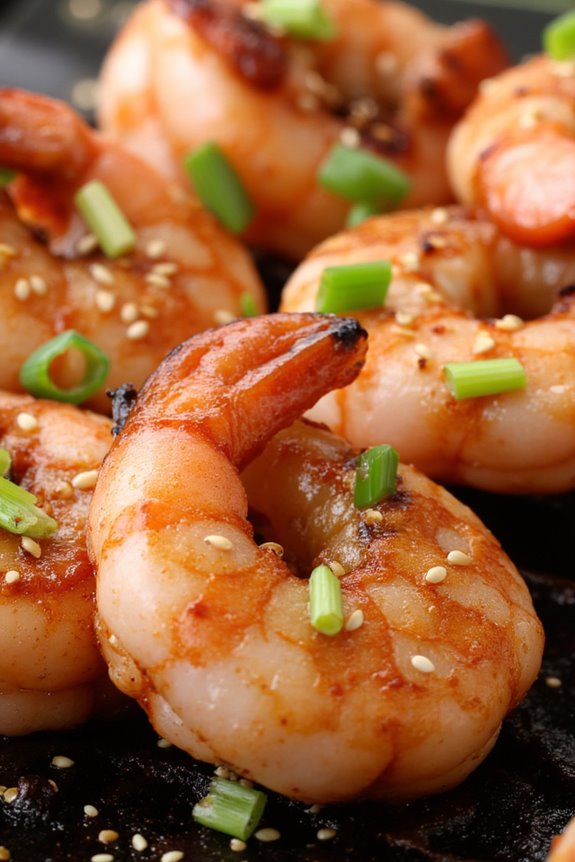
Grilled Shrimp Skewers, or Saewoo Gui, is a delightful Korean seafood dish that showcases the natural sweetness of shrimp enhanced by a savory marinade. This dish is perfect for summer barbecues or quick weeknight dinners, as it can be prepared in less than 30 minutes. The shrimp are typically grilled over high heat, resulting in a perfectly charred exterior while keeping the meat tender and juicy on the inside. Served with a side of dipping sauce, these skewers are sure to impress family and friends alike.
The key to achieving the best flavor in Saewoo Gui lies in the marinade, which combines elements of soy sauce, sesame oil, garlic, and a hint of sugar. This mixture not only infuses the shrimp with a rich taste but also helps in achieving a beautiful caramelization during the grilling process. As you prepare to enjoy this dish, consider pairing it with a revitalizing cucumber salad or steamed rice for a complete meal.
Ingredients (serving size: 4-6 people):
- 1 pound large shrimp, peeled and deveined
- 4 tablespoons soy sauce
- 2 tablespoons sesame oil
- 1 tablespoon sugar
- 4 cloves garlic, minced
- 1 teaspoon grated ginger
- 1 tablespoon rice wine (optional)
- 1 tablespoon sesame seeds (for garnish)
- 1 green onion, finely chopped (for garnish)
- Bamboo skewers (soaked in water for 30 minutes)
Cooking Instructions:
- Prepare the Marinade: In a large bowl, combine the soy sauce, sesame oil, sugar, minced garlic, grated ginger, and rice wine (if using). Whisk the ingredients together until the sugar is dissolved and the mixture is well combined.
- Marinate the Shrimp: Add the peeled and deveined shrimp to the bowl with the marinade. Gently toss the shrimp in the mixture until they’re evenly coated. Cover the bowl and let it marinate in the refrigerator for at least 15-20 minutes to allow the flavors to penetrate the shrimp.
- Preheat the Grill: While the shrimp is marinating, preheat your grill to medium-high heat. If using a grill pan, heat it over medium-high heat on the stovetop. Confirm the grill grates are clean and lightly oiled to prevent sticking.
- Assemble the Skewers: After marinating, take the shrimp out of the refrigerator. Thread the shrimp onto the soaked bamboo skewers, leaving a small space between each shrimp for even cooking. You can fit about 3-4 shrimp per skewer, depending on the size of the shrimp.
- Grill the Shrimp: Place the skewers on the preheated grill. Grill the shrimp for about 2-3 minutes on each side, or until they turn pink and opaque. Be careful not to overcook the shrimp, as they can become tough and rubbery.
- Garnish and Serve: Once the shrimp are cooked, remove the skewers from the grill and transfer them to a serving platter. Sprinkle with sesame seeds and chopped green onions for garnish. Serve immediately with your choice of dipping sauce, such as a spicy gochujang sauce or a sweet soy dipping sauce.
Extra Tips: For added flavor, consider marinating the shrimp for a longer period, up to 1 hour, but avoid over-marinating as the soy sauce can make the shrimp too salty. If you want a bit of heat, you can also add some red pepper flakes or gochugaru (Korean chili powder) to the marinade.
When grilling, keep an eye on the shrimp to prevent flare-ups and confirm even cooking. Enjoy your Saewoo Gui with a side of kimchi for an authentic Korean experience!
