

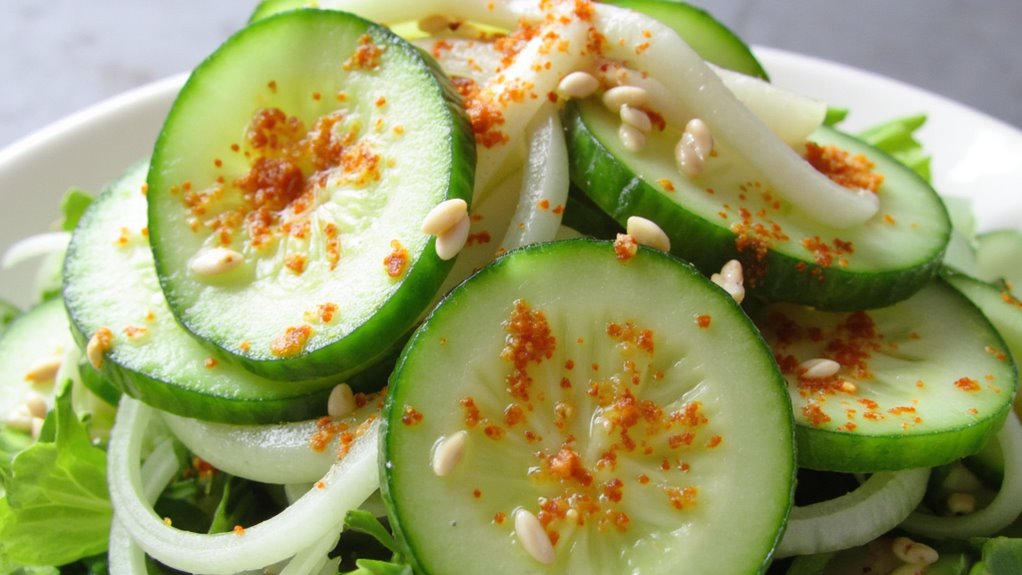
Exploring the world of vegan Korean recipes is a delightful adventure into flavors and textures. These dishes brilliantly transform simple plant-based ingredients into comforting and satisfying meals. From the warm embrace of kimchi jjigae to the vibrant colors of bibimbap, each recipe offers something special. If you’re looking to create bowls that celebrate both health and taste, let’s explore some delicious options together.
Vegan Kimchi Jjigae (Kimchi Stew)
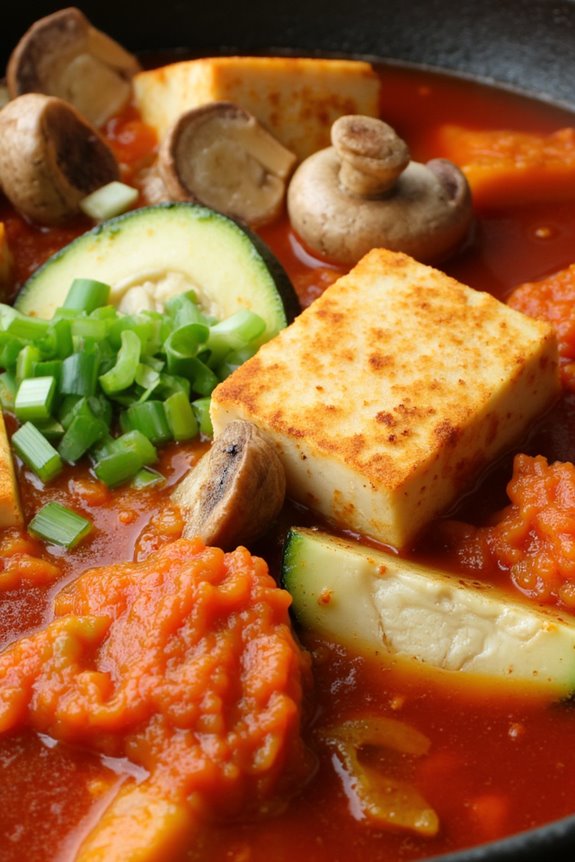
Vegan Kimchi Jjigae is a beloved Korean comfort food that combines the tangy, fermented flavors of kimchi with hearty vegetables and tofu in a savory broth. This dish isn’t only delicious but also incredibly satisfying, making it a perfect meal for any occasion.
The depth of flavor in this stew comes from a rich blend of spices and the umami notes from the kimchi, creating a warm and inviting dish that’s both nourishing and filling.
In this recipe, we’ll create a plant-based version of the classic Kimchi Jjigae that’s suitable for vegans without sacrificing any of the authentic taste. Packed with nutritious ingredients like tofu and a variety of vegetables, this stew isn’t only tasty but also healthy.
Perfect for sharing, this recipe serves 4-6 people and is sure to become a staple in your vegan cooking repertoire.
Ingredients (serves 4-6):
- 2 cups of well-fermented kimchi
- 1 tablespoon vegetable oil
- 1 medium onion, sliced
- 2 cloves garlic, minced
- 1-inch piece of ginger, minced
- 1 medium zucchini, diced
- 1 cup mushrooms, sliced (shiitake or button)
- 1 block (14 oz) firm tofu, drained and cubed
- 4 cups vegetable broth
- 2 tablespoons gochugaru (Korean red pepper flakes)
- 2 tablespoons soy sauce or tamari
- 1 teaspoon sesame oil
- 1 green onion, chopped (for garnish)
- Cooked rice (for serving)
Cooking Instructions:
- Prepare the Ingredients: Begin by gathering all your ingredients. Slice the onion, mince the garlic and ginger, cube the tofu, and chop the zucchini. Having everything ready will streamline the cooking process.
- Sauté the Aromatics: In a large pot, heat the vegetable oil over medium heat. Add the sliced onion and sauté for about 3-4 minutes until it becomes translucent. Then, add the minced garlic and ginger, stirring for an additional 1-2 minutes until fragrant.
- Add the Kimchi: Stir in the kimchi and cook for another 3-5 minutes, allowing it to release its flavors and become slightly caramelized. This step enhances the overall taste of the stew.
- Incorporate Vegetables: Add the diced zucchini and sliced mushrooms to the pot. Sauté the mixture for a few minutes until the vegetables begin to soften.
- Combine Broth and Seasonings: Pour in the vegetable broth, and add the gochugaru, soy sauce, and sesame oil. Stir everything together, bringing the stew to a gentle boil.
- Add Tofu: Gently add the cubed tofu into the pot, being careful not to break it apart. Reduce the heat to a simmer, allowing the stew to cook for about 15-20 minutes. This will help all the flavors meld together beautifully.
- Taste and Adjust: After simmering, taste the stew and adjust the seasoning if necessary, adding more soy sauce or gochugaru according to your preference.
- Serve: Once the stew is ready, ladle it into bowls and garnish with chopped green onions. Serve hot with a side of cooked rice to soak up the delicious broth.
Extra Tips:
When making Vegan Kimchi Jjigae, it’s vital to use well-fermented kimchi for the best flavor. If your kimchi isn’t spicy enough, feel free to add more gochugaru or even a splash of chili oil for an extra kick.
This stew can be customized by adding other vegetables such as spinach or bok choy, or even substituting the tofu with tempeh for a different texture. Enjoy this hearty dish on its own or alongside your favorite banchan (Korean side dishes) for an authentic experience!
Plant-Based Bibimbap
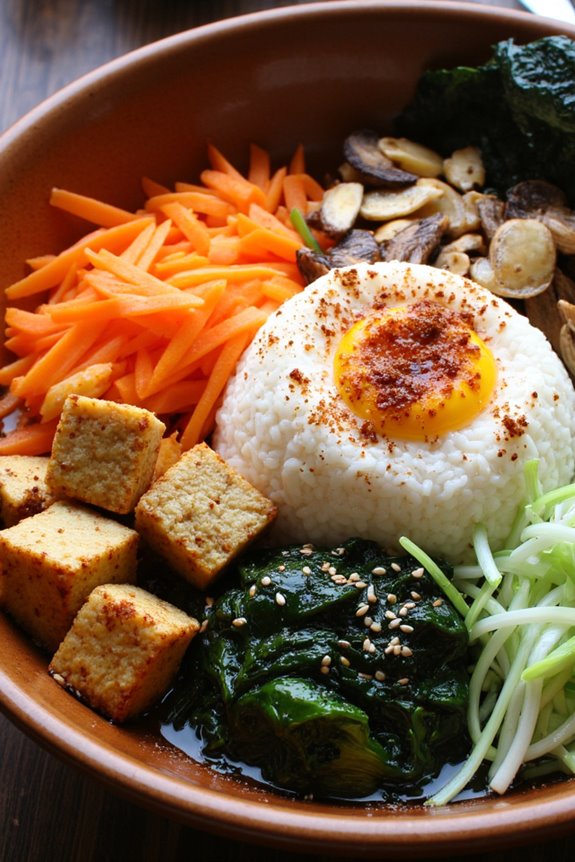
Bibimbap is a classic Korean dish that translates to “mixed rice,” and it beautifully embodies the essence of Korean cuisine with its vibrant colors, textures, and flavors. Traditionally served in a hot stone bowl, this dish consists of a bed of rice topped with an array of sautéed and seasoned vegetables, tofu, and a spicy gochujang sauce. Making a plant-based version not only retains the heartiness of the dish but also showcases the versatility of vegetables and grains.
Creating a scrumptious vegan bibimbap allows you to explore a variety of ingredients while enjoying a nutritious meal. With a colorful medley of vegetables such as spinach, carrots, mushrooms, and zucchini, this dish is both visually appealing and packed with nutrients. The addition of marinated tofu adds protein, making this bibimbap not only a feast for the eyes but also a fulfilling meal for the body. Perfect for a family dinner or a gathering with friends, this recipe will surely impress your guests and satisfy your taste buds.
Ingredients (Serves 4-6)
- 2 cups short-grain brown rice (or white rice)
- 1 block firm tofu, pressed and cubed
- 2 tablespoons soy sauce
- 1 tablespoon sesame oil
- 2 cups spinach, blanched
- 1 cup carrots, julienned
- 1 cup zucchini, julienned
- 1 cup shiitake mushrooms, sliced
- 1 tablespoon vegetable oil (for sautéing)
- 2 teaspoons garlic, minced
- 2 teaspoons sesame seeds
- 4-6 tablespoons gochujang (Korean chili paste)
- Optional: sliced green onions and seaweed for garnish
Cooking Instructions
- Prepare the Rice: Rinse the short-grain rice under cold water until the water runs clear. This helps to remove excess starch. Cook the rice according to package instructions, either in a rice cooker or on the stovetop, making sure it’s fluffy and well-cooked.
- Marinate the Tofu: In a bowl, combine the cubed tofu with soy sauce and sesame oil. Let it marinate for at least 15 minutes to absorb the flavors.
- Sauté the Vegetables: In a large skillet, heat the vegetable oil over medium heat. Add the minced garlic and sauté for about 30 seconds until fragrant. Then, add the shiitake mushrooms and cook for 3-4 minutes until they soften. Remove the mushrooms and set aside.
- Cook the Carrots and Zucchini: In the same skillet, add the julienned carrots and zucchini. Sauté for about 5 minutes until they’re tender but still crisp. Season lightly with salt. Add the blanched spinach and cook for an additional minute, mixing well. Set the vegetables aside.
- Cook the Tofu: In the same skillet, add a little more oil if needed and fry the marinated tofu for about 5-7 minutes, turning occasionally until golden brown on all sides. Add the cooked mushrooms back into the skillet and mix well.
- Assemble the Bibimbap: In a large bowl or individual serving bowls, place a generous scoop of rice at the bottom. Arrange the sautéed vegetables and tofu on top of the rice in sections, creating a colorful presentation. Sprinkle sesame seeds and garnish with sliced green onions and seaweed if desired.
- Serve with Gochujang: Serve the bibimbap hot with a dollop of gochujang on the side, allowing each person to mix it in according to their spice preference.
Extra Tips
For an added depth of flavor, consider roasting your vegetables instead of sautéing them, as this will bring out their natural sweetness. Additionally, if you prefer a little crunch, you can sprinkle some crushed peanuts or serve the bibimbap with a side of kimchi.
Feel free to customize the vegetables based on what you have on hand or what’s in season, as bibimbap is all about flexibility and creativity!
Tofu Katsu With Vegan Tonkatsu Sauce
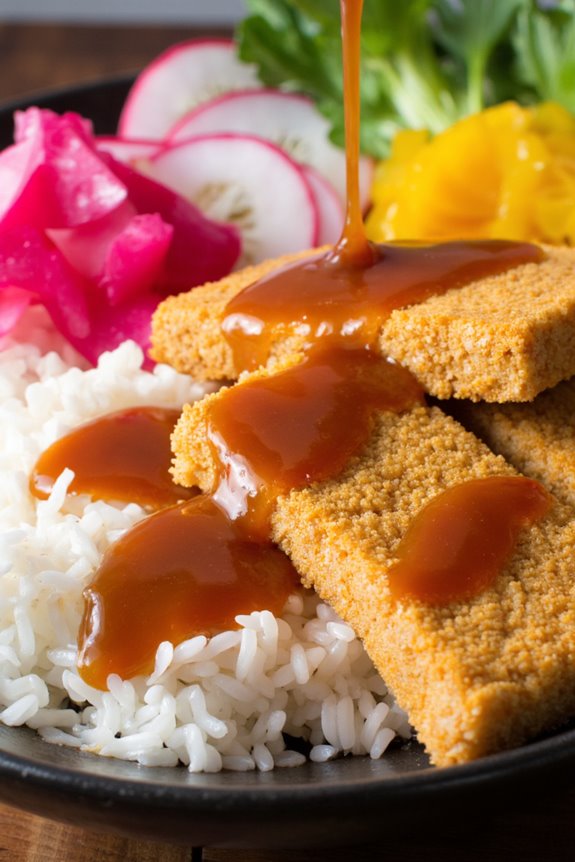
Tofu Katsu is a delightful vegan twist on the traditional Japanese katsu dish, which typically features breaded and deep-fried meat. This version uses firm tofu, marinated for flavor and coated with crispy breadcrumbs, delivering a satisfying crunch with every bite. The accompanying vegan tonkatsu sauce adds a sweet and tangy depth that perfectly complements the savory tofu, making this dish not only delicious but also a hearty option for both vegans and non-vegans alike.
This recipe is perfect for serving 4-6 people, making it an excellent choice for family dinners or gatherings. The combination of textures and flavors will impress your guests and leave them wanting more. Pair it with steamed rice and a side of pickled vegetables for a complete meal that showcases the best of Korean and Japanese culinary traditions.
Ingredients:
- 1 block (14 oz) firm tofu, pressed and sliced into 1/2-inch thick cutlets
- 1 cup all-purpose flour
- 1 cup unsweetened plant milk (e.g., almond or soy milk)
- 1 cup panko breadcrumbs
- 2 tablespoons nutritional yeast
- 1 teaspoon garlic powder
- 1 teaspoon onion powder
- Salt and pepper to taste
- Oil for frying (e.g., vegetable or canola oil)
For Vegan Tonkatsu Sauce:
- 1/4 cup ketchup
- 2 tablespoons soy sauce
- 1 tablespoon vegan Worcestershire sauce
- 1 tablespoon mirin (optional)
- 1 teaspoon sugar
- 1 teaspoon Dijon mustard
- 1/2 teaspoon garlic powder
- 1/2 teaspoon ground ginger
Cooking Instructions:
- Prepare the Tofu: Start by pressing the tofu to remove excess moisture. Wrap the tofu block in a clean kitchen towel and place a heavy object on top for about 30 minutes. Once pressed, slice the tofu into 1/2-inch thick cutlets.
- Marinate the Tofu: In a shallow bowl, combine the plant milk with a pinch of salt and pepper. Dip each tofu cutlet into the milk mixture, making sure they’re well-coated. Let them soak for about 10 minutes to absorb flavor.
- Prepare the Breading Station: In one bowl, place the flour. In a second bowl, place the panko breadcrumbs mixed with nutritional yeast, garlic powder, onion powder, salt, and pepper.
- Bread the Tofu: Take each marinated tofu cutlet and first dredge it in the flour, shaking off any excess. Next, dip it back into the plant milk, and finally coat it generously with the panko mixture. Press the breadcrumbs onto the tofu to confirm they stick.
- Fry the Tofu: Heat about 1/4 inch of oil in a large skillet over medium heat. Once hot, carefully add the breaded tofu cutlets in batches, making sure not to overcrowd the pan. Fry for about 4-5 minutes on each side or until golden brown and crispy. Remove from the pan and place on a paper towel-lined plate to drain excess oil.
- Make the Tonkatsu Sauce: In a small bowl, whisk together the ketchup, soy sauce, vegan Worcestershire sauce, mirin (if using), sugar, Dijon mustard, garlic powder, and ground ginger until smooth. Adjust seasoning to taste.
- Serve: Arrange the crispy tofu katsu on a serving platter and drizzle with vegan tonkatsu sauce. Serve with steamed rice and pickled vegetables for a complete meal.
Tips:
When making Tofu Katsu, make sure that your tofu is well-pressed for the best texture. The firmer the tofu, the better it will hold up during frying.
For extra crunch, consider double-breading your tofu by repeating the flour and milk steps before the final panko coating. If you prefer a healthier option, you can bake the breaded tofu in a preheated oven at 400°F (200°C) for about 25-30 minutes, flipping halfway through, until crisp and golden.
Enjoy the dish with a side of fresh salad for a vibrant, balanced meal!
Spicy Korean BBQ Cauliflower Wings

If you’re searching for a dish that combines bold flavors and a delightful crunch, seek no further than Spicy Korean BBQ Cauliflower Wings. This vegan twist on traditional chicken wings will satisfy your cravings while being completely plant-based. The cauliflower is coated in a spicy batter, baked until crispy, and then tossed in a rich and savory Korean BBQ sauce. Not only are these wings perfect for game day or a party, but they also make for a delicious snack or appetizer any time of the year.
The beauty of this recipe lies in its simplicity and versatility. You can easily adjust the spice levels to suit your taste or serve them with your favorite dipping sauce. Whether you’re a seasoned vegan or just experimenting with plant-based dishes, these Spicy Korean BBQ Cauliflower Wings are sure to impress your family and friends with their flavor-packed punch and satisfying texture.
Ingredients (Serves 4-6):
- 1 large head of cauliflower, cut into bite-sized florets
- 1 cup all-purpose flour
- 1 cup plant-based milk (e.g., almond, soy, or oat)
- 1 teaspoon garlic powder
- 1 teaspoon onion powder
- 1 teaspoon smoked paprika
- ½ teaspoon salt
- ½ teaspoon black pepper
- 1 cup panko breadcrumbs
- 1 cup Korean BBQ sauce (store-bought or homemade)
- 2 tablespoons sesame oil
- Green onions, chopped (for garnish)
- Sesame seeds (for garnish)
Cooking Instructions:
- Preheat the Oven: Start by preheating your oven to 425°F (220°C). This high temperature is vital for achieving crispy cauliflower wings.
- Prepare the Cauliflower: Cut the cauliflower into bite-sized florets, ensuring they’re evenly sized for consistent cooking. Wash and dry them thoroughly to help the batter stick better.
- Make the Batter: In a large mixing bowl, combine the all-purpose flour, plant-based milk, garlic powder, onion powder, smoked paprika, salt, and black pepper. Whisk together until smooth. The batter should be thick enough to coat the cauliflower but still pourable.
- Coat the Cauliflower: Dip each cauliflower floret into the batter, ensuring it’s well-coated. Allow any excess batter to drip off before moving to the next step.
- Breadcrumb Coating: Place the panko breadcrumbs in a shallow dish. Roll each battered cauliflower floret in the breadcrumbs, pressing gently to adhere. This step is essential for achieving that crispy texture.
- Bake the Cauliflower: Line a baking sheet with parchment paper and arrange the coated cauliflower florets in a single layer. Bake in the preheated oven for 25-30 minutes, flipping halfway through, until they’re golden brown and crispy.
- Prepare the BBQ Sauce: While the cauliflower is baking, combine the Korean BBQ sauce and sesame oil in a small saucepan over medium heat. Stir occasionally until warmed through, then remove from heat.
- Toss the Wings: Once the cauliflower wings are done baking, transfer them to a large mixing bowl. Pour the warm BBQ sauce over the wings and toss gently until they’re evenly coated.
- Serve: Transfer the spicy Korean BBQ cauliflower wings to a serving platter. Garnish with chopped green onions and sesame seeds for an added touch of flavor and presentation.
Extra Tips:
For an extra kick, consider adding some gochugaru (Korean red pepper flakes) to the batter or the BBQ sauce to increase the heat level. Additionally, you can experiment with different dipping sauces like vegan ranch or a spicy vegan mayo to complement the flavors of the wings.
If you’re short on time, you can also air-fry the cauliflower wings for an even quicker and healthier option without compromising on taste. Enjoy your delicious and satisfying Spicy Korean BBQ Cauliflower Wings!
Vegan Japchae (Sweet Potato Noodles)
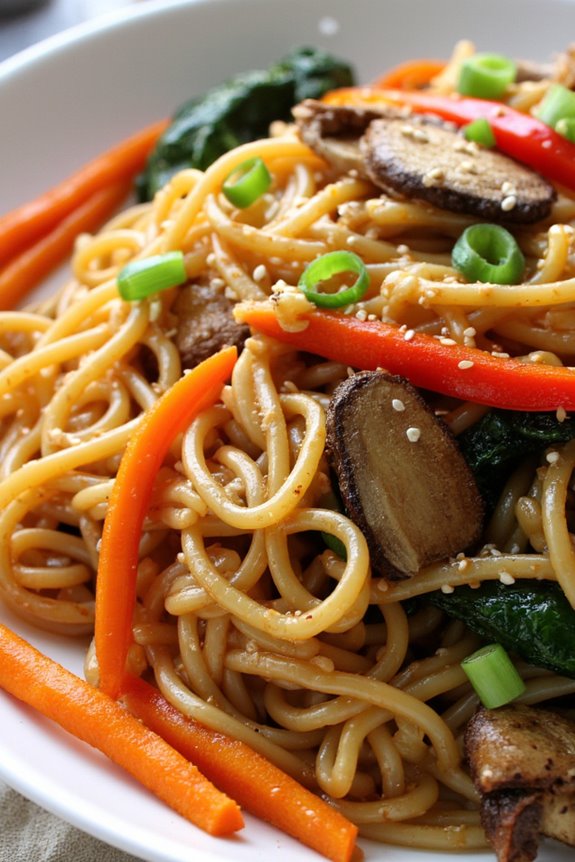
Vegan Japchae is a delightful and colorful Korean dish made with sweet potato noodles, also known as glass noodles. These translucent noodles are gluten-free and have a unique chewy texture that pairs beautifully with a variety of vegetables and a savory sauce. Traditionally, Japchae is served as a side dish or a main course, and it’s enjoyed during special occasions in Korea.
This vegan version maintains all the authentic flavors while being completely plant-based, making it a perfect choice for anyone following a vegan lifestyle or looking to incorporate more plant-based meals into their diet.
The beauty of Vegan Japchae lies not only in its taste but also in its versatility. You can customize the dish with your favorite vegetables, and it can be enjoyed warm or at room temperature. The combination of sautéed vegetables, sweet potato noodles, and a flavorful sauce creates a harmonious balance of flavors that’s sure to impress anyone at your dinner table.
Whether you’re making this dish for a family gathering or simply treating yourself to a hearty meal, Vegan Japchae is a wonderful way to celebrate the vibrant tastes of Korean cuisine.
Ingredients (Serves 4-6):
- 8 oz sweet potato noodles (dangmyeon)
- 1 tablespoon vegetable oil
- 1 medium onion, thinly sliced
- 2 cloves garlic, minced
- 1 medium carrot, julienned
- 1 bell pepper (red or yellow), thinly sliced
- 1 cup spinach, chopped
- 1 cup shiitake mushrooms, sliced (or any preferred mushrooms)
- 3 green onions, chopped
- 3 tablespoons soy sauce (or tamari for gluten-free)
- 2 tablespoons sesame oil
- 1 tablespoon maple syrup (or sugar)
- 1 tablespoon sesame seeds (for garnish)
Cooking Instructions:
- Cook the Noodles: Begin by boiling a pot of water. Once boiling, add the sweet potato noodles and cook according to the package instructions (typically 6-8 minutes) until they’re soft and chewy. Drain and rinse the noodles under cold water to stop the cooking process. Set aside.
- Sauté the Vegetables: In a large skillet or wok, heat the vegetable oil over medium heat. Add the sliced onion and minced garlic, sautéing for about 2-3 minutes until the onion is translucent.
- Add Remaining Vegetables: Incorporate the julienned carrot, bell pepper, and sliced mushrooms into the skillet. Stir-fry for an additional 5-7 minutes, or until the vegetables are tender but still crisp. Add the chopped spinach last and cook for another minute until wilted.
- Combine Noodles and Sauce: Once the vegetables are cooked, add the drained sweet potato noodles to the skillet. In a small bowl, mix together the soy sauce, sesame oil, and maple syrup. Pour this sauce over the noodles and vegetables, tossing everything gently to combine and heat through for about 2-3 minutes.
- Garnish and Serve: Once everything is heated and well mixed, remove the skillet from heat. Sprinkle with chopped green onions and sesame seeds for garnish. Serve warm or at room temperature.
Extra Tips:
For an added depth of flavor, consider marinating the mushrooms in a bit of soy sauce and sesame oil before adding them to the dish.
You can also experiment with other vegetables like zucchini, broccoli, or bok choy to suit your taste. Adjust the level of sweetness or saltiness in the sauce to your preference by modifying the amount of maple syrup and soy sauce.
Finally, if you want a nice crunch, top your Japchae with some toasted peanuts or cashews before serving!
Korean-Inspired Lentil Tacos
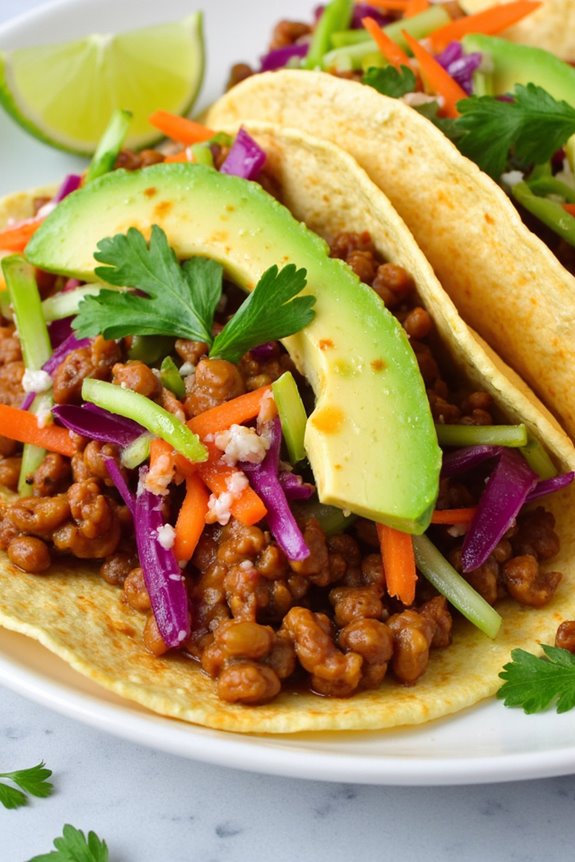
If you’re looking for a delicious and healthy alternative to traditional tacos, these Korean-Inspired Lentil Tacos are a perfect choice. Combining the rich, savory flavors of Korean cuisine with the hearty texture of lentils, this dish isn’t only vegan but also packed with protein and fiber. The lentils are seasoned with classic Korean spices, while fresh toppings provide a crunchy contrast that elevates the dish to new heights.
Whether you’re hosting a casual dinner party or just cooking for yourself, these tacos are sure to impress.
These tacos are easy to prepare and can be ready in about 30 minutes, making them a great option for busy weeknights. They’re customizable, so feel free to add your favorite toppings or adjust the spice levels to suit your taste. Serve them with a side of kimchi or a revitalizing cucumber salad for a complete meal that celebrates the flavors of Korea.
Ingredients (Serves 4-6)
- 1 cup dry green or brown lentils, rinsed and drained
- 2 ½ cups vegetable broth or water
- 1 tablespoon vegetable oil
- 1 small onion, finely chopped
- 3 cloves garlic, minced
- 1 tablespoon fresh ginger, minced
- 2 tablespoons soy sauce
- 1 tablespoon gochujang (Korean red chili paste)
- 1 tablespoon maple syrup
- 1 teaspoon sesame oil
- 1 teaspoon ground black pepper
- 8-10 small corn or flour tortillas
- 1 cup shredded cabbage
- 1 carrot, shredded
- 1 avocado, sliced
- Fresh cilantro, for garnish
- Lime wedges, for serving
Cooking Instructions
- Cook the Lentils: In a medium saucepan, combine the lentils and vegetable broth (or water). Bring to a boil over high heat, then reduce the heat to low, cover, and let simmer for about 20-25 minutes or until the lentils are tender. Avoid overcooking to maintain their texture.
- Sauté the Aromatics: While the lentils are cooking, heat the vegetable oil in a large skillet over medium heat. Add the chopped onion and cook until it becomes translucent, about 5 minutes. Stir in the minced garlic and ginger and sauté for another 1-2 minutes until fragrant.
- Combine Ingredients: Once the lentils are cooked, drain any excess liquid and add them to the skillet with the sautéed onion, garlic, and ginger. Stir in the soy sauce, gochujang, maple syrup, sesame oil, and black pepper. Mix well and cook for about 5-7 minutes, allowing the flavors to meld together.
- Warm the Tortillas: In a separate skillet or on a griddle, warm the tortillas over medium heat for about 30 seconds on each side or until they’re soft and pliable. Keep them warm in a clean kitchen towel to prevent them from drying out.
- Assemble the Tacos: To assemble the tacos, place a generous scoop of the lentil mixture onto each tortilla. Top with shredded cabbage, shredded carrot, and avocado slices. Garnish with fresh cilantro and serve with lime wedges on the side for an extra burst of flavor.
Extra Tips
For added crunch and flavor, consider topping your tacos with some sliced radishes or pickled onions. You can also add a drizzle of sriracha or a sprinkle of sesame seeds for an extra kick.
If you have leftovers, the lentil mixture can be stored in the fridge for up to three days and reheated for a quick meal. Enjoy experimenting with different toppings to make these tacos your own!
Gochujang Roasted Vegetables
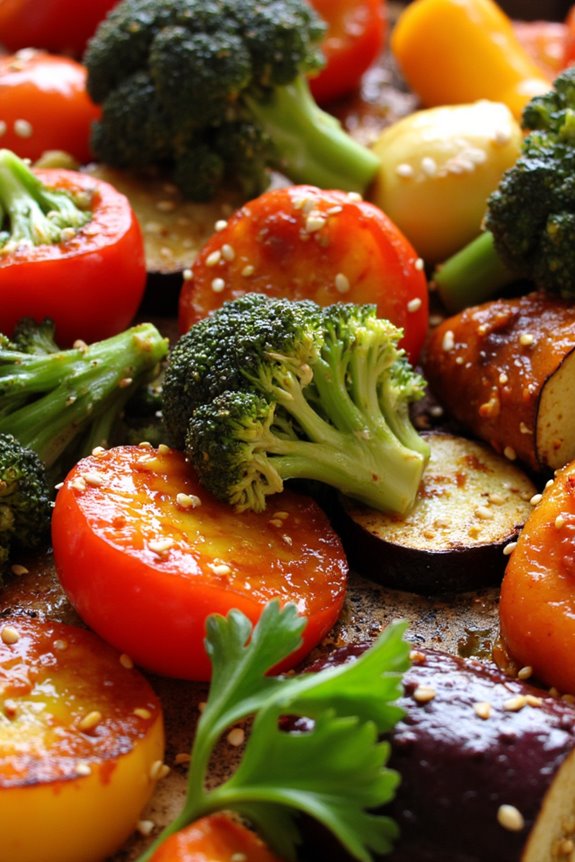
Gochujang Roasted Vegetables are a fantastic way to bring the bold flavors of Korean cuisine into your home while keeping it vegan. This dish takes a variety of seasonal vegetables and elevates them with the spicy, umami-rich flavor of gochujang, a traditional Korean chili paste. The roasting process caramelizes the natural sugars in the vegetables, creating a delightful contrast with the heat and depth of the gochujang.
This recipe isn’t only easy to prepare but also showcases the vibrant colors and textures of the vegetables, making it a visually appealing addition to any meal. Perfect as a side dish or as a main component in a grain bowl, Gochujang Roasted Vegetables are versatile and packed with nutrients.
You can customize the recipe by using your favorite vegetables or whatever you have on hand. Serve these roasted veggies alongside rice or quinoa, or toss them into a salad for an extra kick. Whether you’re hosting a gathering or simply enjoying a weeknight dinner, this dish is sure to impress.
Ingredients (Serves 4-6)
- 2 cups broccoli florets
- 2 cups bell peppers (mixed colors), sliced
- 2 cups zucchini, sliced
- 1 cup red onion, sliced
- 3 tablespoons gochujang
- 2 tablespoons olive oil
- 1 tablespoon maple syrup (optional for sweetness)
- 2 cloves garlic, minced
- 1 tablespoon sesame oil
- 1 teaspoon soy sauce or tamari
- 1 tablespoon sesame seeds (for garnish)
- Salt and pepper to taste
- Fresh cilantro or green onions (for garnish)
Cooking Instructions
- Preheat the Oven: Begin by preheating your oven to 425°F (220°C). This high temperature is essential for roasting the vegetables, as it allows them to caramelize effectively, enhancing their natural sweetness and flavor.
- Prepare the Vegetables: While the oven is preheating, wash and chop all the vegetables into bite-sized pieces. Uniform sizes help guarantee even cooking. Place the chopped vegetables in a large mixing bowl.
- Make the Gochujang Sauce: In a separate small bowl, combine gochujang, olive oil, maple syrup (if using), minced garlic, sesame oil, and soy sauce. Mix well until the ingredients are fully blended into a smooth sauce.
- Combine Vegetables and Sauce: Pour the gochujang sauce over the chopped vegetables in the mixing bowl. Toss everything together until the vegetables are evenly coated with the sauce. Make sure every piece is well-dressed with the flavorful mixture.
- Roast the Vegetables: Spread the coated vegetables in a single layer on a large baking sheet lined with parchment paper. This helps prevent sticking and makes for easy cleanup. Roast in the preheated oven for about 20-25 minutes, or until the vegetables are tender and slightly charred, stirring halfway through to guarantee even cooking.
- Garnish and Serve: Once done, remove the vegetables from the oven. Transfer them to a serving dish and sprinkle with sesame seeds and fresh cilantro or chopped green onions for garnish. Serve warm as a side dish or as part of a main meal.
Extra Tips
When making Gochujang Roasted Vegetables, feel free to mix and match vegetables based on what’s in season or what you have available. Root vegetables like carrots and sweet potatoes also work beautifully in this recipe.
Additionally, if you prefer a milder flavor, adjust the amount of gochujang to your taste. For a little extra crunch, consider adding some chopped nuts or seeds before serving. Enjoy your delicious and colorful vegan dish!
Vegan Kimbap (Korean Sushi Rolls)
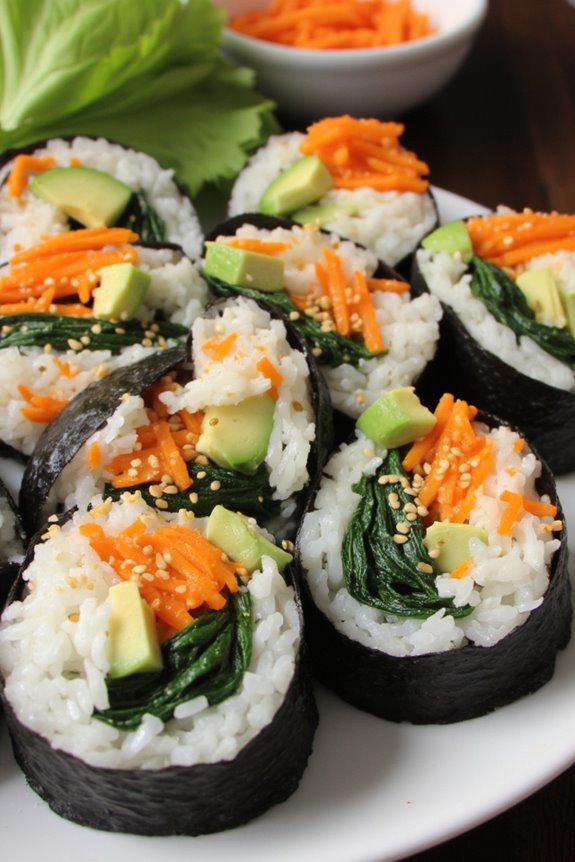
Kimbap, often referred to as Korean sushi, is a delightful dish that combines seasoned rice with a variety of colorful vegetables rolled into sheets of seaweed. Traditionally made with meat and pickled ingredients, this vegan version substitutes those components with fresh vegetables and plant-based ingredients, making it not only healthier but also suitable for those following a vegan lifestyle.
The versatility of kimbap allows you to customize the fillings according to your taste preferences, and it’s a perfect option for a picnic, lunchbox, or even as a snack.
Making vegan kimbap is an enjoyable process that involves preparing the rice and selecting your favorite vegetables to create a vibrant and nutritious meal. The key to flawless kimbap lies in the texture of the rice, which should be sticky enough to hold the rolls together but light enough to guarantee each bite is enjoyable.
Whether you’re a seasoned cook or trying your hand at vegan cuisine for the first time, this recipe will guide you through the steps to create delicious vegan kimbap that everyone will love.
Ingredients (Serves 4-6 people):
- 2 cups short-grain sushi rice
- 2 1/2 cups water
- 4 tablespoons rice vinegar
- 2 tablespoons sugar
- 1 teaspoon salt
- 5 sheets of nori (seaweed)
- 1 medium carrot, julienned
- 1 cucumber, julienned
- 1 small zucchini, julienned
- 1 cup spinach, blanched
- 1/2 cup pickled radish (danmuji), cut into strips
- 1 avocado, sliced
- Sesame seeds for garnish
- Soy sauce for serving
Cooking Instructions:
1. Prepare the Rice: Rinse the sushi rice under cold water until the water runs clear. This removes excess starch and prevents the rice from becoming too sticky. Drain well.
In a medium saucepan, combine the rinsed rice and water, then bring to a boil. Once boiling, reduce the heat to low, cover the pot, and let it simmer for about 18-20 minutes or until the rice is tender and all the water has been absorbed. Remove from heat and let it sit covered for 10 minutes.
2. Season the Rice: In a small bowl, mix the rice vinegar, sugar, and salt until dissolved. Once the rice has rested, transfer it to a large bowl and gently fold in the vinegar mixture. Be careful not to mash the rice. Allow the seasoned rice to cool to room temperature.
3. Prepare the Vegetables: While the rice is cooling, Prepare the Vegetables. Julienne the carrot, cucumber, and zucchini. Blanch the spinach in boiling water for about 30 seconds, then immediately transfer it to an ice bath to stop the cooking process. Drain and squeeze out excess water from the spinach.
4. Assemble the Kimbap: Place a bamboo sushi mat on a flat surface and lay one sheet of nori, shiny side down, on the mat. With wet hands, take about a cup of the seasoned rice and spread it evenly over the nori, leaving a 1-inch border at the top. Layer the julienned vegetables, spinach, pickled radish, and avocado across the rice.
5. Roll the Kimbap: Starting from the bottom, lift the bamboo mat and begin to roll the kimbap away from you, pressing gently but firmly to keep the ingredients tight. Roll until you reach the top border of the nori. Moisten the edge of the nori with a little water to seal the roll.
Use the bamboo mat to shape the roll, pressing gently to make sure it holds together.
6. Cut and Serve: Using a sharp knife, slice the rolled kimbap into 1-inch pieces. Wipe the knife with a damp cloth between cuts to keep the edges clean. Arrange the kimbap pieces on a serving platter, sprinkle with sesame seeds, and serve with soy sauce for dipping.
Extra Tips:
For an added layer of flavor, consider toasting the nori sheets briefly over an open flame or in a dry pan before assembling your kimbap. This enhances their taste and makes them more aromatic.
You can also experiment with different fillings such as bell peppers, mushrooms, or even marinated tofu for a protein boost. Kimbap can be made ahead of time and stored in the refrigerator, but it’s best enjoyed fresh for best texture and flavor.
Kimchi Fried Rice

Kimchi Fried Rice, or Kimchi Bokkeumbap, is a beloved dish in Korean cuisine that elevates simple ingredients into a hearty and flavorful meal. This dish combines the tangy and spicy notes of kimchi with the comforting texture of stir-fried rice. It’s a versatile recipe that allows you to use leftover rice and any vegetables you have on hand, making it a practical choice for busy weeknights. Not only is it quick to prepare, but it also packs a punch of flavor and nutrition, especially when made with fresh, vibrant vegetables and high-quality kimchi.
In this vegan version, we’ll keep all the deliciousness while ensuring that it caters to a plant-based diet. The combination of sesame oil, soy sauce, and a touch of gochujang (Korean chili paste) creates a savory harmony that perfectly complements the kimchi. You can customize the dish by adding your favorite vegetables or proteins, making it a great option for both meal prep and entertaining. Let’s plunge into this easy and satisfying recipe for Kimchi Fried Rice.
Ingredients (Serves 4-6):
- 4 cups cooked rice (preferably day-old)
- 1 cup kimchi, chopped
- 1 medium onion, diced
- 2 cloves garlic, minced
- 1 cup mixed vegetables (such as carrots, peas, and bell peppers)
- 2 tablespoons sesame oil
- 2 tablespoons soy sauce (or tamari for gluten-free)
- 1-2 teaspoons gochujang (Korean chili paste, adjust to taste)
- 2 green onions, sliced
- Sesame seeds for garnish
- Optional: Tofu or any plant-based protein (cubed)
Cooking Instructions:
- Prepare the Ingredients: Start by gathering all your ingredients. If using day-old rice, make sure it’s separated and not clumped together. Chop the kimchi, onion, and any vegetables you’re including. If you’re using tofu or another protein, cube it for easy mixing.
- Heat the Oil: In a large skillet or wok, heat the sesame oil over medium-high heat. The oil not only adds flavor but also helps to fry the rice, giving it a slightly crispy texture.
- Sauté the Aromatics: Add the diced onion and minced garlic to the skillet. Sauté for about 2-3 minutes, or until the onion becomes translucent and fragrant. This step builds a flavorful base for your fried rice.
- Add Vegetables: Toss in the mixed vegetables and cook for another 3-4 minutes, stirring frequently. If you’re using tofu, add it at this stage to allow it to brown slightly and absorb the flavors.
- Incorporate Kimchi: Add the chopped kimchi to the skillet, stirring well to combine all the ingredients. Let it cook for about 2-3 minutes, allowing the kimchi to heat through and release its flavors.
- Combine Rice: Next, add the cooked rice to the skillet, breaking up any clumps. Drizzle the soy sauce and gochujang over the rice, and stir everything together until the rice is evenly coated and heated through. This should take about 5 minutes.
- Finish with Green Onions: Once everything is well combined, stir in the sliced green onions, reserving a few for garnish. Taste and adjust seasoning if necessary, adding more soy sauce or gochujang as desired.
- Serve and Garnish: Remove the skillet from heat and serve the Kimchi Fried Rice hot. Top with sesame seeds and the reserved green onions for a lovely presentation.
Extra Tips:
For an even more authentic taste, use Korean short-grain rice if you can find it, as it has the perfect sticky texture for fried rice. If you enjoy a spicier kick, feel free to add more gochujang or even a sprinkle of red pepper flakes.
Leftover kimchi can vary in flavor and spice level, so taste it before adding to the dish to gauge how much you want to include. Finally, this dish is perfect for meal prep and can be easily reheated for lunch or dinner throughout the week!
Spicy Tofu Stir-Fry
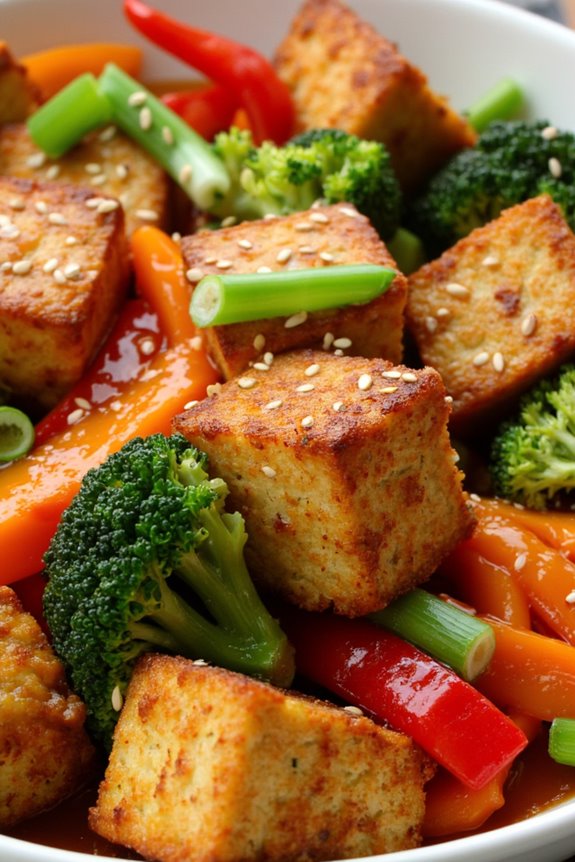
Spicy Tofu Stir-Fry is a vibrant and flavorful dish that embodies the essence of Korean cuisine while keeping it entirely plant-based. This dish is perfect for those who crave a little heat and a lot of flavor. The combination of crispy tofu, fresh vegetables, and a spicy sauce creates a harmonious blend of taste and texture that will leave your taste buds dancing.
Additionally, it’s a quick and easy meal that can be made in under 30 minutes, making it perfect for busy weeknights or a satisfying weekend dinner.
The beauty of this recipe lies in its versatility. You can swap out the vegetables based on what you have on hand or what’s in season. The tofu can be marinated beforehand to enhance its flavor even further. With the right balance of spices and textures, this dish won’t only satisfy your hunger but also impress anyone you serve it to, whether they’re vegan or not.
Ingredients (Serves 4-6):
- 14 oz (400g) firm tofu, drained and pressed
- 2 tablespoons cornstarch
- 2 tablespoons vegetable oil
- 1 bell pepper, sliced
- 1 cup broccoli florets
- 1 carrot, julienned
- 4 green onions, chopped
- 3 cloves garlic, minced
- 1 tablespoon ginger, minced
- 3 tablespoons soy sauce
- 2 tablespoons gochujang (Korean red chili paste)
- 1 tablespoon maple syrup
- 1 teaspoon sesame oil
- Sesame seeds, for garnish
Instructions:
- Prepare the Tofu: Start by draining and pressing the tofu to remove excess moisture. This will help the tofu achieve a crispy texture when cooked. Cut the tofu into bite-sized cubes and toss them in a bowl with cornstarch until they’re evenly coated. This will create a crispy outer layer.
- Heat the Oil: In a large skillet or wok, heat the vegetable oil over medium-high heat. Once the oil is hot, add the coated tofu cubes in a single layer. Cook for about 4-5 minutes on each side until golden brown and crispy. Be careful not to overcrowd the pan; you may need to do this in batches.
- Add the Vegetables: Once the tofu is crispy, remove it from the skillet and set aside. In the same skillet, add the sliced bell pepper, broccoli florets, and julienned carrot. Stir-fry the vegetables for about 3-4 minutes until they’re vibrant and slightly tender.
- Incorporate Aromatics: Add the minced garlic and ginger to the vegetables, stirring constantly for about 1 minute until fragrant. This will infuse the dish with a delicious aroma and flavor.
- Make the Sauce: In a small bowl, mix together the soy sauce, gochujang, maple syrup, and sesame oil. Pour this sauce over the vegetables in the skillet and stir to combine. Let it simmer for about 2 minutes to allow the flavors to meld.
- Combine Tofu and Serve: Return the crispy tofu to the skillet, gently tossing it with the vegetables and sauce until everything is well-coated and heated through. Remove from heat, and garnish with chopped green onions and sesame seeds before serving.
Extra Tips:
For an extra layer of flavor, consider marinating the tofu in a mixture of soy sauce, garlic, and ginger for at least 30 minutes before cooking. This will enhance the tofu’s taste and make it even more delicious.
Additionally, you can adjust the level of spiciness by adding more or less gochujang according to your preference. Serve the Spicy Tofu Stir-Fry over steamed rice or noodles for a complete meal that’s both satisfying and wholesome.
Vegan Samgyeopsal (Grilled “Pork” Belly)
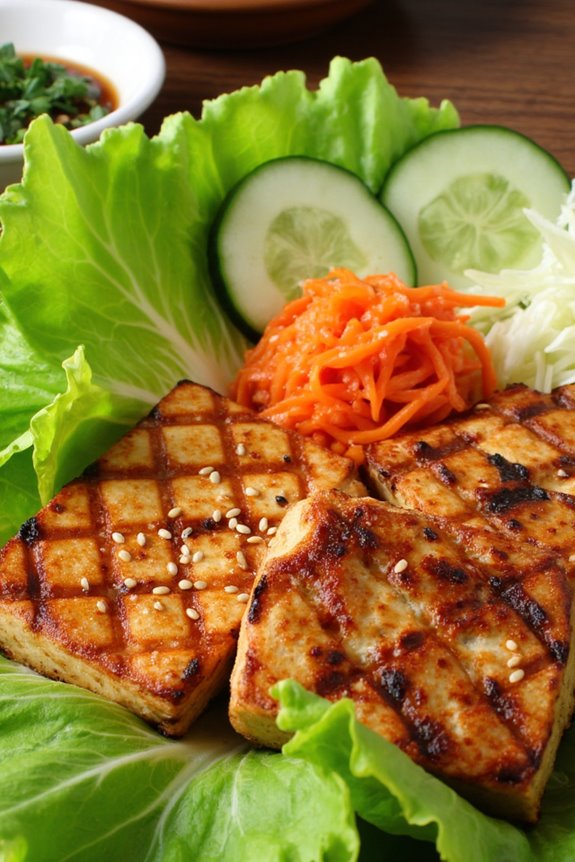
Vegan Samgyeopsal is a delicious alternative to the traditional Korean grilled pork belly, allowing you to enjoy the flavors and experience of this beloved dish without any animal products. This plant-based version uses marinated tofu or seitan to mimic the texture and taste of pork, making it an excellent choice for vegans and those looking to reduce their meat intake.
Paired with fresh vegetables, flavorful dipping sauces, and wrapped in crisp lettuce leaves, this dish is perfect for gatherings and a fun way to share a meal.
To create an authentic experience, we’ll use a combination of savory marinades and seasonings that infuse the tofu or seitan with rich flavors. The preparation includes grilling the marinated protein until crispy, serving it with traditional Korean sides, and enjoying it in a wrap-style format.
This Vegan Samgyeopsal won’t only satisfy your taste buds but also impress your guests with its vibrant presentation and delightful taste.
Ingredients (serves 4-6):
- 2 blocks of firm tofu or 1 pound of seitan
- ¼ cup soy sauce
- 2 tablespoons sesame oil
- 2 tablespoons gochujang (Korean red chili paste)
- 1 tablespoon maple syrup or agave nectar
- 3 cloves garlic, minced
- 1 tablespoon ginger, minced
- 1 tablespoon rice vinegar
- 1 tablespoon toasted sesame seeds
- 1 tablespoon vegetable oil (for grilling)
- 1 head of lettuce (for wraps, such as romaine or butter lettuce)
- 1 cup sliced cucumbers
- 1 cup shredded carrots
- 1 cup kimchi (optional)
- ½ cup sliced green onions (for garnish)
- Dipping sauce (optional, such as ssamjang or spicy soy sauce)
Cooking Instructions:
- Prepare the Tofu/Seitan: If using tofu, press the blocks gently between paper towels or a clean kitchen towel to remove excess moisture. Slice the tofu into thick strips (about 1/2 inch). If using seitan, slice it into similar-sized strips. This will help the marinade adhere better and improve the texture during grilling.
- Make the Marinade: In a mixing bowl, combine the soy sauce, sesame oil, gochujang, maple syrup, minced garlic, minced ginger, rice vinegar, and toasted sesame seeds. Whisk the ingredients together until well blended. This marinade will impart a rich, savory flavor to the tofu or seitan.
- Marinate the Protein: Place the sliced tofu or seitan into a shallow dish and pour the marinade over it. Ascertain that all pieces are well-coated. Cover the dish and let it marinate in the refrigerator for at least 30 minutes, or ideally, for a few hours to allow the flavors to deeply penetrate.
- Preheat the Grill: Heat a grill pan or outdoor grill over medium-high heat. Once hot, brush it lightly with vegetable oil to prevent sticking. This will create a nice sear on the protein.
- Grill the Tofu/Seitan: Remove the marinated tofu or seitan from the marinade, allowing any excess to drip off. Place the pieces on the hot grill. Grill for about 4-5 minutes on each side or until golden brown and crispy. If using tofu, be gentle when flipping to avoid breakage.
- Prepare the Wraps: While the protein is grilling, prep the lettuce leaves, sliced cucumbers, shredded carrots, and kimchi on a large platter. This will allow everyone to build their own wraps easily.
- Serve and Enjoy: Once the tofu or seitan is grilled to perfection, remove it from the grill and arrange it on the platter alongside the vegetables. Serve with dipping sauce on the side for added flavor and let everyone assemble their own wraps using lettuce leaves filled with grilled protein and fresh veggies.
Extra Tips:
When making Vegan Samgyeopsal, feel free to experiment with additional toppings and sides, such as avocado slices, pickled vegetables, or even vegan cheese for added richness.
Also, consider varying the level of spiciness by adjusting the amount of gochujang in the marinade to suit your taste preferences. Finally, grilling over an open flame can enhance the smoky flavor of the dish, so if you have access to a charcoal grill, it’s worth a try for a more authentic experience!
Korean Sweet Potato Soup
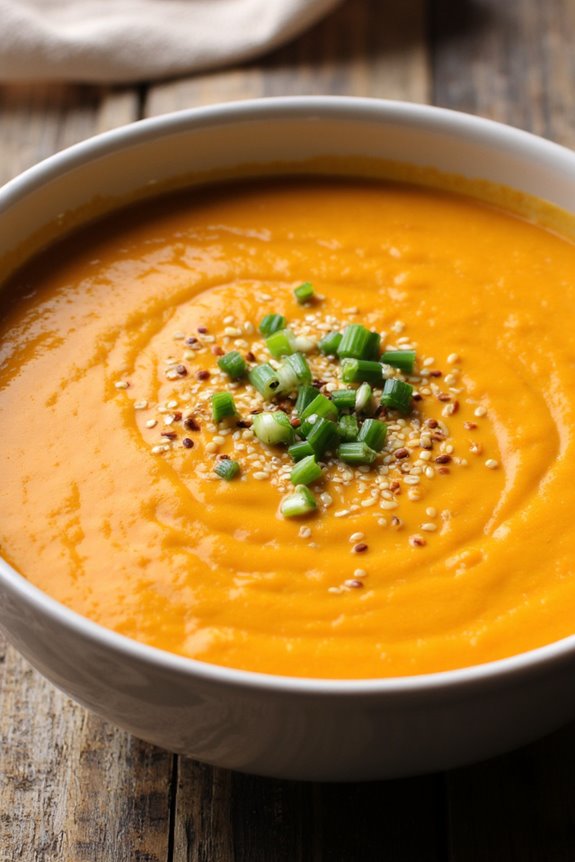
Korean Sweet Potato Soup, known as “Goguma Juk,” is a delightful and comforting dish that highlights the natural sweetness of Korean sweet potatoes. This creamy soup is often enjoyed during the colder months, making it a perfect choice for a cozy meal. The combination of sweet potatoes with a few simple ingredients creates a velvety texture that’s both satisfying and nourishing.
With its rich flavor and hearty consistency, it serves as a wonderful introduction to Korean cuisine, especially for those following a vegan diet. Making Korean Sweet Potato Soup isn’t only easy but also quick, allowing you to prepare a wholesome meal in no time.
This recipe harnesses the unique flavors of sweet potatoes, complemented by a hint of ginger and a touch of garlic, resulting in a soothing soup that can be enjoyed on its own or served as a side dish. Whether you’re familiar with Korean cooking or trying it for the first time, this vegan recipe is sure to please anyone at the table.
Ingredients (Serves 4-6):
- 4 medium Korean sweet potatoes, peeled and diced
- 1 medium onion, chopped
- 3 cloves garlic, minced
- 1 tablespoon ginger, grated
- 4 cups vegetable broth
- 1 tablespoon soy sauce
- 1 tablespoon sesame oil
- 1 tablespoon maple syrup (optional, for extra sweetness)
- Salt and pepper to taste
- Chopped green onions and sesame seeds for garnish
Cooking Instructions:
- Prepare the Ingredients: Start by peeling and dicing the Korean sweet potatoes into small, even pieces. This will guarantee they cook evenly and blend smoothly later on. Also, chop the onion, mince the garlic, and grate the ginger, setting them aside for later use.
- Sauté Aromatics: In a large pot, heat the sesame oil over medium heat. Once hot, add the chopped onion and sauté for about 5 minutes, or until it becomes translucent. Then, add the minced garlic and grated ginger, stirring for another minute until fragrant. This step will build a flavorful base for your soup.
- Cook Sweet Potatoes: Add the diced sweet potatoes to the pot, stirring them to coat with the aromatic mixture. Cook for about 3-4 minutes, allowing the sweet potatoes to slightly soften and absorb the flavors.
- Add Broth and Seasoning: Pour in the vegetable broth and add the soy sauce. Bring the mixture to a boil, then reduce the heat to a simmer. Allow it to cook uncovered for about 15-20 minutes, or until the sweet potatoes are tender and easily pierced with a fork.
- Blend the Soup: Once the sweet potatoes are cooked, using an immersion blender, carefully blend the soup until smooth and creamy. If you don’t have an immersion blender, transfer the soup in batches to a countertop blender. Be cautious with hot liquids to avoid splatters.
- Taste and Adjust: After blending, taste the soup and adjust the seasoning with salt, pepper, and maple syrup if you desire a sweeter flavor. Allow it to simmer for an additional 5 minutes to meld the flavors together.
- Serve and Garnish: Ladle the soup into bowls and garnish with chopped green onions and a sprinkle of sesame seeds for added texture and flavor. Serve hot and enjoy!
Extra Tips:
For an extra layer of flavor, consider adding a splash of plant-based milk or coconut milk when blending for a creamier texture. You can also experiment with toppings like sliced chili peppers for a bit of heat or roasted nuts for crunch.
If you want to thicken the soup, you can reduce the amount of vegetable broth. Storing leftovers in an airtight container in the fridge will keep the soup fresh for up to 3 days, making it a great meal prep option!
Vegan Bulgogi With Mushrooms
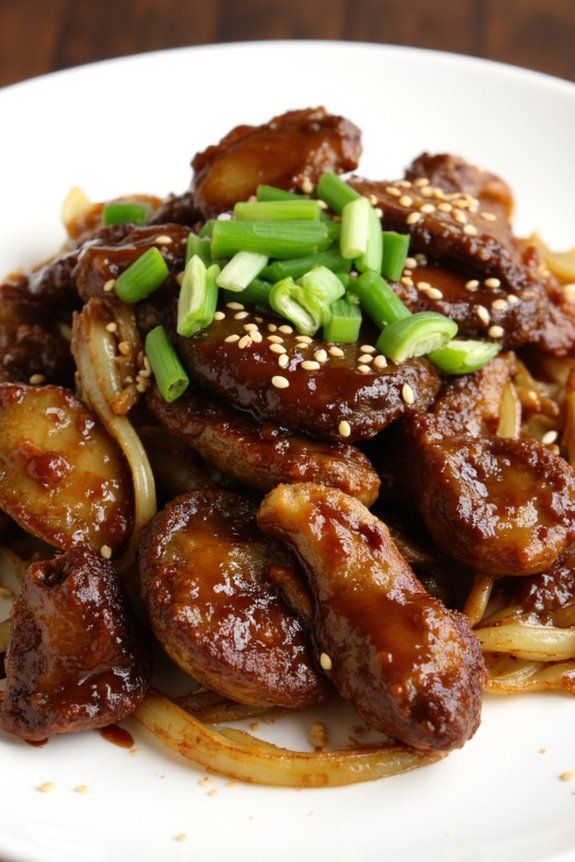
Vegan Bulgogi is a delightful plant-based twist on the traditional Korean barbecue dish, often made with marinated beef. This version incorporates the rich umami flavors of mushrooms, which not only mimic the texture of meat but also absorb the savory marinade beautifully. The dish is bursting with flavor and pairs wonderfully with steamed rice, fresh vegetables, and a side of kimchi, making it an excellent option for family dinners or gatherings.
The marinade is the heart of this Vegan Bulgogi, combining soy sauce, sesame oil, garlic, and ginger to create a depth of flavor that will satisfy even the most dedicated meat lovers. By using a mix of different mushrooms like shiitake and portobello, you can achieve a variety of textures that elevate the dish even further. Whether you’re preparing it for a special occasion or a quick weeknight meal, Vegan Bulgogi With Mushrooms is sure to impress.
Ingredients (Serves 4-6)
- 1 cup shiitake mushrooms, sliced
- 1 cup portobello mushrooms, sliced
- 1 cup button mushrooms, sliced
- 1 medium onion, thinly sliced
- 3 cloves garlic, minced
- 1 tablespoon ginger, grated
- 1/4 cup soy sauce (or tamari for gluten-free)
- 2 tablespoons sesame oil
- 1 tablespoon brown sugar
- 1 tablespoon rice vinegar
- 1 teaspoon black pepper
- 2 tablespoons green onions, chopped (for garnish)
- Sesame seeds (for garnish)
- Cooked rice (for serving)
Cooking Instructions
- Prepare the Mushrooms: Clean the mushrooms with a damp cloth and slice them into thin pieces. This allows them to cook evenly and absorb the marinade well. You can mix different types of mushrooms to add depth to the dish.
- Make the Marinade: In a large bowl, whisk together the soy sauce, sesame oil, brown sugar, rice vinegar, minced garlic, grated ginger, and black pepper. This marinade will infuse the mushrooms with delicious flavors.
- Marinate the Mushrooms: Add the sliced mushrooms and onions to the bowl with the marinade. Toss everything together until the mushrooms are well-coated. Cover the bowl and let it marinate for at least 30 minutes. For the best flavor, consider marinating it for a few hours or overnight in the refrigerator.
- Cook the Mushrooms: Heat a large skillet or wok over medium-high heat. Once hot, add the marinated mushrooms and onions to the pan. Stir-fry for about 5-7 minutes, until the mushrooms are tender and the marinade has thickened slightly. Make sure to stir frequently to ascertain even cooking.
- Serve: Once cooked, remove the skillet from heat. Serve the Vegan Bulgogi hot over a bed of rice. Garnish with chopped green onions and sesame seeds for an extra touch of flavor and presentation.
Extra Tips
When preparing Vegan Bulgogi, feel free to customize the dish by adding in your favorite vegetables, such as bell peppers, carrots, or zucchini, for added color and nutrition.
You can also adjust the level of sweetness or saltiness in the marinade to suit your taste preferences. For a complete meal, serve it alongside a side of kimchi or pickled vegetables, which will complement the flavors beautifully.
Enjoy your culinary adventure into the world of vegan Korean cuisine!
Refreshing Korean Cucumber Salad
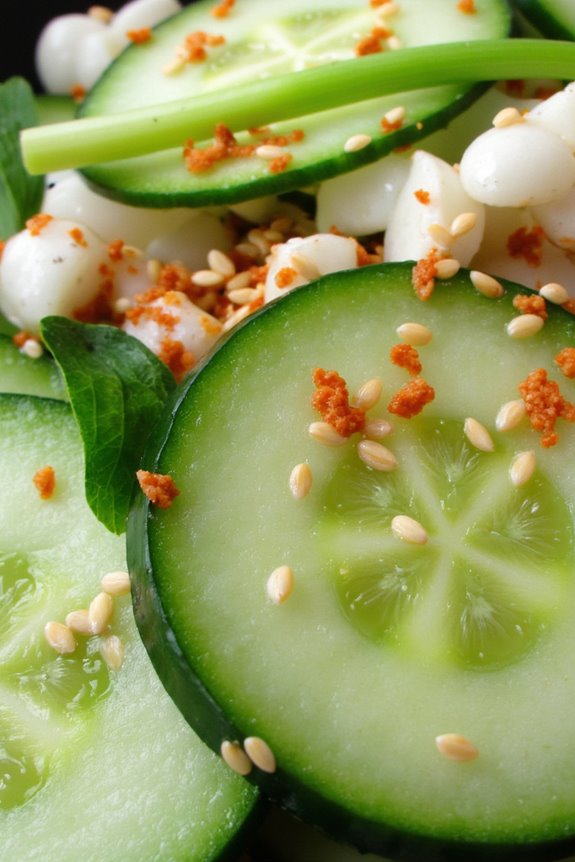
Revitalizing Korean Cucumber Salad, also known as Oi Muchim, is a delightful and vibrant dish that brings a taste of Korea to your table. This salad isn’t only easy to make but also incredibly invigorating, making it a perfect accompaniment to any meal. The cucumbers are typically tossed in a flavorful dressing that combines sweet, salty, and spicy elements, enhancing their natural crunch and freshness.
This dish is a staple in Korean cuisine, especially during the hot summer months, and can be enjoyed as a side dish or a light main course. The beauty of this salad lies in its simplicity and the use of fresh, vibrant ingredients. With just a few key components, you can create a dish that bursts with flavor and pairs well with rice, grilled vegetables, or even your favorite vegan protein.
Whether you’re hosting a gathering or simply looking for a quick and healthy side, this Revitalizing Korean Cucumber Salad is sure to impress your taste buds and leave you feeling satisfied.
Ingredients (Serves 4-6):
- 4 medium cucumbers
- 1 tablespoon salt
- 2 tablespoons rice vinegar
- 1 tablespoon soy sauce (or tamari for gluten-free)
- 1 tablespoon sesame oil
- 1 tablespoon sugar (or maple syrup)
- 2 cloves garlic, minced
- 1 teaspoon gochugaru (Korean red pepper flakes)
- 2 green onions, thinly sliced
- 1 tablespoon sesame seeds (for garnish)
Cooking Instructions:
- Prepare the Cucumbers: Wash the cucumbers thoroughly and cut them into thin slices. You can either slice them into rounds or half-moons depending on your preference. Place the sliced cucumbers into a large bowl.
- Salt the Cucumbers: Sprinkle the salt over the cucumbers and toss them well to guarantee they’re evenly coated. Let the cucumbers sit for about 15-20 minutes. This process helps draw out excess water from the cucumbers, making them crunchier and allowing them to absorb the dressing better.
- Make the Dressing: In a separate bowl, whisk together the rice vinegar, soy sauce, sesame oil, sugar, minced garlic, and gochugaru. Taste and adjust the flavors according to your preference; you may want it sweeter or spicier.
- Drain the Cucumbers: After the cucumbers have rested, drain any excess liquid that has accumulated in the bowl. You can gently squeeze the cucumbers to remove extra moisture.
- Combine the Ingredients: Pour the dressing over the drained cucumbers and add the sliced green onions. Toss everything together gently until the cucumbers are well coated with the dressing.
- Garnish and Serve: Transfer the salad to a serving dish, sprinkle sesame seeds on top, and serve immediately. If you prefer, you can also chill the salad in the refrigerator for about 30 minutes before serving to enhance its invigorating quality.
Extra Tips:
For an extra layer of flavor, consider adding other vegetables such as shredded carrots or thinly sliced bell peppers to the salad. You can also adjust the level of spice by adding more or less gochugaru to suit your taste.
This salad is best enjoyed fresh, but it can be stored in an airtight container in the refrigerator for up to 2 days for a quick snack or side dish.
