

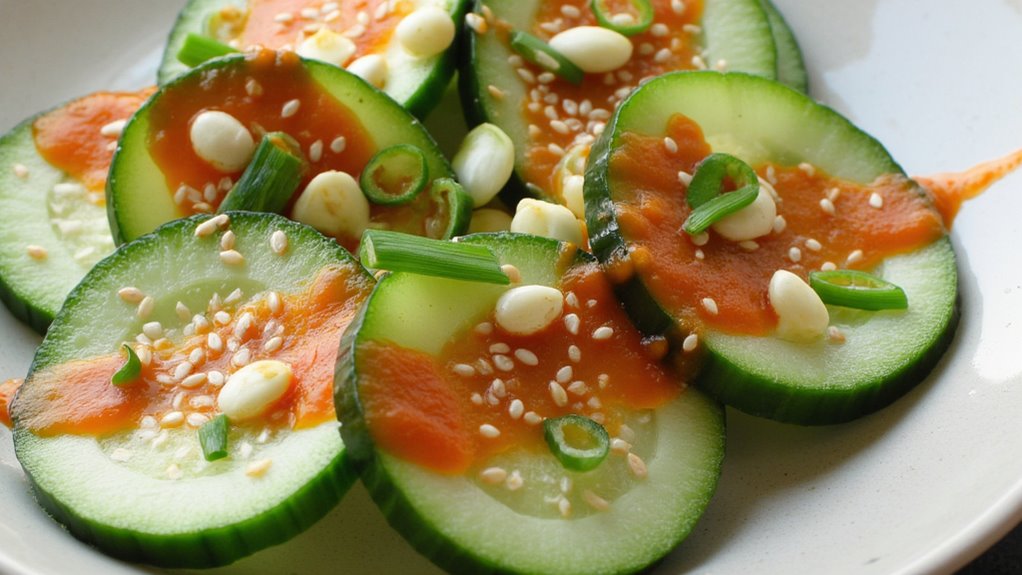
When it comes to hosting a gathering, having a repertoire of quick and flavorful appetizers is a must. Korean cuisine offers a variety of simple starters that pack a punch. From the tangy crunch of kimchi to the crispy goodness of Korean fried chicken wings, these dishes are perfect for elevating your spread. I’ve curated 10 delightful recipes that are not only easy to make but also bring their own unique flair. Let’s explore these culinary gems together, starting with a classic that always wins hearts.
Kimchi
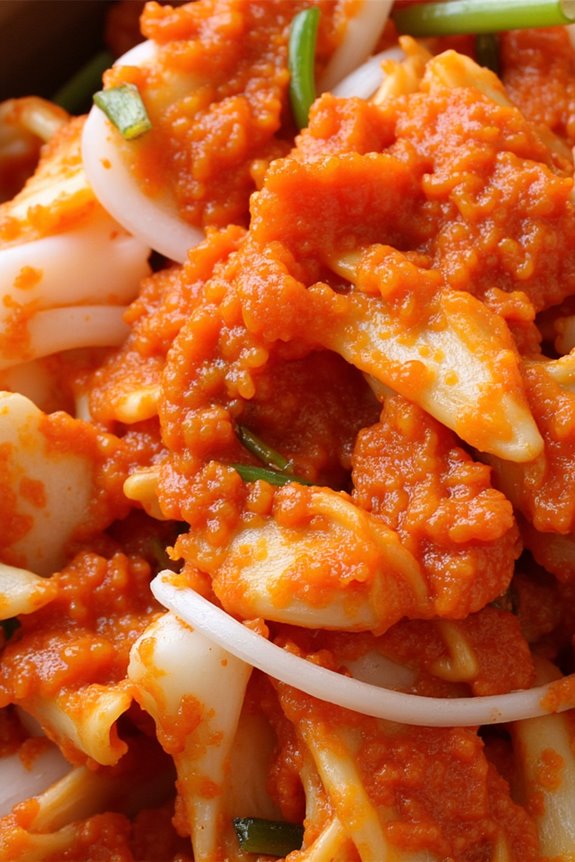
Kimchi is a traditional Korean side dish made from fermented vegetables, primarily napa cabbage and Korean radishes, seasoned with a variety of spices. This iconic dish isn’t only a staple in Korean cuisine but also boasts numerous health benefits, including being rich in probiotics, vitamins, and minerals.
The fermentation process contributes to its unique tangy flavor and aroma, making it a delightful accompaniment to many meals. Making kimchi at home allows you to customize the flavors and adjust the spice levels to suit your taste preferences.
Preparing kimchi might seem intimidating, but it’s a straightforward process that rewards you with a delicious and healthy side dish. The key to excellent kimchi lies in the balance of spices and fermentation time. While the ingredients are simple, the resulting flavors are complex and dynamic.
Once you’ve perfected your kimchi recipe, you can enjoy it on its own, as part of a Korean BBQ spread, or incorporated into various dishes like fried rice or stews.
Ingredients (serving size: 4-6 people)
- 1 medium napa cabbage (about 2-3 pounds)
- 1/2 cup sea salt
- 4 cups water
- 1 cup Korean radish (mu), julienned
- 4 green onions, chopped
- 5 cloves garlic, minced
- 1 tablespoon ginger, minced
- 1 tablespoon sugar
- 2-3 tablespoons Korean red pepper flakes (gochugaru) (adjust to taste)
- 2 tablespoons fish sauce (or soy sauce for a vegetarian option)
Cooking Instructions
- Prepare the Cabbage: Cut the napa cabbage lengthwise into quarters, then chop it into bite-sized pieces. In a large bowl, dissolve sea salt in water and submerge the cabbage pieces in the salted water. Place a plate on top to keep the cabbage submerged. Let it soak for 1-2 hours, turning occasionally to guarantee even salting.
- Rinse and Drain: After the soaking time, rinse the cabbage thoroughly under cold running water to remove excess salt. Drain well in a colander and let it sit for about 30 minutes to remove any excess water.
- Make the Kimchi Paste: In a mixing bowl, combine the minced garlic, ginger, sugar, fish sauce, and Korean red pepper flakes. Stir until you have a smooth paste. Adjust the amount of gochugaru according to your heat preference.
- Combine Ingredients: In a large mixing bowl, combine the drained cabbage, julienned radish, and chopped green onions. Add the kimchi paste to the vegetables and mix well using your hands (you may want to wear gloves to protect your skin from the spice). Confirm all the vegetables are evenly coated with the paste.
- Pack the Kimchi: Transfer the kimchi mixture into a clean, airtight jar or container, pressing it down firmly to remove any air pockets and to pack it tightly. Leave some space at the top, as the kimchi will expand as it ferments.
- Ferment the Kimchi: Seal the jar and leave it at room temperature for 1-2 days to ferment. Check it daily and taste it to see if it has reached your desired level of tanginess. Once fermented to your liking, transfer the kimchi to the refrigerator, where it will continue to ferment slowly.
Extra Tips
When making kimchi, feel free to experiment with additional ingredients such as carrots, garlic chives, or even fruits like pear for added sweetness.
The fermentation time can vary depending on the temperature of your kitchen, so be sure to taste it periodically. If you prefer a milder flavor, consider reducing the fermentation time or using less gochugaru.
Kimchi can be stored in the refrigerator for several weeks, and its flavors will develop further over time.
Korean Fried Chicken Wings

Korean Fried Chicken Wings, known for their crispy texture and flavorful glaze, are a popular appetizer that can be found in many Korean restaurants. The secret to their deliciousness lies in the double frying technique, which results in perfectly crunchy skin while keeping the meat tender and juicy inside.
These wings can be tossed in a variety of sauces, but the classic go-to is a sweet and spicy gochujang sauce that elevates their umami flavor profile. This dish is perfect for sharing with friends and family during gatherings or game nights.
Whether you’re hosting a party or simply craving a tasty snack, these Korean Fried Chicken Wings are bound to impress. The combination of the crispy wings and the sticky glaze creates a delightful experience that will have everyone reaching for more. Not only are they delicious, but they’re also relatively simple to make at home, allowing you to enjoy authentic Korean flavors without stepping out of your kitchen.
Ingredients (Serves 4-6)
- 2 pounds chicken wings
- 1 cup all-purpose flour
- 1/2 cup cornstarch
- 1 teaspoon garlic powder
- 1 teaspoon onion powder
- 1 teaspoon salt
- 1/2 teaspoon black pepper
- 1/2 teaspoon baking powder
- Vegetable oil (for frying)
- 1/2 cup gochujang (Korean red chili paste)
- 1/4 cup honey
- 2 tablespoons soy sauce
- 2 tablespoons rice vinegar
- 1 tablespoon sesame oil
- 1 tablespoon minced garlic
- Sesame seeds (for garnish)
- Chopped green onions (for garnish)
Cooking Instructions
- Prepare the Chicken Wings: Start by rinsing the chicken wings under cold water and patting them dry with paper towels. This step is crucial as it removes any excess moisture, which helps in achieving a crispy texture when frying.
- Make the Dry Coating: In a large mixing bowl, combine the all-purpose flour, cornstarch, garlic powder, onion powder, salt, black pepper, and baking powder. Mix well to guarantee that all the dry ingredients are evenly distributed. This mixture will give the wings their crispy outer layer.
- Coat the Wings: Add the chicken wings to the bowl with the dry coating mixture. Toss the wings in the mixture until they’re fully coated. Make sure each wing is well-covered to achieve the desired crunchiness.
- Heat the Oil: In a deep frying pan or a large pot, heat vegetable oil over medium-high heat until it reaches 350°F (175°C). To test if the oil is ready, drop a small piece of the coating into the oil; if it bubbles and rises to the surface, the oil is hot enough.
- Fry the Wings: Carefully lower the coated chicken wings into the hot oil, working in batches to avoid overcrowding the pan. Fry the wings for about 8-10 minutes, or until they’re golden brown and crispy. Once done, remove the wings from the oil and place them on a paper towel-lined plate to drain excess oil.
- Double Fry for Extra Crispiness: For a crunchier texture, let the wings rest for a few minutes, then re-fry them in the oil for another 3-5 minutes until they’re extra crispy. This double frying technique is key to achieving the perfect Korean fried chicken.
- Prepare the Sauce: While the wings are frying, prepare the sauce by combining gochujang, honey, soy sauce, rice vinegar, sesame oil, and minced garlic in a small saucepan. Heat over low heat, stirring until the sauce is well combined and slightly thickened.
- Toss the Wings in Sauce: Once the wings are fried and crispy, place them in a large bowl and pour the sauce over them. Toss the wings gently until they’re fully coated in the sauce.
- Garnish and Serve: Transfer the wings to a serving platter and garnish with sesame seeds and chopped green onions. Enjoy your delicious homemade Korean Fried Chicken Wings!
Extra Tips
For the best results, use fresh chicken wings, and make sure they’re thoroughly dried before coating. If you prefer a milder flavor, you can adjust the amount of gochujang in the sauce.
Additionally, experiment with different garnishes such as chopped cilantro or a squeeze of lime for a fresh twist. For a healthier version, you can bake the wings instead of frying them, although the texture may differ.
Japchae (Sweet Potato Noodles)
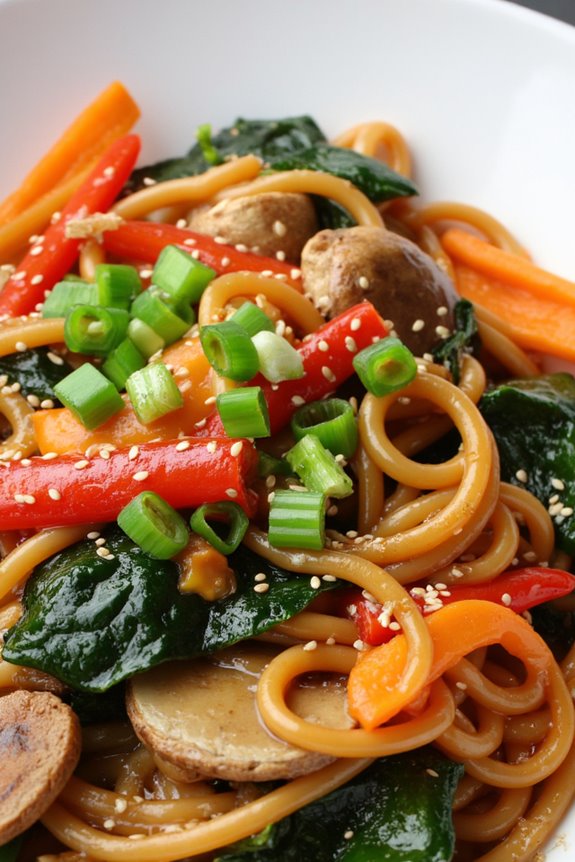
Japchae, a beloved Korean dish, is known for its delightful combination of sweet potato noodles, sautéed vegetables, and a savory sauce. This dish is often served as a side or appetizer in Korean meals and is perfect for any occasion. The unique texture of the sweet potato noodles, also known as dangmyeon, adds an interesting element to the dish, making it both visually appealing and delicious.
The vibrant colors of the vegetables not only enhance the presentation but also contribute a variety of flavors and nutrients.
Making Japchae is a straightforward process, but it requires a bit of preparation to guarantee that each ingredient is cooked to perfection. The noodles are cooked until tender, then tossed with a flavorful blend of sautéed vegetables and a soy-based sauce, creating a harmonious dish that can be enjoyed hot or at room temperature.
Whether you’re hosting a gathering or simply looking to enjoy a home-cooked meal, Japchae is sure to impress your family and friends.
Ingredients (Serves 4-6):
- 8 ounces sweet potato noodles (dangmyeon)
- 1 tablespoon sesame oil
- 2 tablespoons vegetable oil
- 1 medium onion, thinly sliced
- 2 cloves garlic, minced
- 1 medium carrot, julienned
- 1 medium red bell pepper, julienned
- 1 cup spinach, washed and drained
- 4-5 shiitake mushrooms, sliced (fresh or rehydrated)
- 2 green onions, chopped
- 3 tablespoons soy sauce
- 1 tablespoon sugar
- 1 tablespoon sesame seeds
- Salt and pepper to taste
Cooking Instructions:
- Prepare the Sweet Potato Noodles: Begin by boiling a large pot of water. Once the water is boiling, add the sweet potato noodles and cook for about 6-8 minutes or until they become translucent and tender. Drain the noodles and rinse them under cold water to stop the cooking process. Set them aside.
- Sauté the Vegetables: In a large skillet or wok, heat the vegetable oil over medium heat. Add the sliced onion and minced garlic, and sauté for 2-3 minutes until the onion becomes translucent. Next, add the julienned carrot and red bell pepper. Cook for an additional 3-4 minutes until the vegetables are slightly tender.
- Add Mushrooms and Spinach: Stir in the sliced shiitake mushrooms and cooked spinach into the skillet. Sauté everything together for about 2-3 minutes, allowing the flavors to meld and the spinach to wilt.
- Combine Noodles and Sauce: In a small bowl, mix the soy sauce, sugar, and sesame oil together. Add the cooked sweet potato noodles to the skillet with the sautéed vegetables. Pour the sauce over the noodles and toss everything together gently for about 2-3 minutes, guaranteeing the noodles and vegetables are evenly coated.
- Finish and Serve: Add the chopped green onions and sesame seeds to the dish. Toss once more to combine. Taste and season with salt and pepper as needed. Serve the Japchae warm or at room temperature, garnished with additional sesame seeds if desired.
Extra Tips:
To enhance the flavor of your Japchae, consider marinating the noodles in the soy sauce mixture for a few minutes before combining with the sautéed vegetables.
Additionally, feel free to customize the dish by adding your favorite vegetables such as zucchini or broccoli, or protein like beef or tofu for a heartier meal.
Japchae can also be made ahead of time and stored in the refrigerator, making it a convenient dish for meal prep or entertaining guests.
Tteokbokki (Spicy Rice Cakes)
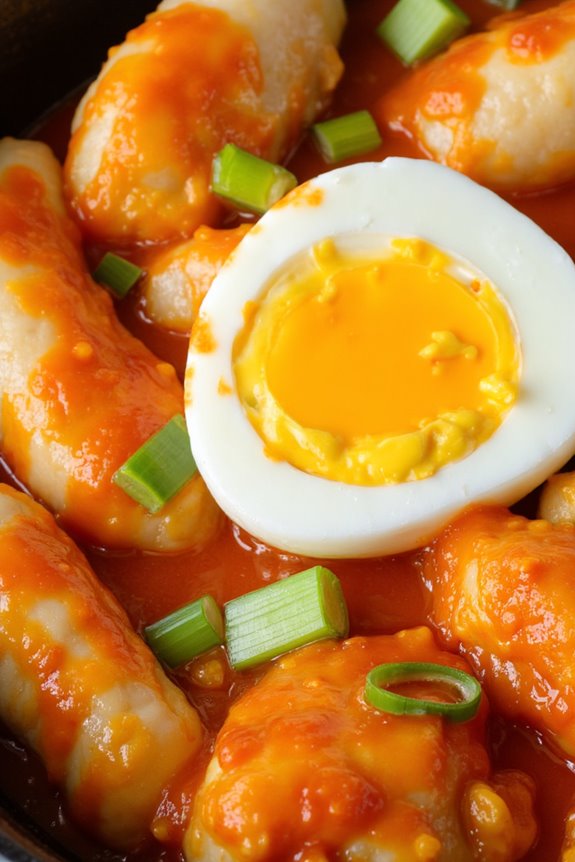
Tteokbokki is a beloved Korean street food that has captured the hearts and taste buds of many around the world. This delicious dish features chewy rice cakes simmered in a spicy and sweet sauce, often accompanied by fish cakes, boiled eggs, and green onions. The combination of flavors and textures makes Tteokbokki a favorite appetizer, perfect for sharing with friends or family.
Whether you’re looking to recreate a taste of Korea at home or simply want to indulge in a delightful dish, Tteokbokki is an excellent choice.
The beauty of Tteokbokki lies in its versatility. You can adjust the level of spiciness to suit your taste, add various ingredients such as vegetables or meats, and even experiment with different sauces. This recipe provides a classic approach to making Tteokbokki, ensuring you enjoy the authentic flavor profile that has made it a staple in Korean cuisine.
Get ready to plunge into the world of Tteokbokki and enjoy a dish that’s as fun to make as it’s to eat!
Ingredients (Serves 4-6)
- 1 pound (450g) cylindrical rice cakes (tteok)
- 4 cups water
- 1/4 cup gochujang (Korean red chili paste)
- 2 tablespoons gochugaru (Korean red chili flakes)
- 2 tablespoons soy sauce
- 1 tablespoon sugar
- 1 tablespoon minced garlic
- 1/2 pound fish cakes, cut into bite-sized pieces
- 2 green onions, chopped
- 1 boiled egg (optional)
Cooking Instructions
- Prepare the Rice Cakes: If your rice cakes are refrigerated or frozen, soak them in warm water for about 30 minutes to soften them. This will help them cook more evenly and absorb the flavors of the sauce better.
- Make the Sauce: In a large pot, combine the 4 cups of water, gochujang, gochugaru, soy sauce, sugar, and minced garlic. Stir the mixture well until all the ingredients are combined and the gochujang is dissolved. This sauce will give your Tteokbokki its signature spicy and sweet flavor.
- Cook the Rice Cakes: Place the softened rice cakes into the pot with the sauce. Bring the mixture to a boil over medium heat, stirring occasionally to prevent sticking. Once boiling, reduce the heat to medium-low and let it simmer for about 10-15 minutes, or until the rice cakes are tender and the sauce has thickened to your desired consistency.
- Add Fish Cakes and Green Onions: Once the rice cakes are cooked, add the fish cakes to the pot and stir well. Allow them to cook for an additional 5 minutes, ensuring they’re heated through. Finally, add the chopped green onions, reserving a bit for garnish, and mix to incorporate.
- Serve: If you’d like to include a boiled egg, slice it in half and place it on top of the Tteokbokki before serving. Garnish with the reserved green onions and serve hot. Enjoy your delicious homemade Tteokbokki!
Extra Tips
When cooking Tteokbokki, you can customize the level of spiciness according to your preference by adjusting the amount of gochujang and gochugaru. For a milder version, start with less and gradually add more until you reach your desired heat level.
Additionally, feel free to incorporate other ingredients like vegetables, cheese, or even dumplings to create your unique twist on this classic dish. Make sure to serve it hot for the best experience, as Tteokbokki is best enjoyed fresh off the stove!
Mandu (Korean Dumplings)
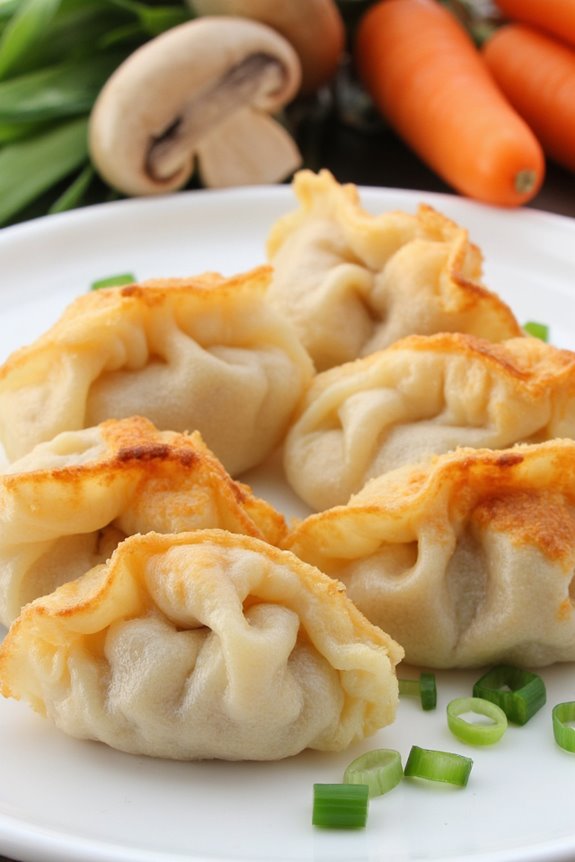
Mandu are traditional Korean dumplings that can be filled with a variety of ingredients, including ground meat, tofu, and vegetables. They’re typically enjoyed as an appetizer or snack, and can be steamed, boiled, or pan-fried, giving them a delightful crispy exterior while remaining tender and flavorful inside.
Making mandu is a wonderful way to introduce a taste of Korean cuisine into your home, and they’re often enjoyed during special holidays or family gatherings. The process of making mandu can be a fun activity, especially when done with friends or family.
The dumpling wrappers can be purchased at most Asian grocery stores, or you can make your own if you’re feeling adventurous. Once the filling is prepared, the mandu can be shaped into various forms, making them visually appealing and delicious. This recipe yields enough mandu for 4-6 people, perfect for sharing and enjoying the delightful flavors of Korean cooking.
Ingredients
- 1 cup ground pork (or beef/chicken)
- 1/2 cup finely chopped cabbage
- 1/2 cup finely chopped mushrooms
- 1/4 cup grated carrots
- 1/4 cup green onions, chopped
- 2 cloves garlic, minced
- 1 tablespoon ginger, minced
- 1 tablespoon sesame oil
- 1 tablespoon soy sauce
- 1 teaspoon salt
- 1 teaspoon pepper
- 1 package of mandu wrappers (about 30-40 wrappers)
- Cooking oil (for pan-frying)
- Water (for sealing and steaming)
Cooking Instructions
1. Prepare the Filling: In a large mixing bowl, combine the ground pork (or your choice of meat), chopped cabbage, mushrooms, grated carrots, green onions, minced garlic, and ginger.
Add sesame oil, soy sauce, salt, and pepper. Mix everything together thoroughly using your hands or a spoon until the mixture is well-combined.
2. Assemble the Mandu: Take a mandu wrapper and place about one tablespoon of the filling in the center.
Using your finger, wet the edges of the wrapper with a little water to help seal it. Fold the wrapper in half to create a half-moon shape and pinch the edges tightly to seal. For added decoration, you can create pleats along the edge.
3. Cook the Mandu: You can choose to steam, boil, or pan-fry the mandu. To pan-fry, heat a tablespoon of cooking oil in a non-stick skillet over medium heat.
Place the mandu in the skillet, making sure not to overcrowd them. Fry for about 2-3 minutes until the bottoms are golden brown. Then, add a few tablespoons of water to the pan and cover it with a lid to steam the mandu for about 5-7 minutes or until cooked through.
4. Serve the Mandu: Once cooked, remove the mandu from the pan and arrange them on a serving plate.
You can serve them with a dipping sauce made from soy sauce and vinegar, or simply enjoy them as they are.
Extra Tips
When making mandu, feel free to customize the filling according to your taste preferences. You can add ingredients like tofu for a vegetarian option, or experiment with different vegetables.
If you’re making a large batch, mandu freeze exceptionally well; simply place uncooked mandu in a single layer on a baking sheet, freeze until solid, and then transfer them to a freezer bag for later use.
When you’re ready to cook them, no need to thaw—just cook them straight from frozen, adjusting the cooking time accordingly. Enjoy your delicious homemade mandu!
Gyeran-jjim (Korean Steamed Egg)
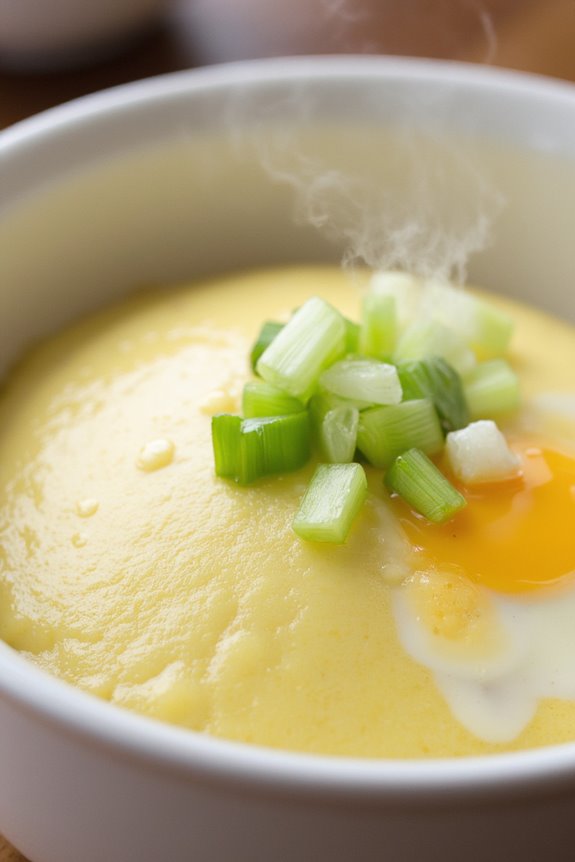
Gyeran-jjim, also known as Korean steamed egg, is a popular side dish that embodies the delicate flavors of Korean cuisine. This fluffy, savory dish is made by whisking eggs and steaming them to create a light and airy texture. It’s often enjoyed as a part of a traditional Korean meal, serving as a comforting accompaniment to rice and various banchan (side dishes).
The simplicity of the ingredients combined with the steaming method allows for a rich, creamy consistency that’s both satisfying and delightful.
To prepare Gyeran-jjim, you’ll need a few fundamental ingredients, including eggs, water or broth, and seasonings. The dish can be customized with additions such as scallions or vegetables for extra flavor and nutrition. The steaming process is vital to achieving the perfect consistency, yielding a dish that’s both visually appealing and delicious.
Whether served as a side dish or as a light meal, Gyeran-jjim is sure to impress with its simplicity and taste.
Ingredients (Serves 4-6):
- 4 large eggs
- 1 cup water or chicken broth
- 1 teaspoon soy sauce
- 1/2 teaspoon sesame oil
- 1/4 teaspoon salt (adjust to taste)
- 1/4 teaspoon ground black pepper
- 2 tablespoons chopped scallions (green onions)
- Optional: diced vegetables like carrots or zucchini (1/2 cup)
Cooking Instructions:
- Prepare the Egg Mixture: In a large mixing bowl, crack the eggs and add the water or chicken broth. Use a whisk to beat the eggs until well combined, making sure that the mixture is smooth and frothy. This incorporation of air will help achieve the fluffy texture once steamed.
- Season the Mixture: Add the soy sauce, sesame oil, salt, and black pepper to the egg mixture. Whisk again until all ingredients are thoroughly mixed. This step is fundamental as it enhances the flavor of the eggs.
- Strain the Mixture (Optional): For an ultra-smooth texture, you can strain the egg mixture through a fine-mesh sieve into another bowl. This will remove any chalazae (the stringy bits in egg whites) and create a silkier texture.
- Add Optional Ingredients: If you’re using diced vegetables, gently fold them into the egg mixture. You can also include the chopped scallions at this stage for added flavor and color.
- Prepare the Steamer: Fill a pot with water and bring it to a gentle simmer. Place a steaming rack or heatproof bowl inside the pot, making sure that it doesn’t touch the water. Alternatively, you can use a dedicated steamer if you have one.
- Transfer the Mixture to a Steaming Bowl: Pour the egg mixture into a heatproof bowl that fits into your steamer setup. You can lightly cover the bowl with aluminum foil to prevent condensation from dripping into the eggs.
- Steam the Eggs: Carefully place the bowl in the steamer and cover it with a lid. Steam the egg mixture over medium heat for about 15-20 minutes, or until the eggs are set and have a soft, custard-like consistency. You can check for doneness by inserting a toothpick into the center; it should come out clean.
- Serve: Once cooked, remove the steaming bowl from the pot and let it cool slightly. Serve hot, garnished with additional scallions or sesame seeds if desired.
Extra Tips:
To achieve the best results with Gyeran-jjim, it’s important to control the steaming temperature. If the heat is too high, the eggs may become rubbery instead of fluffy.
Additionally, you can experiment with different broth flavors or add-ins to customize the dish to your liking. Always make sure that the water in the steamer pot is kept at a gentle simmer throughout the cooking process for even cooking.
Enjoy this delightful Korean appetizer as part of a larger meal or as a snack on its own!
Pajeon (Green Onion Pancakes)
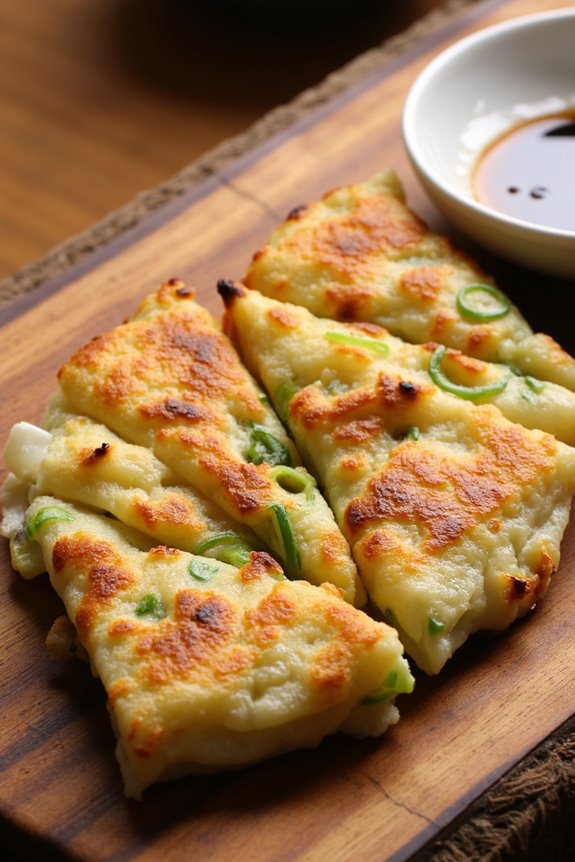
Pajeon, or Korean green onion pancakes, are a delightful and savory appetizer that captures the essence of Korean cuisine. This dish is particularly favored for its crispy texture and the fresh flavor of green onions.
Pajeon isn’t only easy to prepare but also versatile, allowing for the addition of various ingredients such as seafood or vegetables, making it a popular choice for gatherings and celebrations. The combination of a simple batter and the aromatic green onions creates a delicious treat that can be enjoyed at any time of the day.
To make the perfect Pajeon, the key lies in achieving the right batter consistency and guaranteeing that the pancakes are cooked to a golden brown. Traditionally, Pajeon is served with a dipping sauce made from soy sauce, vinegar, and sesame oil, enhancing the overall flavor profile.
Whether you’re hosting a party or just looking for a quick snack, Pajeon is sure to impress with its delightful taste and crunchy texture.
Ingredients (Serves 4-6)
- 1 cup all-purpose flour
- 1 cup water
- 1/2 teaspoon salt
- 1/2 teaspoon black pepper
- 1 bunch green onions, sliced (about 10-12 stalks)
- 1/2 cup carrot, julienned (optional)
- 1/2 cup seafood mix (optional, e.g., shrimp or squid)
- 2 tablespoons vegetable oil (for frying)
- 2 tablespoons soy sauce (for dipping)
- 1 tablespoon rice vinegar (for dipping)
- 1 teaspoon sesame oil (for dipping)
Cooking Instructions
- Prepare the Batter: In a large mixing bowl, combine the all-purpose flour, water, salt, and black pepper. Whisk until the mixture is smooth and has no lumps. The batter should be somewhat thick, as it needs to hold together when cooked.
- Add Green Onions and Optional Ingredients: Fold in the sliced green onions and any optional ingredients like julienned carrots or seafood. Make sure everything is evenly coated with the batter.
- Heat the Pan: Heat a non-stick skillet or frying pan over medium heat and add 1 tablespoon of vegetable oil. Allow the oil to heat up until shimmering but not smoking.
- Cook the Pancake: Pour half of the batter into the pan, spreading it out evenly to form a round pancake about 1/4 inch thick. Cook for about 4-5 minutes or until the edges start to turn golden brown.
- Flip and Finish Cooking: Carefully flip the pancake using a spatula and add another tablespoon of oil if necessary. Cook the other side for another 4-5 minutes until golden and crispy.
- Repeat for Remaining Batter: Transfer the cooked pancake to a plate and cover it to keep warm. Repeat the process with the remaining batter, adding more oil as needed.
- Prepare the Dipping Sauce: In a small bowl, mix together the soy sauce, rice vinegar, and sesame oil to create a dipping sauce. Adjust the proportions to taste.
- Serve: Cut the pancakes into wedges and serve hot with the dipping sauce on the side.
Extra Tips
To enhance the flavor of your Pajeon, consider adding a dash of gochugaru (Korean red pepper flakes) to the batter for a bit of heat.
For a more elaborate version, you can include other vegetables like zucchini or mushrooms. Remember, the key to a crispy pancake is to guarantee the oil is hot enough before adding the batter and not to overcrowd the pan.
Enjoy your homemade Pajeon as a delicious appetizer or snack that brings a taste of Korea to your table!
Kkakdugi (Cubed Radish Kimchi)
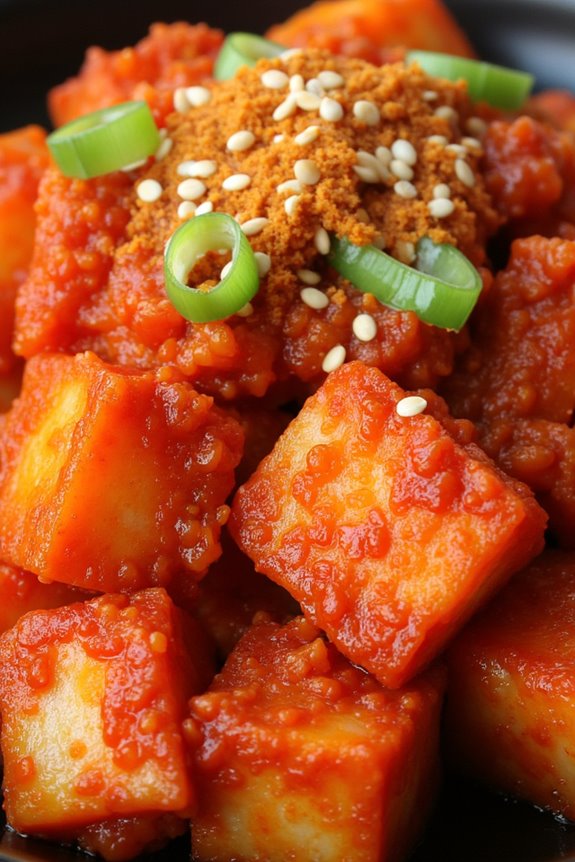
Kkakdugi is a popular Korean side dish made from diced radish that’s fermented with a blend of flavorful seasonings. This crunchy, tangy kimchi offers a rejuvenating contrast to many Korean main dishes, making it a staple in Korean cuisine. The dish showcases the versatility of Korean radishes, known as mu, which are crisp and slightly sweet.
When prepared properly, Kkakdugi not only serves as a delicious accompaniment but also provides probiotics, adding health benefits to your meal.
Making Kkakdugi is a straightforward process that involves cutting the radish into cubes and mixing it with a spicy paste made from gochugaru (Korean red pepper flakes), garlic, ginger, and other ingredients. The fermentation process allows the flavors to meld together, resulting in a dish that can be enjoyed immediately or stored in the refrigerator for weeks.
Whether you’re serving it with rice or as part of a banchan spread, Kkakdugi is sure to delight your taste buds.
Ingredients (serving size: 4-6 people)
- 1 medium Korean radish (mu), about 1 pound
- 1 teaspoon salt (for radish)
- 3 tablespoons Korean coarse sea salt (for brining)
- 1 tablespoon sugar
- 4 tablespoons gochugaru (Korean red pepper flakes)
- 1 tablespoon fish sauce
- 1 tablespoon soy sauce
- 4 cloves garlic, minced
- 1 teaspoon ginger, minced
- 2 green onions, chopped
- 1 tablespoon sesame seeds (optional)
Cooking Instructions
1. Prepare the Radish: Start by peeling the Korean radish and cutting it into ½-inch cubes. This size allows the radish to maintain its crunchiness during fermentation. Place the cubed radish in a large bowl and sprinkle 1 teaspoon of salt over it.
Mix well to guarantee the radish is evenly coated, then let it sit for about 30 minutes. This process draws out excess moisture and helps in the brining process.
2. Make the Kimchi Paste: While the radish is brining, prepare the kimchi paste. In a separate bowl, combine the gochugaru, fish sauce, soy sauce, sugar, minced garlic, and minced ginger.
Mix these ingredients into a thick paste. Adjust the spice level by adding more or less gochugaru based on your preference.
3. Combine Ingredients: After 30 minutes, rinse the salted radish under cold water to remove excess salt and drain well. Add the brined radish to the bowl with the kimchi paste.
Toss everything together using your hands (wearing gloves is recommended) until the radish cubes are thoroughly coated with the paste.
4. Add Green Onions and Sesame Seeds: Stir in the chopped green onions into the mixture for an added layer of flavor and crunch. If desired, sprinkle some sesame seeds for garnish.
Mix everything well to guarantee an even distribution.
5. Ferment the Kkakdugi: Transfer the Kkakdugi to a clean, airtight container. Press it down firmly to remove any air pockets and seal the container.
Leave it at room temperature for about 1-2 days to ferment, depending on your preference for sourness. After this initial fermentation, store it in the refrigerator. The flavors will continue to develop over time.
Extra Tips
When making Kkakdugi, remember that the fermentation time can vary depending on the temperature of your kitchen. If it’s warm, the fermentation may happen faster, while cooler environments will slow it down.
Taste the Kkakdugi after a day or two to find your preferred sourness. Additionally, always use clean utensils when serving to keep the kimchi fresh for a longer time. Kkakdugi can be enjoyed right away, but allowing it to sit for a few days in the refrigerator enhances its flavor even more!
Sigeumchi Namul (Seasoned Spinach)
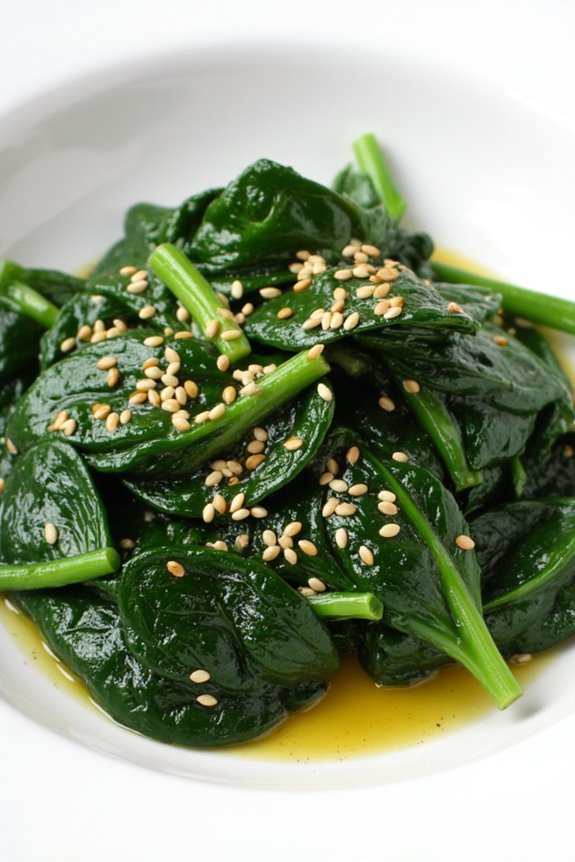
Sigeumchi Namul is a traditional Korean side dish that showcases the vibrant flavors of seasoned spinach. This dish isn’t only nutritious but also very easy to prepare, making it a staple in many Korean households. The combination of fresh spinach, sesame oil, garlic, and soy sauce creates a delightful balance of flavors that complements a variety of main dishes, from grilled meats to rice dishes.
This simple yet flavorful dish is a great way to incorporate leafy greens into your diet. Sigeumchi Namul can be served hot or cold and is often enjoyed as part of a banchan spread, which consists of various small side dishes served alongside the main meal. With just a few ingredients and minimal cooking time, you’ll have a delicious and healthy appetizer ready to impress your family and friends.
Ingredients (Serves 4-6):
- 1 pound fresh spinach
- 2 tablespoons soy sauce
- 1 tablespoon sesame oil
- 2 cloves garlic, minced
- 1 tablespoon sesame seeds, toasted
- 1 teaspoon sugar (optional)
- Salt, to taste
Cooking Instructions:
- Prepare the Spinach: Begin by washing the spinach thoroughly under cold running water to remove any dirt or grit. Once clean, remove any tough stems and set the spinach aside in a colander to drain.
- Blanch the Spinach: Bring a pot of water to a rolling boil. Add a pinch of salt to the water to enhance the flavor of the spinach. Carefully add the spinach to the boiling water and blanch for about 1-2 minutes, or until the spinach is wilted but still vibrant green.
- Cool the Spinach: After blanching, immediately transfer the spinach to a bowl of ice water to stop the cooking process. This step preserves the bright green color and crisp texture of the spinach. Allow it to cool for a few minutes, then drain the spinach again and gently squeeze out excess water.
- Season the Spinach: In a large mixing bowl, combine the blanched spinach with soy sauce, sesame oil, minced garlic, toasted sesame seeds, and sugar (if using). Toss gently to guarantee that all the spinach is evenly coated with the seasoning. Taste and adjust the seasoning with salt if needed.
- Serve: Transfer the seasoned spinach to a serving dish. You can serve Sigeumchi Namul immediately or refrigerate it for later use. It can be enjoyed both warm or chilled as part of a banchan spread.
Extra Tips:
For a more pronounced flavor, consider adding a splash of rice vinegar or a pinch of red pepper flakes to the seasoning mix. Additionally, if you want to elevate the dish further, try sautéing the minced garlic in sesame oil before mixing it with the spinach. This will create a deeper, more aromatic flavor profile.
Remember that fresh spinach wilts down considerably, so it’s always best to start with a larger quantity than you think you’ll need!
Spicy Cucumber Salad
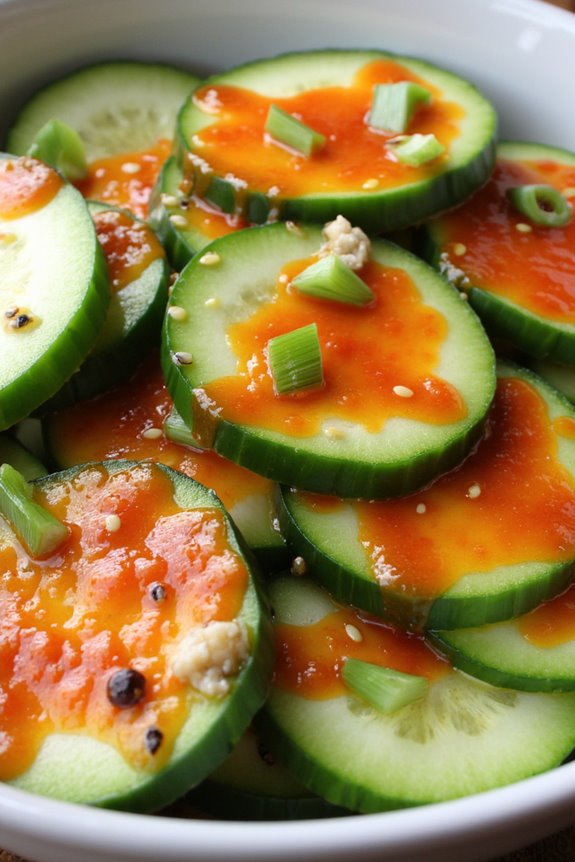
Spicy Cucumber Salad, or “Oi Muchim,” is a revitalizing and zesty dish that’s perfect for any Korean meal. This cold side dish features crisp cucumbers marinated in a spicy dressing, making it a delightful complement to grilled meats or rice dishes. The combination of heat from the gochugaru (Korean red pepper flakes) and the crunch of fresh cucumbers creates a tantalizing flavor profile that’s both invigorating and satisfying.
This salad isn’t only easy to prepare but also incredibly versatile. You can adjust the spice level to suit your taste, or even add other ingredients like sesame seeds or chopped scallions for added flavor and texture. Perfect for summer gatherings or as part of a larger Korean feast, Spicy Cucumber Salad is sure to impress your guests and leave them wanting more.
Ingredients (Serves 4-6):
- 4 medium cucumbers
- 2 teaspoons salt
- 2 tablespoons gochugaru (Korean red pepper flakes)
- 2 tablespoons sugar
- 3 tablespoons rice vinegar
- 2 tablespoons soy sauce
- 1 tablespoon sesame oil
- 2 cloves garlic, minced
- 1 green onion, finely chopped
- 1 tablespoon sesame seeds (optional)
Cooking Instructions:
- Prepare the Cucumbers: Start by washing the cucumbers thoroughly. Cut the cucumbers in half lengthwise, and then slice them into thin half-moons. This shape allows for better absorption of the dressing and makes for a more enjoyable eating experience.
- Salt the Cucumbers: Place the sliced cucumbers in a large bowl and sprinkle the salt over them. Gently toss to make sure all cucumber slices are coated. Let them sit for about 15-20 minutes. This process helps to draw out excess moisture from the cucumbers, making the salad crispier.
- Make the Dressing: In a separate bowl, combine the gochugaru, sugar, rice vinegar, soy sauce, sesame oil, and minced garlic. Whisk the ingredients together until the sugar dissolves and the mixture is well combined. Adjust the level of gochugaru depending on your desired spice level.
- Combine Ingredients: After the cucumbers have rested and released some of their moisture, drain any excess liquid. Add the cucumbers to the bowl with the dressing, and toss gently to coat all the cucumber slices evenly with the spicy mixture.
- Add Final Touches: Stir in the chopped green onion and sesame seeds (if using). Mixing these ingredients in at the end enhances the flavor and adds a bit of crunch to the salad.
- Chill and Serve: Allow the Spicy Cucumber Salad to sit for about 10-15 minutes at room temperature or refrigerate it for a more chilled dish. This resting time helps the flavors meld together. Serve it as a side dish or appetizer, garnished with additional sesame seeds if desired.
Extra Tips:
For a twist on the traditional recipe, feel free to experiment by adding other vegetables like carrots or radishes to the salad. If you prefer an even more invigorating taste, you can incorporate a splash of lime juice or a handful of chopped cilantro.
Always remember to taste and adjust the seasoning to your preference, making sure that the balance of heat, sweetness, and acidity is just right for your palate.
